 StainList
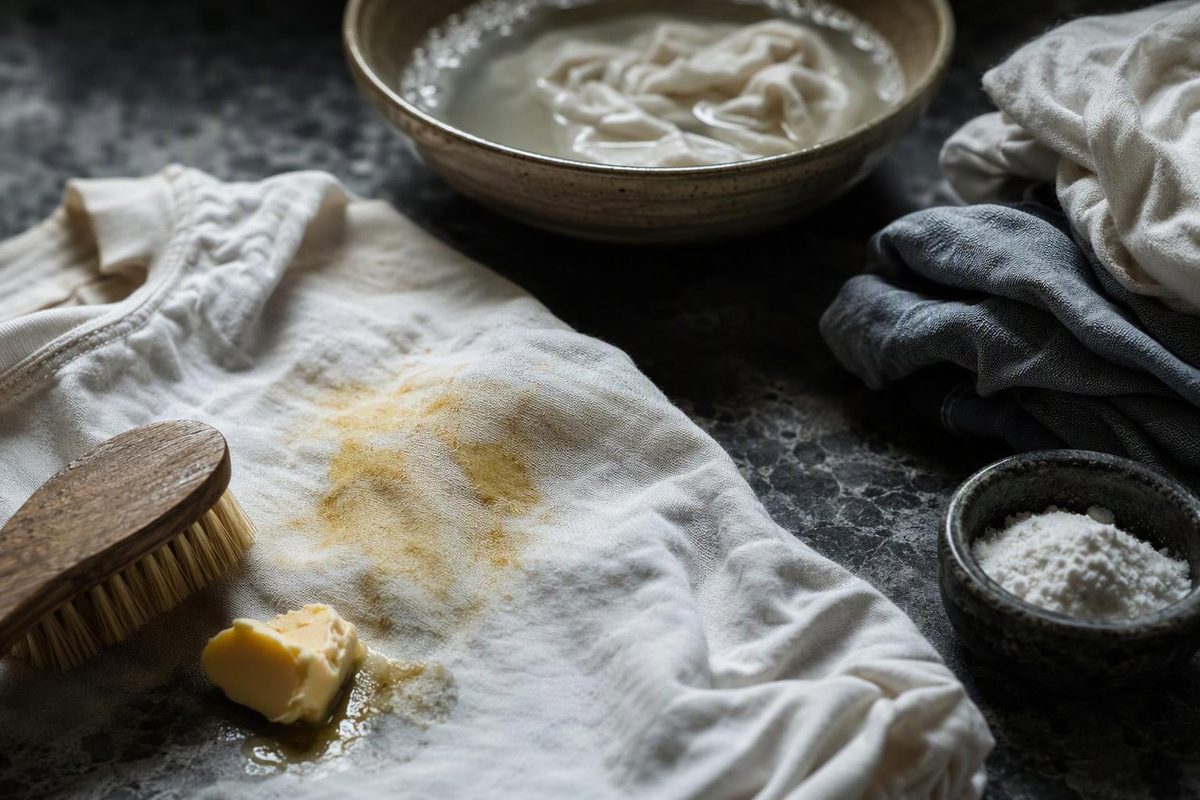
Butter leaves an oily mark, so the useful sequence is to remove the excess, pretreat the spot, wash as the care label permits and keep the garment out of the dryer until the stain is gone.
For a fresh butter stain
-
Check the care label. If it says “dry-clean only,” lift off the excess butter and take the garment to a cleaner, identifying the stain. For washable clothing, follow its temperature, cycle, drying and bleach restrictions. Care instructions account for the garment as a whole, including dyes and components—not only its main fiber (FTC).
-
Lift off the excess. Use a spoon or the edge of a dull knife, working carefully so you do not push the butter farther into the fabric. If the butter has melted, blot it with a white paper towel rather than scrubbing.
-
Spot-test the pretreatment. Follow the product directions and test it on a hidden seam or inside hem first. Stop if the color transfers or the fabric changes. Full-strength laundry pretreatments can remove color from unstable dyes, particularly on some bright and dark garments (American Cleaning Institute).
-
Pretreat the stain. Apply a prewash stain remover as its label directs. Liquid laundry detergent is also suitable for a light grease or oil mark. On an ordinary washable, colorfast fabric, another option is to gently work a few drops of hand-dishwashing detergent into the spot and leave it for a few minutes. The American Cleaning Institute recommends pretreating butter before washing, while Tide’s butter instructions specifically include dish detergent as an option (ACI, Tide).
-
Wash at the warmest temperature the care label allows. Use the normal cycle and the correct dose of laundry detergent. “Warmest safe” does not automatically mean hot; the permitted setting may be cold or warm. Detergent surfactants have oil-attracting and water-attracting portions that help suspend oily soil in wash water so it can rinse away (ACI’s explanation of cleaning chemistry).
-
Inspect before using heat. If you can still see the mark, repeat the compatible pretreatment and wash steps. The American Cleaning Institute advises keeping a stained garment out of the dryer until the stain has been removed (ACI). Air-dry if an oily shadow is difficult to judge while the fabric is wet, then inspect it again before tumble-drying or ironing.
If the stain is old or has already been dried
Apply liquid laundry detergent or a labeled prewash stain remover directly to the dry mark. Allow the contact time stated on the product label, wash at the warmest care-label temperature and air-dry for inspection. Repeat if the mark is fading and the fabric remains unchanged.
A stain that has already been through the dryer may be less responsive, so avoid increasingly aggressive home remedies. Stop if the fabric fades, pills, distorts or develops a ring.
Silk, wool, acetate, embellished clothing and valuable garments need more caution than an ordinary washable cotton or synthetic item. Follow the label rather than adapting this machine-wash method; if the permitted treatment is unclear, consult a professional cleaner.
Avoid these mistakes
- Hard rubbing: It can spread the mark or abrade the fabric.
- Automatic use of chlorine bleach: Bleach restrictions on the care label still apply, and bleach is not the first treatment for oily soil.
- Mixing stain removers: Use one compatible treatment according to its label. Rinse it out before trying a different product.
- Testing the result in the dryer: Inspect and, if needed, repeat the treatment before applying dryer or iron heat.
The same basic sequence applies to many cooking-fat marks; see the related guide to removing vegetable oil from clothes.