
Feature
Are Soy Candles Actually Safe to Burn Indoors? A Balanced Look at the Facts
Dana Kolb · · 23 min
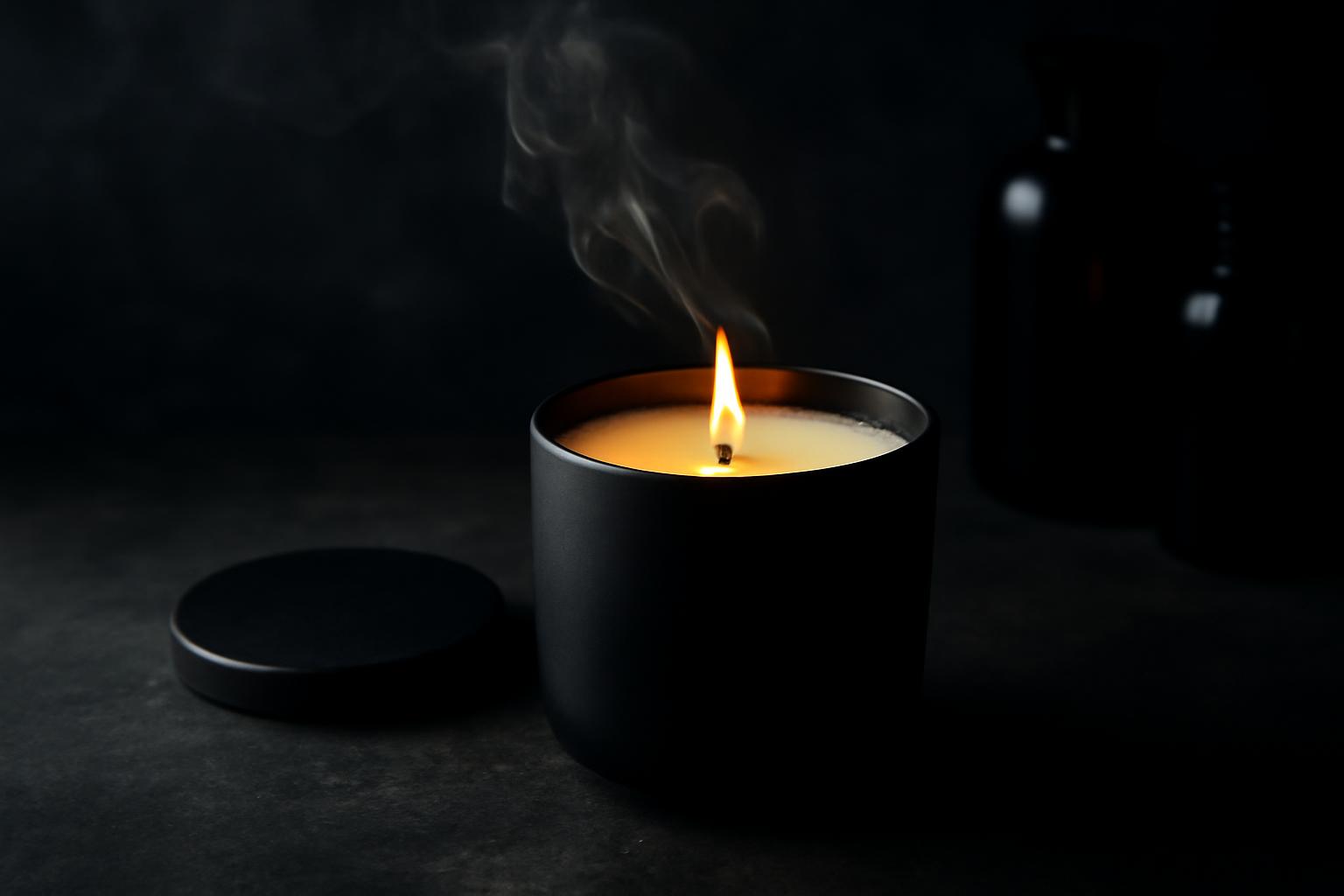
If you’re asking are soy candles safe, the most defensible answer is: usually yes, in relative terms, but not because they are emission-free or magically “non-toxic.”
Across the sources here, soy candles are generally described as a lower-emission choice than paraffin candles, especially when they are made with 100% soy wax or a clearly disclosed blend, burn without visible smoke, and are used in a well-ventilated room. Healthline reports that candles can release volatile organic compounds and particulate matter, but says the amounts are generally too low to cause health problems when candles are used properly. Cleveland Clinic pulmonologist Renee Dixon, MD makes a similar point: candles do release small amounts of VOCs, but there is not enough strong evidence to say they are dangerous to health for typical users in ventilated spaces.
That said, all candles are combustion products. Soy candles still release some byproducts into indoor air. And in real homes, the biggest variables are often not just the wax, but also the wick, fragrance, dye load, jar design, and how the candle is burned.
The evidence hierarchy matters here:
- Best supported: soy usually compares more favorably than paraffin on soot and emissions
- Also well supported: poor burning habits and fire risk are more concrete hazards than ordinary toxicity claims
- Less certain: exact soot-reduction percentages, marketing claims about “clean” formulas, and sweeping safety claims for pets, pregnancy, or highly sensitive users
So the practical takeaway is simple: soy is usually the better candle choice if you want to reduce indoor emissions, but quality and burn habits matter at least as much as wax type.
What Are Soy Candles and How Do They Differ from Paraffin?
Soy candles are typically made from hydrogenated soybean oil, while paraffin candles are made from petroleum-derived wax. That basic distinction is well supported across the source set, including HowStuffWorks and Lone Star Candle Supply.
For indoor safety, the sourcing difference is less important than how the candle behaves when burned. In broad terms:
- Soy wax is commonly described as a longer-burning, lower-soot wax
- Paraffin wax is widely used because it is stable, inexpensive, and often gives a stronger scent throw
- Neither wax is literally emission-free
Lone Star Candle Supply, which sells both waxes, presents a useful moderating point: both soy and paraffin can burn with low soot when properly wicked. That matters, because it pushes back against an oversimplified “soy safe, paraffin toxic” story. The better-supported conclusion is more practical: soy usually has the cleaner-burning reputation, but combustion quality still matters.
Another important distinction is that a candle labeled “soy” is not always 100% soy wax.
That is not just a technical detail. Candle sellers themselves warn that soy blends can contain much less soy than shoppers assume. One seller gives an example of a blend that is roughly 49% soy and 51% paraffin. That exact split comes from commercial guidance, not an independent market audit, so it should be treated as an illustration rather than a proven industry norm. But the buying lesson is solid: “soy” on the front label does not automatically mean pure soy.
If you care about indoor emissions, the most useful things to verify are concrete and observable:
- whether the label says 100% soy wax
- whether the brand clearly states the wax blend
- whether the wick material is disclosed
- whether the candle gives clear burn instructions
- whether it burns without visible smoke or black soot
Some brands also disclose fragrance information such as phthalate-free fragrance oils. That kind of ingredient transparency is more useful than vague terms like “clean-burning” or “non-toxic,” which are marketing language, not standardized safety certifications in this evidence set.
So the short version is:
- Soy wax: hydrogenated soybean oil; often marketed and described as lower-soot
- Paraffin wax: petroleum-derived; common and effective for scent throw
- Soy blends: may still contain meaningful paraffin, so labels matter
That sets up the real question: what actually gets into your air when the candle is burning?
Emissions from Soy Candles: Soot, VOCs, and Particulates
When people worry about candle safety, they are usually asking about three things:
- Soot
- VOCs (volatile organic compounds)
- Particulate matter
The evidence here supports a comparative answer, not an absolute one: soy candles still emit combustion byproducts, but they generally compare better than paraffin candles.
Soot: soy often performs better, but wick and burn conditions matter
HowStuffWorks and several candle-industry sources repeat a figure that soy candles can produce up to 90% less soot than paraffin. Because that number is echoed mainly in consumer or seller-adjacent material here, it is better treated as a directional claim than as a guaranteed measurement for every soy candle on the market.
The stronger, more credible cross-source point is simpler: soy is usually described as the lower-soot option.
But even that comparison needs context. Lone Star Candle Supply makes an important technical point: soot comes from incomplete combustion, not from wax identity alone. In practice, visible smoke or black residue can be driven by factors such as:
- wick size
- wick maintenance
- fragrance load
- added dyes
- air drafts
- poor jar or vessel design
- burning too long without trimming the wick
That explains why a soy candle can still soot if it is badly formulated or badly burned. It also explains why some paraffin candles may appear to burn cleanly under controlled conditions.
So if a soy candle is leaving black marks on the jar, the most accurate interpretation is not “soy candles are unsafe.” It is: this candle is not burning well.
VOCs: all candles emit some, but soy generally compares better than paraffin
Cleveland Clinic says burning candles releases trace quantities of toluene and benzene. Healthline likewise notes that candles emit VOCs and particulate matter. These chemical names understandably make people nervous, because they are tied to real toxicology in other settings.
But dose matters.
Cleveland Clinic’s overall message is cautious rather than alarmist: there isn’t enough strong evidence to say candles are dangerous to health for typical users, especially in well-ventilated spaces. Healthline makes a similar point, stating that the amounts released are generally too low to cause health problems when candles are used properly.
That does not mean VOCs are irrelevant. It means the meaningful question is not whether a candle can emit benzene or toluene at all, but how much, for how long, and under what conditions.
On the scented-candle side, Healthline reports that scented candles can release formaldehyde at less than half World Health Organization guideline levels. That is a much narrower and more precise claim than saying “candle VOCs are below WHO limits” across the board. It supports a lower-risk interpretation for typical use, but it does not justify calling candles harmless.
The soy-versus-paraffin comparison is clearer. Healthline, HowStuffWorks, and several commercial sources all describe paraffin as the higher-emission option, with more soot and more concerning combustion byproducts. Even when the commercial sources are stripped away, the independent health sources still point in the same direction: soy is usually the more cautious choice if your goal is reducing indoor emissions.
Particulate matter: measurable, but low in typical use
Healthline cites a 2014 study finding that particulate matter from candle burning was insufficient to cause health problems under the conditions studied. Healthline also notes that daily exposure to VOCs and particulates from other common sources, such as exhaust, often exceeds what candles contribute.
That framing matters. It does not mean candles never affect indoor air. It means candles are usually a modest source, not the dominant one, in normal household use.
In other words:
- one candle burned occasionally in a ventilated room is one scenario
- multiple candles burned for long stretches in a small closed room is another
The evidence supports a low-risk for typical use reading, not a “no impact under any conditions” reading.
What this means in practice
For most households, the emissions question is best understood this way:
- Soy usually emits less soot and fewer concerning byproducts than paraffin
- All candles emit something when burned
- Real-world emissions depend heavily on formulation and burn habits
If your goal is better indoor air, the most useful priorities are:
- choose candles that disclose what they are made from
- stop using candles that visibly smoke or soot
- ventilate the room
- keep burn sessions moderate
Wax type matters. It just is not the whole story.
Health Risks: Real Concerns or Overstated Fears?
On health effects, the strongest evidence here supports a middle position.
Soy candles are not risk-free, but the evidence also does not support the sweeping claim that normal soy candle use is poisoning healthy people’s homes.
Cleveland Clinic’s position is especially important because it comes from a medical source rather than a candle seller: candles release small amounts of VOCs, but there isn’t enough strong evidence to say they’re dangerous to your health in normal, ventilated use. Healthline similarly says research suggests candles release VOCs and particulate matter, but that those amounts are generally too low to cause health problems when used properly.
Headaches, irritation, and fragrance sensitivity are plausible
The most believable short-term complaints are not dramatic diseases. They are symptoms such as:
- headaches
- runny nose
- sneezing
- coughing
- eye or throat irritation
- general discomfort from strong scent
Healthline specifically notes that possible allergic reactions to scents can include sneezing and a runny nose. Cleveland Clinic explains that toluene can irritate the eyes, nose, throat, and skin and can also cause headaches and dizziness at sufficient exposure levels.
That does not mean a typical soy candle will produce those effects in most users. It does mean that when people feel bothered by candles, the likely explanation is often fragrance sensitivity or irritation, not the soy wax itself.
This is one reason “soy gives me headaches” is often too broad a conclusion. The more precise possibilities are:
- the fragrance was too strong
- the candle was smoking
- the room was poorly ventilated
- the person is sensitive to scented products generally
Serious long-term disease claims are much weaker than online headlines suggest
The evidence here does not support saying that ordinary soy candle use causes cancer or major chronic disease in healthy people.
Cleveland Clinic explicitly says there is not enough strong evidence to make that claim. That alone is a useful corrective to fear-based content that treats any trace chemical emission as proof of danger.
At the same time, there are some narrower cautions worth keeping in view. Cleveland Clinic notes that small studies have suggested an association between candle use and bladder cancer, but that is not proof that candles cause bladder cancer. Association is not causation, and the evidence is not presented as settled.
Cleveland Clinic also flags extra caution for people with COPD. That makes sense on first principles as well: even low-level indoor combustion can be more bothersome for people with existing respiratory disease than for healthy adults.
So the most supportable summary is:
- evidence for serious long-term harm from normal candle use is weak
- evidence for short-term irritation in sensitive people is more plausible
- evidence for soy being a better choice than paraffin is stronger than evidence for “candles are dangerous” in general
Soy is the safer alternative to paraffin, not a zero-risk product
This is the cleanest health conclusion the sources support.
Healthline says soy candles produce less soot and toxic chemicals than paraffin. Cleveland Clinic recommends preferring soy, beeswax, or other plant-based waxes over paraffin if you want to reduce exposure. HowStuffWorks makes the same general case.
But “safer than paraffin” should not be converted into “harmless under all circumstances.” Soy candles still:
- involve combustion
- release some emissions
- may bother sensitive users
- become more problematic in closed rooms or poor burn conditions
That distinction is what keeps the answer balanced.
Key Factors Impacting Soy Candle Safety: Wicks, Fragrances, and Blends
If you want to know whether soy candles are safe, asking only about wax type is too narrow. In real use, the candle’s overall formulation often matters just as much.
Wicks: lead is not the main modern concern in the U.S.
A persistent candle myth is that modern candles commonly contain lead wicks. The evidence here does not support that for the U.S. market.
Healthline and Cleveland Clinic both note that lead-core candle wicks were banned in 2003 by the U.S. Consumer Product Safety Commission. So if you are shopping from reputable U.S. sellers, lead is not the primary current issue.
That does not mean wick choice is unimportant. It just means the main concern is now burn quality, not lead.
Several candle sources recommend cotton or wood wicks. Because those recommendations in this set come mostly from brands and candle businesses, they are better treated as practical buying guidance than as hard independent proof that one wick material is always healthiest. The more reliable principle is this: a good wick should burn steadily, without excessive mushrooming, smoking, or visible soot.
So if a brand discloses wick material, that is useful. But the better real-world test is how the candle actually burns.
Fragrance: often the biggest variable for sensitive users
Fragrance is one of the clearest reasons soy candles can feel very different from one another.
Cleveland Clinic says burning candles releases trace VOCs. Healthline reports that scented candles can release formaldehyde, though at levels under the threshold it summarizes from WHO guidance. SOJA&CO., citing a Journal of Hazardous Materials study, notes that scented candles can emit VOCs both before lighting and while burning.
At the same time, Cleveland Clinic does not treat scented candles as automatically dangerous. So the balanced conclusion is:
- fragrance can increase irritation potential
- fragrance is often the main issue for sensitive users
- that still does not mean every scented candle is toxic
For people who get headaches, respiratory irritation, or scent-triggered discomfort, the most practical adjustment is not necessarily “ban all candles.” It is often:
- choose unscented candles
- choose lightly scented candles
- avoid very strong scent throw
- ventilate well
- discontinue any candle that triggers symptoms
Some brands also disclose phthalate-free fragrance. That is useful as a transparency signal, though it should not be treated as a standalone guarantee of low emissions.
Dyes and extra additives: less is usually simpler
Cleveland Clinic specifically suggests avoiding dyed candles, raising concern about compounds such as benzidine and possible bladder-cancer links. That is precautionary guidance, not proof that every dyed candle is unsafe. Still, if you are trying to minimize uncertainty, avoiding unnecessary additives is a reasonable step.
The broader principle is straightforward: a simpler candle formula usually gives you fewer variables to worry about.
Blends: “soy” may not mean what shoppers think
A candle can be marketed as soy while still containing paraffin or other waxes. That matters because many of the cleaner-burning claims associated with soy apply most directly to pure soy or at least to a clearly disclosed plant-based blend.
So the best buying rule is not “trust the front label.” It is:
- prefer 100% soy wax when the brand clearly states it
- if it is a blend, look for the blend disclosure
- be cautious with vague phrases like “soy blend” or “clean-burning”
- judge the candle partly by real burn behavior, not just by marketing
Low-quality formulation can cancel soy’s advantage
A poorly made soy candle can still perform badly. Heavy fragrance, unnecessary additives, poor wick sizing, and bad burn habits can all undermine the benefit of using soy wax in the first place.
By contrast, a more convincing lower-emission soy candle is one that offers:
- clear wax disclosure
- wick material disclosure
- reasonable scent strength
- clear use instructions
- clean burn behavior in normal use
That is a more evidence-based shopping framework than relying on “non-toxic” branding alone.
Safe Burning Practices to Minimize Risks
Even a good candle can burn badly if used poorly. The practical upside is that the most useful safety steps are simple.
Trim the wick to about 1/4 inch
This is one of the most consistent pieces of candle advice across the sources.
Healthline and candle-care sources recommend trimming the wick to about 1/4 inch before each burn. A wick that is too long can create:
- a larger flame
- more flicker
- more smoke
- more soot
- less stable combustion
Because soot is strongly tied to incomplete combustion, wick trimming is one of the easiest ways to reduce mess and emissions.
Burn in a ventilated room
Both Healthline and Cleveland Clinic place strong weight on ventilation. If the key emissions question is dose, then air exchange matters.
That does not require turning the room into a wind tunnel. It simply means avoiding long burns in sealed, stagnant spaces. Practical steps include:
- cracking a window
- opening an interior door
- not burning multiple candles in a small closed room
Ventilation is especially important if anyone in the household is sensitive to fragrance or smoke.
Avoid direct drafts
This sounds like the opposite of ventilation, but it is not.
You want air exchange, not a strong stream of moving air hitting the flame. Direct drafts from fans, vents, or a breezy window can make a candle flicker hard and burn unevenly, which can increase soot. So ventilate the room, but do not place the candle where the flame is constantly disturbed.
Keep burn sessions moderate
Candle-care sources in this set recommend keeping burns to roughly 2 to 4 hours per session, with some seller guidance preferring 2 to 3 hours. Because those time limits come mainly from brand or maker guidance, they should be understood as practical performance and safety advice rather than a medical threshold.
Still, the advice makes sense. Long burns can overheat the container, enlarge the melt pool too much, and destabilize the flame.
A sensible pattern is:
- on the first burn, allow enough time for the wax to melt evenly across the surface
- on later burns, avoid letting the candle run for many hours without interruption
Let the first burn create a full melt pool
Several candle guides emphasize the first burn. Letting the top layer melt evenly to the edges helps prevent tunneling and other poor burn behavior later. While this is partly a performance issue, it also affects safety and emissions indirectly: a poorly burning candle is more likely to smoke, drown the wick, or burn unevenly.
Stop using a candle that visibly soots or smokes
This is one of the most practical rules in the whole topic.
If a candle is leaving black soot on the jar or nearby surfaces, take that seriously. First try the basic fixes:
- trim the wick
- move the candle away from drafts
- shorten the burn session
If it still smokes or soots, stop using it. Whatever the label says, that candle is not burning cleanly in your space.
Fire risk is the better-documented hazard
Indoor-air debates get most of the attention, but the clearest candle hazard in this evidence set is still fire.
Cleveland Clinic, citing NFPA figures, says candles are involved in about 5,910 U.S. structure fires per year, with an average of 74 deaths. That is much firmer evidence than the more speculative toxicity claims that circulate online.
Basic fire rules matter:
- never leave a burning candle unattended
- keep it away from curtains, paper, bedding, and pet traffic
- place it on a stable, heat-resistant surface
- keep it out of reach of children
- extinguish it before sleep or before leaving the room
If you want one sentence that captures the evidence well, it is this: for most households, careless candle use is a clearer risk than typical soy-candle emissions.
Soy vs Other Waxes: Beeswax, Coconut, and Paraffin Compared
Most people do not really mean “are soy candles safe in isolation?” They mean “safe compared with what?”
Soy vs paraffin
This is the strongest comparison in the source set.
Across Healthline, Cleveland Clinic, HowStuffWorks, and candle-industry comparisons, soy is generally presented as producing:
- less soot
- fewer concerning combustion byproducts
- a cleaner burn overall
Lone Star Candle Supply adds an important limitation: when properly wicked, both soy and paraffin can burn with low soot. That does not erase the broader pattern. It just means the comparison should be framed as relative advantage, not absolute purity.
So if two candles are similar in build quality and one is 100% soy while the other is paraffin, soy is usually the better choice for someone trying to reduce indoor emissions.
Soy vs beeswax
Beeswax is often marketed as the cleanest-burning wax. The evidence in this set is not strong enough to settle that claim.
What can be said safely is:
- beeswax is often promoted as a very clean-burning alternative
- soy is also widely described as a lower-soot alternative to paraffin
- the evidence here does not prove beeswax is definitively cleaner than soy in all real-world use
That matters because some of the strongest “beeswax is best” language in the source set comes from beeswax sellers, not from independent comparative testing.
Soy vs coconut or coconut-soy blends
Coconut wax and coconut-soy blends are also promoted as premium, cleaner-burning options. The problem is not that they are implausible. It is that the evidence here is thinner and often tied to brand content.
So if you want the most supportable safety conclusion, soy versus paraffin is the comparison with the best support in this set. A good coconut-soy candle may perform very well, but the same caveats still apply: formulation, wick, fragrance, and burn behavior matter.
Is any wax inherently toxic?
The most balanced answer is not in the simplistic way the internet often suggests.
The evidence supports a relative ranking better than an absolute one:
- no common candle wax is truly emission-free
- paraffin generally looks worse than soy on emissions
- formulation and use can narrow or widen the gap
- fragrance and burn quality may matter as much as wax type in real homes
So yes, soy usually comes out ahead of paraffin. But “pick soy and stop thinking about the rest of the candle” is too simple.
Special Considerations for Families, Pets, and Sensitive Users
This is where caution matters most, because the evidence becomes more indirect.
For healthy adults, the overall picture is fairly reassuring: candles appear to present low typical health risk when used properly in ventilated spaces. But direct safety data for pets, pregnancy, children, asthma, or other sensitive groups is much more limited in this source set. That means recommendations here should be read as precautionary, not as proof of special safety.
Families with children
The best-supported point for families is not about toxicity. It is about fire and burn risk.
Children are more likely to be harmed by a tipped jar, hot wax, or an unattended flame than by trace emissions from occasional candle use. So the core advice is practical:
- never leave candles unattended
- keep them well out of reach
- avoid unstable surfaces
- do not place them near bedding, toys, or curtains
If you want to reduce indoor-air exposure too, choosing a lower-soot option such as soy and keeping use occasional and well ventilated is reasonable. But the evidence here does not prove soy is uniquely safe for children.
Pets
Claims that soy candles are categorically “safe for pets” go beyond what this evidence can prove.
A more careful reading is:
- soy may be preferable to paraffin if the goal is reducing soot and emissions
- pets may still react to fragrance, smoke, or poor ventilation
- open flame is still a physical hazard around curious animals
If a pet seems bothered by a candle, sneezes, leaves the room, or acts agitated, the safest response is simple: extinguish it and ventilate.
Asthma, allergies, migraines, and COPD
This is the group where extra caution is most justified.
Healthline notes possible allergic reactions to scents. Cleveland Clinic says people with COPD should be more cautious about indoor candle emissions, even though the overall evidence does not show strong danger for most users. For asthma, fragrance sensitivity, migraines, and chronic allergies, the issue may not be population-level danger so much as individual tolerance.
A precaution-first approach looks like this:
- use candles sparingly
- choose unscented or lightly scented options
- ventilate well
- stop using any candle that triggers symptoms
- favor transparent labeling and clean burn behavior
The evidence here does not support promising zero risk for sensitive users. It does support taking their symptoms seriously.
Pregnancy and other higher-sensitivity situations
Some commercial guidance in the source set advises extra caution for children, pregnant women, and people with asthma or allergies. But direct pregnancy-specific evidence is limited here.
So the most responsible guidance is modest: if you want to be especially careful, the prudent move is to reduce exposure, not to assume that “natural” means harmless.
In practice, that means:
- less frequent use
- shorter burns
- lighter fragrance
- better ventilation
Common Myths About Soy Candle Safety Debunked
Candle discussions online often swing between fear and marketing hype. Neither is especially helpful.
Myth: All candles are highly toxic
This overstates the evidence.
Healthline says candles release VOCs and particulate matter, but the amounts are generally too low to cause health problems when candles are used properly. Cleveland Clinic likewise says there is not enough strong evidence to say candles are dangerous to health for typical users in ventilated spaces.
A better summary is: candles are a real but usually modest indoor-air source.
Myth: Soy candles are zero-emission
Also false.
Soy candles still burn, which means they still release combustion byproducts. The evidence supports lower-emission than paraffin, not emission-free. Any claim that soy candles release “nothing harmful at all” goes beyond what the sources support.
Myth: Lead wicks are still common
Not in the modern U.S. market.
Healthline and Cleveland Clinic both note that lead-core wicks were banned by the CPSC in 2003. Today’s main wick issue is not lead. It is whether the candle burns steadily and cleanly.
Myth: If a candle says “soy,” it must be safe
Not necessarily.
A soy candle can still be:
- a soy-paraffin blend
- heavily fragranced
- dyed
- poorly wicked
- badly burned in use
Soy wax helps, but it does not override everything else in the jar.
Myth: Paraffin candles are automatically dangerous in every case
This is too absolute.
Paraffin generally appears to emit more soot and more concerning byproducts than soy. That is why soy is usually the better indoor-air choice. But the evidence here does not justify treating every paraffin candle as an acute health threat in normal use. The more accurate frame is comparative risk, not “safe” versus “poisonous.”
Myth: Beeswax is proven cleaner than soy
Not from this evidence set.
Beeswax may be an excellent option, but the sources here do not definitively establish it as cleaner than soy in all realistic conditions. Much of the strongest language on that point comes from beeswax sellers.
Bottom line
So, are soy candles safe? For most households, yes in relative terms: they appear to be a lower-emission option than paraffin, especially when you choose a clearly labeled product, avoid candles that visibly soot, and burn them in a ventilated room.
The real advantage of soy is not magical purity. It is lower expected emissions, when the rest of the candle and the way you use it are also sensible.
Frequently Asked Questions
Are soy candles safer than paraffin candles?
Generally, yes.
Across Healthline, Cleveland Clinic, HowStuffWorks, and candle-industry comparisons, soy candles are usually described as producing less soot and fewer concerning combustion byproducts than paraffin candles. That makes soy the better choice if your goal is reducing indoor emissions.
But “safer” is comparative, not absolute. Both soy and paraffin candles release some byproducts, and poor wick design or bad burn habits can make either perform worse.
Do soy candles produce less soot?
Usually, yes.
HowStuffWorks and several candle-industry sources cite figures as high as 90% less soot than paraffin, but that exact percentage is not firmly established by the stronger independent sources here. The safer takeaway is: soy is generally described as the lower-soot option.
Lone Star Candle Supply also makes an important technical point: soot depends heavily on incomplete combustion, so wick size, drafts, fragrance load, and wick maintenance matter too.
Can soy candles cause allergies or respiratory issues?
They can for some people.
Healthline notes possible allergic reactions to scents, including sneezing and runny nose. Cleveland Clinic says candles release trace VOCs such as benzene and toluene, though it also says there is not enough strong evidence to say candles are dangerous to health for typical users in ventilated spaces.
So the best answer is:
- most people appear to be at low risk in normal use
- sensitive people may still react
- fragrance, smoke, and poor ventilation are often the biggest triggers
How can I tell if a soy candle is high-quality and safe?
Look for transparency and clean burn behavior, not just buzzwords.
Better signs include:
- the label states 100% soy wax or clearly discloses the blend
- wick material is disclosed
- fragrance information is disclosed if the candle is scented
- the brand gives clear burn instructions
- the candle burns without visible smoke or black soot in normal use
Be cautious with vague claims like “clean-burning” or “soy blend” if the brand will not say what those terms mean.
What are the fire safety risks of soy candles?
Soy candles still carry the same core fire risks as other candles: open flame, hot wax, hot containers, and ignition of nearby materials.
Cleveland Clinic, citing NFPA figures, says candles are involved in about 5,910 U.S. structure fires per year, with an average of 74 deaths. That makes fire safety the best-documented candle hazard in this topic.
To reduce risk:
- never leave a candle unattended
- keep it away from curtains, paper, bedding, and pets
- place it on a stable, heat-safe surface
- trim the wick
- extinguish it before sleeping or leaving the room