 StainList
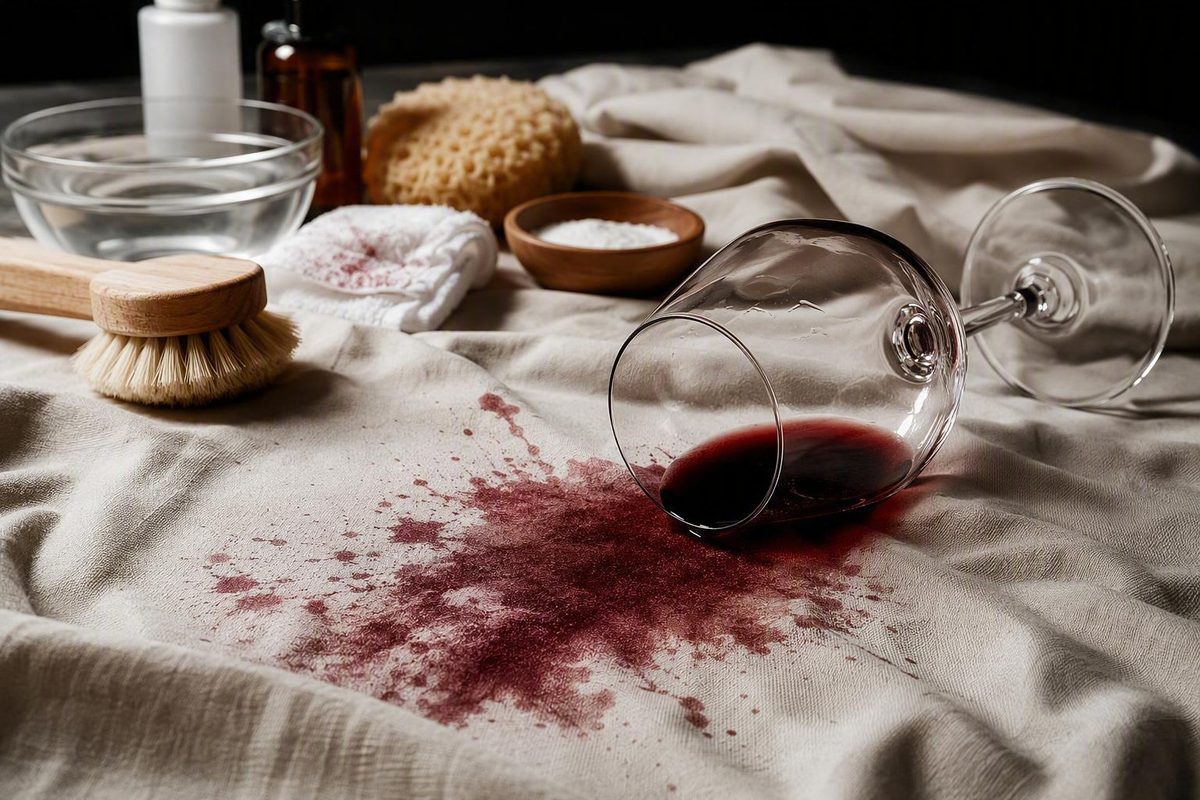
Red wine gets its staining power from two compound classes: tannins and anthocyanins. Tannins are polyphenols that bind to protein fibers (wool, silk) aggressively; anthocyanins are the pigments that shift from red to blue-purple depending on pH. Both are water-soluble when fresh and increasingly resistant after heat, drying, or time beyond 30 minutes.
Immediate response (within 5 minutes)
Blot with a dry cloth — do not rub. Rubbing drives the liquid deeper into the fiber weave and spreads the boundary of the stain. Once you have lifted the surface liquid:
- On cotton or polyester: saturate with cold water, then apply a few drops of dish soap (any surfactant-based formula), work it in with a fingertip, and blot again. Repeat twice. Rinse with cold water — never hot.
- On wool or silk: skip dish soap. Use cold water only, blot, and get to a proper cleaner within 2 hours. Alkaline detergents damage wool’s protein structure.
- On carpet: pour a small amount of plain club soda or cold water to dilute, blot from outside the stain inward, then apply an enzyme cleaner (see below).
After 30 minutes to 12 hours
Once wine begins to dry, water alone is insufficient. The method that works across most fabrics at this stage:
- Mix 1 tablespoon hydrogen peroxide (3% pharmacy grade) with 1 teaspoon dish soap.
- Apply to the stain, let sit for 10 minutes.
- Blot with a damp cloth, working from the edge inward.
- Rinse thoroughly with cold water.
Do not use this mixture on dark or saturated colors — the peroxide will bleach the fabric. Test on an inside seam first.
Set stains (over 24 hours, or dried with heat)
A stain that has gone through a dryer is likely permanent. The heat from a tumble dryer accelerates the binding of anthocyanins to the fiber structure, particularly on cotton. At this point:
- Enzyme cleaners (products containing protease and amylase) can break down the remaining organic matter partially but rarely remove the stain fully.
- Commercial oxi-cleaners (sodium percarbonate-based) soak for 2–4 hours in warm water sometimes reduce visibility by 50–80% on white cotton.
- Professional wet cleaning is worth attempting on garments you care about.
What does not work
- Salt: absorbs surface liquid but does not chemically lift tannins. It is better than rubbing, but worse than immediate cold water.
- White wine poured over red: dilutes the stain slightly but adds its own sugars and acids.
- Hot water at any stage: accelerates the binding reaction. Always use cold.
Surface-specific notes
Grout and concrete: Anthocyanins penetrate grout deeply. Oxi-cleaner paste (sodium percarbonate mixed to a thick paste) applied and left covered with plastic for 30 minutes works well on unsealed grout. Sealed grout usually wipes clean.
Upholstery: Follow the fabric method above but avoid saturating the foam underneath, which is slow to dry and can grow mold. Blot more, apply less liquid.
Tablecloths (linen or cotton): Treat immediately with dish soap and cold water, then soak in an oxi-cleaner solution (1 tablespoon per liter) for 1 hour before machine washing on cold.