 StainList
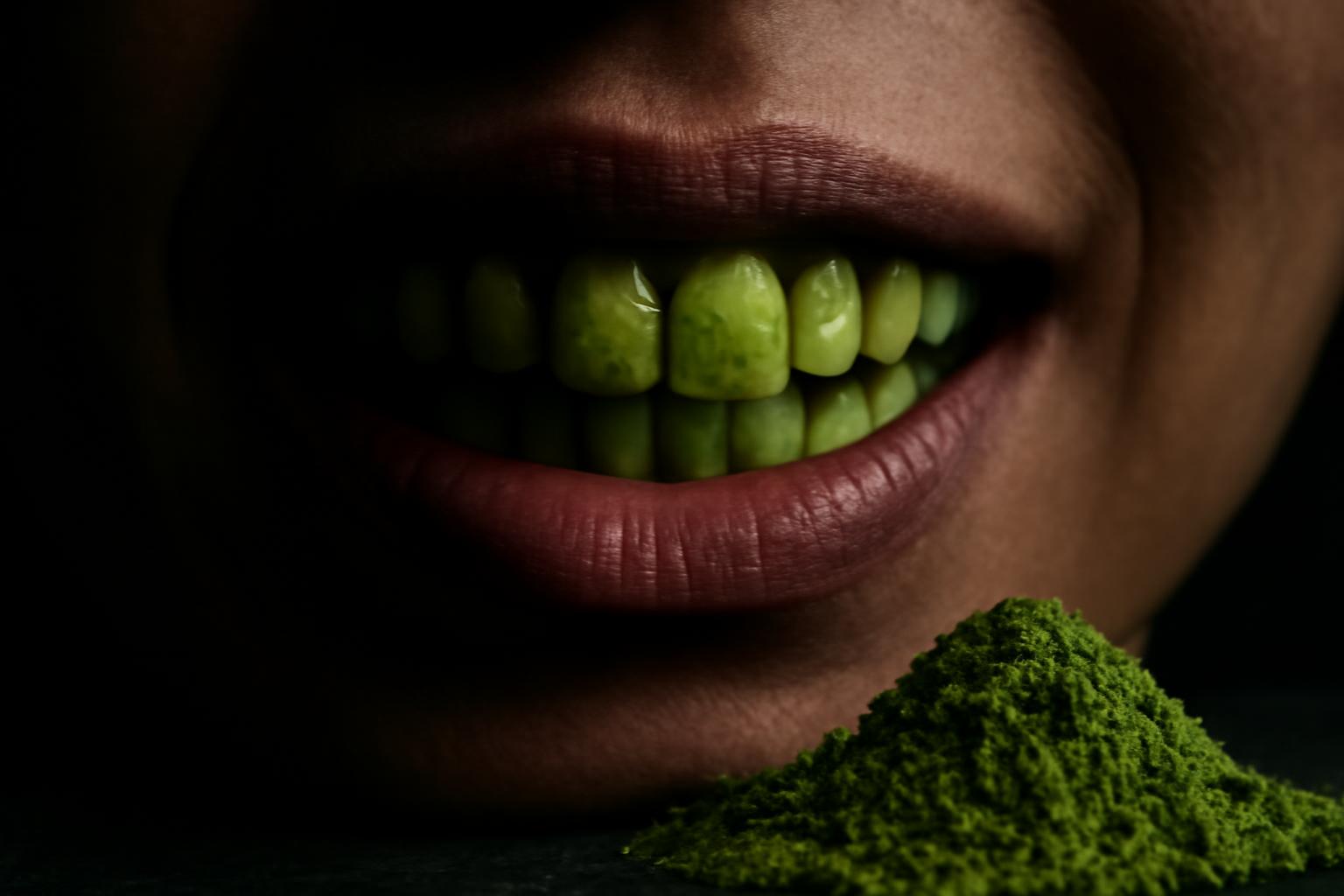
If you’re asking does matcha stain teeth, the safest evidence-based answer is: yes, it can contribute to surface discoloration, but the available guidance suggests it usually stains less than coffee or black tea.
That answer needs some caution. The source set behind this article is limited: it is mostly dental clinic explainers, commercial whitening or tea articles, and a few references to general green-tea research rather than strong matcha-specific clinical trials. So this article is best read as a careful synthesis of available dental commentary, not as a final scientific verdict.
Still, a few themes show up consistently enough to be useful:
- Matcha’s staining risk is usually described as extrinsic, meaning it affects the outside surface of teeth, plaque, or tartar rather than causing deep internal discoloration.
- Several dentists quoted in the source material say matcha may color plaque or film on the teeth more readily than clean enamel.
- Compared with coffee and black tea, matcha is usually framed as a milder stainer.
- Risk seems to rise with frequency, long sipping time, existing buildup, rough enamel, and post-whitening sensitivity.
- At the same time, green tea compounds in matcha are often discussed as potentially helpful for oral bacteria and gum inflammation.
So the practical takeaway is not “matcha is harmless” or “matcha ruins your teeth.” It’s closer to this:
Matcha appears to carry a low-to-moderate risk of surface staining, especially when plaque is present, but that risk is often manageable with good oral hygiene and sensible drinking habits.
Important note: Because the available evidence is limited and partly commercial, this article is not a substitute for dental advice. If you recently had whitening treatment, have persistent discoloration, or have enamel concerns, follow your own dentist’s instructions.
Understanding Matcha and Its Pigments
Matcha is not brewed the same way as regular tea. Instead of steeping leaves and discarding them, you drink finely ground whole green tea leaves suspended in liquid. That matters because the entire leaf powder comes into contact with your mouth and teeth.
Across the available sources, three groups of compounds come up most often in the staining discussion:
- Chlorophyll, the green pigment that gives matcha its bright color
- Tannins, plant polyphenols often associated with staining in tea and coffee
- Catechins, green tea polyphenols more often discussed for health effects, though some sources mention they may also contribute slightly to discoloration
The most commonly cited staining players are chlorophyll and tannins.
Why chlorophyll gets the blame
Chlorophyll is the obvious visual suspect because matcha is vividly green. When dental articles describe discoloration from green tea or matcha, they often describe it as greenish, grayish, or dull-looking rather than the brown tone people associate with coffee.
That does not prove chlorophyll alone is responsible for tooth staining. But it is a plausible explanation for the color profile of the discoloration some sources describe.
Why tannins matter
Tannins matter because they are often described as compounds that bind to proteins and surfaces. In dental articles, that is the basic explanation for why tea and coffee can leave residue behind on the outer surface of teeth.
That still needs careful wording. The source set supports the broad idea that tannins help staining compounds cling more readily, but it does not give a matcha-specific clinical measurement of exactly how much staining they cause.
So the cautious version is:
Matcha contains tannins, and tannins are commonly cited as one reason pigments can stick to plaque or enamel surfaces over time.
Does the powder form make a difference?
Possibly. Several sources suggest that matcha’s fine particulate form may adhere to tooth surfaces more readily than ordinary steeped tea, because you are drinking the powdered leaf itself.
That explanation is reasonable, but it is still better treated as a commonly cited mechanism than a proven quantitative finding. The evidence here says “may,” not “definitely.”
Extrinsic vs. intrinsic staining
This distinction is one of the most useful parts of the discussion.
- Extrinsic stains affect the outer tooth surface, or buildup sitting on it.
- Intrinsic stains happen deeper inside the tooth structure and are much harder to remove.
The available material mostly treats matcha as an extrinsic staining concern. In other words, the main issue appears to be surface discoloration, not deep internal staining.
That is important because extrinsic stains are generally the kind most likely to improve with:
- brushing and flossing
- routine cleanings
- stain-polishing or whitening toothpaste
- professional dental care if buildup is stubborn
So when people notice matcha making teeth look less bright, the problem may often be what is sitting on the teeth, not a permanent change inside the tooth itself.
Does Matcha Actually Stain Teeth?
The most balanced answer is yes, but usually at the surface level, and often not as aggressively as coffee or black tea.
A recurring explanation in the source set is that matcha may discolor plaque or film on the teeth more readily than clean enamel. Some dentists quoted in commercial articles describe this film as developing in the hours after brushing, sometimes giving a rough window of about 4 to 12 hours. Because that figure is repeated in a narrow source base rather than strong independent evidence, it should be treated as a rule of thumb, not a hard clinical timeline.
Even with that caveat, the underlying idea is useful:
teeth that already have buildup seem more likely to show matcha discoloration than freshly cleaned teeth.
That helps reconcile the mixed messaging across sources. Some say matcha does not directly stain teeth in the way coffee does. Others say it can discolor enamel over time. Those positions are not necessarily contradictory if you read them like this:
- On clean, smooth teeth, matcha’s staining effect may be mild.
- On teeth with plaque, tartar, grooves, chips, or rough surfaces, matcha may be much easier to notice.
- With repeated exposure, mild residue can build up enough that teeth start to look stained overall.
What color is matcha staining?
Unlike coffee, matcha is not usually described as leaving obvious brown marks. Several sources instead describe green tea-type staining as more likely to appear:
- greenish
- grayish
- dull
- less bright
That makes sense given the pigment profile, but again, it should be taken as a common description rather than a precisely studied pattern.
Does one cup matter?
The source set does not support a strong claim that one serving of matcha will or will not stain teeth. What it does support is a broader pattern:
- occasional exposure appears lower risk
- frequent exposure appears higher risk
- all-day sipping seems worse than drinking one serving in one sitting
Some articles repeat a practical threshold of more than four cups per day as a point where discoloration becomes more noticeable. That number should be treated cautiously. It appears in the source set as repeated guidance, not as a well-established clinical cutoff.
So rather than thinking in strict cup counts, it is more accurate to think in terms of contact time and repetition.
The best direct answer
If you want the shortest honest answer to the main question, it is this:
Matcha can stain the outer surfaces of teeth, especially if plaque or residue is present, but the available evidence suggests that its effect is usually milder than coffee or black tea.
Matcha vs. Coffee, Black Tea, and Other Drinks
For many readers, the real question is comparative: if matcha is part of a switch away from coffee, is it likely to be better or worse for your smile?
Based on the available dental commentary, matcha is usually presented as less staining than coffee and less staining than black tea.
That comparison is more defensible than claiming matcha is stain-free.
1. Matcha is usually described as a milder stainer than coffee
Coffee is repeatedly treated in the source set as a heavy staining beverage because it combines:
- dark chromogens
- tannins
- acidity
Matcha still contains staining compounds, but several dental sources describe it as less severe and more manageable than coffee.
Some of the articles explain that by pointing to matcha’s green pigments rather than dark brown ones, while others emphasize that matcha is often considered less acidic.
2. Matcha is usually placed below black tea too
Black tea is also consistently framed as more staining than matcha. In the provided articles, the reason is usually that black tea is treated as having higher tannin content and producing more obvious dark discoloration.
This is one of the clearer comparison points in the source set:
coffee and black tea are usually presented as stronger stainers than matcha.
3. The acidity comparison is suggestive, not exact
Some sources cite broad pH ranges that place tea around 5 to 7 and coffee around 4.85 to 5.10. Those numbers vary by preparation and are not strong enough to use as exact rules, but the directional point is consistent:
matcha is often described as less acidic than coffee.
That matters because more acidic drinks may leave enamel temporarily more vulnerable to pigment sticking. The cautious conclusion is not “matcha protects enamel because of pH,” but rather:
if matcha is usually less acidic than coffee, that may be one reason it is often seen as the gentler staining option.
Matcha vs. brewed green tea
This is where the evidence gets less tidy.
Across the source set, you can find three different positions:
- matcha and green tea are broadly similar because both contain tannins and green pigments
- matcha may stain a bit differently because its powder form increases direct contact
- a few sources suggest matcha may even stain less than regular green tea
That last claim is the weakest of the three. The source set does not support a confident ranking between matcha and brewed green tea in every situation.
The fairest summary is:
- both can stain
- both are usually treated as milder than coffee or black tea
- the difference between them is probably less important than your hygiene and drinking pattern
Matcha vs. white tea
White tea is often presented in dental articles as a lower-visibility staining option than green or black tea. The reasoning is usually that its stains are lighter and less noticeable.
That does not mean white tea is stain-free. It just tends to be placed below matcha, green tea, and black tea when visible discoloration is the main concern.
Matcha vs. soda
Soda is a different kind of comparison. In pure pigment terms, some pale sodas may not stain the same way matcha does. But several sources still frame soda as worse for teeth overall because of:
- acidity
- sugar
- plaque-friendly conditions
So if the question is cosmetic staining alone, the comparison is mixed. If the question is broader dental impact, the source set often treats soda as the more concerning habit.
Bottom line on comparisons
A cautious ranking from the source material would look something like this:
- Coffee and black tea: usually higher staining risk than matcha
- Matcha and brewed green tea: both can stain; relative risk is less certain
- White tea: often described as lighter-staining
- Water: no staining
- Soda: a separate concern because acid and sugar can be worse for teeth overall
That puts matcha in the middle: not neutral, but usually not the worst offender.
The Science of Staining Mechanisms
The mechanism discussion is where many articles sound overly certain, so it helps to keep two ideas in mind at once:
- there are plausible explanations
- the matcha-specific evidence base is still limited
With that in mind, here is the most careful version of how staining is thought to happen.
Tannins: the “stickiness” explanation
Tannins are polyphenols found in tea and coffee. In both general tea-stain guidance and matcha-specific articles, tannins are described as compounds that can bind to proteins and surfaces.
On teeth, that means they may help pigments cling to:
- the outer enamel surface
- plaque
- the thin film that develops on teeth between cleanings
This is why tannins show up so often in stain discussions. The key idea is not simply “tannins are dark,” but that they may help other compounds stay attached.
Chlorophyll: the color explanation
Chlorophyll is matcha’s major green pigment. Dental articles often point to chlorophyll when explaining why green tea-related discoloration can look green-gray instead of brown.
That explanation is plausible, but it should still be framed carefully. The evidence supports chlorophyll as a likely contributor to the kind of color people notice, not as a fully settled biochemical account of tooth staining.
Powder contact may increase residue
Because matcha is consumed as a fine powder rather than a simple infusion, some sources suggest its particles may linger on tooth surfaces more easily than steeped tea alone.
Again, this is best understood as a possible reason matcha behaves a little differently from ordinary green tea—not as strong proof that it stains dramatically more.
Plaque is likely part of the story
One of the most repeated explanations in the source pack is that matcha often seems to color plaque or film on the teeth.
That is useful because it shifts the question from “Is matcha uniquely dangerous?” to “What surface is matcha landing on?”
If plaque is present, pigments may be easier to see. If the surface is freshly cleaned and smooth, the effect may be less noticeable.
Some of the dental commentary also says plaque can harden into tartar in about a day if not removed. Like other time-based claims in this topic, that should be read as rough practical guidance rather than a precise universal clock. The broader point is better supported than the exact number:
the longer pigmented buildup sits on the teeth, the harder it may be to remove at home.
Surface roughness and porosity increase risk
Several sources point out that not all tooth surfaces stain equally. Matcha is more likely to show up on teeth that have:
- rough areas
- grooves or pits
- chips or cracks
- existing tartar
- recent whitening-related sensitivity or temporary porosity
This matters because visible staining is not always just about the drink. It can also point to retention areas where pigments and plaque are easier to trap.
Why matcha is usually described as slower than coffee or black tea
The same basic staining ideas apply to coffee and black tea too, but the source set usually portrays those drinks as more aggressive because they combine:
- darker pigments
- substantial tannins
- often more acidity, especially with coffee
Matcha still contains staining compounds, but it is typically described as slower, lighter, or easier to manage.
That does not mean “no staining.” It means lower apparent intensity in many everyday situations.
Oral Health Benefits That Offset Risks
One reason this topic feels confusing is that the two main claims are not mutually exclusive:
- matcha can contribute to staining
- matcha may also offer some oral-health benefits
The benefit side usually comes from green tea catechins, especially EGCG. In the source set, those compounds are linked to reduced growth or adherence of certain bacteria associated with gum disease and decay.
That is still not a reason to treat matcha as a dental treatment. But it does mean the conversation is more nuanced than “green drink equals bad for teeth.”
What the source set suggests green tea compounds may do
Several sources describe green tea catechins as potentially helping to:
- reduce certain oral bacteria
- limit bacterial adherence
- reduce gingivitis-related inflammation
- support fresher breath
- improve resistance to acid-related damage or dental caries in some contexts
Because these points come largely from green tea literature and dental summaries—not strong matcha-specific clinical evidence—they are best stated as possible oral-health upsides, not guaranteed outcomes.
Does matcha strengthen enamel?
This is one of the claims most likely to be overstated online.
A few sources in the pack suggest that green tea or matcha compounds may improve the mouth’s resistance to acid or help preserve enamel over time. That is a much safer claim than saying matcha rebuilds or restores enamel.
So the careful phrasing is:
Some sources suggest green tea compounds may support the mouth’s resistance to bacteria and acid-related damage, which could help enamel preservation, but that is not the same as reversing wear or preventing all staining.
Could the benefits outweigh the cosmetic downside?
Some dentists quoted in the source set say yes, especially for people with good hygiene. But that is still an expert opinion in commercial articles, not a universally established finding.
A cautious interpretation would be:
- if you drink plain matcha
- if you do not sip it all day
- if you rinse and brush regularly
- if you keep plaque under control
then the cosmetic staining risk may be small enough that many people consider the trade-off acceptable.
What the benefit discussion does not support is turning sugary café drinks into health foods. The oral-health upside often described for green tea should not automatically be assumed for a sweetened matcha latte consumed slowly over hours.
The balanced health view
The most supportable conclusion is this:
Matcha is not stain-free, but it may offer some oral-health advantages associated with green tea compounds. For people with solid hygiene, the staining risk often appears manageable rather than severe.
Proven Prevention Strategies for Matcha Drinkers
The heading says “proven,” but the evidence here is better described as common low-risk dental advice than as matcha-specific clinical proof. Even so, these are the most consistently recommended habits in the source set.
1. Rinse with water right after drinking
This is the simplest and most repeated recommendation.
Rinsing with plain water may help remove:
- lingering pigment
- powder residue
- acids or sugars from add-ins
It is not a substitute for brushing, but it is a practical first step—especially when you are away from home.
2. Use a straw for iced matcha or lattes
For iced drinks, smoothies, or café-style lattes, a straw may reduce contact with the front teeth.
This is not perfect. Even the whitening-aftercare guidance in the source set notes that a straw reduces contact rather than eliminating it. But for people who drink iced matcha often, it is a reasonable exposure-limiting habit.
3. Don’t linger over the drink
This may be the most important behavior change in the article.
The sources repeatedly suggest that drinking pattern matters. One serving finished in one sitting exposes teeth once. Nursing the same drink over hours keeps reapplying pigment to the teeth again and again.
So if staining is your concern, it is generally better to drink matcha, rinse, and move on than to sip it all morning.
4. Wait a bit before brushing
Several dental articles recommend waiting around 30 minutes after tea or coffee before brushing. The rationale is that brushing immediately after an acidic drink may be harsher on the teeth.
Because matcha is often described as less acidic than coffee, the exact waiting time should not be treated as matcha-specific law. But as a cautious routine, it is reasonable:
- drink the matcha
- rinse with water
- wait a short while
- brush normally
If your own dentist has given different instructions, especially after whitening or for sensitive enamel, follow that advice instead.
5. Keep up with brushing and flossing
If staining often shows up first on plaque, then plaque control is the main defense.
The most consistently supported basics are:
- brush twice daily with fluoride toothpaste
- floss daily
- clean carefully around the gumline and between teeth
- do not let residue sit for long periods
A whitening toothpaste may help with mild surface stain maintenance, though the source set does not support treating it as a guaranteed fix.
6. Keep intake moderate
Some articles repeat the suggestion to stay under four cups per day. Because that number is not strongly established, it is better treated as rough common advice rather than a medical threshold.
The stronger principle is simple:
more frequent exposure means more opportunity for surface discoloration.
7. Milk may help somewhat, but it is not a shield
A few sources suggest milk could reduce staining because casein proteins may bind tannins, making them somewhat less likely to stick.
That explanation is plausible, but it is not strong enough to promise a major effect. The safe version is:
- milk may reduce staining somewhat
- it does not eliminate staining risk
- sweetened lattes may still be worse overall if they add sugar and encourage prolonged sipping
So milk is at most a partial modifier, not a solution.
8. Stay current with dental cleanings
Professional cleanings matter most if you:
- drink matcha daily
- build tartar easily
- have rough enamel or retention areas
- notice staining near the gumline or between teeth
Many surface stains are much easier to manage when plaque and tartar are removed professionally.
A realistic anti-stain routine
If you want the most practical version of all of this, it is:
finish the drink, rinse with water, avoid all-day sipping, brush later rather than immediately, floss regularly, and keep plaque from building up.
Post-Whitening and High-Risk Scenarios
Even if matcha is milder than coffee in many situations, there are times when it makes sense to be more cautious.
After teeth whitening
Several dental clinic sources advise avoiding pigmented drinks such as matcha for about 48 hours after professional whitening because teeth may be temporarily more porous and more prone to picking up color.
That 48-hour window is better understood as common dental aftercare guidance from the provided sources, not as a universal law for every whitening method. If your dentist gave a different timeline, use theirs.
The practical takeaway is still clear:
right after whitening is not the ideal time to test whether matcha stains you.
Does a straw solve the problem after whitening?
Not fully.
The source set says a straw may reduce direct contact, but it does not completely eliminate it. That is especially relevant after whitening, when even a lighter-staining drink may be a poor choice for a short period.
If you already have buildup, grooves, or rough spots
Some dentists quoted in the sources say visible matcha staining can act as a clue that something else is going on, such as:
- plaque buildup
- tartar
- inconsistent brushing or flossing
- grooves, chips, or cracks
- rough areas that trap residue
That does not mean matcha is harmless. It means matcha may sometimes highlight an existing retention problem instead of acting like an unusually powerful stain by itself.
Sweet lattes are a separate issue
The source material repeatedly distinguishes plain matcha from sweetened café drinks.
A sugary matcha latte may involve:
- more sugar exposure
- longer sipping time
- more plaque-friendly conditions
- less of the clean “tea-only” profile people associate with matcha
So someone asking whether matcha is good or bad for teeth really has to ask which matcha habit they mean.
When to book a cleaning
If you notice discoloration that:
- keeps returning
- sits near the gumline
- looks patchy
- does not improve with ordinary home care
then a professional cleaning may be the next logical step. Persistent surface staining can be a sign that buildup or roughness is holding onto pigment in places brushing does not fully reach.
Removing Existing Matcha Stains
If matcha has already dulled your smile, the encouraging news is that the source set mostly treats this as an extrinsic, surface-level issue—the kind that is often manageable.
Start with the basics
For mild discoloration, the first steps are simple:
- brush twice a day
- floss daily
- rinse after drinking matcha
- keep plaque from sitting on the teeth
- consider a whitening toothpaste if your teeth tolerate it
These steps are most useful when the stain is superficial and relatively recent.
Whitening toothpaste can help, but only within limits
Over-the-counter whitening toothpastes are generally described as maintenance tools for surface stains. They may help polish away mild discoloration, but the source set does not support expecting dramatic results from them alone.
So they are best used for:
- maintenance
- small touch-ups
- preventing gradual buildup from becoming more obvious
not for fixing heavy staining by themselves.
Don’t brush harder
Aggressive scrubbing is a poor trade. It can irritate gums and wear on enamel without solving stubborn discoloration.
A better approach is gentle, consistent cleaning, not force.
Professional cleaning is often the best next step
If the discoloration is tied to tartar or rough areas, a dental hygienist can usually do far more than home brushing.
A professional cleaning may be especially helpful if:
- stains cluster near the gumline
- the color returns quickly
- the teeth feel rough
- you have not had a cleaning in a while
Whitening may come after cleaning, not before
If cleaning removes buildup but your teeth still look darker than you want, dentist-guided or professional whitening may help with the remaining cosmetic discoloration.
The order matters:
clean first, whiten second is usually more sensible than whitening over plaque and tartar.
Is matcha staining reversible?
Often, yes—if it is truly extrinsic.
That does not always mean it disappears quickly or fully with home care alone. The result depends on things like:
- how long the discoloration has been there
- whether it is on plaque, tartar, or enamel
- how rough or smooth your teeth are
- how consistent your oral hygiene has been
So the realistic message is:
Most matcha-related discoloration appears manageable, but stubborn buildup may need professional cleaning or whitening.
Before the FAQs, the bottom line is worth stating plainly one more time: matcha can stain teeth, but the available evidence suggests it usually does so at the surface level, often less aggressively than coffee or black tea, and with a strong hygiene component.
Does matcha stain more than coffee?
Usually, no.
Across the provided dental commentary, coffee is more often treated as the stronger stainer because it combines dark pigments, tannins, and more acidity. Matcha still has tannins and pigments, so it is not stain-free, but it is usually described as milder and easier to manage than coffee.
That said, individual habits can narrow the gap. A sweet iced matcha latte sipped for hours may still create a noticeable staining routine.
Does milk in matcha lattes prevent staining?
Not completely.
Some sources suggest milk may help a bit because casein proteins may bind tannins, which could reduce how readily they stick. But the effect is not strong enough to call it prevention.
Milk also does not solve the bigger issues that often come with lattes:
- sugar
- longer drinking time
- repeated exposure
So milk may be a partial helper, not a free pass.
How soon after matcha should I brush?
A cautious routine from the source set is to rinse soon after drinking and brush later rather than immediately.
Several articles mention waiting about 30 minutes before brushing. Because that guidance comes from general dental advice rather than strong matcha-specific evidence, it is best treated as a sensible habit, not a strict rule.
If you cannot brush soon, rinsing with water is still worthwhile.
Is matcha staining permanent?
Usually, not if it is extrinsic.
The provided sources mostly frame matcha discoloration as a surface stain affecting plaque, tartar, or the enamel exterior. That kind of staining often improves with brushing, flossing, whitening toothpaste, and professional cleaning.
What makes it seem permanent is often buildup. If stain is trapped in tartar or rough areas, home care may not be enough until a dentist or hygienist removes it.
Matcha vs. green tea: which stains worse?
There is no clean consensus in the source set.
The safest answer is that both can stain, and both are generally treated as less aggressive than coffee or black tea. Matcha may behave a little differently because you drink the whole powdered leaf, which could increase surface contact. On the other hand, some sources suggest matcha may have fewer tannins than brewed green tea.
Because the evidence is mixed and limited, the practical answer is:
either one can discolor teeth, and your brushing, plaque control, and sipping habits probably matter more than the difference between them.
If you want the most publication-safe takeaway from all of this, it is simple: matcha is not stain-proof, but it also is not usually presented as a worst-case beverage. For most people, the smartest move is not to avoid matcha entirely—it is to drink it in a way that gives stains less chance to stick.