 StainList
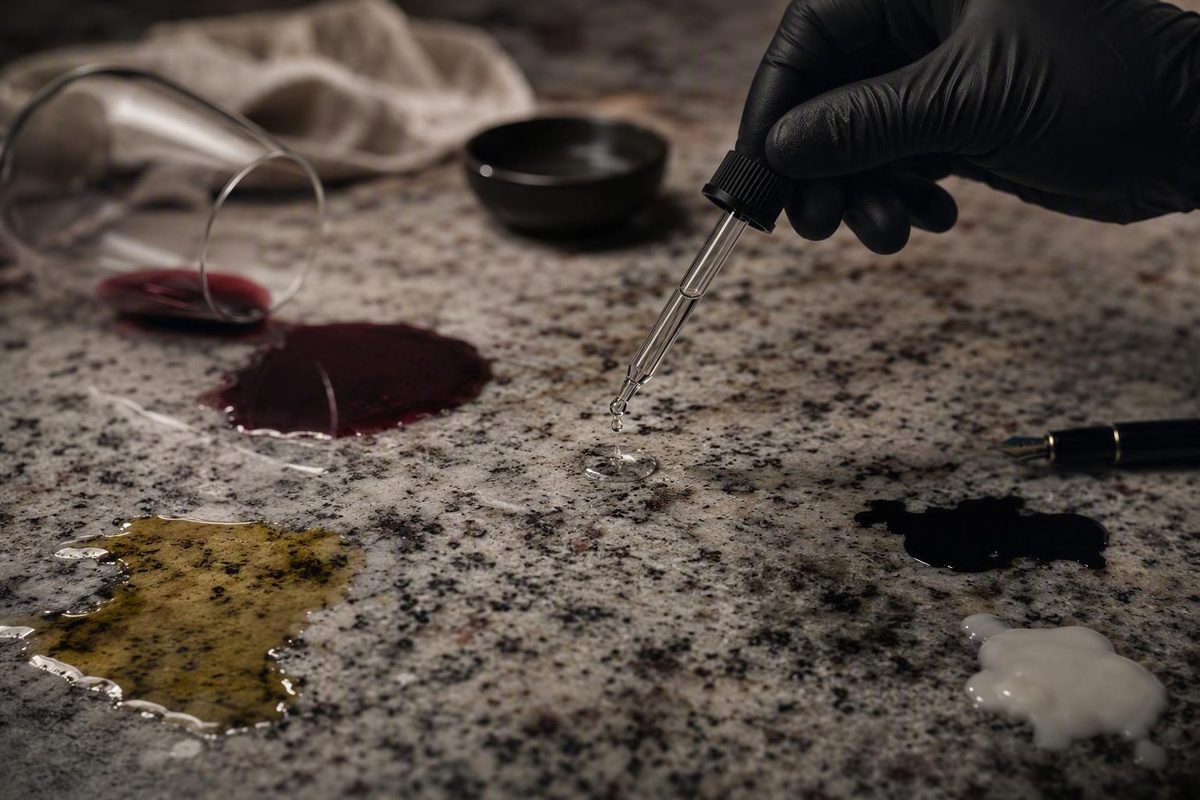
Let the stone’s absorption—not the calendar—guide you.
The short answer: many granite counters need sealing, but not all
Many granite countertops benefit from sealing, but the requirement is not universal. A countertop that readily absorbs liquid may need treatment; a naturally dense, factory resin-treated, or effectively sealed countertop may gain little from another application.
Granite is not uniform. Permeability can vary between stone types and even between slabs sold under the same color or variety name. Color offers only a rough clue, so it cannot replace testing the actual installed slab (guidance on granite permeability and sealing).
Whether a particular countertop needs sealer depends on several variables:
- The slab’s inherent porosity
- Factory resin treatment
- Sealer applied during fabrication or installation
- The condition of existing protection
- The surface finish
- Use and spill patterns
- Cleaning products and methods
- Grease, deposits, residue, stains, or damage that could affect testing
A newly installed countertop is not necessarily untreated. Granite may be resin-treated or sealed during fabrication or installation. Ask the fabricator what was applied, when it was applied, and which maintenance products are compatible. The polished face may also behave differently from cut edges or sink openings that received different finishing or treatment (fabricator guidance on factory treatment and cut surfaces).
Do not decide from color alone. Some dark granites absorb relatively little, and some light granites absorb more readily, but exceptions exist. A variety name likewise does not guarantee a particular absorption rate.
The practical decision rule is:
Clean and dry the countertop, test several locations with water, and seal only if the surface shows renewed absorption.
If water remains on the surface without temporarily darkening the granite, there is no immediate evidence that another application will help. If the tested area darkens or visibly absorbs water, sealing may be beneficial.
That rule has an important limit: a household water test screens water absorption only. It does not establish resistance to cooking oils, wine, coffee, or every other staining liquid. Do not improvise an oil or chemical test on an installed countertop without a reliable, finish-safe procedure. If kitchen oil resistance matters—as it usually does—verify it through the sealer label rather than assuming that water repellency guarantees oil repellency.
What granite sealer does—and what it cannot do
A penetrating granite sealer is a preventive treatment. It enters accessible pores and slows the movement of liquids into the stone. Depending on the formulation, it may resist water-based liquids, oil-based liquids, or both.
Slower absorption gives you more time to clean up a spill. It does not create an impenetrable shield. Sealed granite can still stain if a liquid remains long enough, coverage is uneven, or the product is not formulated to resist that substance. Commercial stone-care guidance accordingly describes sealer as a way to reduce absorption and buy cleanup time—not make granite completely stain-proof (sealer performance and limitations).
A penetrating sealer does not:
- Remove an existing stain
- Repair a chip, crack, or open seam
- Erase scratches
- Restore a worn or damaged finish
- Remove hard-water deposits
- Correct heat damage
- Make granite maintenance-free
- Guarantee resistance to every chemical exposure
Penetrating sealers work within the stone rather than forming an intentional wear layer on top. They therefore do not provide general surface protection against scratching or etching (technical distinctions among stone sealers).
If the counter already has a stain, diagnose and treat that problem before resealing. Unexplained haze, dullness, tackiness, or residue should also be identified before another product is added.
Even after successful sealing, wipe up oil, wine, coffee, sauces, and strongly colored liquids promptly. Think of sealer as extra response time, not permission to leave spills.
How to perform a safe water-absorption test
A water test is a practical household screen for deciding whether granite may benefit from sealing. The method is based primarily on commercial stone-care and fabricator guidance; the supplied evidence does not establish an independently validated universal test duration.
The test also answers a narrow question: Is water entering this area under these conditions? It does not measure formal porosity, identify the existing sealer, or prove resistance to oil-based stains.
1. Clean the countertop
Remove crumbs, grease, deposits, and cleaner residue using a mild method compatible with natural stone. Do not test while soap, polish, disinfectant, or another product remains on the surface. Residue may change how water spreads or beads.
If the finish is honed, leathered, unusually textured, enhanced, or previously coated, ask the fabricator or product manufacturer whether the same interpretation is appropriate. The available guidance does not establish separate household protocols for every finish.
2. Let the stone dry completely
The counter should be dry to the touch and free of lingering moisture from cleaning.
There is no universal drying period for every counter. Room conditions, airflow, finish, stone absorption, and the amount of water used during cleaning all matter. Wait until the surface has returned to a uniform appearance.
3. Select several locations
Test more than one convenient spot. Include:
- A frequently used area near the sink
- A location near the stove or main food-preparation zone
- A lower-use area for comparison
You may also inspect a seam, exposed edge, or sink cutout separately. These areas can have a different finish or treatment history, but that does not mean they automatically require sealer.
4. Apply clean water
Place a quarter-size drop or small puddle of clean water at each location, a quantity used in commercial test guidance (water-drop test procedure).
Use plain water only. Do not add vinegar, lemon juice, cleaner, oil, or another chemical.
About 10 to 15 minutes is a useful practical screening period, but it is not a scientifically definitive cutoff. Some commercial instructions use approximately five minutes (five-minute commercial test guidance).
Other commercial guidance extends the observation period to as long as 30 minutes, illustrating why the result should be treated as a comparative household screen rather than a formal material classification (30-minute commercial water test).
5. Wipe and inspect
Wipe each location completely dry. Examine the test areas under consistent lighting and from the same angle.
Look for:
- Temporary darkening beneath the water
- A dark ring around the puddle
- Visible absorption
- Spreading compared with the other test locations
- A difference between high-use and low-use areas
6. Interpret the result cautiously
Water remains on the surface with no darkening: There is no immediate evidence that more sealer is needed. The granite may be naturally dense, effectively sealed, or both. The test cannot distinguish among those possibilities.
The granite temporarily darkens or visibly absorbs water: Water entered the tested area. After the moisture evaporates and the original appearance returns, sealing may be beneficial.
Different locations produce different results: Wear, contamination, treatment, finish, and inherent absorption can vary across one countertop. Clean, dry, and retest the anomalous area before deciding what to do.
Temporary darkening indicates liquid entry; it does not necessarily mean the water created a permanent stain.
Avoid routine lemon-juice or acid-based porosity tests on an installed countertop. Acid introduces a separate possibility of finish reaction or damage and can confuse a liquid-absorption question with a chemical-sensitivity problem. Plain water is sufficient for this initial screen.
Use the test result as a decision tree
Use the overall pattern—not one isolated droplet—to choose the next step.
If water stays on the surface with no darkening
Wipe the counter dry and continue normal care. Do not reseal merely because a reminder appeared on your calendar.
Passing the test does not prove that sealer is present. The granite may simply be dense. The practical conclusion is still the same: another application is unlikely to provide much immediate benefit.
Remember that passing a water test does not prove resistance to cooking oil or other staining substances. It only indicates that water did not visibly enter during the test period.
If only one high-use area darkens
A location near the sink, stove, or primary work zone may behave differently from a lightly used section.
Before treating it:
- Clean the area without leaving residue.
- Let it dry completely.
- Repeat the water test.
- Compare the result with a lower-use location.
If the same area repeatedly absorbs while the rest does not, local wear, contamination, finish differences, or treatment history may be involved.
If several areas darken
If several clean, dry areas absorb water within the practical observation period, the countertop is a reasonable candidate for sealing.
First identify any existing treatment as far as possible. Then choose a compatible penetrating product labeled for natural granite countertops. If the previous product is unknown, consult the prospective manufacturer before combining treatments.
If the granite darkens almost immediately
Rapid darkening means that the tested area is relatively absorbent under those conditions. It does not establish a formal porosity grade or dictate a universal coat count.
The required application method still depends on the product, finish, existing treatment, and how readily the surface accepts sealer. Follow the selected product’s instructions rather than assigning coats from the water-test time alone.
If the result is ambiguous
Cleaner residue, grease, hard-water deposits, polish, or lingering moisture can distort the result. Clean the surface again using a compatible method, let it dry thoroughly, and repeat the test.
Do not interpret every dark area as new absorption. A pre-existing stain, mineral variation, seam shadow, or moisture below an edge can look similar.
If recently sealed granite still absorbs
Do not automatically apply another coat. Check:
- Whether the label-stated cure period has passed
- Whether the counter was completely dry before treatment
- Whether the product was intended for granite
- Whether it was applied and removed according to its instructions
- Whether the visible mark may be an older stain or finish issue
- Whether an unidentified coating or residue may be present
These are possibilities to investigate, not reliable homeowner diagnoses. If the existing treatment is unknown or the results remain contradictory, contact the product manufacturer or a qualified stone-restoration professional.
Professional assessment is also the safer choice when the countertop has persistent haze or tackiness, a peeling film, stubborn staining, chips, cracks, loose seams, or an unusual or valuable finish.
How often granite should be tested or resealed
Granite should not automatically be resealed every year. Renewed absorption is a more useful trigger than elapsed time.
Commercial calendar recommendations vary too widely to serve as a dependable rule for an individual counter. One product guide suggests intervals as short as 6 to 12 months, while also saying frequency varies by stone and test result (commercial sealing-frequency guidance).
Other industry-oriented guidance reports manufacturer recommendations ranging from yearly applications to intervals of five to ten years (overview of manufacturer resealing intervals). These are commercial recommendations rather than independently validated schedules.
How long useful protection lasts can depend on:
- The slab’s absorption
- The sealer formulation
- Compatibility with the stone and prior treatment
- Surface preparation and application quality
- Countertop use
- Spill frequency and duration
- Cleaning products and techniques
- Surface finish and condition
- Uneven wear between work zones
A heavily used area may begin absorbing before a lower-use section on the same slab. One counter can therefore have different maintenance conditions across its surface.
Periodic retesting is a sensible monitoring habit, but the supplied evidence does not support one mandatory frequency for every home. Treat a seller’s suggested interval as a reminder to inspect and test—not proof that another coat is due.
Keep a simple countertop record:
| Record | What to note |
|---|---|
| Test date | When you performed the water test |
| Locations | Sink, stove, prep zone, and comparison area |
| Result | No darkening, spreading, absorption, or ambiguous |
| Approximate time | When visible darkening began |
| Surface condition | Clean, dry, recently treated, or deposits present |
| Sealer | Product name and type, if known |
| Application date | When treatment was completed |
| Cure period | The label-stated period before use or water exposure |
| Follow-up | Result after the full cure period |
Over time, this creates a countertop-specific maintenance history that is more useful than a generic annual schedule.
Choosing an appropriate granite sealer
If testing confirms water absorption, favor a penetrating or impregnating sealer specifically labeled as compatible with natural granite countertops.
Penetrating products are intended to work within accessible pores rather than create an intentional surface film. This generally makes them more suitable for preserving the existing feel and finish of kitchen granite.
For a kitchen, confirm that the label addresses both:
- Water-based staining liquids
- Oil-based staining liquids, including cooking oils and greasy foods
Do not assume that every penetrating or water-repellent product also resists oil. Technical stone guidance distinguishes water repellency from oil repellency and specifically advises checking for oil protection on natural-stone kitchen counters.
Also distinguish among the following categories.
Natural-look penetrating sealer: Intended to reduce absorption while minimizing deliberate changes to color and sheen.
Enhancing sealer: Intended to deepen, enrich, or darken the stone’s appearance. Use one only when that change is wanted, and patch-test it first.
Topical coating: Forms a film on the surface. Depending on the product and conditions, it may alter sheen, wear unevenly, trap moisture, or require removal before another topical coat is applied.
Do not categorically rank water-based and solvent-based products. Formulations vary. The appropriate choice depends on compatibility, finish-change risk, ventilation requirements, intended use, and curing instructions.
Identify the existing sealer or coating before combining products whenever possible. If that cannot be done, ask the prospective manufacturer whether its product can be used safely under those conditions.
Generic guidance cannot replace the selected product’s current label and safety documentation. Those materials should control:
- Surface compatibility
- Preparation
- Ventilation and personal protection
- Application tools and coverage
- Dwell time
- Permitted coat count
- Excess removal
- Drying and curing
- Restrictions on water exposure or food-preparation use
A cautious DIY sealing process
DIY sealing can be reasonable when the countertop is confirmed granite, the finish is undamaged, no unknown coating is apparent, and the homeowner can follow the selected product’s directions exactly.
1. Confirm that sealing is warranted
Perform the water test first. Do not begin merely because the counter is old or has not been sealed during your ownership.
If you inherited the counter, ask the previous owner, installer, or fabricator about prior treatment when practical. Stop if you find an unidentified glossy film, peeling layer, or recurring tackiness.
2. Clear and inspect the surface
Remove appliances, containers, cutting boards, racks, and decorative items. Inspect the granite in good light.
Pause the project if you find:
- A stain requiring separate treatment
- Cracks, chips, or loose seams
- Persistent unexplained dullness
- A cloudy or sticky layer
- A peeling or flaking coating
- Heavy mineral deposits
- An unusual finish you are not confident treating
Sealer will not correct these conditions.
3. Clean without leaving contamination
Remove grease, dirt, deposits, and cleaner residue. Use a mild method compatible with natural stone and the sealer manufacturer’s preparation instructions.
Do not improvise with acidic, abrasive, or harsh products. If the surface cannot be cleaned without uncertainty about the finish or prior coating, seek professional guidance.
4. Allow complete drying
Do not seal damp granite. Moisture may interfere with even penetration and curing or make the stone appear unevenly dark.
Drying time varies with room conditions, airflow, finish, absorption, and the amount of water used. Do not take a drying period from another manufacturer’s guide and apply it universally.
5. Patch-test the product
Apply the sealer in a small, inconspicuous area exactly as directed. After the stated drying or curing period, inspect for:
- Unwanted darkening
- A change in sheen
- Haze or streaking
- Tackiness
- Uneven color
- An unexpected reaction with an existing treatment
An enhancing sealer is intended to change color. A natural-look penetrating product should not be assumed to be invisible until the patch test confirms an acceptable result.
6. Follow the label and safety documentation
Product formulations differ, and the documentation for the actual sealer—not generic advice—should determine the precautions.
7. Apply evenly for the labeled dwell time
Work in manageable sections and apply the product only by the method stated on its label.
Do not borrow a dwell time, coverage rate, or coat count from another sealer. Dense granite may accept little product, while a more absorbent surface may accept more. The manufacturer’s directions determine whether another application is permitted.
8. Remove all excess as directed
Excess removal is the critical finishing step. Penetrating sealer is meant to work within accessible pores, not cure as residue on polished granite.
Wipe or buff away excess within the product’s working period. Inspect the surface from several angles under good light. Sealer left on the surface can dry into haze, streaks, smears, dull areas, or tacky patches (application cautions for penetrating sealer).
If the residue begins to drag, smear, or become sticky, stop and consult the product instructions or manufacturer. Do not add more sealer as an improvised remedy.
9. Observe the full cure period
Keep the countertop dry and out of service for the period stated on the product label. Generic curing recommendations differ significantly and should not override the directions for the selected formulation.
Observe any label restrictions concerning water exposure, appliances, food preparation, or ventilation during curing.
10. Retest after curing
After the full cure period has passed, repeat the water test in the documented locations and record the result.
If the stone still absorbs, do not assume that unlimited additional coats are the answer. Ask the manufacturer to review product suitability and application conditions, particularly if prior treatment is unknown.
Professional help is the safer choice for valuable stone, unusual finishes, unidentified coatings, significant stains, damaged surfaces, or a previous application that produced haze, tackiness, or uneven color.
Avoid over-application and protect the result
More sealer does not automatically mean more protection. If the countertop already resists absorption, additional product may have little pore space to enter. Unremoved material can become residue or buildup instead of useful protection.
Avoid these common mistakes:
- Sealing a counter that still passes the water test
- Applying product over damp stone
- Failing to remove grease from cooking areas
- Sealing over hard-water deposits
- Leaving cleaner, polish, or soap residue
- Covering an unidentified stain
- Assuming every granite sealer resists cooking oil
- Skipping the patch test
- Using another product’s dwell, coat, or cure instructions
- Letting excess penetrating sealer dry on the surface
- Applying another coat to fix haze or tackiness
- Returning the counter to use before curing is complete
Cured excess, contamination, or interaction with an existing treatment may be involved. The appropriate remedy depends on the specific sealer and finish, so consult the manufacturer or a qualified stone-care professional.
For routine care, use mild methods compatible with natural stone and the existing treatment. Avoid relying on acidic, abrasive, or harsh cleaners that the fabricator or sealer manufacturer has not approved. Wipe spills promptly even when water continues to bead.
A compact maintenance checklist:
- Identify any prior resin, sealer, enhancer, or topical coating.
- Clean and dry the countertop completely.
- Test several locations, including high-use and comparison areas.
- Remember the test’s limit: it screens water absorption, not oil resistance.
- Seal only after absorption is confirmed.
- Choose a compatible penetrating product labeled for the required water and oil resistance.
- Patch-test for color, sheen, haze, and tackiness.
- Follow the label and safety documentation.
- Remove all excess within the stated working period.
- Observe the complete cure period.
- Retest and record the result.
Frequently asked questions
How long should water sit on granite during a sealing test?
About 10 to 15 minutes is a useful practical screening period, but it is not a universal scientific threshold. Commercial procedures range from approximately five to 30 minutes, so the test should be interpreted as a comparative household check rather than a definitive porosity measurement.
Use plain water on several clean, completely dry locations. Temporary darkening suggests water entered the tested area; no darkening suggests no immediate need for another application. The test does not establish oil resistance.
How often should granite countertops be resealed?
There is no universal interval. Reseal when clean, dry granite begins absorbing water again rather than automatically every year.
Porosity, product type, preparation, use, spills, and cleaning methods can all affect how long protection remains useful. Retest periodically, compare the same locations, and keep a record. Treat a seller’s suggested interval as a reminder to inspect and test.
Can a new granite countertop already be sealed or factory treated?
Yes. A new countertop may have been resin-treated or sealed during fabrication or installation. Ask what was applied, when it was applied, and which products are compatible with it.
The polished face may behave differently from a sink cutout, seam, or unfinished edge if those areas received different finishing or treatment. Test rather than assuming uniform absorption.
Can too much granite sealer cause haze or a sticky surface?
Yes. If penetrating sealer cannot enter the stone—or if excess is not removed before it dries—it may leave haze, streaks, smears, dullness, or tacky patches.
Do not add another coat to fix the problem. Identify the product, review its instructions, and contact the manufacturer or a stone professional if the residue has cured or the underlying treatment is unknown.
Does sealing granite prevent stains, scratches, and etching?
Sealing slows liquid absorption and reduces staining risk, but it does not make granite completely stain-proof. It also does not repair or reliably prevent scratches, chips, cracks, heat damage, or finish wear.
Penetrating sealers primarily work within accessible pores, so they do not provide general surface protection against scratching or etching. Continue using sensible countertop protection and clean spills promptly.
Do not seal granite simply because a year—or another advertised interval—has passed. Identify prior treatment, clean and dry the countertop, and test several locations. If water remains on the surface without darkening the stone, another application is unlikely to be necessary now. If the granite absorbs water, choose a compatible penetrating sealer, follow its label exactly, and remove all excess before it cures. Record the result and let future absorption—not the calendar—determine when to test and treat again.