 StainList
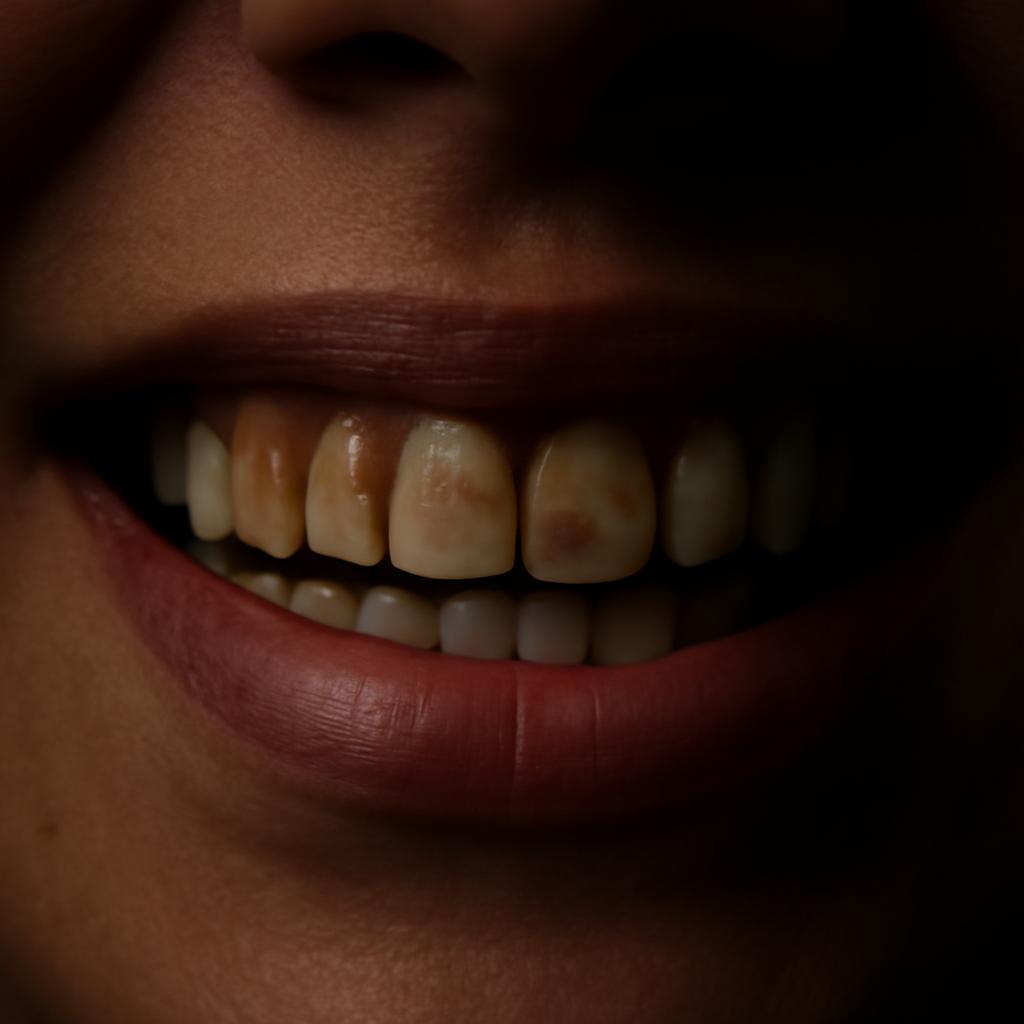
If you’re searching for how to remove brown stains from teeth naturally, the most careful answer is also the least flashy: some mild brown stains can improve at home, but only when they are surface-level stains on the enamel. Brown discoloration from coffee, tea, tobacco, or plaque buildup may respond gradually to gentle methods such as baking soda, diluted hydrogen peroxide, and stronger day-to-day hygiene. Deeper discoloration, tartar, and decay usually do not. Colgate’s stain overview, and Dr. Chris Mott’s overview all make that basic distinction.
That distinction matters because a brown mark is not always just cosmetic. Brown areas can also reflect hardened tartar at the gumline, age-related darkening, medication-related discoloration, or tooth decay, especially if you also notice pain, sensitivity, pits, roughness, or gum changes. Colgate and Northside Family Dental both note that brown discoloration can signal more than a removable surface film.
This guide is best read as general, source-based information rather than a diagnosis. Because home whitening advice varies widely, the safest approach is conservative: use only gentle methods, expect gradual rather than dramatic change, and stop early if the stain looks suspicious or your teeth become sensitive. Healthline, and One Two Three Dental all support that cautious framing.
A quick triage helps:
- Surface stain from coffee, tea, tobacco, or plaque? Gentle home care may help a little over time.
- Hard brown buildup near the gumline? That often points to tartar, which usually needs professional cleaning rather than more scrubbing. Dr. Chris Mott
- Brown spot with pain, pitting, roughness, or sensitivity? Treat it as a dental problem until a dentist says otherwise.
What Causes Brown Stains on Teeth?
Brown tooth discoloration usually falls into two broad buckets: extrinsic stains and intrinsic discoloration.
Extrinsic stains sit on the outer tooth surface. These are the ones most people mean when they talk about staining from everyday habits. Common contributors include coffee, tea, tobacco, dark sauces, berries, and plaque buildup. Colgate identifies foods, drinks, tobacco, plaque, and tartar as common causes of surface discoloration, and Dr. Chris Mott lists coffee, tea, tobacco, and poor brushing among the usual culprits.
Coffee is a good example of how this happens. The cited sources describe its staining compounds as tannins, which are brown polyphenols that can cling to the tooth surface over time. Brown Road Dental and Healthline’s coffee-stain explainer both explain that repeated exposure makes those pigments more noticeable.
Part of the reason stains accumulate is that enamel is not perfectly slick. The cited dental sources describe it as slightly porous, so pigments can settle into tiny surface irregularities and become harder to ignore with repeated exposure. Dr. Chris Mott makes that point directly, and Healthline’s coffee article similarly describes stain compounds lodging in enamel.
Plaque and tartar make surface staining worse. Plaque can hold onto pigments; once it hardens into tartar, home whitening becomes much less realistic. Dr. Chris Mott notes that tartar traps pigments, and Colgate says plaque and tartar often require professional cleaning rather than DIY whitening.
Intrinsic stains, by contrast, sit deeper in the tooth structure. Colgate and Dr. Chris Mott both describe these deeper stains as related to dentin, aging, medications, trauma, or other internal causes. Those are not the kind of discoloration that a kitchen remedy can reliably scrub away.
And some brown areas are not stains in the casual sense at all. Northside Family Dental specifically warns that brown staining with pitting can indicate untreated decay, especially when pain or sensitivity is also present. That is why the first question is not “What can I brush with?” but “What am I actually looking at?”
If you want a simple chemistry analogy for why these compounds cling so stubbornly, our guide to tannin stain chemistry in red wine explains the broader staining behavior of tannins on surfaces.
Extrinsic vs. Intrinsic Stains: Which Can Natural Methods Target?
Natural home methods can sometimes improve extrinsic stains. They do not reliably fix intrinsic ones.
That is the single most useful expectation-setting point in this topic. Surface stains are the realistic DIY target because they are on the enamel exterior and may respond, at least modestly, to mild abrasion or oxidation. Smile Lab says surface stains from coffee, tea, wine, tobacco, and plaque buildup can respond to steady home care, and Colgate describes extrinsic stains as the easiest type to remove.
That does not mean home care is powerful. The better summary is: sometimes helpful, usually gradual, never dramatic. One Two Three Dental characterizes natural options as mild and temporary at best, with tradeoffs if overused. That is a more honest framing than “natural whitening” marketing.
Intrinsic stains are different because the color change is deeper. Colgate and Dr. Chris Mott both indicate that deeper discoloration generally needs dentist-guided whitening or other professional treatment.
Brown staining near the gumline deserves extra caution. In the cited sources, that pattern is repeatedly associated with tartar buildup rather than a simple removable beverage film. Smile Lab says gumline staining typically needs professional cleaning, and Dr. Chris Mott notes that tartar both traps pigments and is not a home-removal job.
A practical stopping rule is to try only gentle home care, and only for a limited period. Smile Lab suggests getting evaluated if there is no improvement after about 4 to 6 weeks. That matters because persistent discoloration may be tartar, intrinsic staining, or decay rather than a surface film.
Baking Soda: The Mild Abrasive for Surface Stains
Among the home remedies discussed in the cited sources, baking soda is one of the most commonly suggested options for mild extrinsic stains.
Why it may help is fairly simple: baking soda acts as a mild abrasive, so it can polish away some surface discoloration. It does not bleach the tooth from within. Penn Dental Family Practice says baking soda can improve whiteness over time but does not chemically bleach teeth, and Brown Road Dental likewise describes it as a surface polisher.
Because evidence and advice are not strong enough to treat kitchen baking soda like a formal dental protocol, the safest way to present it is as commonly suggested conservative use, not proven best practice. In the cited consumer guidance, that usually means a small baking-soda-and-water paste, gentle brushing for about 1 to 2 minutes, and limiting it to no more than about 2 to 3 times per week. Smile Lab and Brown Road Dental both support that general range. If you already have sensitivity, thin enamel, gum recession, or other concerns, Dr. Nemeth advises an even more conservative approach, such as no more than once weekly.
Following with your usual fluoride toothpaste is also part of the more cautious guidance. Brown Road Dental recommends doing that, and Smile Lab emphasizes gentle technique rather than hard scrubbing.
Some sources also describe mixing baking soda with a small amount of 3% hydrogen peroxide instead of water. That may increase whitening potential, but it also raises the chance of gum irritation or sensitivity. A careful synthesis of the cited guidance is to treat that combination as occasional and short-term, not as a daily homemade toothpaste. Healthline, and Brown Road Dental all support limiting frequency.
What is the evidence quality here? Better than viral hacks, but still not strong enough to justify overconfidence. Healthline summarizes research suggesting baking-soda toothpastes can outperform regular toothpaste for plaque and gum measures, and Smile Lab says stain-control toothpastes and baking-soda approaches have more support than acids or charcoal. That does not make plain kitchen baking soda risk-free. It only makes it more plausible than harsher trends.
A reasonable use case is:
- light surface staining from coffee, tea, or tobacco, with no pain or pitting
- short-term testing rather than indefinite use, Dr. Nemeth
- very gentle brushing pressure, followed by normal fluoride toothpaste
A poor use case is:
- hard buildup at the gumline, where tartar is likely
- patchy brown spots with pits, roughness, or pain
- teeth that are already sensitive or have thin enamel
Coconut Oil Pulling: Reduces Plaque for Gradual Brightening
Coconut oil pulling is not well supported as a true whitener, but it is a lower-drama option than acids or gritty scrubs.
The routine described across the cited sources is fairly consistent: swish about 1 tablespoon of coconut oil for roughly 10 to 20 minutes, then spit it into the trash, rinse, and brush. Healthline, and One Two Three Dental all describe that general method.
The more defensible claim is not “it whitens teeth.” It is that coconut oil pulling may help reduce oral bacteria, plaque, and gingivitis, which can indirectly make teeth look cleaner over time. Healthline says the evidence is limited but suggests daily coconut oil pulling may reduce bacteria, plaque, and gum inflammation. Smile Lab presents it in the same supporting-hygiene role, and One Two Three Dental describes any whitening effect as subtle.
That distinction matters. If plaque is helping pigments stick, then less plaque can make teeth look a bit brighter. But that is different from bleaching or lifting established brown stains directly. Colgate is skeptical of coconut oil as a stain-removal method, while Healthline treats it as a limited-evidence hygiene habit.
The practical pros are straightforward:
- no acid exposure
- no abrasive scrubbing
- may support plaque control when used consistently alongside normal brushing and flossing
The limitations are just as important:
- visible whitening evidence is limited
- the routine is time-consuming
- it should never replace brushing, flossing, or professional care when a stain looks suspicious
So if you try oil pulling, treat it as a supportive oral-hygiene habit, not a primary brown-stain remover.
Diluted Hydrogen Peroxide: Oxidative Lift for Mild Discoloration
Hydrogen peroxide is different from baking soda because it works by oxidizing stain molecules, not just polishing the surface.
That makes it one of the more plausible at-home whitening ingredients in the cited material, but also one that calls for more care. Healthline says diluted hydrogen peroxide can whiten over time, while Brown Road Dental notes that it oxidizes discoloration and should be used cautiously.
As with baking soda, the evidence base here does not justify treating a homemade rinse like a standardized medical protocol. The cited consumer sources generally stay in the low-concentration range, describing diluted 1.5% to 3% hydrogen peroxide, short contact times of roughly 30 seconds to 1 minute, and occasional rather than daily use. Healthline, and Smile Lab all support keeping both concentration and frequency conservative.
Some guides also describe using a small amount of peroxide in a baking-soda paste. Again, the safer reading is not “more whitening,” but “more potential irritation.” Healthline warns that stronger or more frequent peroxide use can irritate gums and worsen sensitivity, and Brown Road Dental advises avoiding swallowing it and limiting use.
The timeline matters too. Even when peroxide helps, whitening is usually measured over weeks, not overnight. Healthline mentions a clinical trial in which a higher-peroxide toothpaste produced more whitening after 12 weeks. That does not mean every homemade rinse behaves the same way, but it does support the broader point that peroxide-based whitening is cumulative.
If you want the most careful takeaway from the cited guidance, it is this:
- stay with low concentrations, not stronger DIY mixes
- keep contact time short
- use it occasionally rather than daily
- stop if you notice sensitivity or gum irritation
Rinse well afterward and go back to your usual fluoride toothpaste. If you already have sensitive teeth, mouth irritation, enamel wear, or gum recession, this is not the most forgiving method to test.
Daily Habits to Prevent and Minimize Brown Stains
For most people, prevention is more reliable than trying to reverse built-up staining.
The most consistently supported habits are basic ones:
- brush twice daily with fluoride toothpaste
- floss once daily, Penn Dental Family Practice
- rinse with water after coffee, tea, red wine, and other dark drinks
- reduce or quit tobacco
- keep up with professional cleanings, especially if buildup is forming
Two beverage habits are especially practical.
Rinse soon after dark drinks. Water reduces how long staining compounds sit on the teeth. Penn Dental Family Practice and Dr. Chris Mott both recommend this.
Use a straw when it makes sense. This is most useful for iced coffee, cold brew, tea, or other chilled staining drinks. Dr. Chris Mott and Healthline’s coffee article both suggest it to reduce contact with front teeth.
Timing matters after acidic drinks. Smile Lab and Healthline’s coffee article both advise waiting about 30 minutes before brushing after acidic drinks rather than brushing immediately.
Crunchy fruits and vegetables are better viewed as a minor support habit than a whitening treatment. Smile Lab mentions apples and carrots as foods that may help mechanically dislodge some residue while promoting saliva, but that is not the same as actual stain removal.
And professional cleanings matter because tartar is not a DIY whitening problem. Dr. Chris Mott explains that tartar traps pigment, and Northside Family Dental recommends routine exams and cleanings about every 6 months for many people, depending on a dentist’s advice.
If your staining is mostly beverage-related, our piece on matcha stain prevention tips covers another tannin-rich drink that can create the same kind of surface discoloration pattern.
Remedies to Avoid: Myths and Enamel Risks
This is where a lot of “natural whitening” advice goes off track: natural does not automatically mean enamel-safe.
Apple cider vinegar, lemon juice, and other acidic remedies: The cited sources are much more cautious about acids than many viral posts are. Smile Lab specifically warns against lemon and apple cider vinegar because of enamel-erosion risk. Colgate also advises against fruit-based remedies because acids and sugars may damage enamel. Even sources that mention vinegar as a possible DIY option tend to add a clear warning that overuse can soften or erode enamel. That is not a good trade for routine stain care.
Activated charcoal: This is another trend with weak upside and clearer downside than many people realize. Smile Lab and One Two Three Dental both warn that charcoal is abrasive and may wear enamel over time. At best, it may remove a little surface discoloration; at worst, it adds roughness and sensitivity risk.
Overusing baking soda or peroxide: Even the more plausible DIY options can become a problem when “occasionally” turns into “constantly.”, and Smile Lab all caution that heavy use can contribute to enamel wear, gum irritation, and sensitivity.
Banana peels and similar viral hacks: The source set reviewed here does not provide meaningful clinical support for banana peel rubbing as a reliable whitening method. In practical terms, that puts it in the unproven category rather than the evidence-backed one.
The simplest filter is: avoid methods that are very acidic, very abrasive, or used often enough to turn mild cleaning into chronic wear.
When to See a Dentist for Brown Stains
A big part of safe DIY care is knowing when to stop.
You should book a dental visit if:
- there is no improvement after about 4 to 6 weeks of careful home care
- the brown area comes with pain, sensitivity, pitting, roughness, or gum changes
- the discoloration is concentrated near the gumline, where tartar is common
- the color seems deeper, more generalized, or not like a patchy surface film
Professional cleaning is often the best next step for extrinsic staining that has built up with plaque or tartar. Colgate says plaque and tartar commonly need dental cleaning, and Dr. Chris Mott notes that professional cleanings can remove plaque and tartar and polish enamel.
For intrinsic or age-related discoloration, dentist-guided whitening is usually more effective than kitchen remedies. Colgate and One Two Three Dental both describe professional trays, gels, or in-office treatments as more reliable for deeper stains.
Bottom Line
If the brown discoloration is mild, superficial, and clearly related to coffee, tea, tobacco, or plaque, gentle home care may help a little. The most reasonable low-cost options in the cited sources are occasional baking soda, careful limited use of diluted hydrogen peroxide, and stronger daily hygiene, with coconut oil pulling as a possible support habit rather than a true whitener.
If the stain is hard, gumline-heavy, pitted, painful, sensitive, or unchanged after 4 to 6 weeks, stop experimenting and get a dental evaluation.
Can baking soda damage enamel if used for brown stains?
Yes. It can contribute to enamel wear if you use it too often or brush too aggressively. That is also why it can remove some surface stains in the first place: it is mildly abrasive. Healthline, and Dr. Nemeth all point in the same direction. The safer approach is gentle pressure, short brushing time, and occasional use rather than daily scrubbing.
How long does it take for natural remedies to remove tooth stains?
If they help at all, they usually work gradually over weeks, not overnight. Healthline notes that peroxide-based whitening changes are typically measured over weeks, and Smile Lab suggests reassessing after about 4 to 6 weeks. One Two Three Dental similarly describes natural options as mild and temporary. If nothing changes after a month or so, the discoloration may be tartar-related, deeper than the surface, or not a stain at all.
Is coconut oil pulling proven to whiten brown stains?
Not really. The stronger claim supported by the cited sources is that coconut oil pulling may reduce oral bacteria, plaque, and gingivitis, which can make teeth look a bit cleaner over time. Healthline, and One Two Three Dental all describe the whitening evidence as limited. So it is reasonable as a low-risk supporting habit, but not as a proven brown-stain eraser.
What if brown stains are near the gumline?
Brown discoloration near the gumline often suggests tartar buildup, and tartar usually needs professional cleaning. Dr. Chris Mott, and Northside Family Dental all support that general warning. If the area is also rough, sensitive, bleeding, or swollen, it is a poor place to keep scrubbing at home.
Are acidic rinses like apple cider vinegar safe naturally?
Not as a routine whitening method. Even when diluted, acidic rinses can soften or erode enamel with repeated use. Smile Lab advises avoiding acidic rinses, Colgate warns against fruit-based acid remedies, and One Two Three Dental ranks safer options above harsher DIY trends. “Natural” does not cancel out acid damage.
Sources
- Commercial Dental Brand Website · 3 Types Of Tooth Stains And How To Remove Them | Colgate .
- Dental Practice Blog · Natural Ways To Remove Brown Tooth Stains And Brighten Your Smile.
- Third Party · How to Whiten Your Teeth Naturally at Home.
- Third Party · Solutions for Teeth Stains | Penn Dental Family Practice.
- Third Party · How to Remove Brown Stains from Teeth Naturally: Simple Tips for a Brighter Smile - Smile Lab.
- Commercial Dental Clinic Blog · Coffee Stains on Teeth? Try These 6 Whitening Tips.
- Health Information Website · Coffee Stain on Teeth: Cause, Treatments, and Prevention.
- Third Party · How to Remove Brown Stains from Teeth Naturally | Northside Family Dental.
- Dental Blog Post · Is Baking Soda the Best Teeth Whitener? A Periodontist Weighs In.
- Third Party · Natural Teeth Whitening: Myths vs Facts | Guiseley Dentist.