 StainList
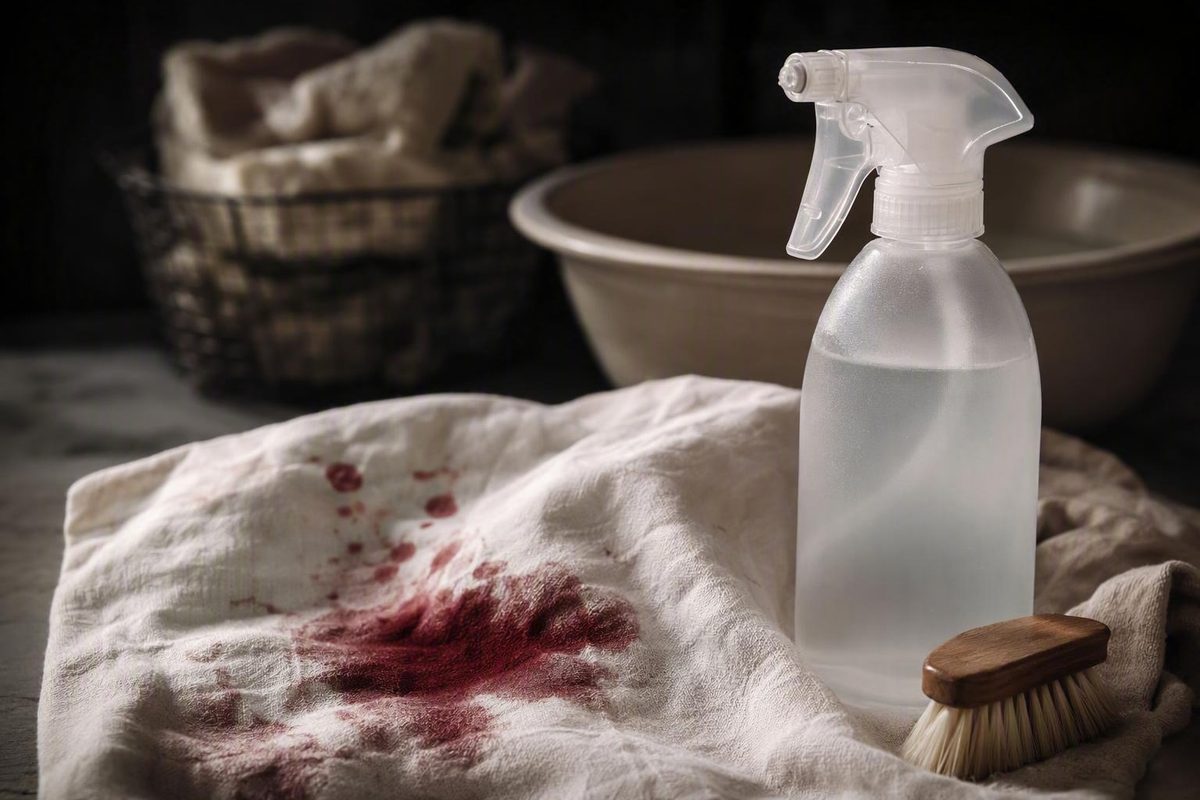
An enzymatic cleaner for blood stains should do more than display the word “enzyme” on the bottle. Blood is generally treated as a protein-based stain, so the relevant enzyme is protease. Choose a cleaner whose label or manufacturer information identifies protease, permits use on the affected material, and provides workable pretreatment directions.
Technique matters as much as formula. For washable textiles, begin with cold or cool water, allow the label-directed contact time, inspect before drying, and withhold dryer heat while discoloration remains. Older or previously heated stains may need repeated treatment and may not disappear completely.
The short answer: look for protease, not just an enzyme claim
Look for a stain remover or enzyme detergent that:
- Discloses protease on its label, ingredient information, technical sheet, or manufacturer website.
- Explicitly mentions blood or protein stains.
- Permits use on the affected surface, such as washable laundry, carpet, or upholstery.
- Lists exclusions and restrictions, particularly for wool, silk, non-colorfast dyes, and non-washable textiles.
- Provides specific directions covering dose, contact time, rinsing, washing, and whether the treatment may remain on the material.
Blood is classified as a protein-based stain in the available cleaning guidance. Protease is associated with protein residue, while lipase is used for fats and oils and amylase for starches. That makes protease the enzyme identity that matters most when screening a cleaner for blood—not the number of enzymes advertised on the package. Koparo Clean’s commercial stain guide likewise identifies protease for protein stains, lipase for fats and oils, and amylase for starches.
Terms such as “enzymatic,” “bio enzyme,” “active enzyme,” “multi-enzyme,” and “triple enzyme” do not identify the enzymes present. A triple-enzyme formula might contain protease, but that phrase alone does not establish that it does.
An explicit blood-stain claim is useful because it shows that the manufacturer or seller intends the cleaner for that use. It does not prove that the product will outperform another formula or remove every stain. The available evidence contains no independent, controlled comparison sufficient to name one cleaner the best.
Use this quick decision path:
- Washable cotton, polyester, nylon, or a compatible blend: Check both labels, then proceed with a protease pretreatment permitted for that material.
- Dark or potentially non-colorfast fabric: Conduct a hidden-area test first.
- Wool, silk, or another protein-based fiber: Do not assume that protease is safe; review the fabric-safety section before treatment.
- Valuable, antique, fragile, specialty-finished, or non-washable textile: Consider professional care rather than experimenting.
- Carpet or upholstery: Use only a cleaner whose directions specifically address that surface.
How protease cleaners act on blood—and what the label can actually prove
Cleaning products use different enzymes for different classes of organic residue. In practical terms, a protease-containing pretreatment acts on protein residue so the broader cleaning formula and wash process can remove it more readily.
The main distinctions are:
- Protease: Protein-based residue, including blood
- Lipase: Fats and oils
- Amylase: Starch-based residue
A multi-enzyme cleaner may contain several useful enzymes, but the enzyme count does not establish their identities. If the package advertises “six enzymes” without naming them, that wording does not confirm that protease is among them.
When comparing products, separate four levels of evidence:
- Disclosed protease: A label, ingredient list, technical document, or manufacturer page identifies protease.
- Explicit blood-removal claim: The manufacturer or retailer names blood as an intended stain.
- Retailer category placement: The cleaner appears in a blood-stain-remover category or search result.
- Independent comparative testing: Multiple products are tested under controlled, disclosed conditions on comparable stains and fabrics.
The first criterion confirms the relevant enzyme. The second helps establish intended use. Retailer category placement can reveal possible candidates, but it is weaker because those categories may include products with different or undisclosed chemistries. No independent side-by-side performance testing appears in the supplied evidence.
Even verified protease does not guarantee removal. Results can vary with the full formulation, dose, contact time, stain age, fabric construction, dye stability, water conditions, prior treatment, and heat exposure. Enzymes are only one part of the cleaning system; surfactants, washing action, rinsing, and textile condition also affect the result.
Commercial technical guidance suggests direct pretreatment for 5–15 minutes, extending to 30 minutes for dried blood, and soaking heavily stained washable items for 30–60 minutes, generally at 30–40°C when the fabric and detergent directions permit it. Those ranges describe that publisher’s general guidance, not a universal formula for every cleaner or textile (Creative Enzymes’ laundry guidance).
Use the cleaner label to determine dose, dilution, contact time, rinsing, and suitable surfaces. Use the textile care label to determine whether the item can be washed, soaked, bleached, brushed, or treated at the specified temperature. If the instructions conflict, choose another method or seek professional advice rather than improvising.
How the named cleaners compare when marketing is separated from evidence
The products below illustrate why enzyme wording, intended use, and proof of performance must be evaluated separately. This is not a ranking, and “surfaces mentioned” does not necessarily mean formal approval on a current product label.
| Product | Source of claim | Enzyme wording | Explicit blood claim | Format and package size | Disclosed protease status | Surfaces mentioned by the source | Evidence limitation |
|---|---|---|---|---|---|---|---|
| Zout Laundry Stain Remover | Retailer listing | “Triple enzyme” | Yes | Laundry stain remover; 12 oz | Not established by the listing | Laundry and washable textiles | Enzymes are not identified; retailer marketing is not independent testing |
| Shout Active Enzyme Laundry Stain Remover | Retailer category listing | “Active enzyme” and “triple-acting” | Not explicit for this specific product in the supplied listing | Prewash spray, 22 fl oz | Not established | Laundry and washable textiles | Category placement does not verify a blood claim or enzyme identity |
| Puracy Natural Stain Remover | Brand-authored blood-removal article | Multi-enzyme formula; article identifies protease as relevant | Yes, in the brand’s article | Stain-remover format; package size not established | Yes, according to the brand article | Clothing, carpet, and upholstery | Effectiveness, safety, naturalness, and superiority statements are brand-authored rather than independently verified |
What the Zout listing establishes
Zout is marketed for blood and described by the retailer as a triple-enzyme laundry stain remover. The supplied listing supports the product description, package size, and blood claim. It does not identify the three enzymes, provide current fabric restrictions, or establish performance through independent testing.
Consequently, “triple enzyme” should not be treated as proof of protease content. A current label or manufacturer ingredient disclosure would be needed to verify the enzyme identity.
What the Shout listing establishes
Shout Active Enzyme appears as a prewash spray in Walmart’s blood-stain-remover category. The listing uses active-enzyme and triple-acting language, but the supplied category page does not explicitly say that this specific Shout product removes blood. It also does not identify the enzyme or enzymes in the formula.
Its category placement and format make it a candidate to investigate—not a verified protease cleaner or independently proven blood treatment.
What the Puracy article establishes
Puracy recommends its own stain remover for blood and identifies protease as the relevant enzyme. Its article addresses clothing, carpet, and upholstery, making the intended-use discussion more specific than a retailer category page. The Puracy blood-stain guide therefore supports what the brand says about its own product and process.
It does not independently establish superior effectiveness, universal fabric safety, naturalness, or comparative advantage. Those remain commercial brand claims unless supported by separate testing.
Prices, package options, availability, ratings, review totals, and sponsored placement can change. None demonstrates blood-removal performance under a particular household’s conditions.
Use this selection hierarchy:
- Verified protease disclosure
- Permission for the affected material, with clear exclusions
- Directions you can follow for dose, dwell time, rinsing, and washing
- An explicit blood- or protein-stain claim
- Format, package size, availability, and price
If two products satisfy the first three criteria, price and convenience are reasonable tie-breakers. They should not replace enzyme and material verification.
Fresh blood on washable clothing or bedding: a cold-water-first workflow
This workflow is for machine-washable textiles whose care labels permit water-based pretreatment. It should not be transferred automatically to wool, silk, carpet, upholstery, or dry-clean-only items.
1. Read both labels
Check the textile care label and the cleaner directions before treatment. Confirm that the item may be washed and that the cleaner is permitted for its fiber and color.
Stop if either label prohibits the intended procedure. A washable item may still exclude soaking, bleach, brushing, or a particular temperature.
2. Remove excess blood gently
If the stain is wet, blot excess liquid with a clean, absorbent white cloth or paper towel. Press and lift rather than smearing the area.
For a spreading stain, work from the outside toward the center. Change to a clean part of the cloth as it picks up blood. Avoid hard rubbing, which can spread residue and stress the fibers.
3. Back-flush with cold or cool water
Hold the reverse side of the stained area under cold or cool running water. Flushing from the back helps move loosened residue out through the route by which it entered instead of driving it farther through the fabric face.
Continue while the material remains stable and the runoff is clearing. Do not wring or twist delicate weaves. Cold-water rinsing, back-flushing, blotting, and delaying dryer heat form the prevailing washable-textile sequence in the supplied guidance (Mozi Wash’s cold-water method).
4. Apply a compatible protease cleaner
Dampen the stained area if it has started to dry, then apply the label-specified amount directly to the stain. Use enough to contact the affected fibers without assuming that more is better.
If both labels permit gentle mechanical action, work the cleaner in with:
- Clean fingertips
- A clean white cloth
- A soft-bristled brush
Use blotting rather than brushing on fine knits, loose weaves, embellished fabrics, or materials that pill easily.
5. Allow the label-directed contact time
Commercial guidance differs by product and publisher. One laundry-service guide suggests 15–20 minutes for direct application of a general enzyme stain remover, but that is not a universal rule (EZ Express Laundry guidance).
Follow the actual product label. Do not extend the dwell time merely because the stain looks difficult, especially on colored, delicate, or blended fabric.
Unless the label expressly allows it, do not let pretreatment dry on the textile. If it begins drying early, follow the product instructions rather than adding an unapproved chemical or liquid.
6. Wash compatibly
Wash using a cycle and temperature permitted by both the cleaner and textile labels. Cold or cool washing is the prevailing recommendation for blood in the supplied guidance, although a particular enzyme product may specify a defined operating range.
Use the directed amount of detergent.
7. Inspect before applying heat
Examine the affected area under good light after washing.
If discoloration remains:
- Keep the item out of the tumble dryer.
- Rinse if the product directions require it.
- Repeat a compatible treatment if the textile remains stable.
- Do not layer unrelated cleaners over unresolved residue.
8. Air-dry until removal is confirmed
Air-dry while any uncertainty remains. Treatment may require more than one cycle, and no supplied evidence supports promising complete removal after the first application—or after any application.
Dried, old, or previously washed blood needs more time and lower expectations
Dried stains have had more time to adhere to and penetrate the textile. A stain that has survived washing, tumble drying, or ironing may be more resistant. Repeated treatment can reduce discoloration, but complete recovery is not assured.
Identify what has already happened
Before treating, determine whether the item has been:
- Air-dried only
- Washed in cold, warm, or hot water
- Machine-dried
- Ironed
- Treated with bleach, peroxide, vinegar, ammonia, or another cleaner
Stop and consult the textile-care label, cleaner manufacturer, or a professional cleaner for substance-specific advice.
Remove loose material without abrading the fabric
If dried blood has formed a surface crust, gently lift only loose material with the edge of a dull spoon or similar non-sharp tool. Do not scrape aggressively or pull at the weave.
Back-flush with cool water. If the textile is washable and stable, soak it in cool water to rehydrate the residue before applying cleaner.
Use a bounded presoak procedure
The University of Georgia Extension gives one defined option for old or stubborn apparel stains: soak in cool water for 30 minutes or longer, then, if the stain remains, use a lukewarm enzyme presoak for at least 30 minutes, provided the care label permits the procedure (University of Georgia Extension guidance).
This illustrates an important temperature distinction. Most supplied sources favor cold or cool water for the initial rinse and rehydration. Some enzyme-presoak guidance permits lukewarm water or a specified warm operating range. Neither approach should be converted into a universal temperature rule.
Resolve the issue in this order:
- Follow the textile care label.
- Follow the enzyme product’s temperature directions.
- Begin with cold or cool water when neither label requires warmer water.
- Do not raise the temperature simply to make the treatment more aggressive.
Extend treatment only within the label limits
A product may allow longer contact for dried stains than for fresh ones. Keep the treatment within the stated limit and prevent it from drying unless that use is expressly permitted.
Monitor the fabric during treatment. Rinse and stop if:
- Dye transfers or changes color.
- The surface becomes fuzzy.
- The weave distorts.
- Fibers appear weakened.
- A coating or finish changes.
After pretreatment, rinse or wash as directed, inspect before drying, and repeat only while the textile remains stable. Do not promise recovery of a machine-dried or ironed stain.
Salt and vinegar are sometimes suggested for dried blood, but the available evidence does not establish that either adds value to the core procedure. Cool-water rehydration, compatible protease treatment, washing, inspection, and controlled repetition are sufficient as the basic workflow.
Fabric safety: wool, silk, dark dyes, and delicate items
Do not assume that a protease cleaner is safe for every textile. Wool and silk are protein-based fibers, and commercial enzyme guidance warns that protease detergents may weaken them. The same guidance contains some product-dependent qualifications, reinforcing the need to check the exact formulation rather than rely on a general enzyme claim (Creative Enzymes’ material cautions).
The conservative rule is to use:
- An enzyme-free method suitable for the fiber, or
- Professional cleaning
unless the exact cleaner explicitly permits use on that fiber and the textile care label allows the treatment. A broad phrase such as “safe for colors” or “all fabrics” should not override a specific wool, silk, or dry-clean-only restriction.
Patch-test questionable fabrics and dyes
Test in an inconspicuous area before treating:
- Dark or saturated colors
- Non-colorfast dyes
- Multicolored prints
- Fiber blends
- Delicate weaves and knits
- Vintage textiles
- Specialty finishes
- Embellished or coated fabrics
Apply the cleaner at the intended dilution and for the intended dwell time. Remove it as directed, allow the test area to dry, and check for color transfer, fading, rings, stiffness, texture change, or fiber damage.
Wear, sunlight, the stain itself, or an earlier treatment may have changed that section.
Use gentle mechanical action
Hard scrubbing can spread residue, distort a weave, produce fuzzing, or damage delicate fibers. Blot, press, or work the cleaner in gently. Use a brush only when both the textile and product directions permit it.
Treat peroxide and bleach as separate escalation steps
Hydrogen peroxide may alter dark or non-colorfast dyes and is generally presented in the supplied guidance as a treatment for lighter fabrics rather than a universally color-safe option (EcoClean’s dried-blood guidance).
Permission to use one does not establish permission to use the other. Either may be prohibited by the textile care label. Chlorine bleach can also reduce enzyme activity, so it should not be added casually to an enzyme pretreatment.
Do not mix or sequence the following unless the applicable product directions expressly authorize the procedure:
- Enzyme cleaner
- Hydrogen peroxide
- Oxygen bleach
- Chlorine bleach
- Ammonia
- Vinegar
- Other stain removers or household cleaners
The supplied evidence does not establish that rinsing alone makes arbitrary chemical combinations safe. If a permitted process uses separate treatments, follow its specified rinsing and sequencing directions exactly.
Ammonia is not an appropriate routine addition for delicate protein fibers. University of Georgia textile guidance specifically warns that ammonia can damage wool and silk. Valuable, antique, fragile, dye-unstable, specialty-finished, non-washable, or care-label-restricted items are better referred to a qualified cleaner than subjected to escalating household chemistry.
Carpet and upholstery require controlled moisture and a surface-approved cleaner
Do not transfer laundry instructions automatically to carpet, a couch, a mattress, or another non-washable surface.
1. Identify the surface and its restrictions
Check the carpet warranty or furniture care information.
Confirm that the enzyme cleaner specifically permits use on the surface. A laundry prewash spray is not automatically suitable for upholstery merely because both materials contain fabric.
2. Blot fresh blood
Use a clean, absorbent white cloth. Press and lift rather than scrubbing, rotate the cloth as it picks up moisture, and work toward the center to limit spread.
Avoid forcing liquid into carpet backing, cushion fill, or hidden components. University of Georgia’s surface-specific guidance repeatedly emphasizes blotting and avoiding overwetting on carpet and upholstery materials (University of Georgia Extension).
3. Patch-test the complete procedure
Test the cleaner in an inconspicuous area using the intended dose, dwell time, and removal method. Let the test area dry fully before evaluating it.
Watch for:
- Dye transfer
- Lightening or darkening
- Water rings
- Texture change
- Stiff residue
- Finish damage
4. Control the amount of cleaner
Apply only the quantity allowed by the product directions. Some product-specific methods call for thorough wetting, but that does not establish that saturation is safe for every carpet or upholstered item.
If the directions require more liquid than the surface can be adequately rinsed, blotted, or extracted from, use professional treatment instead.
5. Observe the product-specific dwell time
Puracy’s brand-authored upholstery process specifies at least 15 minutes for its own cleaner. That timing belongs to the named process and should not be transferred to unrelated formulas (Puracy’s upholstery directions).
6. Remove cleaner as directed
Depending on the product and surface, the instructions may call for blotting, rinsing, wet extraction, or another removal method. Follow that process so loosened material and cleaner residue are removed without excessive moisture.
There is no single extraction procedure supported for all carpets and upholstery. A washable removable cover, fixed upholstery, delicate rug, and moisture-sensitive carpet backing may require different methods.
Repeat only if:
- The material remains colorfast and structurally stable.
- The cleaner permits another application.
- The surface can be rinsed or extracted adequately.
- The area has not become excessively wet.
The available evidence is less complete for carpet and upholstery than for washable clothing. Use professional cleaning for valuable furniture, rugs, unknown fibers, persistent stains, dye transfer, moisture-sensitive construction, or anything that cannot be properly rinsed or extracted.
If the stain remains: a cautious escalation ladder
The first rule remains simple: do not machine-dry a washable item while visible staining remains.
Step 1: Recheck the product and method
Ask:
- Does the label or manufacturer identify protease?
- Is the material included in the product directions?
- Did you use the stated dose?
- Did you allow the required contact time?
- Did the cleaner dry prematurely?
- Was the wash temperature compatible with both labels?
- Has the stain already been exposed to dryer or iron heat?
A vague enzyme claim may justify switching to a verifiably protease-containing cleaner. Using an excessive dose is not a substitute for selecting the right formula and following its directions.
Step 2: Rinse and repeat a compatible treatment
If the textile remains stable and the label permits reapplication, remove the prior treatment as directed and repeat the correct process.
A second controlled application is preferable to layering peroxide, bleach, vinegar, ammonia, or another cleaner over unresolved residue. Inspect after every cycle and stop if color, fibers, weave, or finish changes.
Step 3: Consider oxygen bleach only where permitted
For washable, colorfast fabric, a label-approved oxygen-bleach treatment may be a later escalation. Oxygen bleach is not chlorine bleach, and permission to use one should not be interpreted as permission to use the other.
Follow both labels for concentration, temperature, soaking, and rinsing. Do not add oxygen bleach directly to an enzyme pretreatment unless the product directions explicitly authorize combined use.
Step 4: Treat hydrogen peroxide as material-dependent
Hydrogen peroxide is commonly presented as an option for white or light-colored washable fabric. It is not universally color-safe and should not be assumed suitable for dark, non-colorfast, delicate, or specialty-finished textiles.
Use it only where the textile and relevant treatment directions permit it. Patch-test first, and do not assume that peroxide can be safely added to an enzyme cleaner or bleach treatment.
Step 5: Skip weakly supported substitutions
Ammonia is also not a routine substitute and is unsuitable for casual use on wool or silk.
More chemicals do not necessarily mean more cleaning power. They create additional compatibility and sequencing questions and can make the cause of any dye or fiber damage difficult to identify.
Step 6: Know when to stop
Stop home treatment if:
- Color changes or transfers.
- Fibers become weak, fuzzy, stiff, or distorted.
- The finish develops a ring or texture change.
- The care label prohibits further treatment.
- The item is valuable, antique, delicate, or non-washable.
- The stain is large, persistent, or previously heat-exposed.
- Carpet or upholstery cannot be rinsed or extracted adequately.
At that point, professional cleaning is the safer escalation.
This guide addresses visible stain treatment only. It does not provide disinfection, biological-exposure, or decontamination instructions. When exposure to another person’s blood or another biological hazard is the concern, consult current public-health or workplace-safety guidance appropriate to the situation.
Frequently asked questions
What enzyme should a blood-stain cleaner contain?
Look for protease, the enzyme associated with protein-based residue such as blood. Verify it through the product label, ingredient information, technical document, or manufacturer website.
Do not assume that “enzymatic,” “bio enzyme,” “multi-enzyme,” or “triple enzyme” confirms protease. An explicit blood-stain claim is also useful, but it indicates intended use rather than guaranteed removal.
How long should an enzymatic cleaner sit on a blood stain?
Follow the cleaner label. Supplied guidance varies by formula and method, with shorter direct pretreatment for many fresh stains and longer label-approved treatment or soaking for dried and heavily stained items.
Do not combine ranges from different products, and do not let the pretreatment dry on the textile unless the label expressly permits it.
Can I use an enzymatic cleaner for blood on wool or silk?
The conservative answer is no, unless the exact cleaner explicitly permits that fiber and the textile care label allows the procedure.
Protease formulas may weaken protein-based fibers such as wool and silk. An enzyme-free, fiber-appropriate method or professional cleaning is the safer default, particularly for valuable, dyed, delicate, or structured items.
Should I use cold or warm water with an enzyme cleaner?
Start with cold or cool water for the initial rinse and rehydration. Some enzyme products or presoak procedures permit lukewarm water or specify a defined operating range.
Follow the cleaner and textile labels rather than assuming that one temperature is correct for every treatment stage, formula, and fabric. Do not introduce hot water simply to make the process more aggressive.
Can I put the item in the dryer after enzyme treatment?
Only after inspection confirms that the stain is gone. If discoloration remains, repeat a compatible treatment and air-dry instead.
Check the area under good light as it begins to dry because wet fabric can conceal faint residue. Older or heat-exposed stains may remain visible despite repeated treatment.
The restrained decision rule is straightforward: choose a cleaner that verifiably contains protease and is permitted for the affected material, begin with cold or cool rinsing, allow the label-directed contact time, and inspect before applying dryer heat. For wool, silk, valuable, non-colorfast, non-washable, or persistently stained items, stop escalating household chemistry and use professional care.