 StainList
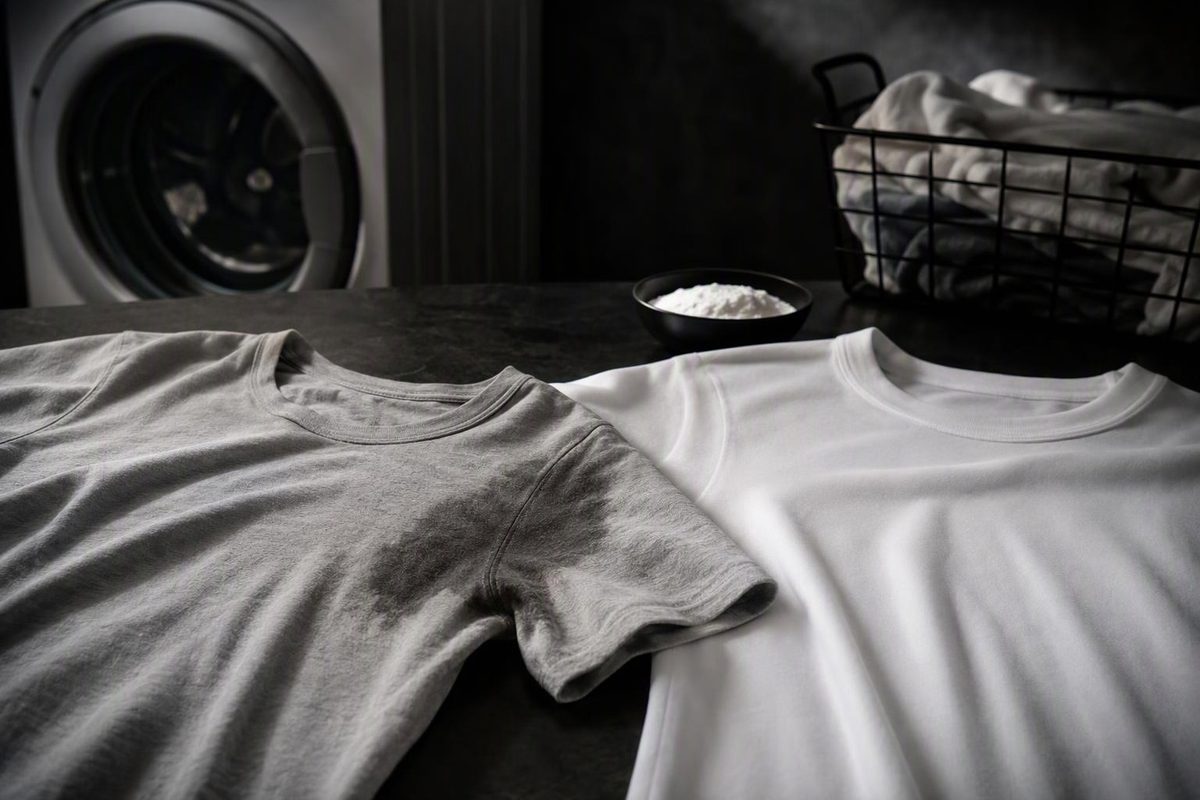
For washable clothing, start with a cool-water rinse, pretreat with liquid laundry detergent, then wash at the warmest temperature the care label permits. Check the mark before drying. On colored clothes, first distinguish residue from fading: a stronger stain remover is not the answer to every underarm mark. ACI’s laundry guidance supports cold rinsing for uncertain stains, detergent pretreatment and inspection before drying.
This guide focuses on fresh sweat marks, oily body soil and deodorant residue, including on colored clothing. For persistent yellow patches on whites, use the more specific sweat-stain treatment for white shirts.
Check what is actually on the fabric
“Sweat stain” can describe several different problems. These clues help choose the first treatment; they do not prove the stain’s composition.
| What you notice | Where to start |
|---|---|
| A fresh damp mark or pale tide line after sweating | Rinse, then detergent and a label-safe wash. |
| A greasy-looking or darkened collar, cuff or underarm | Pretreat with liquid laundry detergent to tackle body oils. |
| White streaks or stiff, waxy underarm buildup | Gently remove loose product, then pretreat the residue. |
| An old yellow underarm patch | Detergent first; consider oxygen bleach only if both labels permit it. |
| A lighter patch rather than material sitting on the fabric | Do not keep escalating treatment: this may be a color change rather than removable soil. |
Liquid detergents are useful for oily soils, while prewash products can target body soil. Sweat and deodorant can also accumulate together, so yellow underarm staining should not automatically be treated as sweat alone. See ACI’s laundry guidance and Persil’s deodorant-residue guidance.
1. Check the label and spot-test
This sequence is for washable garments. A fiber name is not permission to use hot water or bleach: check the whole garment’s care label, including restrictions for trims and stretch fabrics. For dry-clean-only clothing, valuable garments, silk or wool, use professional care rather than this general treatment sequence.
Test each cleaner on an inside seam or hidden hem using its intended dilution and contact time. Rinse and let the test area dry before checking for fading or texture changes. If the test changes the fabric, do not continue. A successful test does not override a label prohibition. UGA Extension advises checking the care label and pretesting every cleaning agent.
For neon or fluorescent clothing, skip prewash stain removers. ACI specifically warns that these colors can fade or run. Keep treatment within the garment and detergent instructions instead. Source: ACI laundry guidance.
2. Rinse and pretreat before washing
- Turn the garment inside out. Gently lift or brush away loose deodorant without scraping the fabric or grinding a hard deposit into it.
- Rinse the affected area with cool water. This is a cautious starting point for a fresh or uncertain mark.
- Apply liquid laundry detergent that permits direct pretreatment. Use enough to wet the stained area and distribute it gently with your fingers. Follow the product’s contact-time instructions; do not assume concentrated detergent is suitable for an overnight soak.
- For heavy product residue, use a fabric-compatible prewash stain remover if permitted. ACI recommends a 5–10 minute pretreatment for heavy deodorant stains; follow your product’s directions if they differ.
- Wash the whole garment with the correct detergent dose at the warmest care-label temperature.
Persil’s deodorant instructions support removing excess product and cold rinsing; ACI’s stain guide supports detergent or prewash pretreatment for deodorant and collar soil. Avoid forceful scrubbing, particularly on thin underarms and stretchy knits.
Stop and inspect before heat. If a mark remains, keep the garment out of the tumble dryer and do not iron it. Air-dry as the label permits if you need a clearer view. Heat can set remaining stains, making another treatment harder—not necessarily impossible. Tide’s sweat-stain instructions call for repeat treatment before drying, and OxiClean’s set-in-stain guidance advises checking before drying or ironing.
3. Escalate only for remaining discoloration
If detergent has reduced the greasy or stiff residue but discoloration remains, a laundry oxygen bleach may be an option. ACI lists enzymes or oxygen bleach for stubborn perspiration stains.
“Color-safe” does not mean safe for every garment. Check both labels and spot-test first. Use the exact package’s soak concentration, water temperature and time—not a recipe borrowed from another formulation. Dissolve powder fully before adding the garment, then wash with detergent afterward. For example, OxiClean Versatile Stain Remover’s instructions require testing and exclude wool, wool blends, silk, silk blends, leather and dry-clean-only fabrics.
An old, dryer-exposed stain may improve with another label-safe treatment, but complete removal is uncertain. Stop if the fabric fades, roughens or looks thin, or if repeated treatment produces no visible improvement. A cleaner cannot replace missing dye or repair worn fibers.
Skip improvised cleaner cocktails. In particular, never mix chlorine bleach with vinegar or ammonia: hazardous gases can result. Poison Control explains the vinegar–bleach hazard; ACI warns against bleach–ammonia mixtures.
To reduce recurring marks, let deodorant dry before dressing, avoid excess application, and wash sweaty clothing promptly rather than repeatedly wearing it with residue still present. These are the prevention steps recommended in Persil’s deodorant-stain guide.