 StainList
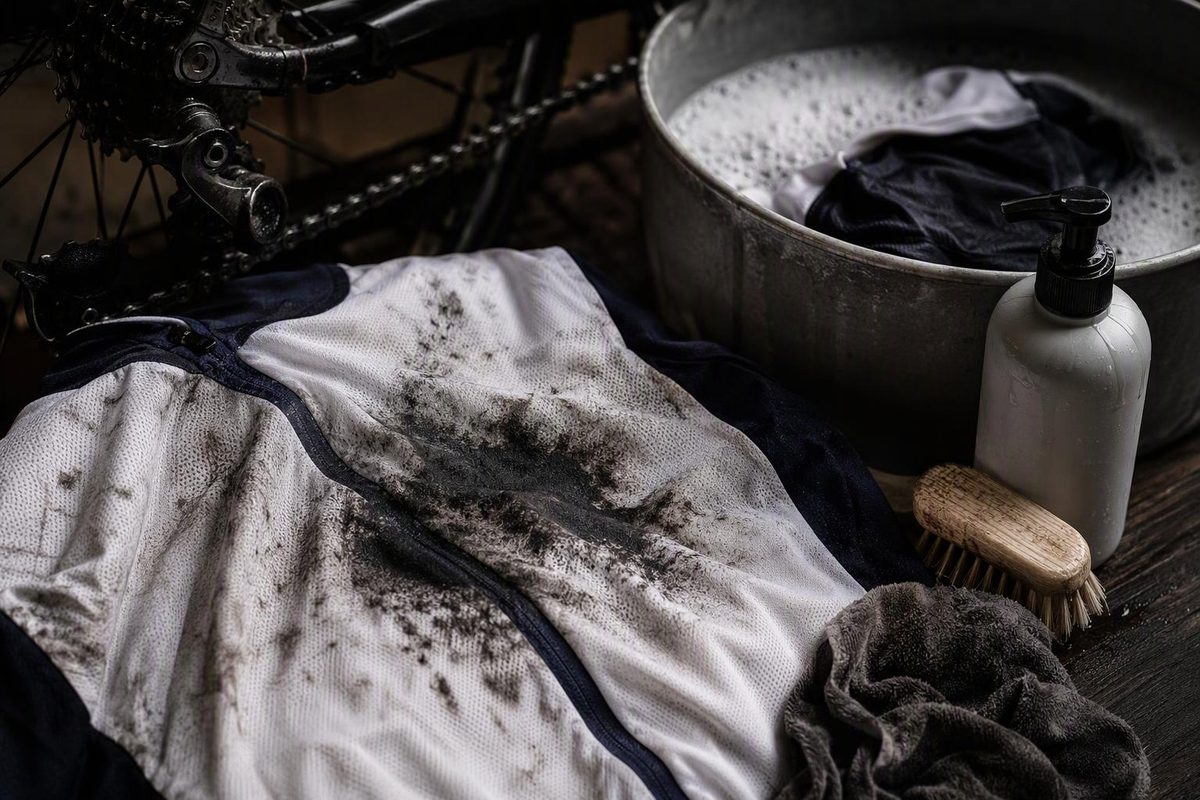
For a small bicycle-grease mark on an ordinary washable garment, lift off excess grease, pretreat with liquid laundry detergent, then wash at the warmest temperature the care label permits. Air-dry and inspect before using dryer heat or an iron. The American Cleaning Institute recommends detergent pretreatment and a fabric-safe wash for light grease and oil stains. ACI’s stain-removal guide
Check the fabric first
Read both the garment’s care label and the cleaner’s directions. Test your chosen cleaner on an inside seam, using the intended contact time, then rinse and let the test area dry. Stop if you see color transfer, fading, or a change in texture.
- Washable cotton, jeans, and everyday synthetic fabrics: follow the sequence below.
- Cycling jerseys, bib shorts, and coated garments: use a detergent allowed by their care instructions. Do not assume a hot wash is safe.
- Dry-clean-only, silk, wool, or valuable garments: gently lift surface grease and consult a professional cleaner rather than trying ordinary detergent, dish soap, or solvents. Persil specifically excludes wool, silk, and other delicates from its biological-detergent method. Persil’s bicycle-grease guide
Remove bicycle grease from washable clothes
You need a spoon or blunt edge, white paper towels or a clean white cloth, and liquid laundry detergent suitable for pretreating the fabric.
1. Lift off the excess
If there is a thick deposit, gently lift it with the edge of a spoon. Do not scrape hard or smear it across the garment. For a thin mark, blot any transferable grease with a white paper towel. Put a clean towel between the fabric layers so treatment does not reach the other side.
2. Pretreat with liquid laundry detergent
Apply enough detergent to wet the stained area, not the whole garment. Work it in gently with your fingertips; avoid vigorous brushing, especially on stretch fabric or fine knits.
Leave it for a few minutes, unless the detergent’s directions specify otherwise. Follow any rinsing instructions before washing. Persil recommends this pretreatment with its liquid biological detergent for fresh and dried bicycle-grease stains on synthetics. Persil’s instructions
Do not extend contact time beyond the product’s instructions. Tide’s grease guide likewise calls for direct detergent application and a few minutes of contact before washing. Tide’s instructions
3. Wash within the label’s limits
Use your normal laundry detergent dose and the warmest wash setting permitted by the garment. “Hottest safe” does not mean automatically choosing hot water: the care label is the limit. ACI’s grease-and-oil guidance
For cycling kit, be particularly cautious. Liv’s cycling-apparel guide recommends 30°C maximum, a delicate setting, and no bleach or fabric softener. Follow your own garment’s instructions if they differ. Liv’s apparel-care guide
4. Air-dry and inspect
Let the garment air-dry as its label directs, then check the spot in good light. Look for both a dark greasy patch and a remaining gray mark. If either remains, repeat pretreatment and washing before applying heat. ACI advises keeping stained clothing out of the dryer until the stain is removed. ACI’s instructions
If you only have dish soap
For a small mark on washable, colorfast cotton or polycotton, hand dishwashing liquid whose directions allow fabric pretreatment can be a fallback. Spot-test first and follow that product’s directions. Dawn’s guidance describes using a few drops of its Platinum liquid, gently working it into the spot and allowing a few minutes of contact; it excludes delicate fabrics such as silk and says not to reapply it to the same spot and wash again. Dawn’s laundry guidance
Rinse the treated spot thoroughly with cool water from the back before laundering, as Persil recommends for bicycle-grease treatment with dishwashing liquid. Persil’s instructions
Do not pour dish soap into the washer or use it as laundry detergent: excessive suds can cause problems, especially in high-efficiency machines. Dawn’s warning
Old stains and when to stop
If the stain has already been washed or tumble-dried, try the detergent sequence first. It may need another treatment, but do not compensate by scrubbing harder or exceeding the care-label temperature. Heat-exposed marks may not come out completely; Persil recommends avoiding tumble-dryer and iron heat while a bicycle-grease stain remains. Persil’s guide
If detergent pretreatment does not help, use a prewash stain remover labeled for grease and compatible with the garment, following its application and dwell-time instructions. ACI lists prewash stain remover as another option for light grease stains. ACI’s guidance
Avoid improvising with bicycle degreaser or workshop solvents: use a product intended for textiles instead. Stop if the fabric starts fading, fuzzing, or changing texture, or if repeated label-safe treatment makes no visible improvement. A professional cleaner is the safer next step for a valuable garment.