 StainList
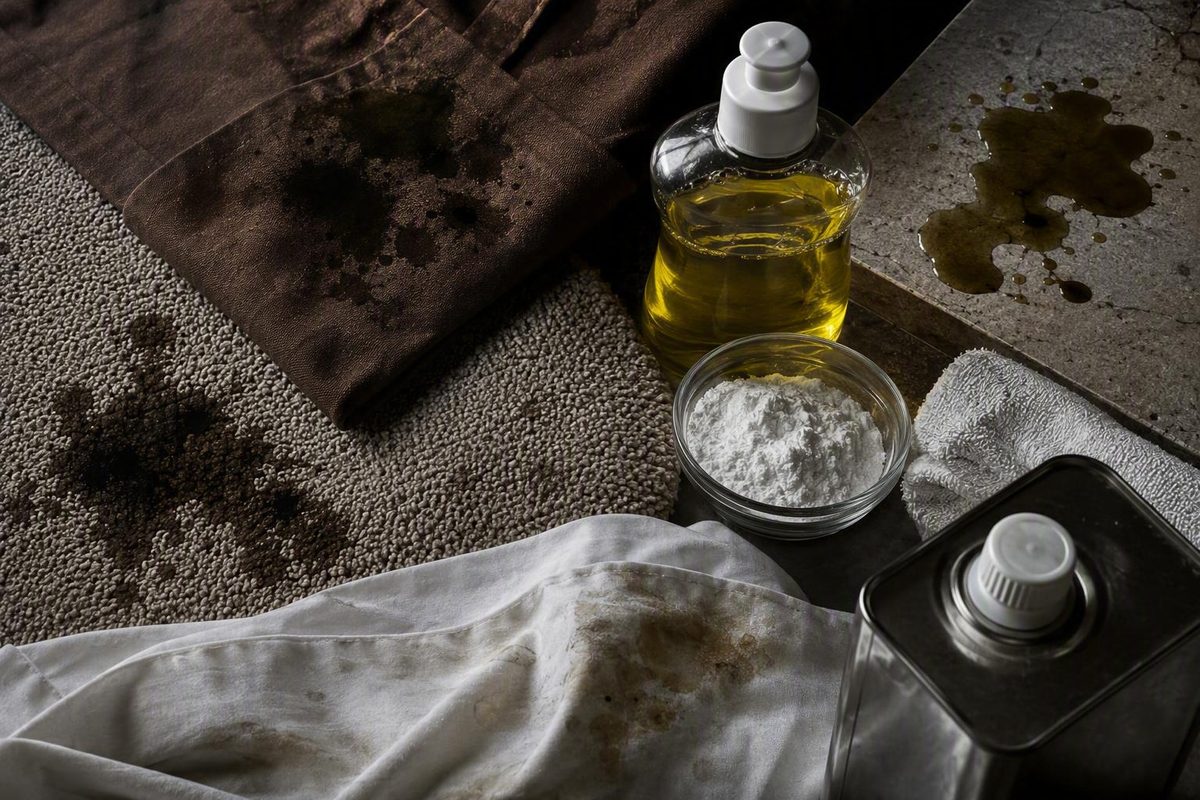
Grease and oil stains — cooking oil, butter, body lotion, motor oil, salad dressing — are lipids that do not dissolve in water. Attempting to rinse them with water first pushes the oil deeper into the fiber structure. The chemistry you need is surfactant action (to emulsify the lipid) or a nonpolar solvent (to dissolve it).
Fresh stains: the absorb-first rule
Before applying any liquid, blot away surface grease, then apply an absorbent powder immediately:
- Cornstarch or talcum powder: Pour a generous layer over the stain, press it gently into the fabric, and leave for 15–30 minutes. The powder draws oil out of the fiber. Brush off completely before any wet treatment.
- Baking soda: Works similarly, with a mild alkali component that helps on some cooking oils.
Skipping this step means you are spreading oil laterally while trying to lift it.
Cotton, polyester, and blends
After absorbing:
- Apply undiluted dish soap directly to the stain. Dawn and similar concentrated surfactant formulas work; avoid those with added moisturizers, which add more lipids.
- Work into the fabric with a soft brush or fingertip. Let sit 5 minutes.
- Rinse with warm water (warm, not cold — lipids are more soluble at higher temperature).
- Check the stain before drying. If oil is still visible, repeat. Do not machine dry until the stain is gone — heat will set it permanently.
For heavier stains (motor oil, bicycle grease), a pre-treatment product containing a dry-cleaning solvent (perchloroethylene or hydrocarbon-based) applied before the dish soap step improves results significantly. Apply, let sit 10 minutes, then continue with step 1 above.
Wool and silk
Dish soap is mild enough for wool on most greasy stains, but apply a small amount diluted in water (1 part soap, 10 parts water) rather than neat. Work it in gently. Rinse with cold water — warm water can felt wool. Do not rub; pat.
Dry-cleaning solvents are safe on wool and silk and are often the better choice for set stains.
Carpet
The absorb-first step is especially important on carpet because there is padding and backing underneath that absorbs deeply.
- Cornstarch or baking soda, 20–30 minutes.
- Vacuum up the powder thoroughly.
- Apply dish soap solution (1 teaspoon soap in 1 cup warm water).
- Blot with a clean cloth, working from outside inward.
- Follow with plain warm water to rinse soap residue (soap residue attracts dirt and leaves a spot).
For motor oil or heavy grease on carpet, a citrus-based degreaser applied before the dish soap step is more effective.
Hard surfaces
Wood floors: Grease on finished hardwood can be lifted with a few drops of dish soap on a damp cloth — minimal water. Dry immediately afterward. Do not use petroleum-based solvents on finished floors; they can strip the finish.
Concrete and pavers: These are porous. Cat litter or sawdust pressed into fresh grease for several hours draws oil out before any wet treatment. Afterward, a strong alkaline degreaser (sodium hydroxide-based, found in most hardware stores) diluted per label instructions is the most effective agent. Scrub with a stiff brush, rinse with a hose.
Stove and oven surfaces: High-temperature polymerized grease (the carbonized layer from months of cooking) requires a lye-based oven cleaner. Apply, seal with a plastic bag or wrap if possible, and leave 2–6 hours. The alkali breaks the ester bonds in the carbonized lipid layer. Ventilate the area.
Set oil stains on fabric
Oil stains that have been through a dryer are the hardest. The heat causes the oil to bond oxidatively with the fiber. Best approach:
- Apply a heavy layer of dish soap, let sit overnight.
- Wash in the hottest water safe for the fabric with a full-dose enzyme detergent.
- Results vary: light-colored cotton recovers frequently; dark synthetics may show a permanent shadow.