 StainList
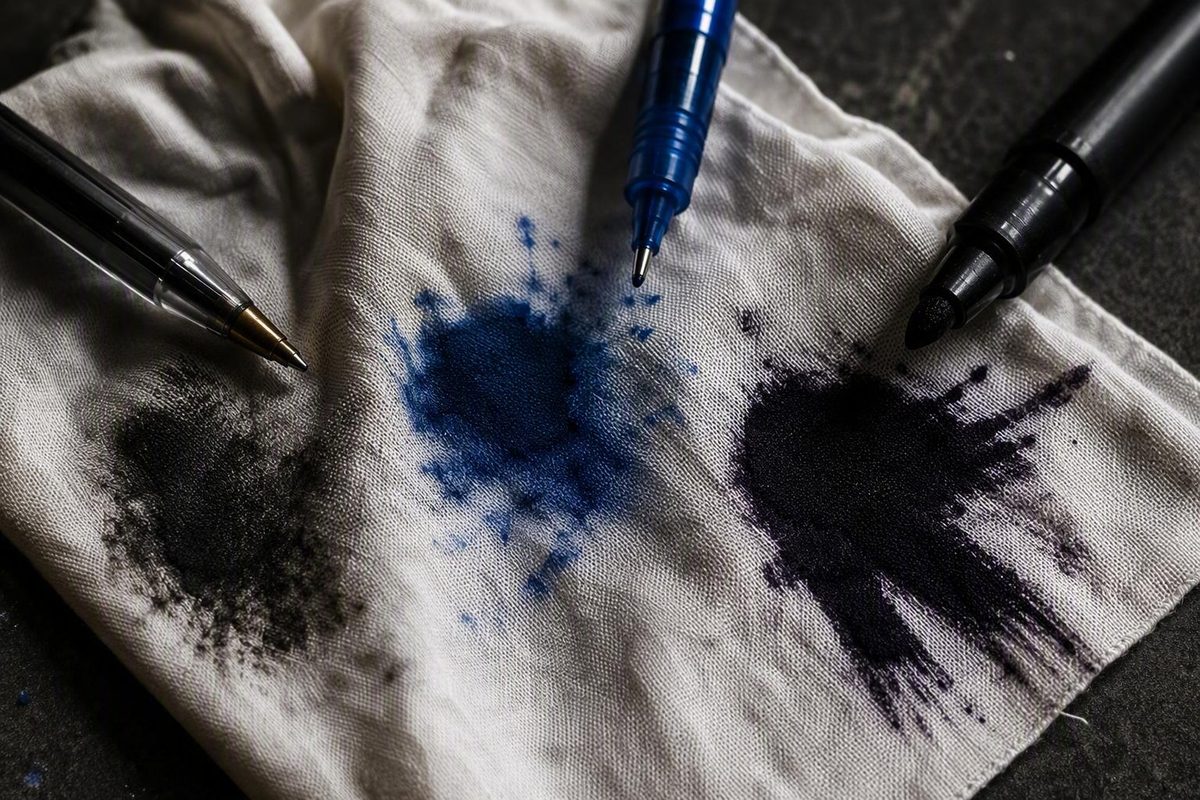
Ink is not one thing. Ballpoint, rollerball, gel, fountain, and permanent marker inks each use a different chemistry, and a method that works for one often does nothing for another. Knowing the ink type is the first step.
Ballpoint ink (oil-based)
Ballpoint ink uses a paste of dye dissolved in oil or glycol. It does not dissolve in water. Approach it like an oil stain with a dye component:
- Isopropyl alcohol (70–91%): The most accessible solvent that works. Apply to a cotton ball, blot the stain from outside inward. Do not rub — this spreads ink laterally. Change cotton balls frequently to avoid re-depositing ink.
- Alternatively, hand sanitizer with a high alcohol content (60%+) works on smaller stains.
- After the ink lifts, wash with dish soap and warm water to remove any oily residue.
What does not work: water, hairspray (older formulas contained high-alcohol lacquers, but modern water-based hairsprays do not dissolve ballpoint ink).
On synthetic fabrics (polyester, nylon), rubbing alcohol may affect dye if left on too long. Apply briefly, blot immediately, rinse.
Gel ink (water-based, pigment-suspended)
Gel ink contains pigments suspended in a water-glycerin carrier. It responds differently from ballpoint:
- Cold water and dish soap applied immediately work reasonably well on fresh gel stains.
- For set stains, an enzyme pre-treatment cleaner followed by a standard warm-water wash is more effective than alcohol.
- Isopropyl alcohol can work on some gel inks but is less reliable than it is for ballpoint.
Fountain pen ink (water-based, dye-based)
Standard fountain pen inks are dye-in-water solutions, usually with a small amount of surfactant or humectant. They are among the easier inks to remove when fresh:
- Cold water immediately, followed by dish soap.
- For set stains on cotton or linen: a dilute hydrogen peroxide solution (3%, pharmacy grade) plus a small amount of dish soap, left 10 minutes, then rinsed.
- Iron gall inks (historical and some niche modern formulas) contain tannic acid compounds that can cause permanent staining on some fabrics; treat immediately and get to a professional cleaner if the fabric is valuable.
Permanent marker (solvent-based: alcohol, acetate, or xylene)
Permanent markers use pigments suspended in a fast-evaporating solvent with a resin binder that bonds the pigment to surfaces. This binder is what makes them “permanent.” Breaking it requires a strong solvent:
- Isopropyl alcohol (91%+): Works on most marker formulas on fabric. Soak the stain, blot aggressively.
- Acetone (nail polish remover): More aggressive; effective on fabric but damages acetate, triacetate, and some rayon. Check the care label.
- Rubbing a clean cloth soaked in hand sanitizer: On hard surfaces (glass, sealed countertops, whiteboards), hand sanitizer often removes permanent marker fully because the alcohol re-dissolves the resin before it has fully cured to the surface.
On fabric, permanent marker is often partially permanent despite treatment. You can reduce visibility significantly but full removal on dark-colored ink is unlikely.
Printer and laser toner
Laser toner is a plastic particulate fused with heat. It sits on fabric rather than penetrating deeply. Do not wash in hot water — this melts the toner into the fiber. Instead:
- Let it dry fully.
- Brush off loose powder before any wet treatment.
- Apply cold water and dish soap, wash in cold water.
- Accept that significant residue may remain.
Inkjet ink is water-based and behaves like fountain pen ink — respond fast with cold water.
Hard surfaces
On sealed countertops and glass: isopropyl alcohol removes ballpoint and permanent marker completely. On painted walls: rubbing alcohol may remove wall paint; test in a hidden area first. A magic eraser (melamine foam) works on many marker types on painted surfaces with light abrasion.
Drying rule (applies to all ink types)
Do not machine dry until you confirm the stain is fully gone. Heat from a dryer sets most inks permanently, and a partially-treated stain goes from difficult to essentially irreversible.