 StainList
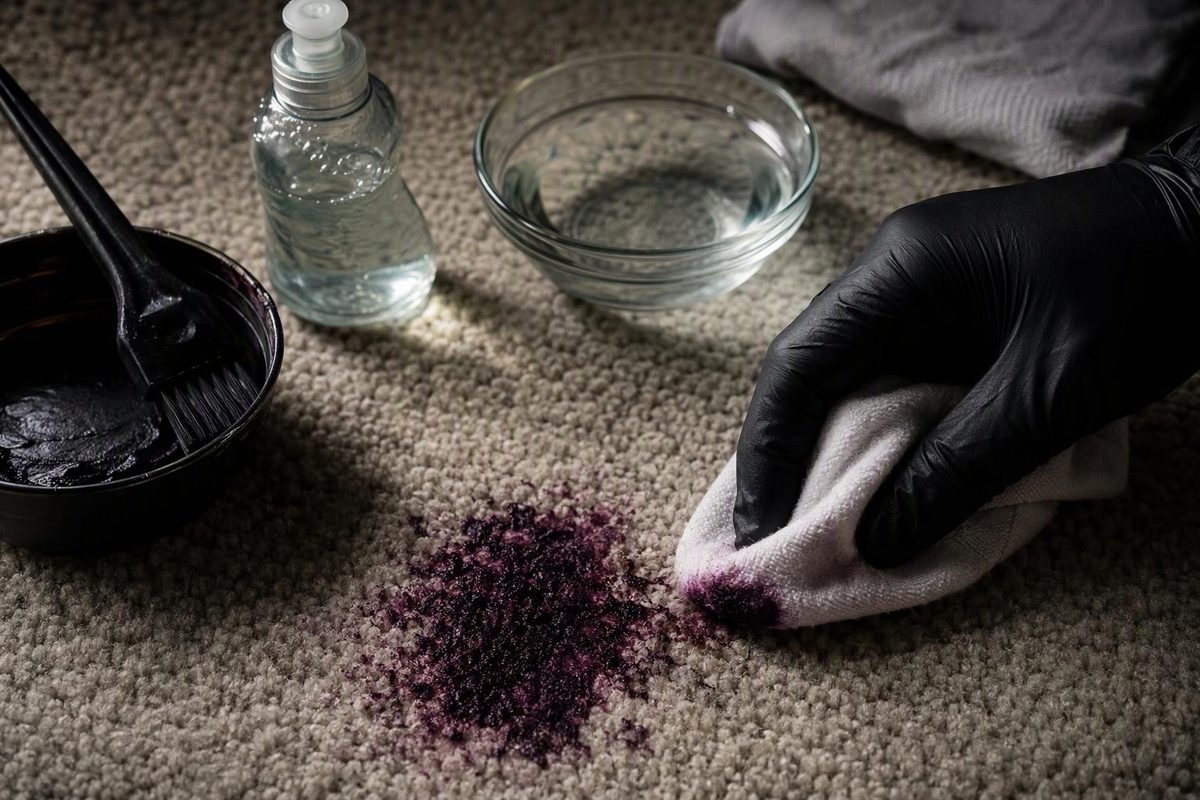
Lift excess dye and blot rather than scrub. On known synthetic carpet that permits water-based spot cleaning, start with a spot-tested, dilute dish-soap solution. Use small amounts and rinse out the cleaner afterward. Hair dye is a difficult stain—not an ordinary dirt mark—and full removal may not be possible, especially after a delay. University of Georgia Extension notes that substances designed to dye are extremely difficult to remove from carpet.
Check the carpet before choosing a cleaner
Find the carpet’s care instructions or fiber information, and keep the hair-dye packaging. Note whether the spill was unmixed colorant or dye mixed with developer; that information will help a cleaner assess it.
- Known synthetic carpet: Follow the dilute-detergent sequence below if the manufacturer permits water-based spot cleaning.
- Wool or wool blend: Blot first, then use only a compatible WoolSafe-approved spot remover according to its instructions—or contact a wool-carpet specialist. WoolSafe warns that high alkalinity can cause color bleeding and, in extreme cases, weaken wool; added bleaches can change its color.
- Silk, delicate or valuable rugs, or unknown fibers: Limit immediate treatment to lifting excess and dry blotting while you seek the manufacturer’s or a specialist’s advice.
For wool, compatibility matters more than a product’s “gentle” wording. See WoolSafe’s carpet-care guidance.
1. Lift and blot the excess
Wear gloves. Scoop thick dye cream up with a rounded spoon, without pushing it into the pile. Press a dry white cloth or white paper towel onto liquid dye, lifting and changing to a clean section each time. Work from the outside toward the center.
Do not rub or brush the spill. The Carpet and Rug Institute’s hair-dye instructions recommend lifting semi-solids, blotting liquids and working inward to prevent spreading.
For a dried mark: Lift only loose surface residue, then try the spot-tested cleaning step below if the carpet permits it. Do not scrape hard or saturate the carpet to soften the dye.
2. Spot-test diluted dish soap, then treat
Gather white cloths, water and liquid hand-dishwashing detergent, preferably clear and without bleach. Mix:
¼ teaspoon detergent with 1 cup of lukewarm water.
This is the Carpet and Rug Institute’s specified concentration for its hair-dye guide; it explicitly advises against making it stronger. Do not substitute laundry detergent or automatic-dishwasher detergent: these may contain optical brighteners or bleaching ingredients that affect carpet dyes or fibers. Source: CRI
- Apply a little solution to an inconspicuous area using a white cloth.
- Blot, rinse lightly and allow the test patch to dry. Stop if carpet color transfers, the patch changes shade or the texture changes.
- If the test passes, dampen a fresh white cloth with the solution—not the carpet itself.
- Dab the stained fibers gently, working inward. Allow a few minutes of contact, then blot with a dry cloth.
- Repeat while hair-dye color continues transferring to the cloth. Use clean sections so you do not put dye back down.
Stop point: If no more dye transfers and the mark is not improving, do not increase the soap concentration or start scrubbing.
3. Rinse and dry before assessing the result
Remove detergent with a cloth lightly dampened with clean water, then blot dry. Repeat with small amounts as needed. CRI recommends a mist sprayer to prevent overwetting and warns that detergent residue can attract soil. Rinsing guidance
Press clean, dry towels onto the area and allow it to air-dry fully, with airflow. Judge the remaining mark after drying rather than repeatedly wetting it while checking progress.
If dye remains: choose one compatible treatment
A carpet-labeled dye-stain remover may be the next step, but only if both the carpet’s care instructions and the product label permit it. Spot-test again, follow the stated contact time, and remove the product as directed. Do not layer it over leftover cleaner.
Hydrogen peroxide is not a universal carpet remedy. Clorox discusses a peroxide-containing treatment specifically for semi-permanent hair dye on a rug, with color testing and controlled contact time. That does not establish a safe concentration or overnight dwell time for plain peroxide on every carpet. Prefer a compatible carpet product rather than adapting a laundry formula. Clorox’s semi-permanent-dye guidance
Vinegar is not a guaranteed dye remover either: CRI describes its main role as lowering alkalinity. Avoid improvised mixtures of vinegar, ammonia, bleach or other cleaners.
Contact a professional promptly for a large spill, a valuable rug, failed spot testing or a persistent mark after gentle treatment. Tell them which dye spilled and every cleaner already applied. Professional cleaners have access to more aggressive treatments and specialized equipment, but stubborn dye still cannot be promised to disappear. CRI’s professional-care advice