 StainList
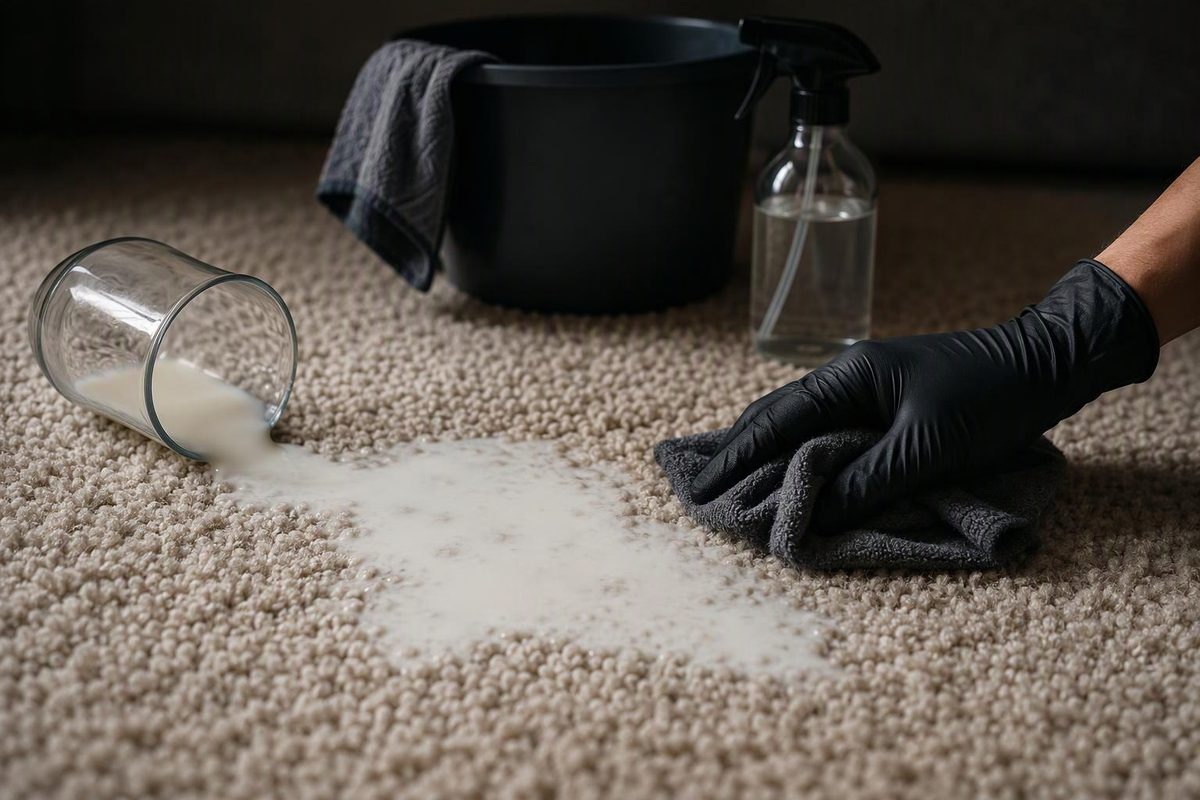
Blot up the milk, clean any remaining residue with a spot-tested mild cleaner, then rinse sparingly and dry thoroughly. Removing the visible mark is not enough if milk remains in the pile or padding: a spill can leave a lingering sour smell. The aim is to lift the residue out, not cover its odor. COIT’s milk-spill guidance identifies milk’s proteins, fats and sugars as the material that needs removing.
Check the carpet before choosing a cleaner
For a small surface spill on ordinary synthetic carpet whose care instructions permit water-based spot cleaning, use the diluted dish-soap method below. If the manufacturer specifies a particular cleaner, follow that guidance instead. A large spill that has soaked through needs professional assessment rather than repeated surface wetting.
For wool or wool-rich carpet, use a WoolSafe-approved carpet spotter rather than dish soap. WoolSafe advises against household washing-up liquid because it can leave sticky residues and cause rapid soiling. For silk, viscose, antique or valuable rugs, blot the spill and seek specialist advice before wet cleaning. WoolSafe’s care guide recommends professional help for extensive or old, set-in stains.
Test any cleaner in a hidden area first. Let the test dry and check for color transfer onto a white cloth, fading or a texture change. Stop if any occurs.
Remove a fresh milk spill
Gather white absorbent cloths or paper towels, a bowl, a measuring spoon and a fan.
- Absorb the milk before adding water. Press a dry white cloth onto the spill, lifting and replacing it as it becomes wet. Work from the outside toward the center. Do not rub or scrub.
- Try a little cool water. Blot with a cloth lightly dampened with plain cool water, then press with a dry cloth. For a small, fresh spill, this may be enough; if no residue remains, move to drying.
- If needed, mix a weak detergent solution. For suitable synthetic carpet, use ¼ teaspoon of clear, non-bleaching hand dishwashing liquid in 1 cup of lukewarm—not hot—water. Do not increase the concentration. Do not substitute automatic dishwasher detergent or laundry detergent. If using a manufacturer-specified or WoolSafe-approved spotter instead, follow its label for application, dwell time and rinsing.
- Apply the dish-soap solution to the cloth, not by pouring it onto the carpet. Gently dab the affected pile, leave it for a few minutes, then blot with a fresh dry cloth. Repeat while residue continues transferring to the cloth; stop if the treatment is no longer improving the spot.
- Rinse out the cleaner. Use a fresh cloth lightly dampened with cool water, followed by a dry cloth. Repeat these small rinse-and-blot cycles to remove the detergent without saturating the backing.
The Carpet and Rug Institute’s milk instructions specify this detergent dilution, gentle outside-in blotting and a cold-water rinse. They also warn that detergent left behind can attract soil. Keep the water cool to lukewarm throughout milk cleanup, as recommended by the Good Housekeeping Institute.
If the milk has dried
Gently lift any loose crust with the rounded edge of a spoon; do not scrape hard against the fibers. Hold a lightly cool-water-dampened white cloth against the remaining residue briefly to soften it, then blot. Repeat gently rather than soaking the patch or scrubbing it.
Once the residue softens, follow the compatible cleaner and rinse sequence above. Dried milk needs patient removal, not a stronger soap mixture. For a cocoa-colored spill, use the additional guidance for chocolate milk on carpet.
Extract moisture and dry the spot
Press firmly with clean, dry towels. To draw out more moisture, place a thick stack of white paper towels over the patch, topped with a smooth-bottomed baking dish and a stable weight. Replace wet towels as needed. This is the absorption method described in Shaw’s carpet-care instructions.
Remove the wet towels and direct a fan across the area; a dehumidifier can help in a humid room. Keep foot traffic and furniture off the patch until it is completely dry. Do not use a hot hair dryer or keep adding cleaner to a damp spot.
If the sour smell or mark returns
After the carpet dries, check for odor, stiffness and a returning mark. If sour odor remains, consider one carpet-labeled enzymatic cleaner intended for food residues and odors, provided it is compatible with the carpet. For wool, use only a product approved for wool, such as a WoolSafe-approved spotter. Follow the product’s own dose, dwell time and rinse directions; do not assume every pet cleaner suits milk or wool. COIT recommends enzymatic treatment for older milk spills and odors. Do not mix or layer cleaners.
If a large spill soaked through, the odor persists after compatible treatment, or the stain reappears during drying, stop repeated surface wetting and call a carpet-cleaning professional. Residue can travel upward from deeper layers as the carpet dries—a process called wicking—so more surface soap may not reach the problem. Bane-Clene explains this mechanism. Ask the cleaner to assess the backing and padding, not just the visible pile.