 StainList
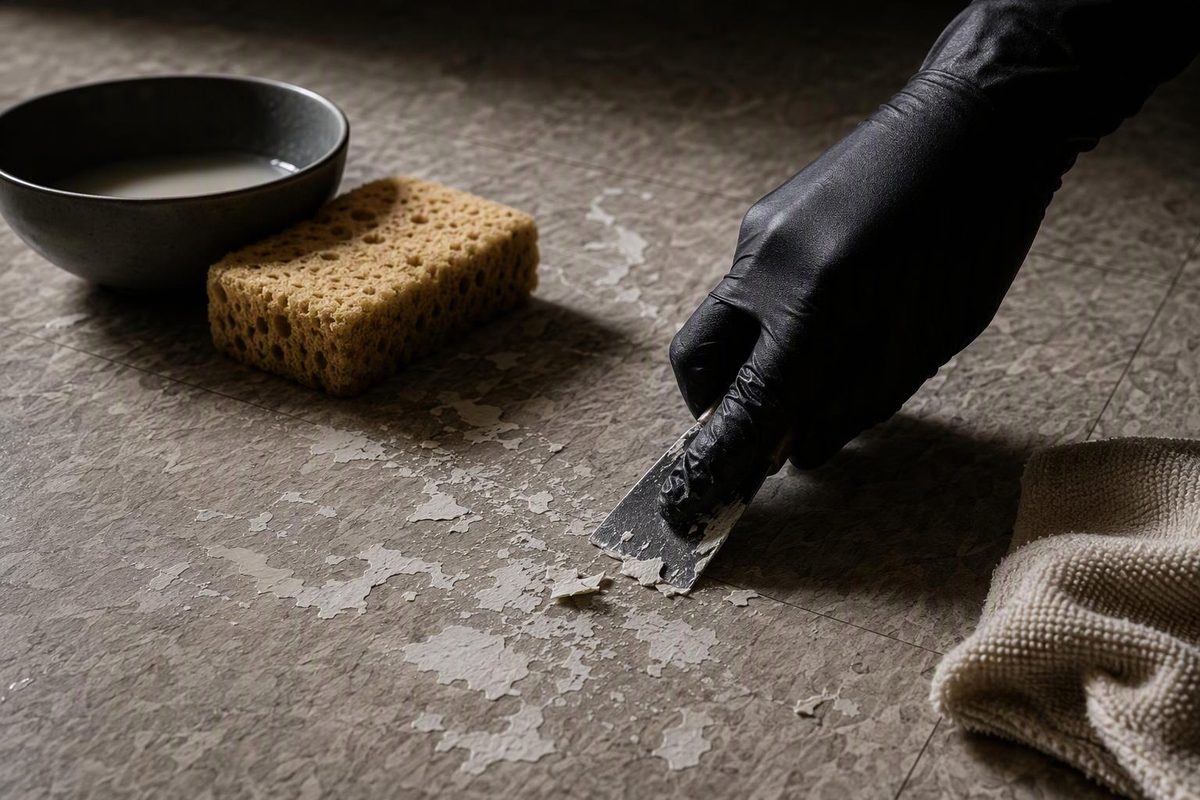
Blot wet paint promptly; gently lift dried drips with a plastic scraper. Clean the residue with a floor-approved cleaner, then use rubbing alcohol only if your flooring care guide permits it. Do not jump straight to paint stripper or nail-polish remover.
The aim is to remove the paint without changing the vinyl’s color, texture or sheen. Sheet vinyl and luxury vinyl planks do not necessarily tolerate the same treatments.
Check the paint and flooring first
Check the paint can’s cleanup instructions: “soap and water” identifies a water-cleanup product; instructions naming a solvent mean water alone is not the intended cleanup method. If the paint is unknown, start with lifting and gentle cleaning rather than guessing at a solvent.
Find your flooring brand and product care guide, if possible. Shaw permits isopropyl alcohol for stubborn spots on its luxury vinyl, while Karndean directs owners toward approved pH-neutral cleaners and its own spot-cleaning products. Neither recommendation is permission to use every household cleaner on every vinyl floor. Shaw’s care guidance and Karndean’s cleaning guidance illustrate that difference.
Gather white absorbent cloths, water, a smooth plastic scraper and your approved floor cleaner. Before using any cleaner or permitted solvent, test it on a spare piece or inconspicuous area. Let the test dry and compare its color and sheen with untreated flooring. Stop if it becomes dull, tacky, discolored or visibly altered. If you cannot identify the flooring, do not proceed to solvents without compatibility advice from the manufacturer or installer.
1. Lift wet paint without spreading it
- Blot up the bulk with a white cloth or paper towel. Work inward from the edges and change to a clean section frequently. Do not wipe a large puddle across clean flooring.
- For water-cleanup paint, wipe the remaining film with a water-dampened white cloth. Armstrong’s residential sheet-vinyl guide starts wet paint removal with water on a clean white cloth. See its paint-removal sequence.
- For oil-based or solvent-cleanup paint, lift as much as possible first. Before treating the remaining film, check the flooring guide—not just the paint can—for an allowed solvent.
- Clean the spot with the approved floor cleaner at its labeled dilution. Remove residue as directed and dry the area.
Keep cloths damp rather than dripping, and avoid pushing paint or liquid into seams. If the floor was just installed, check its washing restrictions: Mannington, for example, advises avoiding scrubbing or washing its sheet vinyl for at least three days and avoiding seams during initial spot cleaning. Mannington’s sheet-vinyl care guide.
2. Gently lift dried paint
Remove loose grit around the drip first. Then try easing a smooth plastic scraper beneath the paint’s edge, keeping it nearly flat to the floor. Use light pressure; do not dig into the vinyl or force a drip that will not release.
Armstrong’s sheet-vinyl instructions recommend carefully scraping dried paint with a thin spatula. A smooth plastic tool is a cautious starting choice; a razor blade or sharp metal edge is not. Armstrong’s paint instructions.
Wipe the remaining mark with your approved cleaner. If the paint stays firmly attached, move to the compatibility check below rather than increasing scraping pressure.
3. Use a permitted solvent only for remaining residue
If your floor’s instructions allow rubbing alcohol (isopropyl alcohol), spot-test it first. Dampen a clean white cloth—not the floor—and gently wipe the paint residue. Use brief applications rather than leaving a soaked cloth over the mark. Shaw recommends alcohol with a clean white cloth for spots that water and cleaning agents cannot remove. Shaw’s solvent guidance.
Remove treatment residue as the care guide directs, let the spot dry and inspect before continuing. Mannington specifically advises rinsing and drying between stain-removal procedures. If paint transfers to the cloth without a change to the floor, continue cautiously with clean cloth sections. If there is no progress, stop.
Do not automatically escalate to mineral spirits, acetone or a commercial paint remover. Armstrong’s sheet-vinyl guide lists stronger solvents later in its paint sequence, but that does not establish compatibility with an unknown plank finish. Use them only with explicit approval for your particular floor and follow the solvent’s ventilation, protective-equipment and fire-safety instructions. Alcohol and mineral spirits are flammable. Mannington’s solvent warning.
What makes the damage worse—and when to stop
Avoid abrasive powders, steel wool, aggressive scrubbing pads and sharp scraping tools. Do not substitute vinegar or ammonia for a verified cleaner: Shaw specifically warns against both on its luxury vinyl. Household dish soap is not a universal choice either; Mannington’s sheet-vinyl guide warns that soaps and detergents leave a dulling film.
Stop immediately if flooring color appears on the cloth, the surface softens, or a shiny or dull patch develops. A flat mark left after the raised paint is gone may be staining or finish damage rather than removable paint. For stubborn cured paint, widespread overspray or an altered finish, ask the flooring manufacturer or installer about the next treatment or repair. More force is not a reliable next step.