 StainList
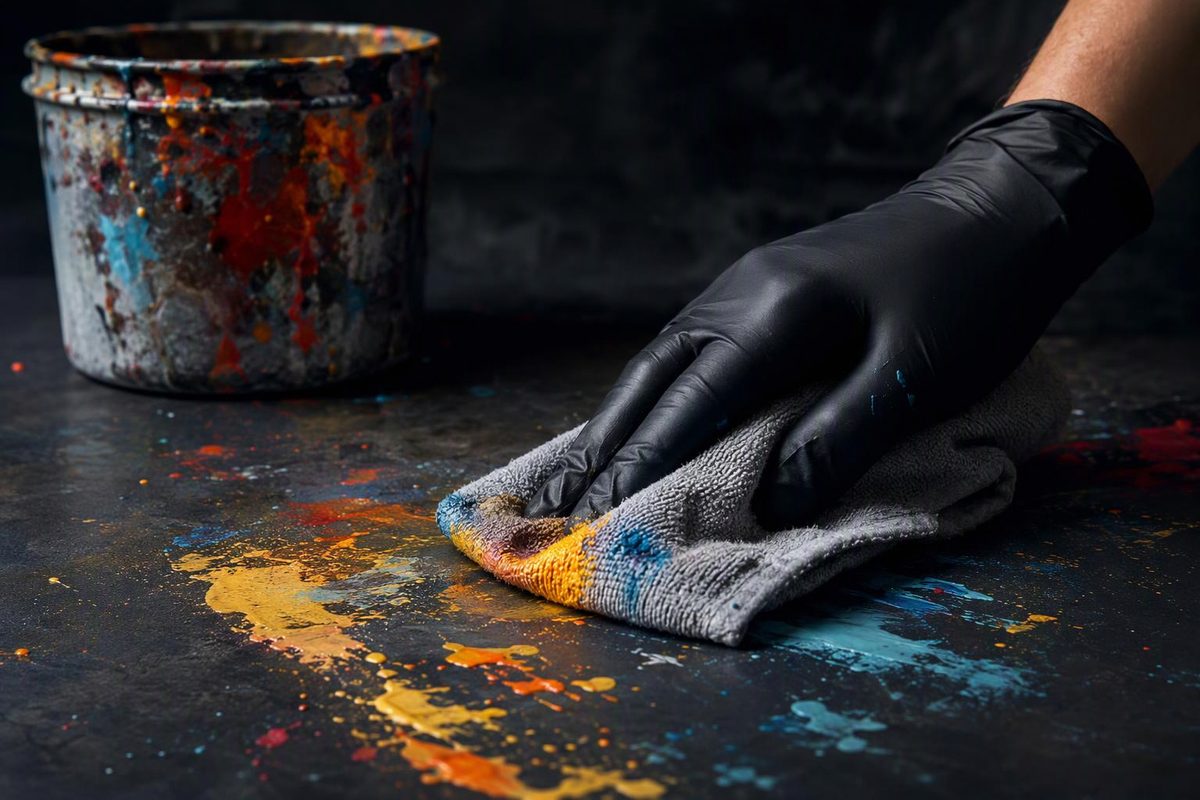
For wet acrylic paint, lift the excess, then use water and a suitable detergent. For dried paint, the surface determines what is safe: a water soak can loosen paint on a glass palette, while clothing may need a cautious rubbing-alcohol trial—and may never come completely clean.
This guide covers ordinary water-based artist and craft acrylics. Check the paint container and the stained item’s care instructions first; do not use these steps for an unidentified solvent-based or two-part coating.
Acrylic paint forms a cohesive polymer film as water leaves it. That is why “water-based” does not mean “washable once dry,” and why prompt treatment matters. Golden Artist Colors explains this film-forming process.
Before treating the stain
- Check whether it is wet or dry. Paint that smears or transfers readily is still wet; a firm crust needs the dried-paint approach. A dry skin can conceal wet paint beneath it, so do not press it into the material.
- Spot-test the cleaner. Use a hidden area, then rinse or wipe as appropriate and let it dry. Stop if the item’s own color transfers, the texture changes, or a finish becomes dull, sticky or cloudy.
- Lift rather than spread. Use a spoon or dull plastic edge for excess paint. Do not pull off paint that brings fibers or finish with it.
- Keep stained clothing out of the dryer. Inspect after washing and air-dry while assessing any remaining mark. ACI advises against dryer use until a stain is removed.
For dry-clean-only clothing, silk, wool, antique textiles or valuable upholstery, lift loose excess and seek professional advice rather than experimenting with solvents.
Wet acrylic paint on washable clothes
- Remove the bulk. Scoop off thick paint without pressing it into the cloth.
- Flush from the back. Turn the garment inside out and run cool water through the reverse of the stain. This directs paint out rather than farther through the fabric. Paint-maker Schipper recommends this approach for fresh acrylic spills.
- Pretreat the residue. Apply enough liquid laundry detergent to cover the remaining mark. Gently work it in with your fingers; follow the detergent’s pretreatment directions.
- Wash according to the care label. Wash separately from unstained clothing and inspect before drying. Repeat only while the mark is improving.
A small amount of hand dishwashing liquid is another pretreatment option; rinse it out before machine washing. Crayola’s acrylic-paint instructions recommend water rinsing, dish-soap pretreatment, label-safe laundering and air-drying; the company also cautions that results vary.
If you cannot wash immediately, keep the paint spot damp without letting it touch clean fabric. Utrecht’s clothing-care guidance emphasizes keeping acrylic stains wet until treatment and avoiding color transfer during laundering.
Dried acrylic paint on washable clothes
Dried paint may be permanent. Start by gently lifting loose surface flakes, then try the detergent-and-wash sequence above. Do not scrub until the cloth thins or becomes fuzzy.
If paint remains on an otherwise sturdy, washable garment, rubbing alcohol is an optional next step—not a guaranteed fix. Tide recommends isopropyl alcohol for acrylic paint but warns that it can fade clothing. See Tide’s paint-removal guidance.
For a cautious trial:
- Remove the garment and spot-test plain household rubbing alcohol. Check the bottle; 70% isopropyl alcohol is a common household formulation, not a proven optimum for every acrylic stain.
- Place a clean white absorbent cloth beneath the stain. Dampen another white cloth with a small amount of alcohol and dab the paint gently.
- Move to clean sections as paint transfers. Avoid soaking the whole garment or letting alcohol spread onto printed decorations.
- Rinse thoroughly, pretreat with laundry detergent and wash as labeled.
Stop if paint no longer transfers or the garment’s dye begins transferring. Work with ventilation, away from flames and ignition sources; rubbing alcohol is flammable. Poison Control provides these safety precautions and describes the common 70% formulation.
Acrylic paint on carpet
For a wet spill, scoop up thick paint and blot liquid with a dry white cloth. For dried paint, gently loosen only free flakes and vacuum them up.
Then try a mild detergent treatment, provided the carpet’s care instructions permit water cleaning:
- Mix ¼ teaspoon of hand dishwashing liquid with 1 cup of lukewarm water. Do not make it stronger, and do not use laundry detergent or automatic-dishwasher detergent.
- Spot-test, then apply a small amount of solution to a white cloth—not directly into the carpet.
- Work gently from the outside inward without rubbing. Leave the treated spot for a few minutes, then blot. Repeat while paint transfers.
- Rinse using small amounts of clean water and blot after each rinse. Press dry towels onto the area to absorb moisture.
This is the Carpet and Rug Institute’s detergent method for water-based latex paint, used here as a conservative first treatment for acrylic spills—not proof that it will remove cured artist acrylic. Thorough rinsing matters because detergent residue can attract soil. Avoid flooding the backing or scrubbing the pile. If the paint stays bonded, or the spill is large, call a carpet cleaner rather than pouring in solvent.
Hard surfaces and painting tools
Plain glass or plastic palettes: Cover dried paint with a very wet sponge or rag for 3–5 minutes, then try gently peeling or lifting it with a plastic edge. Golden recommends this water-softening method for palettes. It is not permission to soak furniture, coated glass or electronics.
Finished wood, including wood floors: Lift wet excess, then use a lightly damp cloth and a finish-approved cleaner. Dry promptly. Do not leave a wet rag soaking the spot; Bona warns that excess liquid can warp wood flooring. If dried paint resists gentle lifting, ask the finish manufacturer about a compatible remover before using alcohol or stripper.
Clear acrylic plastic: Start with mild soap, lukewarm water and a soft cloth. Do not assume the clothing alcohol method is safe here. ACRYLITE warns that incompatible solvents, including acetone, can cause surface cracking.
Brushes: Clean before the paint hardens, using water with a small amount of dish detergent. For hardened paint, choose a brush cleaner compatible with the bristles and follow its label. Golden supports these tool-cleaning approaches, but they should not be transferred to clothing or furniture.
For masonry, use the separate paint-removal guide for concrete.