 StainList
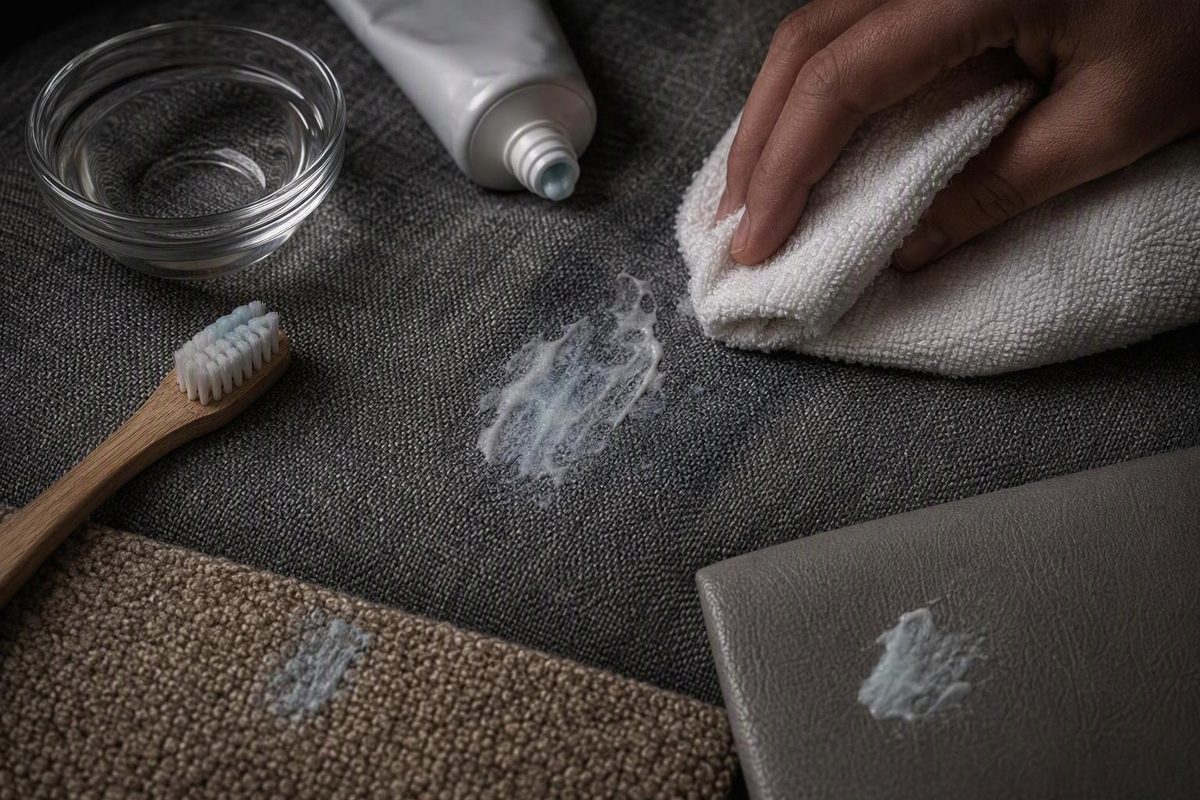
On washable clothes, lift off excess toothpaste, blot with cool water, then treat any remaining mark with a few drops of liquid laundry detergent and wash by the care label. Air-dry until you have checked that the stain is gone. Avoid vigorous rubbing, which can push toothpaste farther into the fabric. See Persil’s toothpaste guidance.
For carpet, upholstery or a bathroom surface, use the matching method below—not the clothing detergent treatment.
Clothes: fresh or dried toothpaste
Check the care label first. For dry-clean-only clothing, stop before wet treatment and take the item to a professional. Seek professional advice for valuable silk, wool or fragile garments rather than improvising a spot treatment.
Before using a cleaner, test it on a hidden seam: apply a small amount, rinse if appropriate, and let the area dry. Stop if the fabric’s color or texture changes. Care-label checks and hidden-area testing are precautions in University of Georgia’s toothpaste stain guide.
- Lift the excess. Use the edge of a spoon or a blunt butter knife to lift fresh paste without smearing it. If the mark is dry, do not grind the crust into the cloth; move to dampening it.
- Blot with cool water. Use a smooth white cloth, damp rather than dripping. Keep switching to a clean section as toothpaste transfers. For dried residue on washable fabric, gently dab to soften it; if necessary, submerge the stained area in cool water and gently work the loosened paste out.
- Check before adding detergent. If the visible paste has lifted, rinse and let the area air-dry. If you need to wear the garment immediately, this is the simplest first attempt—but a remaining white halo may need laundering.
- Pretreat any remaining mark. Apply a few drops of liquid laundry detergent and gently work it into the damp stain. Follow the detergent’s pretreatment directions for dwell time and fabric restrictions.
- Wash and inspect. Use cool or warm water as permitted by the garment’s care label. Air-dry, then check. Repeat the treatment if residue remains; do not tumble-dry or iron the marked area yet.
The cool-water treatment for old stains, smooth white cloth and air-drying steps follow Maytag’s toothpaste stain instructions.
If a white or colored mark remains
A white mark is not automatically permanent damage. Some toothpastes contain white pigment, including titanium dioxide, while colored gels can leave dye behind. Detergent and laundering are the next steps after water alone. If color persists, use a fabric-compatible prewash stain remover according to its label, then wash again. Persil explains these formulation differences; the American Cleaning Institute recommends pretreatment, label-safe laundering and repeating before drying.
A lighter patch that remains after thorough cleaning may instead be dye loss. Some whitening toothpastes contain hydrogen peroxide, as shown in Colgate’s product information; check the tube’s ingredients. Persil warns that whitening formulas can bleach colored clothing. Appearance alone cannot confirm dye loss, but cleaning cannot replace missing dye. Stop escalating cleaners if the area is clean and the original color appears to have disappeared.
Carpet: remove residue without soaking
Check the carpet or rug’s care instructions and spot-test first. For valuable wool, silk, viscose or specialty rugs, seek professional advice before wet cleaning.
- Lift excess paste with a spoon, without pressing it into the pile.
- Blot with a white cloth lightly dampened with cool water.
- If residue remains and wet cleaning is permitted, mix ¼ teaspoon of mild liquid hand-dishwashing detergent with 1 cup of lukewarm water. Use a non-bleaching product—not dishwasher detergent or laundry detergent. Do not increase the concentration.
- Apply a small amount to the cloth, not directly to the carpet. Blot from the edges toward the center. Let it work for a few minutes, then blot again; repeat while residue transfers.
- Rinse by blotting with a separate cloth dampened with plain lukewarm water. Repeat with small amounts to remove soap, blotting dry after each rinse. Press with a dry white towel and allow the area to dry fully.
UGA’s toothpaste guide recommends lifting, detergent cleaning, rinsing and drying. The gentler dilution above comes from the Carpet and Rug Institute’s general spot-cleaning instructions, which warn that leftover detergent can attract soil. Do not scrub or flood the backing. If residue stops transferring but the mark remains, consult a carpet cleaner rather than making the solution stronger.
Upholstery: the cleaning code comes first
Gently lift excess toothpaste, then check the furniture tag:
- W: Spot-test and use the specified water-based upholstery shampoo or foam. Blot from the outside toward the center; do not saturate.
- W/S or S/W: A water-based method may be permitted. If the manufacturer allows it, blot with a cloth lightly dampened with cool water. Follow its approved cleaner instructions if residue remains, then rinse and dry as directed.
- S: Do not apply water; obtain advice about an appropriate solvent treatment.
- X: No liquid or foam cleaner. Seek professional help for paste stuck to the fabric.
These limits follow La-Z-Boy’s fabric-care guidance; cool-water blotting for toothpaste is described by UGA. If the code is missing, ask the furniture manufacturer before wet treatment. A removable cushion cover is not necessarily machine-washable. For leather, use its specific care instructions rather than this fabric sequence.
Bathroom counters and other hard surfaces
Lift or blot away the paste, then use a soft damp cloth and the surface manufacturer’s approved cleaner. Avoid grinding dried paste into a polished finish.
For natural stone, use a neutral stone cleaner or mild dishwashing detergent with warm water, following the cleaner’s dilution instructions. Rinse thoroughly and dry with a soft cloth. Do not substitute vinegar, lemon juice or scouring powder: acids can etch susceptible stone, and abrasives can scratch it. If a clean stone surface still has a dull patch, consult a stone professional rather than scrubbing harder. These precautions come from the Natural Stone Institute’s care guide.