 StainList
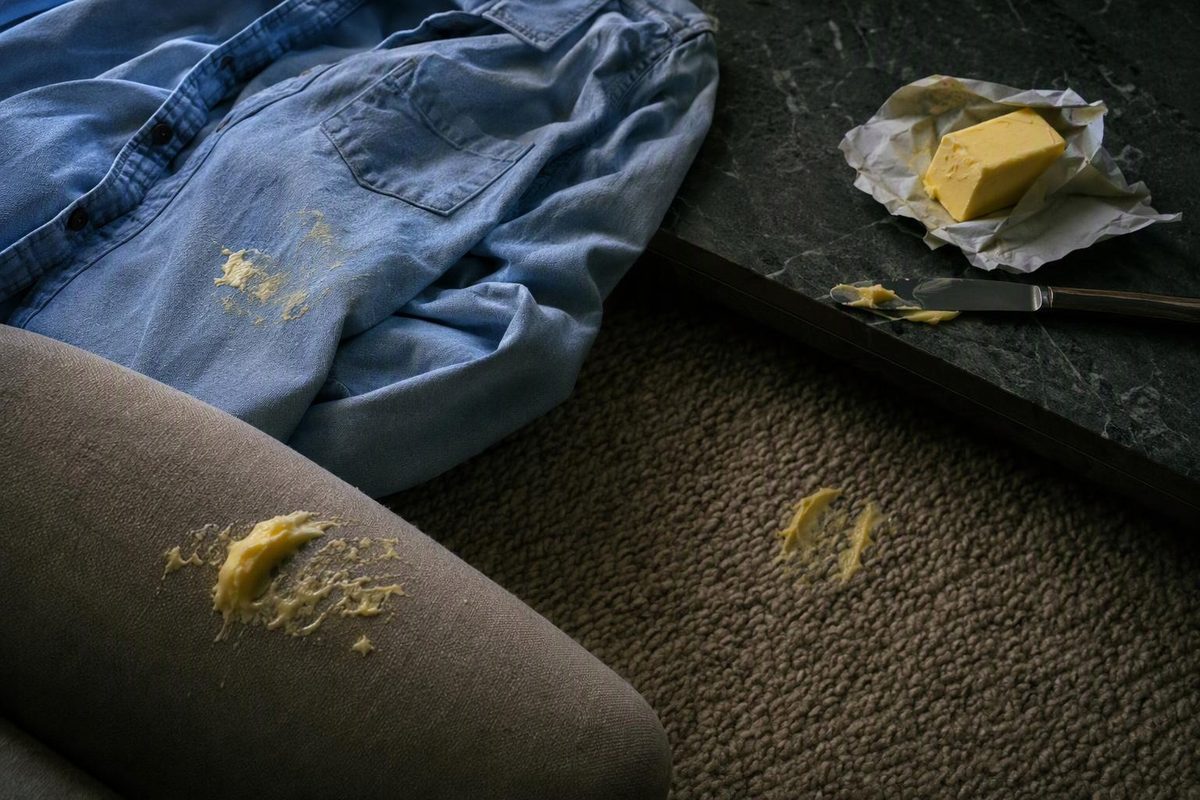
To get butter stains out, lift off the excess, then treat the greasy mark with a cleaner suited to the surface. For washable clothes, pretreat with liquid laundry detergent or a prewash stain remover, wash at the hottest care-label-safe temperature, and inspect before drying. Carpet and upholstery need small, controlled applications of material-approved cleaners; natural stone needs a neutral stone cleaner or mild dishwashing liquid.
Choose your surface and care instructions to see the appropriate treatment.
Butter-Stain Treatment Finder
Without JavaScript, expand the matching treatment below. Always check the maker’s instructions and let a hidden-area test dry before continuing.
Washable Clothes: Pretreat, Then Wash
- Lift butter with a spoon; blot melted residue with a white cloth.
- Apply pretreatment-approved liquid laundry detergent or a fabric-compatible prewash remover. Follow its contact time.
- Wash at the hottest care-label-safe temperature with the recommended detergent dose.
- Inspect before drying. Repeat if needed; do not tumble-dry with a visible stain.
If using a small amount of hand-dishwashing liquid instead, rinse it out thoroughly before machine washing. Do not use dishwasher detergent.
Water-Cleanable Carpet: Blot, Do Not Pour
- Scoop up butter and blot from the outside toward the center. Do not scrub or brush.
- Mix ¼ teaspoon clear, non-bleaching hand-dishwashing liquid with 1 cup warm—not hot—water.
- After a successful spot test, dampen a white cloth with the solution and blot.
- Blot with a separate cloth lightly dampened with plain water; press with dry towels and let dry fully.
This CRI dilution is published for wine and chocolate, not butter. It is only a mild first attempt where the carpet maker permits water-based cleaning. Do not substitute laundry detergent.
If grease remains after drying, use a manufacturer-compatible grease spot remover or contact a carpet cleaner. Do not increase soap concentration or wet the backing.
Unknown Carpet Care or Heirloom Rug: Stop Before Wetting
Lift loose butter and blot melted residue with a dry white cloth, working inward. Do not scrub or brush.
Check manufacturer instructions before applying liquid. Use a professional service for an heirloom rug.
W or WS/SW Upholstery: Use an Approved Product
Lift loose butter first. Spot-test a compatible upholstery cleaner and follow its directions without saturating the fabric or filling.
W: water-based upholstery shampoo or foam; no solvents.
WS/SW: upholstery shampoo, mild-detergent foam or an approved cleaning solvent may be permitted.
Do not assume the carpet recipe is suitable or that a removable cover is machine washable.
S Upholstery: No Water or Dish-Soap Solution
Lift loose butter gently. An S code permits solvent-only cleaning.
Consult an upholstery cleaner before adding liquid. Follow the furniture maker’s instructions; a removable cover is not automatically machine washable.
X or Unknown Upholstery Code: Do Not Add Liquid
Lift loose butter gently and consult an upholstery cleaner.
X: vacuuming or light brushing only; no water- or solvent-based cleaner.
An unknown code does not establish permission to use any cleaner. Find the code beneath a cushion or under the furniture before treatment.
Natural Stone: Clean, Rinse and Dry
- Blot up the butter.
- Use a neutral stone cleaner or mild dishwashing liquid and warm water, following the cleaner’s dilution instructions.
- Rinse and dry with a soft cloth.
Avoid vinegar, lemon juice and abrasive powders. If a dark patch remains after drying, ask the stone supplier or a restoration specialist about oil-stain treatment or a poultice.
Delicate Items: Remove Excess and Seek Specialist Care
For silk, wool, leather, dry-clean-only items or valuable textiles, gently remove loose butter and seek material-specific professional care.
Do not apply the general washable-clothes or carpet method.
Sources: American Cleaning Institute and Tide (laundry); Whirlpool (suds); Carpet and Rug Institute (carpet); Ashley (upholstery codes); Natural Stone Institute (stone). CRI’s dilution is not butter-specific.
Before applying cleaner, check the care instructions and test it in a hidden area. Let the test area dry; stop if you see dye transfer, a ring, fading or a texture change. For silk, wool, leather, dry-clean-only items or valuable textiles, remove loose butter gently and seek material-specific professional care rather than using the general methods below.
Washable Clothes: Pretreat, Wash and Check Before Drying
- Lift the excess. Use the edge of a spoon to pick up solid or soft butter without pressing it into the fabric. Blot melted butter with a plain white absorbent cloth; do not spread it across a larger area.
- Pretreat the oily patch. Apply enough liquid laundry detergent to cover the mark, provided its label permits pretreatment. Work it in gently with a fingertip and follow the product’s contact-time instructions. Alternatively, use a fabric-compatible prewash stain remover. The American Cleaning Institute’s stain-removal guide recommends prewash treatment for butter and permits liquid laundry detergent for light grease stains.
- Wash by the care label. Use the hottest water the item’s label allows—not automatically a hot cycle. Add the recommended laundry-detergent dose. Both ACI and Tide’s butter-stain instructions recommend the hottest fabric-safe wash temperature.
- Inspect before heat. If you can still see the greasy patch, repeat the treatment and wash. Air-dry if you need the fabric dry to judge the result. Do not tumble-dry while a stain remains, as directed in ACI’s guidance.
This sequence applies to washable clothes, tablecloths and napkins whose care labels permit the treatment.
Hand-Dishwashing Liquid Is an Alternative Pretreatment
Tide’s butter-stain instructions also recommend gently working dishwashing liquid into the stain and leaving it for a few minutes. Use a small amount of hand-dishwashing liquid, not dishwasher detergent, on washable, spot-tested fabric.
Rinse it out thoroughly before machine washing. Dish soap produces substantially more suds than laundry detergent, so avoid carrying it into the washer; Whirlpool warns about excess suds from dish soap.
Old or Dryer-Exposed Stains May Need Another Treatment
Start with pretreatment again rather than scrubbing harder. If the first wash does not clear the mark, try a prewash remover labeled for grease and suitable for the fabric, observing its stated dose and dwell time. Keep the item out of the dryer between attempts.
Older stains may still respond, but complete removal is not assured. Stop if treatment begins to affect the fabric or dye.
For the clothing-only sequence, see how to get butter stains out of clothes.
Carpet: Blot With Minimal Moisture
First scoop up butter with a spoon, then blot melted residue with a dry white cloth, working from the outside toward the center. Do not scrub or brush: the Carpet and Rug Institute’s carpet-care guidance warns that this can spread the spill and fray or change the carpet’s texture.
For a small mark on carpet whose manufacturer permits water-based spot cleaning:
- Mix ¼ teaspoon clear, non-bleaching hand-dishwashing liquid with 1 cup warm—not hot—water. CRI publishes this dilution for wine and chocolate stains in its carpet-cleaning tips. Here it is a mild first attempt for butter residue, not a butter-specific method or a guarantee of removal. Do not substitute laundry detergent.
- Spot-test, then dampen a white cloth with the solution. Blot the mark without pouring solution into the carpet. Move to a clean part of the cloth as residue transfers.
- Blot with a separate cloth lightly dampened with plain water to remove cleaner. Press with dry towels and allow the area to dry fully. CRI’s carpet-care guidance recommends small applications and clear-water blotting after treatment.
If the greasy mark remains after drying, use a manufacturer-compatible carpet spot remover labeled for grease, or contact a carpet cleaner. Do not keep increasing the soap concentration or wetting the backing. For heirloom rugs, use a professional service.
Upholstery: The Cleaning Code Determines the Cleaner
Find the cleaning code beneath a cushion or under the furniture before wet treatment.
| Code | Permitted Cleaning | Avoid |
|---|---|---|
| W | Water-based upholstery shampoo or foam | Solvents |
| WS/SW | Upholstery shampoo, mild-detergent foam or approved solvent | Unapproved products |
| S | Solvent-only cleaning | Water and dish-soap solution |
| X | Vacuuming or light brushing only | Water- and solvent-based cleaners |
These definitions come from Ashley’s cleaning-code reference. The codes do not mean a removable cushion cover is machine washable. Follow the furniture maker’s instructions, spot-test, and do not saturate the fabric or filling.
Lift loose butter first. For W or WS/SW furniture, use a compatible upholstery product as directed rather than assuming the carpet recipe is suitable. For S, X or an unknown code, consult an upholstery cleaner before adding liquid. The carpet instruction against brushing is separate from an upholstery X code’s allowance for light brushing.
Natural Stone: Clean the Surface, Then Assess the Dark Patch
Blot up butter, then clean with a neutral stone cleaner or mild dishwashing liquid and warm water, following the cleaner’s dilution instructions. Rinse and dry with a soft cloth.
Avoid vinegar, lemon juice and abrasive powders. Acids can etch calcareous stone, and abrasives can scratch it, according to the Natural Stone Institute’s care and stain guidance.
If a dark patch remains after the surface is clean and dry, oil may have penetrated the stone. More surface washing may not remove it. Ask the stone supplier or a restoration specialist about an appropriate oil-stain treatment or poultice rather than experimenting with solvents on an unknown stone or finish.