 StainList
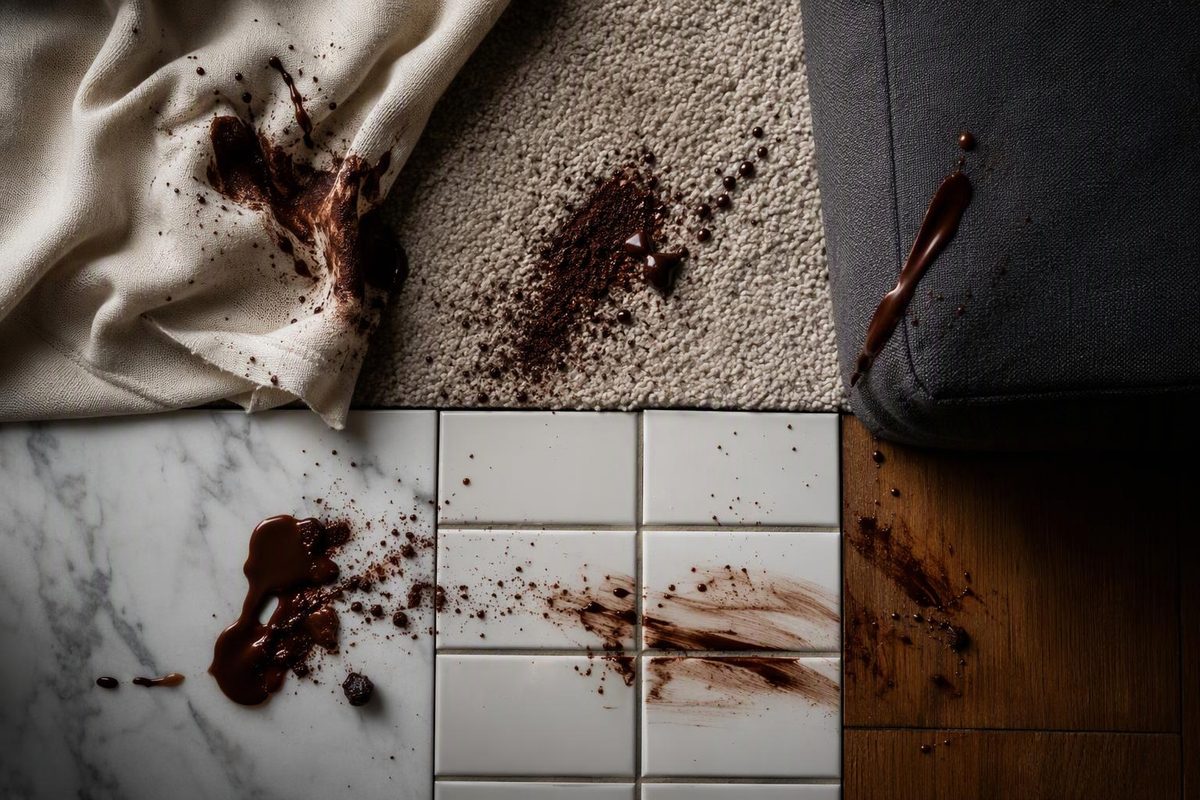
Remove the excess first, then match the treatment to the material. For washable fabric, rinse from the back with cool water, pretreat, wash according to the care label and inspect before using a dryer. For carpet or upholstery, blot rather than scrub and limit the moisture. On a washable hard surface, mild dishwashing liquid and water are the usual starting point.
Chocolate is a combination stain with both colored and greasy residue. Rubbing, heating the mark or pouring on several remedies at once can spread it or damage the material.
Start here on any surface
- Lift solid chocolate. Use a spoon, dull knife or the edge of a plastic card. If it is soft, chill it briefly with ice inside a sealed bag; do not grind it into the material.
- Blot liquid spills. For hot chocolate or chocolate milk, press with a clean white cloth, rotating it as it picks up liquid.
- Check the material. Read the garment care label, upholstery cleaning label or surface manufacturer’s instructions.
- Patch-test the cleaner. On a hidden area, check for color loss, texture change, dulling or finish damage.
- Use one treatment at a time. Do not combine stain removers, bleach, ammonia, vinegar or solvents.
Washable clothes and household fabrics
For washable, colorfast cotton, polyester and similar fabrics:
- Scrape away excess chocolate.
- Hold the stain face down and flush cool water through its back. This helps carry residue out rather than farther through the fibers.
- Apply a small amount of liquid laundry detergent or a labeled prewash stain remover. Leave it only as long as the product directs.
- Wash with detergent at the warmest temperature allowed by the care label.
- Inspect before tumble-drying. If a shadow remains, air-dry and repeat the pretreatment rather than exposing the mark to dryer heat.
The American Cleaning Institute’s chocolate method also starts by scraping away the excess, then soaking in cool water, pretreating and washing in the hottest water safe for the fabric (ACI stain-removal guide).
For a dried stain, scrape off brittle residue, then soak a washable item in cool water before pretreating. If the spill contained dairy, an enzyme-containing laundry product may help when its label permits use on the fabric; ACI recommends an enzyme product for dairy stains. Do not use one on silk or wool unless the product expressly allows that fiber.
Use bleach only when both the garment label and bleach label permit it. Do not reach for chlorine bleach merely because a brown shadow remains: it may remove dye or damage an incompatible fiber. For a clothing-only sequence, see how to remove chocolate stains from clothes.
Stop and use a professional cleaner for dry-clean-only garments, silk, wool, velvet, unstable dyes, structured clothing or valuable textiles. Tell the cleaner what made the stain and what, if anything, has already been applied.
Carpet and rugs
- Lift solid pieces without pulling at the pile. Blot chocolate drinks with a dry white cloth, working from the edge toward the center.
- Check the carpet or rug care instructions and patch-test in an inconspicuous place.
- If water-based spot cleaning is allowed, first try a carpet spot cleaner approved by the manufacturer. If none is available, the Carpet and Rug Institute gives a chocolate-specific mixture of 1/4 teaspoon clear dishwashing liquid in 1 cup warm water. Put a small amount on a white cloth rather than pouring it onto the carpet.
- Blot without scrubbing, rotating the cloth as the stain transfers.
- Blot with another cloth lightly dampened with plain water to remove detergent, then press with dry towels and let the area dry fully.
The Carpet and Rug Institute advises scooping up solids, blotting rather than scrubbing, and working from the edge inward; it warns against using laundry detergent on carpet (CRI carpet-cleaning guidance). Avoid saturating the pile or backing and do not apply heat.
A wool, silk, viscose, jute, hand-dyed or antique rug deserves specialist care. For separate instructions for solid chocolate, melted chocolate and chocolate milk, use the complete chocolate-on-carpet method.
Upholstery
Find the manufacturer’s cleaning label before adding moisture. If water-based cleaning is permitted, lift or blot the excess, then apply a small amount of diluted neutral detergent with a white cloth. Blot; do not rub. Follow with a barely damp cloth only if the instructions permit rinsing, then dry promptly with airflow but no direct heat.
Do not use this method on solvent-only or no-liquid-cleaning upholstery. Stop if a ring develops, dye transfers to the cloth, the nap changes or liquid reaches the cushion filling. Unknown fabric, leather, suede and valuable furniture are safer with a qualified cleaner. University of Georgia guidance notes that overwetting can create rings in upholstery and that solvent can damage foam padding, which is another reason not to improvise with a solvent (UGA Cooperative Extension).
Washable counters, tile, painted surfaces and finished wood
Gently scrape up the chocolate, then wipe with a soft cloth dampened with warm water and a small amount of dishwashing liquid. Wipe again with a clean damp cloth and dry. This basic sudsy-water sequence is consistent with UGA’s guidance for many washable hard surfaces (UGA Cooperative Extension).
Use very little moisture on finished wood and dry it promptly; UGA specifically cautions against leaving water or moisture standing on wood. On delicate paint, test first and stop if color or sheen transfers to the cloth.
For natural stone, unsealed grout or another porous surface, consult its care instructions before escalating. Acids, strong alkalis, abrasives and improvised peroxide mixtures can affect some materials or finishes. If the chocolate residue is gone but a dark patch remains, absorbed oil may need a material-specific treatment rather than more scrubbing.
What makes a chocolate stain worse
- Rubbing melted chocolate deeper into fibers
- Starting with an iron, hair dryer or tumble dryer
- Overwetting carpet, upholstery, wood or laminate seams
- Using a colored towel that transfers dye
- Combining household chemicals
- Escalating to bleach or solvent before checking labels and patch-testing
Stop if color transfers, the finish or texture changes, the stain spreads, or the material cannot be safely rinsed. Set or heat-exposed chocolate stains may improve without disappearing completely.