 StainList
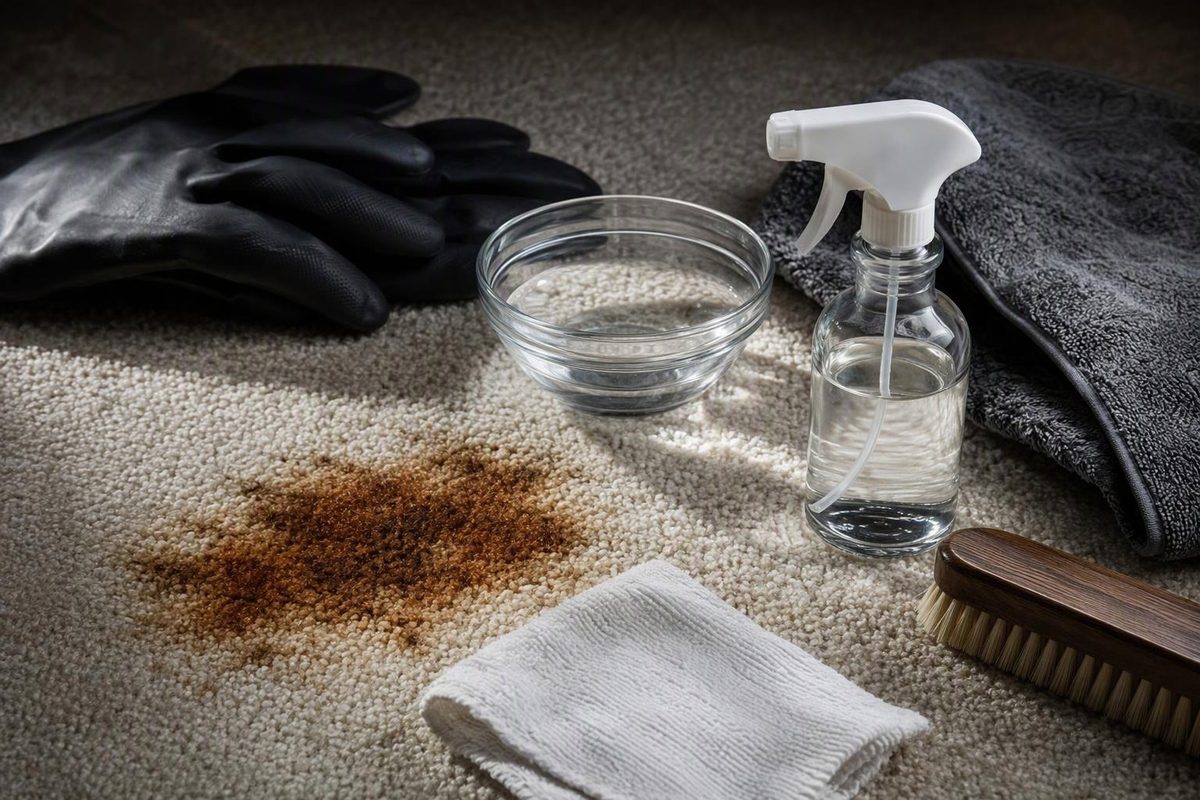
For a small rust stain on synthetic carpet, remove loose residue and try a little water first. If the carpet’s care instructions allow it, diluted white vinegar is a reasonable next attempt. If that does not help, rinse it out and consider a rust remover explicitly labeled for carpet—not a general metal cleaner. Do not use chlorine bleach: the American Cleaning Institute warns that it can intensify rust discoloration on textiles. ACI stain-removal guidance
Check the carpet and the source first
An orange-brown mark directly beneath a corroded furniture leg or metal base is a useful clue. Move the object away and inspect its underside; color alone does not confirm rust.
Check the carpet’s care instructions before wetting it. Use professional care for silk, viscose, antique or valuable rugs, and carpets whose fiber or cleaning requirements you cannot establish. For wool carpet, skip the household rust treatment: WoolSafe’s stain guide identifies rust as a stain that may require professional treatment. WoolSafe wool-carpet care guide
Gather clean white cloths, plain white vinegar, water and a measuring cup. If loose rust flakes are present, lift them with a spoon or vacuum them while dry. Do not scrub them into the pile. The Carpet and Rug Institute recommends removing solid debris first and warns that brushing or scrubbing can fray carpet and change its texture. CRI spot-cleaning instructions
On carpet that permits water-based spot cleaning, blot with a white cloth lightly dampened with plain water, then a dry cloth. If the mark remains, move to the vinegar spot test below. Zerorez recommends water before diluted vinegar in its rust-removal sequence. Zerorez rust guide
1. Spot-test diluted vinegar
Mix ¼ cup of plain white vinegar with 1 cup of warm—not hot—water. Use ordinary household vinegar, not a concentrated cleaning-vinegar product. This dilution is recommended in Wolfe Flooring’s carpet rust-removal instructions. Wolfe Flooring rust guide
Test a little mixture on a hidden area or spare carpet piece. Apply it with a white cloth, blot, rinse with a separate water-dampened cloth and let the test area dry. Check for dye transfer, a lighter patch or a change in texture. If any appears, stop. CRI recommends pretesting even laboratory-tested carpet cleaners. CRI cleaning guidance
2. Blot the rust mark, then rinse
If the spot test passes:
- Lightly dampen a white cloth with the vinegar mixture. Do not pour the bowl onto the carpet.
- Blot the stain from its outside edge toward the center. Keep the treatment in the pile rather than soaking the backing.
- Blot with a dry white cloth, moving to a clean section as residue transfers.
- If the mark is visibly fading, repeat a small application. If it is unchanged, do not keep increasing the strength or soaking time.
- Blot with a separate cloth lightly dampened with plain water to remove the vinegar, then press with dry towels.
This is a mild first attempt, not a reliable cure for every rust stain. Carpet rust treatments may need specialized chemistry; University of Georgia Extension lists oxalic acid and commercial rust/iron removers for carpet, while also warning that oxalic acid is poisonous. Do not improvise an acid-crystal mixture at home. UGA rust-stain guidance
3. If needed, choose a carpet-labeled rust remover
Let the rinsed area dry and reassess it. If rust remains, choose a product whose label explicitly permits your carpet application and fiber type. A claim that it removes rust from toilets, tools or concrete is not enough. Summit Brands, for example, lists carpeting among the applications for Iron OUT Spray; check the current bottle’s directions before use. Manufacturer’s application guidance
Spot-test the new product separately. Follow its own dose, contact time, protective-equipment and rinsing instructions; there is no universal safe dwell time for rust removers. If the directions do not explain how to treat your carpet, ask the manufacturer or use a professional cleaner rather than adapting hard-surface instructions.
Do not combine cleaners. Skip hydrofluoric-acid products for this household method: some consumer rust removers contain it, and Rust-Oleum’s technical sheet for Whink Rust Stain Remover carries a “Danger–Poison” warning. Whink technical and safety information
Dry fully—and know when to stop
Blot out rinse water, allow airflow and keep the metal object off the area until it is completely dry. Repair or replace the corroded contact surface, or use a suitable non-staining furniture protector before returning it.
Stop if carpet dye transfers, the fibers change texture, or the orange mark becomes a pale patch. Lost dye will not be restored by more stain remover. If the stain returns after drying, deeper residue may be wicking upward; repeated soaking is not the answer. Persistent rust, returning marks or suspected color loss warrant a professional assessment. Wolfe Flooring’s removal limits and wick-back guidance