 StainList
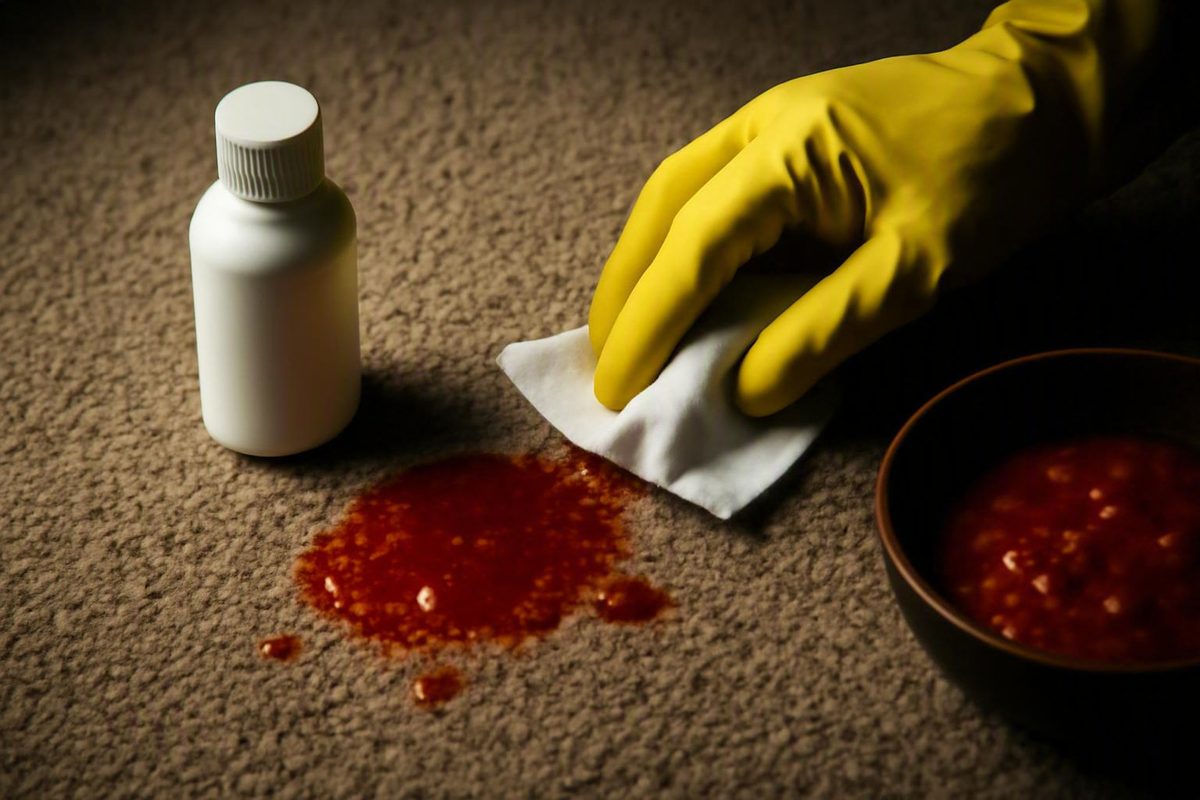
Quick answer and supplies to gather
If tomato sauce lands on carpet, use this controlled sequence:
- Lift off the excess sauce with a spoon or dull edge.
- Blot the remaining moisture with a clean white cloth.
- Check the carpet’s care instructions and patch-test the proposed cleaner.
- Apply a small amount of diluted clear dishwashing liquid.
- Rinse sparingly with clean, cool water.
- Blot or extract as much moisture as possible.
- Let the carpet dry completely before judging the result.
Act promptly, but do not panic-scrub or pour cleaner onto the spot. Scrubbing can spread the sauce, distort the pile, and press residue deeper into the carpet. Excess liquid can carry dissolved residue toward the backing or pad and make the area harder to dry.
Gather these supplies:
- A spoon or dull butter knife
- Several clean white cloths or white paper towels
- Cool water
- Clear, non-bleaching hand dishwashing liquid
- A small bowl
- A fan
Optional moisture-control tools include:
- A spray bottle that produces a light mist
- A wet/dry vacuum designed for liquid extraction
- Additional absorbent white towels
White cloths make it easier to see whether tomato color—or carpet dye—is transferring. They also avoid moving dye from a colored towel onto the carpet. Consumer Reports recommends white cloths or white paper towels and blotting rather than rubbing.
The practical first-line recipe used here is:
Mix 1 tablespoon of clear, non-bleaching dishwashing liquid with 2 cups of cool water. This ratio appears in a rug manufacturer’s tomato-sauce cleaning instructions.
Published recipes vary, so this is not the only possible dilution or a scientifically proven optimum. It is a practical starting mixture. Apply it incrementally; you probably will not need the entire bowl.
Stop before wet treatment if the rug is wool, viscose, bamboo silk, art silk, Luxcelle, antique, vintage, specialty-dyed, handmade, or valuable. Review its care instructions first. If the fiber, backing, or dye stability is uncertain, consult the manufacturer or a professional rug cleaner.
Check the carpet and patch-test before treating the visible stain
Before using a homemade solution, check the carpet or rug care label, manufacturer guidance, and any applicable warranty. Do not assume that a treatment suitable for a colorfast synthetic carpet will also be appropriate for a natural fiber, unstable dye, unusual backing, adhesive, or specialty finish.
To patch-test the proposed solution:
- Choose an inconspicuous area, such as inside a closet, beneath furniture, or at the back edge of a rug.
- Apply a very small amount of the solution. Dampen the fibers; do not soak them.
- Blot the test area with a clean white cloth.
- Let the solution sit briefly, using no longer a contact period than you intend to use on the stain.
- Blot again and inspect the carpet and cloth.
- Check for dye transfer, fading, stiffness, fuzzing, matting, pile distortion, or another texture change.
Do not continue if the hidden test causes any visible change. Natural fibers and delicate or antique rugs may require gentler treatment or professional care, as this overview of homemade carpet-cleaner limitations also cautions.
A rug may contain several yarn colors, repairs, uneven fading, or different dye lots. Test the actual solution you intend to use rather than assuming that “mild,” “natural,” or “carpet-safe” means universally compatible.
Moisture control matters as much as cleaner selection. Dampen the pile instead of pouring enough liquid to reach the backing or pad. Excess moisture may spread dissolved sauce, prolong drying, and allow residue to move back toward the surface as the carpet dries.
Seek manufacturer or professional advice instead of proceeding when:
- The fiber or backing is unknown.
- The rug has a delicate, looped, sculpted, or handmade construction.
- Dye transfers during testing.
- The item is valuable, antique, vintage, or specialty-dyed.
- The care label prohibits wet cleaning.
- The warranty or care instructions restrict the proposed treatment.
- You cannot treat the spot without wetting the backing.
Step-by-step method for a fresh tomato-sauce spill
1. Lift the thick sauce
Use a spoon or dull butter knife to scoop sauce off the carpet. Begin at the outer edge and work toward the center, wiping the tool clean between passes.
Do not place a cloth directly onto the bulk of the spill and press downward. That may absorb some liquid, but it can also force thick sauce into the pile. Lifting first removes material before water or cleaner can distribute it.
2. Blot the remaining moisture
Place a dry white cloth or white paper towel over the stain and press gently. Lift the cloth rather than dragging it. Move to a clean section whenever sauce transfers, and replace saturated paper towels promptly.
Work from the outside inward to help contain the stain’s boundary. Never rub back and forth or scrub with a brush.
3. Use a little cool water if necessary
If considerable color remains after the loose sauce has been removed, lightly dab or mist the area with cool water. Blot immediately with a fresh white cloth.
The purpose is to loosen surface residue, not flood the carpet. Do not pour water from a cup or saturate the pile. Cool water is a conservative default when the manufacturer permits wet treatment, particularly because mixed sauces may contain ingredients other than tomato.
4. Mix the detergent solution
Combine:
- 1 tablespoon clear, non-bleaching dishwashing liquid
- 2 cups cool water
This ratio is included in a commercial tomato-sauce spot-treatment guide. Use hand dishwashing liquid—not laundry detergent or automatic-dishwasher detergent. Those products are formulated differently and should not be treated as interchangeable.
Published detergent dilutions vary. Apply a small amount and rinse it out rather than assuming that a stronger or soapier mixture will clean better.
5. Apply the solution incrementally
Dip a clean white cloth into the mixture and wring it out, or apply a light mist with a spray bottle. Blot from the stain’s outer edge toward the center.
Move to a clean section of cloth as the sauce transfers. Do not repeatedly press a stained section back onto the carpet. If no more color or residue transfers, pause instead of automatically adding more solution.
Dishwashing liquid is a surfactant, so it can help water contact and release sticky or oily residue. That is useful for marinara, spaghetti sauce, and similar mixtures that may contain oil.
6. Allow a short contact period
Leave the treated area damp for only a few minutes while keeping it under observation. Tomato-sauce carpet instructions commonly allow this brief contact period before blotting or rinsing; one published procedure specifies five minutes.
The fibers should remain damp, not flooded. Do not leave the wet spot unattended for an extended period, and do not keep adding liquid merely to prevent the surface from drying.
7. Rinse sparingly
Once the color stops transferring—or the stain has lifted—lightly dab or mist the area with clean, cool water. Blot or extract the moisture. Repeat the light rinse if the carpet still feels slippery or soapy.
Rinsing removes detergent that could otherwise dry into a sticky residue and attract soil. Avoid pouring rinse water directly onto the carpet or rug.
If using a wet/dry vacuum, follow its operating instructions and use it only if it is designed to extract liquid. Work carefully so the nozzle does not distort delicate pile.
8. Extract moisture and dry fully
Press folded, absorbent white towels into the area. Replace them as they become damp. Apply gentle, even pressure, but do not twist or rub the pile.
Run a fan across the area to improve airflow. If practical, keep people and pets off the damp carpet so the pile is not compressed and soil is not tracked into it.
Each stage has a distinct purpose:
- Lifting removes thick material without spreading it.
- Blotting transfers moisture and residue out of the pile.
- Detergent helps release sticky and oily material.
- Rinsing removes cleaner that may otherwise attract soil.
- Extraction and drying limit retained moisture and make the final result easier to assess.
Stop once the stain has lifted. Continuing to add treatments after the visible mark is gone increases moisture and chemical exposure without a clear benefit.
How to treat dried or old tomato sauce
Dried sauce needs more preparation, not stronger scrubbing.
First, use a spoon or dull edge to lift removable crusted material. Work gently and follow the direction of the pile where possible. Do not grind dry particles into the fibers or scrape so aggressively that the pile frays.
If the remaining residue is sticky, lightly dampen it with cool or room-temperature water. Add only enough moisture to soften the surface. Wait briefly, then blot away the loosened material before introducing detergent. Removing solids first reduces the amount of material that cleaning liquid can redistribute.
Next, use the same patch-tested process recommended for a fresh stain:
- Apply a small amount of diluted clear dishwashing-liquid solution.
- Blot from the outside inward.
- Move to a clean section of cloth as residue transfers.
- Allow a brief contact period.
- Rinse sparingly with clean water.
- Blot or extract thoroughly.
- Let the carpet dry completely.
Do not decide that the treatment failed while the carpet is still wet. The result is easier to assess after complete drying.
If color remains after drying, cautiously repeat the same conservative process. Do not increase the detergent concentration or begin layering vinegar, peroxide, ammonia, and unrelated remedies.
Set realistic expectations. An old stain may have been exposed to heat, ground in under foot traffic, scrubbed, or treated with several products. Those conditions can make removal more difficult. No DIY method can guarantee that an old tomato-sauce stain will disappear completely.
What to do when the stain remains or comes back
A remaining red or orange mark can have several possible causes:
- Residual tomato color
- Oily or sticky sauce residue
- Detergent residue attracting fresh soil
- Material wicking upward from deeper carpet layers
- Permanent fading or loss of carpet dye
A spot that disappears while wet and returns as it dries may be caused by dissolved material moving upward from the lower pile, backing, or pad. Published carpet guidance notes that treated stains may wick back to the surface, but appearance alone cannot confirm that sauce reached the pad.
Let the carpet dry completely, then perform one cautious repeat of the detergent, rinse, extract, and dry process. Concentrate on controlled rinsing and extraction rather than adding more soap.
If the treated area feels stiff, crunchy, slippery, or sticky, detergent residue may remain. Lightly mist it with clean water and blot or extract. Repeat only as needed to remove residue without saturating the carpet.
A pale or bleached-looking mark may be carpet color loss rather than remaining tomato residue. If the area is lighter than the surrounding carpet and no color transfers to a white cloth, stop escalating. A homeowner cannot identify dye loss with certainty from appearance alone, and stronger chemicals may worsen existing color damage.
Stop DIY treatment if:
- Carpet dye transfers to the cloth.
- The area fades or becomes lighter.
- The pile becomes fuzzy, stiff, matted, or distorted.
- The stain spreads beyond its original boundary.
- The backing becomes saturated.
- An unusual odor develops.
- The same mark repeatedly returns.
- The carpet remains wet because you cannot extract enough moisture.
Removing the visible stain does not necessarily remove odor, grease, dairy residue, or material that has reached deeper carpet layers. Recurrence, persistent odor, or saturation warrants professional assessment, particularly when the carpet cannot be lifted to inspect and dry the underlying area safely.
Do peroxide, vinegar, club soda, lemon, baking soda, or ammonia help?
Treat household remedies as options with different risks—not as interchangeable shortcuts.
First choice: diluted dishwashing liquid and cool water
Clear dishwashing liquid in cool water is a practical first-line household treatment supported across several tomato-sauce cleaning guides. It addresses sticky and oily residue while allowing controlled application and rinsing.
Even this relatively mild approach requires a patch test, minimal moisture, and thorough removal. Too much soap can leave a sticky spot that attracts soil.
Club soda, vinegar, lemon, baking soda, and salt
These ingredients appear in cleaning guides, but the available evidence does not establish that they outperform diluted dishwashing liquid for tomato sauce on carpet.
Club soda mainly supplies carbonated water. Vinegar and lemon introduce acids. Baking soda and salt can leave particles that must later be removed. None should be presented as a proven upgrade, and neither a baking-soda-and-salt paste nor a lemon treatment is an evidence-backed replacement for the first-line method.
If the detergent method is compatible and working, there is little reason to interrupt it with another ingredient. Changing products also makes it more difficult to determine what caused fading, residue, or a texture change.
Hydrogen peroxide
Hydrogen peroxide can lighten carpet, particularly dark, saturated, or dye-unstable colors. It is not universally safe. Commercial guidance that includes peroxide also warns users to monitor carpet color and test the treatment in a hidden area; see this tomato-sauce treatment guide.
If you are considering peroxide after the detergent method fails:
- Confirm that the carpet manufacturer permits it.
- Test it in a hidden area.
- Monitor the visible spot closely for lightening.
- Stop immediately if the color changes.
- Rinse and extract thoroughly before considering any other treatment.
Published peroxide recipes differ. That disagreement does not prove that one concentration is best. For dark, valuable, delicate, wool, or dye-unstable carpet, professional advice is the safer escalation.
Ammonia
Ammonia is not recommended here as a routine tomato-sauce treatment. Published recipes vary substantially, and some carpet dyes or fibers may be damaged. Do not use it unless the carpet manufacturer or a qualified professional confirms compatibility and provides product-specific instructions.
More broadly, do not mix cleaning products or place a new treatment over the residue of an earlier one. Products may be incompatible, and leftover cleaner can complicate subsequent treatment. Guidance on common carpet stain-removal mistakes likewise advises against combining cleaning products. Rinse and extract one treatment before considering another.
For most households, sensible escalation means one careful repeat after drying—not increasingly aggressive chemistry—followed by professional evaluation if the stain remains.
Adjust the plan for delicate rugs and mixed sauces
Carpet fiber is only one part of compatibility. Dye stability, pile, backing, adhesive, construction, previous treatments, and care requirements can all change what is safe.
Use heightened caution with:
- Wool
- Viscose
- Bamboo silk
- Art silk
- Luxcelle
- Antique or vintage rugs
- Handmade or specialty-dyed rugs
- Valuable rugs
- Rugs with unknown fibers or backing
Viscose and similar delicate fibers can react poorly to rubbing and aggressive agitation. Do not scrub them, brush against the pile, or assume that a general carpet recipe is appropriate. Carpet type matters, and natural or fragile fibers may require gentler treatment or professional cleaning.
Wool also needs case-by-case care. Although some cleaning guides apply diluted dishwashing liquid to many wool rugs, that does not establish compatibility with every wool carpet, dye system, backing, or construction. Follow the individual rug’s care instructions.
The sauce itself may contain more than tomatoes:
- Pizza or pasta sauce may contain oil, cheese, meat, or toppings. The red mark may fade while grease or dairy residue remains.
- Ketchup may leave sticky, sugar-rich residue, making controlled rinsing especially important.
- Tomato soup or creamy sauce may add fat or dairy components.
- Heavily seasoned sauces may leave residue or odor after the visible color is reduced.
The core method here addresses the visible tomato-sauce spot. It is not a separate, proven protocol for removing grease, dairy residue, odor, or contamination from carpet padding. A mixed spill on a delicate rug is a strong reason to seek specialist care.
Mistakes to avoid and when to call a professional
Avoid these common mistakes:
- Rubbing or scrubbing
- Using a stiff brush
- Pressing thick sauce deeper into the pile
- Working from the center outward
- Pouring water or cleaner onto the carpet
- Saturating the pile, backing, or pad
- Using excessive dish soap
- Failing to rinse out detergent
- Applying a generic cleaner without reading its label
- Switching repeatedly among household remedies
- Treating the spot again before it has dried
- Assuming a pale patch must be remaining sauce
Use cool water as the conservative default unless the carpet’s care instructions specify otherwise. There is no need to make the broader claim that hot water always and irreversibly sets plain tomato sauce in every carpet. Mixed sauces may contain oil, cheese, meat, or other components that complicate the choice of treatment.
Read the label of any commercial product and confirm that it is intended for the carpet’s fiber and construction. “Carpet cleaner” does not mean suitable for every rug, and “natural” does not mean incapable of fading dye or leaving residue.
Do not use a dry-only vacuum while the carpet is wet. A wet/dry vacuum may be used for extraction if its instructions permit that application. Keep a standard dry vacuum away until the carpet is fully dry.
Call a professional carpet or rug cleaner when:
- The fiber or backing is unknown.
- The rug is valuable, delicate, antique, or specialty-dyed.
- A patch test causes fading or another change.
- Carpet dye transfers to a white cloth.
- The pile or texture changes.
- The backing or pad becomes saturated.
- The stain spreads.
- The mark repeatedly returns after drying.
- A persistent odor suggests a deeper problem.
- One cautious repeat does not improve the stain.
- Previous chemicals were applied and you do not know what they were.
Some old, heat-exposed, aggressively scrubbed, or repeatedly treated spots cannot be removed completely. A lighter area may be permanent carpet color loss rather than a stain that needs stronger cleaner.
Frequently asked questions
What dish-soap-to-water ratio should I use for tomato sauce on carpet?
Use 1 tablespoon of clear, non-bleaching dishwashing liquid in 2 cups of cool water as a practical first-line mixture, a ratio also given in published tomato-sauce rug-cleaning instructions. Patch-test it and apply it with a damp cloth or light mist rather than pouring it onto the carpet.
Published recipes vary, so this ratio is not uniquely correct or proven optimal. More soap is not necessarily better; excess detergent can be difficult to rinse out and may leave soil-attracting residue.
Can I use hydrogen peroxide on a tomato-sauce carpet stain?
Possibly, but only as a cautious escalation after confirming compatibility. Hydrogen peroxide can lighten carpet, especially dark or dye-unstable material. General carpet-cleaning guidance similarly warns that peroxide may lighten fibers and calls for hidden-area testing.
Monitor closely and stop immediately if fading occurs. Rinse and extract the treatment thoroughly afterward. Do not use peroxide casually on wool, delicate fibers, valuable rugs, or carpet with unknown dye stability.
Why did the tomato-sauce stain come back after the carpet dried?
The spot may have wicked upward as moisture evaporated, carrying residual sauce or cleaner from deeper in the pile, backing, or pad. Detergent residue may also attract new soil. Appearance alone cannot confirm pad contamination.
Let the carpet dry fully, then perform one controlled repeat with particular attention to rinsing and extraction. If the stain repeatedly returns, spreads, smells unusual, or the backing became wet, seek professional assessment.
Can I use the same method on wool, viscose, or an area rug?
Not automatically. Check the care label, manufacturer instructions, and warranty first.
Some wool carpets may tolerate a patch-tested diluted solution, but that does not make it safe for every wool rug. Viscose, bamboo silk, art silk, Luxcelle, antique, vintage, specialty-dyed, and valuable rugs need heightened caution. Avoid rubbing or aggressive agitation, and use a rug-care specialist when the fiber or dye stability is uncertain.
When should I stop treating the stain and call a carpet cleaner?
Stop if carpet dye transfers, the area fades, the pile changes texture, the spot spreads, the backing becomes saturated, an unusual odor develops, or the stain repeatedly returns. Professional care is also appropriate when the fiber is unknown, the rug is valuable or delicate, several products have already been used, or one cautious repeat fails.
Do not keep escalating simply because a mark remains. A pale area may be permanent dye loss, and additional chemicals may make the damage worse.
The safest decision rule is simple: lift and blot first, use a patch-tested diluted dishwashing-liquid solution with minimal moisture, rinse and extract thoroughly, and wait for complete drying before reassessing. If the carpet fades, changes texture, becomes saturated, or repeatedly develops the same mark, stop adding chemicals and consult a professional—especially for a delicate or valuable rug.