 StainList
By the Stain List editorial team · Updated August 19, 2026
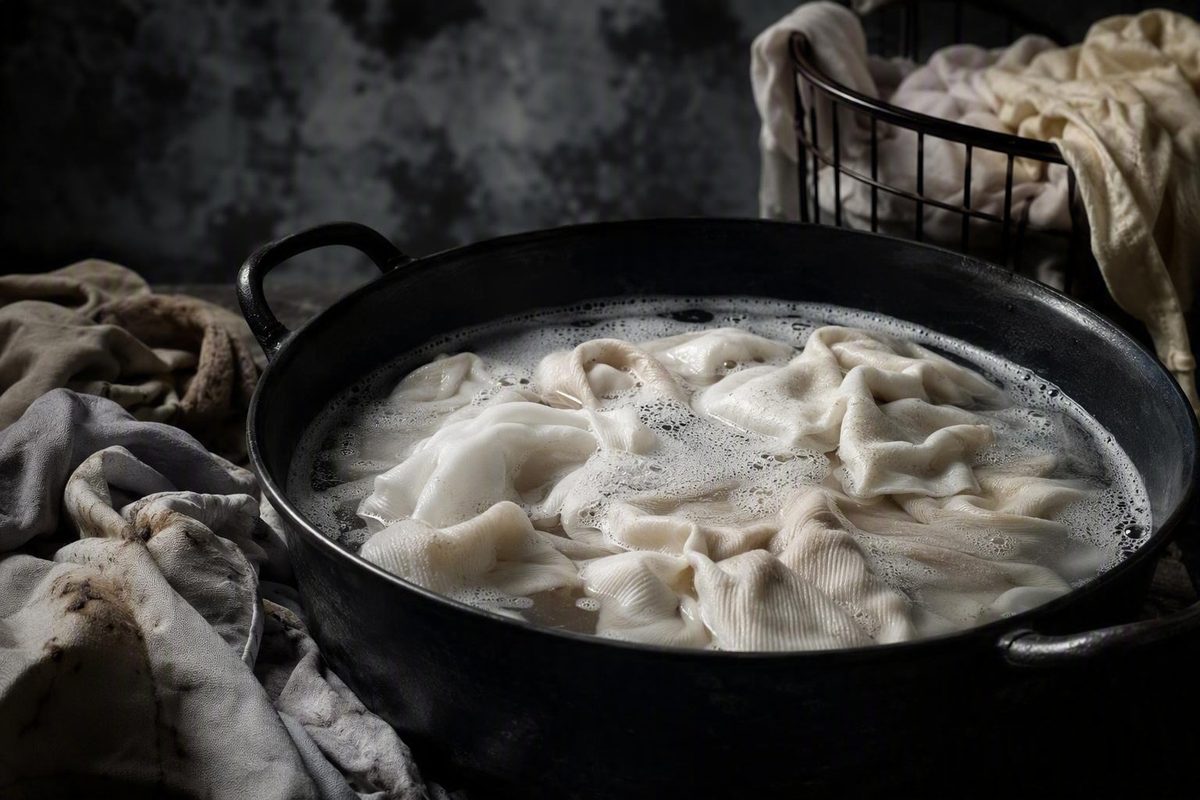
Laundry stripping gets a mixed verdict on Reddit. Some users say it revived sturdy textiles with persistent odor, waxiness, dinginess, or heavy soil. Others noticed no meaningful improvement—or reported fading, shrinkage, distortion, fragility, and holes.
The sensible conclusion is neither “stripping always works” nor “stripping is a hoax.” It is an aggressive troubleshooting method with narrow potential uses. Murky soak water is not proof that hidden grime was removed, and the process is unnecessary for normally washed laundry.
Before filling a bathtub, diagnose the problem. Correct detergent dosing, eliminate excess fabric softener, reduce the load size, rewash, and add a rinse when appropriate. If a sturdy, colorfast, heat-safe item remains unusable, one cautious stripping attempt may be reasonable. Valuable, delicate, stretchy, dye-unstable, or already weakened items are poor candidates.
Editorial methodology: This assessment compares personal reports from three Reddit discussions with published guidance from Consumer Reports, Good Housekeeping, Arm & Hammer, and Maytag. Reddit comments are treated as anecdotes, not controlled evidence. Arm & Hammer and Maytag are commercial manufacturers, and Good Housekeeping discloses affiliate relationships; their instructions are identified as published conventions rather than independently validated universal procedures.
The short Reddit verdict: useful in narrow cases, unnecessary for routine laundry
Reddit does not offer a clear endorsement or rejection of laundry stripping. Across the three discussions reviewed, users describe both apparent successes and disappointing or damaging outcomes.
Positive reports tend to involve problem textiles rather than ordinary clean clothing:
- Gym or workout items that retained odor after washing
- Old sheets with a waxy feel
- Dingy light-colored sheets
- Towels and other absorbent linens
- Heavily soiled washable goods
- Clothes exposed to a mold problem
- Items that users otherwise considered unusable
Negative reports include little or no visible improvement, fading, shrinkage, changes in shape, and textiles that later seemed fragile or developed holes more readily.
The largest discussion was an October 2023 r/CleaningTips thread described as having 1,083 upvotes and 164 comments. It included reports of fresher gym clothing, improved light-colored sheets, and salvaged mold-exposed clothes, alongside fading, shrinkage, and shape changes. The original poster argued that stripping should be a last resort rather than a routine refresh. These are anecdotes and opinions, and an upvote indicates visibility or agreement—not scientific reliability. Read the October 2023 r/CleaningTips discussion.
The other discussions were much smaller. An April 2022 r/laundry thread, described as having 3 upvotes and 7 comments, included reports of improved waxy or dingy sheets, no noticeable benefit for white towels, and possible later fragility. See the April 2022 r/laundry discussion. A March 2025 r/laundry thread, described as having 2 upvotes and 13 comments, focused on fading, fabric integrity, persistent odors, and whether stripping is simply prolonged laundry soaking under a newer name. See the March 2025 r/laundry discussion.
The engagement difference matters. One highly visible thread can reveal recurring concerns, but it cannot establish how frequently a method works or causes damage. Two small threads provide even less basis for estimating typical outcomes.
Procedures also vary. “Laundry stripping” often means a long soak in borax, washing soda, and powdered detergent, but commenters sometimes describe ordinary detergent, oxygen cleaner, different boosters, different temperatures, or a washing-machine soak. Soak times, textile types, item condition, and color also differ. White cotton sheets and black stretch shirts are not comparable test subjects.
The strongest recurring position is therefore restrained: stripping may be useful as an occasional corrective treatment for a durable problem item, but it is not a routine deep-cleaning requirement for otherwise clean laundry.
What users reported after stripping sheets, towels, and clothing
Individual Reddit comments are most useful when grouped by outcome. This shows the disagreement without turning a handful of personal experiences into a consensus.
Reported positive outcomes included:
- Gym clothes that smelled fresher after soaking
- Previously washed, light-colored sheets that looked improved
- Old sheets that felt less waxy
- Dingy white sheets that appeared cleaner
- Much of one wardrobe being retained after exposure to a mold problem
- Persistently odorous items becoming wearable again
- Durable linens or heavily soiled goods appearing to improve after ordinary washing had failed
The October 2023 r/CleaningTips discussion contains the reports about gym clothes, improved light-colored sheets, and retaining much of a mold-exposed wardrobe. The same discussion also records that some items faded, shrank, changed shape, or did not survive the process. These are personal reports, not evidence that stripping reliably produces either outcome. Review the reported outcomes in the r/CleaningTips thread.
These stories suggest a narrow possible use: a specific problem remains after normal washing, and the item has little utility unless a more aggressive treatment succeeds. They do not prove that stripping was the only treatment that would have worked. Correct detergent dosing, a smaller load, an extra rinse, or a fabric-safe symptom-specific treatment might produce a similar result with less exposure to heat and alkalinity.
Mixed or inconclusive outcomes included:
- Clean white towels showing no noticeable improvement over an earlier oxygen-cleaner soak
- Dark soak water without a meaningful reported difference in the dried item
- Items that looked brighter immediately but whose longer-term condition was uncertain
- Stripping that seemed useful for one category, such as old sheets, but unnecessary for routine laundry
The April 2022 r/laundry thread is particularly useful because it includes both a no-improvement report involving white towels and an account of sheets that initially improved but later seemed more fragile and prone to holes. It also includes a user who found the method useful for waxy old sheets but otherwise considered it a waste of time. Read the April 2022 accounts.
The towel comparison does not establish that oxygen cleaner is always safer or more effective. It shows only that, for one user, stripping did not produce a noticeable advantage over a previous oxygen-cleaner soak.
Reported negative outcomes included:
- Fading or dye loss
- Shrinkage
- Changes in garment shape
- Items that did not survive
- Fabrics that appeared more fragile afterward
- Sheets that reportedly developed holes more readily over later use
None of these accounts proves that stripping alone caused the later damage. Textile age, accumulated wear, previous laundering, temperature, alkalinity, soak duration, agitation, and drying conditions were not controlled. Old sheets already near the end of their useful life might have failed anyway.
That uncertainty does not justify dismissing the reports. It means neither improvement nor damage should be confidently attributed to one uncontrolled factor.
The mold-exposure story requires similar restraint. Retaining much of a wardrobe after stripping does not establish that the process reliably remediates mold-contaminated textiles. The thread did not verify contamination before or after treatment. Laundry stripping should not be described as sanitizing, disinfecting, killing bacteria, removing allergens, or making mold-exposed belongings safe.
Overall, the anecdotes support one conclusion: outcomes differ substantially. They cannot provide a success rate because users vary the ingredients, temperature, soak time, textile condition, color, fiber content, and even the definition of stripping.
Why brown or gray water does not prove the laundry was filthy
Water color alone cannot identify what left the fabric.
Brown, gray, black, or purple water may contain some combination of:
- Released fabric dye
- Ordinary soil
- Body oils
- Detergent residue
- Fabric-softener residue
- Hard-water minerals
One Reddit commenter described similar dark water from white and dark towels, with a purple tint in the water from the dark towels. That makes dye release a plausible contributor, but it does not reveal how much of the remaining discoloration came from dye, soil, oil, detergent, softener, or minerals.
Several commenters also note that ordinary washer water may look dirty. Most people do not watch a complete wash cycle in a transparent container, so the comparison is uneven: bathtub stripping displays the water for hours, while washer water drains out of sight.
The opposite overstatement should also be avoided. The Reddit posters did not chemically analyze their soak water, so the evidence does not support saying that most discoloration is definitely dye. Murkiness may include residue and soil; color simply cannot identify the proportions.
Comparing white and dark fabrics is not a controlled test. Clearer water from white sheets does not identify what was released by dark sheets. The items may differ in age, construction, finish, soil level, previous product exposure, body-oil load, and dye stability.
Consumer Reports similarly notes that murky stripping water may contain residue or released dye. It also warns that hot, high-pH treatment can remove color or damage fabrics vulnerable to heat or alkalinity. Its broader assessment is that bathtub stripping is usually unnecessary when simpler washing corrections can address residue. Review Consumer Reports’ laundry-stripping assessment.
Judge the dried textile instead of the bathwater:
- Is the persistent odor gone after complete drying?
- Does the item look meaningfully brighter?
- Is a waxy or sticky texture reduced?
- Does a towel absorb water better?
- Does the garment still fit?
- Has the color changed?
- Are seams, elastic areas, or surface fibers distorted?
- Does the item remain sound after later uses and washes?
When practical, treat one of two similar items and leave the other untreated. Photograph both under the same lighting, dry them in the same way, and compare odor, texture, fit, color, and performance. This is not a laboratory test, but it is less subjective than relying on memory or dramatic water color.
What laundry stripping targets—and what it cannot be expected to fix
The commonly published method is a prolonged soak of already-washed textiles in hot or very warm fabric-safe water containing borax, washing soda, and powdered detergent.
Published guides frame it as a treatment for accumulated:
- Detergent
- Fabric softener
- Hard-water minerals
- Body oils
- Ordinary soil
- Odors associated with that buildup
Possible signs of buildup include stale odor after washing, a waxy or sticky feel, dingy light-colored linens, and towels that seem less absorbent. These signs are not diagnoses by themselves. Reduced towel absorbency, for example, may involve fabric softener, but the supplied evidence does not establish a single cause in every case.
Stripping is not primarily a stain-removal process. Arm & Hammer’s commercial guide describes it as a residue treatment for already-washed sheets, towels, robes, bedding, and similar items, and explicitly states that its method does not remove stains. See Arm & Hammer’s definition and published method.
That distinction matters because a visible stain generally calls for a treatment selected for the substance and surface. Treating an entire garment exposes its dyes, elastic, seams, and finishes when the problem may occupy only a small area.
For stain-specific navigation, Stain List publishes references organized by stain and surface, including content about red wine, ink, and grease. Its current listed content does not establish that laundry stripping treats those stains.
Laundry stripping also should not be expected to disinfect or sanitize textiles, kill bacteria, remove allergens, or reliably remediate mold contamination. Those are separate claims requiring treatment-specific evidence.
Start by naming the symptom. “This towel feels waxy” is a useful troubleshooting observation. “My laundry contained hidden toxins because the water turned brown” is not.
Fabric risk matrix: reasonable candidates and items to avoid
The most defensible candidates are sturdy, colorfast towels, sheets, robes, cotton bedding, and washable linens—provided their care labels permit the proposed water temperature.
Even then, cotton does not guarantee safety. Fiber content is only one variable. Also consider:
- Colorfastness
- Elastic or spandex content
- Applied finishes
- Printed designs
- Heat tolerance
- Existing wear
- Shrinkage history
- Seams, trims, and bonded components
- Whether the item is valuable or replaceable
Hot water can encourage dye bleeding and can shrink or distort textiles that are not heat-safe. A prolonged alkaline soak adds another potential stress. Maytag’s manufacturer guidance limits the method to light, white, or colorfast towels and linens that tolerate high heat; it also warns that the alkaline solution may degrade spandex and remove protective lanolin from wool. Read Maytag’s fabric cautions.
| Textile category | Possible suitability | Primary risk | Preferred first step |
|---|---|---|---|
| Sturdy white, heat-safe cotton towels | More defensible if badly waxy, dingy, or poorly absorbent | Unnecessary harsh exposure or wear | Reduce detergent and softener; rewash in a smaller load; add a rinse |
| Colorfast, heat-safe sheets or cotton bedding | Possible last-resort candidate | Shrinkage, finish loss, failure in worn areas | Rewash correctly; try a care-label-compatible soak |
| Light-colored robes and washable linens | Possible if sturdy and label-compatible | Distortion, fading, trim damage | Check every component and rewash normally first |
| Dark towels or clothing | Higher risk | Dye bleeding, fading, transfer | Wash separately at the labeled temperature with correct dosing |
| Workout clothing and stretch garments | Generally poor candidate | Spandex or elastane degradation, shape loss, fading | Use the labeled cycle, a smaller load, correct detergent dosing, and complete drying |
| Wool | Avoid | Lanolin loss, shrinkage, or structural damage | Follow the label or use a wool-specific process |
| Delicates | Avoid | Distortion, color loss, fiber damage | Use the labeled delicate-care method |
| Cold-wash-only items | Avoid hot stripping | Shrinkage or distortion | Remain within the label’s temperature limit |
| Non-colorfast prints or saturated colors | Avoid | Bleeding and irreversible fading | Use a mild, label-compatible process |
| Old, thin, frayed, or hole-prone textiles | Usually avoid | Accelerated failure | Wash gently, repair, replace, or seek professional advice |
| Valuable, sentimental, specialty, or unknown-fiber items | Do not experiment | Irreplaceable damage | Consult a textile-care professional |
For a polyester garment with a localized mark, use a stain-by-stain polyester approach rather than treating the whole item for generalized buildup.
Workout clothing illustrates the tradeoff. A method used on white cotton towels cannot automatically be transferred to leggings, compression garments, elastic waistbands, or stretch denim.
The March 2025 r/laundry discussion includes warnings about fading and fabric damage, as well as a report from someone who reserved stripping for clothing with odors that other methods had not removed. These comments remain anecdotal, and several technical assertions in the thread are unsupported. Review the March 2025 safety discussion.
Do not gamble with an item merely because it is technically washable. If it is valuable, fragile, sentimental, specialty-made, already weakened, or difficult to replace, the possible benefit rarely justifies an uncontrolled last-resort soak.
Try these lower-risk fixes before filling the bathtub
Troubleshoot the symptom instead of assuming every problem is “buildup.”
For waxy residue or reduced towel absorbency
- Measure detergent rather than pouring by eye.
- Stop or reduce liquid fabric softener.
- Skip dryer sheets.
- Reduce the load size so water can circulate.
- Rewash according to the care label.
- Add an extra rinse if residue is plausible.
- Assess absorbency only after the towel is fully dry.
More detergent does not automatically mean more cleaning.
For stale odor after washing
- Avoid overloading the machine.
- Confirm that the selected temperature complies with the care label.
- Make sure the item dries completely and promptly.
- Rewash it in a smaller, appropriately sorted load.
- Assess odor after drying, not while the textile is warm or wet.
- Check whether the empty washer also smells stale.
For dingy, heat-safe whites
A fabric-safe machine soak or oxygen-cleaner soak may be a reasonable preliminary option if both the textile label and product directions allow it. The supplied evidence does not prove that oxygen cleaner is always safer or more effective than stripping. It is simply a less elaborate possibility to consider before a prolonged three-product bathtub soak.
Not every cause is reversible.
For extremely soiled durable goods
Isolate the item so it does not transfer soil or color to other laundry. Remove loose material, follow the care label, and consider a compatible presoak before escalating. A heavily soiled durable item may present a stronger case for aggressive treatment than an ordinary shirt, but heat tolerance and dye stability still matter.
Consumer Reports generally considers bathtub stripping unnecessary and identifies detergent-free rinse-and-spin or soak-and-spin cycles as more convenient alternatives. It also lists excessive detergent or softener, incomplete rinsing, hard water, and washer overloading as possible sources of residue. See Consumer Reports’ alternatives and prevention advice.
Appliance advice conflicts. Some guidance discusses washer-based soaking or rinsing, and one Reddit commenter suggested using similar chemicals in a machine. Maytag, however, advises against putting a stripping solution directly into a washer because it could damage the appliance.
The conservative resolution is to consult the manual for your exact washer. A built-in soak or rinse cycle is not permission to add a concentrated improvised mixture. Do not place powders or boosters in an unapproved compartment or quantity.
Most importantly, recurring residue needs a recurring-cause solution.
If you still strip laundry: a conservative last-resort framework
What follows describes a common published convention, not a scientifically validated universal recipe. The available evidence does not establish that the formula is optimal for every textile or that longer exposure improves results.
1. Screen the item
Proceed only if the item is:
- Sturdy
- Washable
- Colorfast
- Free of delicate trim or uncertain finishes
- Able to tolerate the proposed temperature
- Replaceable enough that damage would not be disastrous
Read the entire care label. Do not infer heat tolerance from fiber content alone. Separate whites, lights, and darks. Avoid questionable dyes, wool, delicates, cold-wash-only goods, shrink-prone textiles, and stretch-rich garments.
2. Wash it normally first
The commonly published process begins with already-washed laundry. That makes stripping a troubleshooting treatment for material that appears to remain after normal washing, not a substitute for washing visibly dirty items.
Before continuing, confirm that proper dosing, removal of softener, a smaller load, and adequate rinsing have not solved the problem.
3. Understand the common ratio
Published guides commonly use a 1:1:2 ratio:
- One part borax
- One part washing soda
- Two parts powdered laundry detergent
For a standard bathtub, commonly published quantities are:
- 1/4 cup borax
- 1/4 cup washing soda
- 1/2 cup powdered detergent
Good Housekeeping’s affiliate-supported editorial guide publishes this ratio and these quantities, with a soak of about four hours or until the water cools. It also warns against colored, delicate, shrink-prone, and non-hot-water-safe fabrics. See Good Housekeeping’s recipe and precautions.
These amounts are a recurring convention, not proof of universal safety. Do not treat them as an appliance dose or assume they are appropriate for every container, load, or textile.
4. Use water no hotter than the label permits
“Hot” is not a universal temperature instruction. The care label is the ceiling. If an item permits only cool or warm water, a hot-water recipe is incompatible with that item.
Keep whites, lights, and darks separate. Do not combine questionable dyes with lighter textiles.
5. Favor the shortest published duration
Published durations vary. Arm & Hammer describes a four-to-five-hour soak, while Maytag describes an overnight soak. The evidence does not show that overnight exposure works better or is safer.
This conservative framework favors approximately four hours—the shortest cited convention—not an overnight soak. Even four hours is not a validated safe exposure time for every textile. Check the item during the soak and stop sooner if you observe:
- Obvious dye release or transfer
- Distortion
- Surface fuzzing or texture change
- Changes in elastic or trim
- Any other visible sign of damage
Arm & Hammer’s commercial recipe specifies powdered detergent, excludes liquid detergent and bleach-containing powdered detergent, and calls for a four-to-five-hour soak followed by detergent-free rinsing. Review the manufacturer’s complete recipe. Maytag’s separate manufacturer guide uses an overnight soak, illustrating why published duration should not be mistaken for a validated universal standard. Compare Maytag’s published method.
Some water discoloration may occur without visible damage, but dramatic color is not a reason to continue.
6. Handle powders conservatively
Consumer Reports reports advice to use gloves and reduce inhalation of dispersed washing-soda dust. Add powders without deliberately dispersing dust, and follow each product’s handling directions.
Do not improvise additions involving bleach, ammonia, vinegar, vodka, oxygen cleaner, or other household products. The supplied Reddit discussions do not establish that such mixtures are safe. Product-specific directions and incompatibility warnings take priority over social-media recipes.
7. Rinse thoroughly and dry normally
After the soak:
- Drain the solution.
- Remove the items without aggressively twisting vulnerable fabric.
- Use a detergent-free rinse or rinse-and-spin process only if the appliance manual permits it.
- Add another plain-water rinse if treatment solution remains.
- Do not add more detergent or fabric softener.
- Dry according to the care label.
- Avoid dryer sheets while evaluating whether residue or absorbency improved.
There is no universal machine dose in this framework. Appliance designs and source instructions differ, and a rinse stage does not authorize putting the concentrated stripping mixture directly into a washer.
How to decide whether stripping was worth it—and avoid doing it again
Do not evaluate the result while the item is wet. Rinse it fully, dry it according to the label, and then assess it.
Use practical outcome measures:
- Odor: Is the unwanted smell gone after complete drying?
- Brightness: Is there a meaningful improvement under consistent lighting?
- Texture: Is waxiness or stickiness reduced?
- Absorbency: Does a towel take up water more readily?
- Fit: Did the garment shrink?
- Color: Is there fading, bleeding, or unevenness?
- Shape: Are seams, hems, elastic areas, or panels distorted?
- Durability: Does the item show thinning, fraying, or holes over later uses?
Do not count brown, gray, black, purple, or otherwise dramatic water as success by itself. The purpose is to improve the textile, not to produce visually satisfying soak water.
Do not repeat the treatment merely because the water remained murky. Without meaningful improvement in the dried item, repetition has no demonstrated benefit.
Higher-authority guidance generally treats routine stripping as unnecessary for properly washed laundry. Maytag recommends attempting it no more than a few times per year, while Reddit commenters generally frame it as occasional or last-resort treatment. Neither position should be converted into a universal schedule: laundry without a buildup problem does not need stripping on a calendar.
Prevention is the better long-term strategy:
- Follow the detergent label and account for load size and product concentration.
- Do not assume extra detergent means extra cleaning.
- Reduce or discontinue fabric softener when waxiness or absorbency is a concern.
- Avoid overloading the washer.
- Sort textiles appropriately.
- Use an extra rinse when there is a genuine residue problem.
- Dry items completely.
- Investigate the washer if odor or residue affects many loads.
- Consider whether hard water is contributing to recurring problems.
If an item remains persistently odorous, badly faded, misshapen, or prone to holes, another aggressive treatment may shorten its remaining useful life. Replace it or seek professional evaluation when it is valuable, unusual, or worth preserving.
The decision rule is straightforward: If normal washing corrections solve the problem, do not strip. If a sturdy, colorfast, heat-safe item remains unusable, one cautious last-resort attempt may be reasonable. If it fails or causes damage, do not repeat it.
Laundry stripping FAQ
Does laundry stripping really work, according to Reddit?
Sometimes, according to individual users—but not consistently. Positive reports involve persistent odor, waxy old sheets, dingy light-colored linens, towels, workout items, and heavily soiled goods. Other users report no noticeable improvement or say a simpler soak performed similarly.
Reddit provides anecdotes rather than controlled evidence. Recipes, temperatures, soak times, fabrics, and definitions vary, so the discussions cannot establish a success rate. The most supportable verdict is that stripping may help some durable problem items but is unnecessary for routine laundry.
Is the brown or gray water from laundry stripping mostly dirt or dye?
The available reports do not establish the proportion. Dye, ordinary soil, detergent, fabric softener, body oils, and hard-water minerals may all contribute.
Purple-tinted water from dark towels makes dye release plausible, but no chemical analysis was performed. Dark water cannot prove that an item was filthy, and it is equally unsupported to claim that nearly all discoloration is dye. Judge the dried item’s odor, appearance, texture, absorbency, color, fit, and condition instead.
Can laundry stripping fade clothes, shrink them, or cause holes?
Those are credible risks, particularly for dye-unstable, heat-sensitive, shrink-prone, stretchy, delicate, old, or weakened textiles. Reddit users report fading, shrinkage, shape changes, fragility, and holes, while published guidance warns about heat, alkalinity, dye loss, wool, and spandex.
The anecdotes do not prove that stripping alone caused every reported failure. Age, previous wear, temperature, duration, and textile construction may also have contributed. That uncertainty is a reason to reserve the process for sturdy, replaceable, care-label-compatible items.
Can I put a laundry-stripping mixture directly in my washing machine?
Do not assume so. Some sources discuss washer-based soak, rinse-and-spin, or soak-and-spin alternatives, but Maytag warns against putting a stripping solution directly into a washer.
Consult the manual for your exact machine. Use built-in cycles only as directed, and do not add concentrated powders or improvised mixtures unless the appliance manufacturer permits the product, compartment, and quantity. The reviewed sources do not establish a universal machine dose.
Does laundry stripping remove stains or mold?
Laundry stripping is intended primarily for accumulated detergent, softener, minerals, body oils, soil, and related odor—not individual stains. A visible stain usually needs a treatment selected for the specific stain and textile.
Reddit includes an anecdote about retaining clothes after mold exposure, but that does not establish reliable mold remediation. Laundry stripping should not be described as disinfecting, sanitizing, killing bacteria, removing allergens, or making mold-contaminated textiles safe.