 StainList
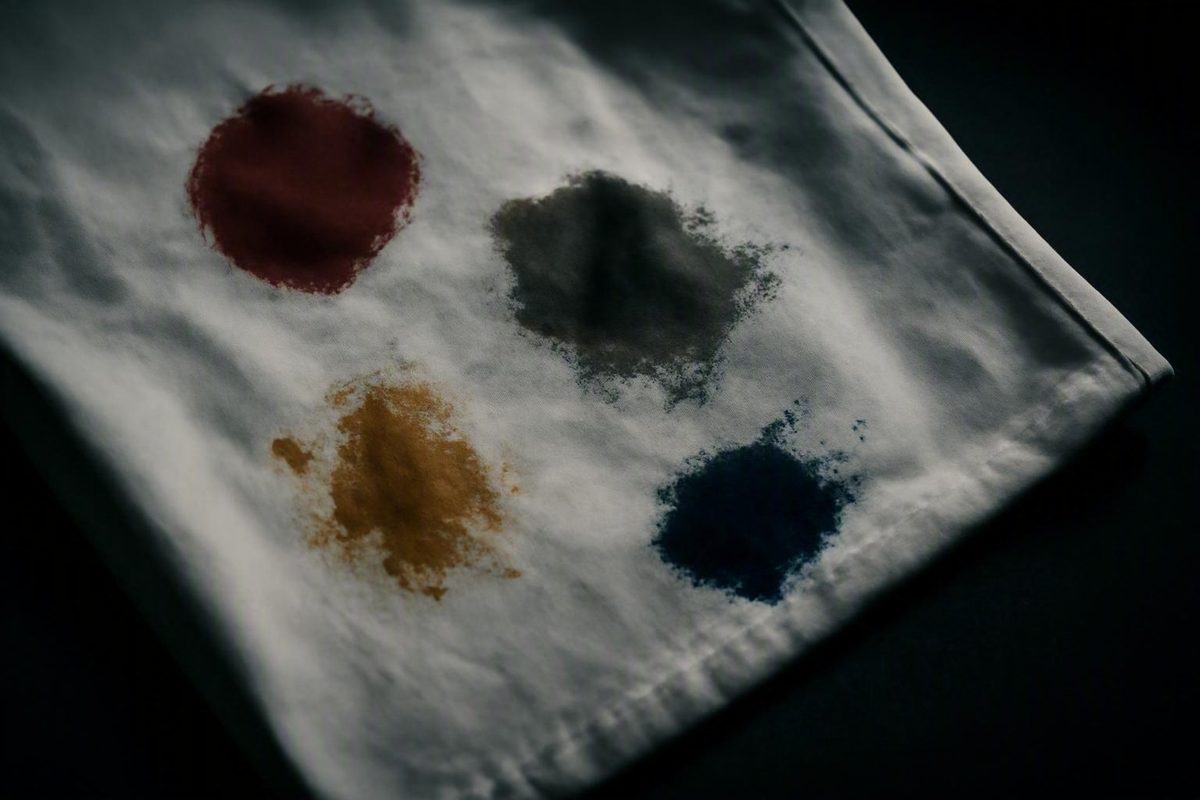
Learning how to remove stains from polyester starts with a distinction that matters more than any cleaning recipe: the polyester fiber may be washable, but the finished item may not be. Dye, blended fibers, coatings, transfer prints, linings, insulation, adhesives, and embellishments can all limit what is safe.
The reliable approach is conservative and stain-specific: identify the material and stain, remove excess residue without rubbing, patch-test an appropriate pretreatment, wash only as the care label permits, and air-dry before deciding whether to repeat the process. Complete removal is not always possible, especially after heat exposure, and preserving the item should take priority over escalating to harsher chemicals.
Before You Treat the Stain: Make Five Quick Checks
Before adding water or cleaner, work through this decision sequence:
- Read the care label. Determine whether the item is washable, hand-wash only, or dry-clean only. Follow restrictions on bleach, water temperature, agitation, ironing, and tumble drying.
- Check the complete fiber composition. “Polyester” does not necessarily mean 100% polyester. A blend may contain wool, silk, rayon, spandex, or another component that requires gentler treatment.
- Identify the stain if possible. Oil, blood, ink, coffee, mud, and paint do not respond to the same cleaner.
- Determine whether the stain is fresh, old, washed, or heat-exposed. An air-dried stain is different from one that has passed through a hot dryer or been ironed.
- Inspect the item’s construction. Look for prints, water-repellent finishes, coatings, laminates, linings, insulation, glued seams, transfers, sequins, and other embellishments.
Polyester-care guidance advises checking both the care label and exact material composition because blends containing sensitive fibers may need handwashing, a delicate cycle, or professional cleaning rather than an ordinary polyester wash according to Persil’s fabric-care guide.
Separate washable polyester from dry-clean-only items at this stage. Do not test a water-based home treatment on an item marked dry-clean only; general clothing guidance directs those garments to professional care rather than ordinary stain treatment as noted in this common-stain guide.
Also classify the item as:
- White, light, dark, or brightly colored
- Solid-colored or printed
- Plain, coated, laminated, or water-repellent
- Ordinary washable clothing or structured outerwear
- A garment or an item that cannot be thoroughly rinsed, such as upholstery
White fabric is not automatically bleach-safe, and colored polyester is not automatically colorfast. Restrictions may come from thread, trim, printing ink, blended fibers, or a surface treatment rather than the base fabric.
How to patch-test a treatment
Use the same concentration and contact time you intend to use on the stain:
- Choose a hidden seam, hem allowance, or inside facing.
- Apply a very small amount of the proposed cleaner.
- Leave it for the intended short treatment period.
- Blot with a clean white cloth.
- Rinse the test area if the full treatment would require rinsing.
- Let the area settle, then compare it with the untreated fabric.
Stop if the white cloth picks up dye or if you see fading, a change in sheen, tackiness, stiffness, puckering, surface roughness, a lifted print, or coating damage.
If you cannot identify the stain, begin with cool water and a small amount of mild liquid laundry detergent. Do not immediately reach for chlorine bleach, peroxide, rubbing alcohol, acetone, or another solvent. An unidentified mark could respond badly to heat or to a cleaner chosen for the wrong substance.
The governing rule is simple: use a treatment and water temperature that are both appropriate for the stain and permitted by the care label. If stain-specific advice conflicts with the label, choose the more restrictive option or seek professional care.
The Safest General Process for Washable Polyester
For most fresh stains on ordinary, washable polyester, use this sequence:
- Remove excess material. Lift thick or solid residue with a spoon, dull knife, or another blunt edge. Do not grind it into the weave.
- Blot liquids. Press with a clean white cloth or plain paper towel, moving to a clean area as the stain transfers.
- Flush when appropriate. For a water-compatible stain, hold the fabric with its stained side facing down and run cool water through the back. This pushes residue outward rather than farther through the material.
- Patch-test the pretreatment. Test the exact detergent, stain remover, alcohol, or oxidizing product you plan to use.
- Pretreat according to the stain. Use a surfactant for grease, a compatible enzyme detergent for suitable organic residue, or another stain-specific treatment.
- Wash according to the care label. Use a generic detergent compatible with the item’s color, blend, and washing instructions. No particular brand is required.
- Inspect while the item is still damp. Examine the stain in good light from both sides.
- Air-dry for another inspection. Keep the item away from a dryer, iron, radiator, or other concentrated heat.
- Repeat cautiously if the stain is improving. Another mild treatment may remove more residue, but complete removal cannot be guaranteed.
Blotting is safer than rubbing. Rubbing can enlarge the stain or abrade the surface, and general polyester-care guidance notes that rubbing may cause pilling while oily stains tend to cling to the material as summarized in this synthetic-fabric care guide.
Reverse flushing is most useful for fresh, water-compatible stains such as coffee, fruit drinks, or tomato sauce. It is not the first step for every substance. Paint, resin, unidentified chemicals, and solvent-based stains may need professional assessment.
Use cold or cool water as the conservative initial choice for blood and unidentified stains. For the later wash, select only the warmest temperature that is suitable for the stain and allowed by the care label. Warmer washing may assist some oily soils, but it is not a universal polyester setting.
Stop before heat: If any stain remains, do not machine-dry or iron the item. Air-dry it, inspect it, and decide whether another safe treatment is justified. General stain-removal guidance likewise advises repeating treatment when necessary and keeping a stained garment out of the dryer until the mark is removed according to the American Cleaning Institute.
Polyester Stain-Removal Chart: Match the Method to the Stain
The table below applies to ordinary washable polyester unless the care label, blend, color, or construction requires something gentler.
| Stain category | Immediate action | Generic pretreatment | Approximate dwell time | Water temperature | Principal caution |
|---|---|---|---|---|---|
| Grease or oil | Lift excess and blot without spreading | Colorless dish soap, liquid laundry detergent, or a compatible degreaser | Follow product directions; for the set-in dish-soap-and-baking-soda option, 15–30 minutes is the published range in this set-in stain guide | Cool to lukewarm rinse; label-safe wash | Oil may persist; repeat mild degreasing rather than immediately adding bleach or solvent |
| Makeup, lipstick, lotion, or sunscreen | Lift thick product and blot | Mild liquid detergent or compatible degreaser | Follow product directions | Cool initially; wash as labeled | These stains may contain oils, waxes, and pigments, so water alone may be insufficient |
| Fresh blood | Flush or soak promptly | Compatible enzyme-containing detergent if the full blend permits | Follow product directions; do not let pretreatment dry | Cold | Hot water can set protein-based blood residue |
| Ink or marker | Blot; place face down on replaceable white paper towels | After patch-testing, dab rubbing alcohol from the reverse | Use brief, controlled applications | Rinse cool, then launder as labeled | Alcohol can affect color, prints, coatings, or adhesives; not every ink is removable |
| Coffee or tea | Blot, then rinse or soak | Compatible liquid laundry detergent | Short treatment or product-directed soak | Cool initially; wash as labeled | Milk or cream adds protein and oil |
| Wine or fruit beverage | Blot promptly | Compatible liquid detergent; consider a fabric-safe oxidizer only after compatibility checks | Follow product directions | Cool initially | Oxidizers may fade dyes or alter finishes |
| Tomato sauce or mixed food | Lift solids and flush from the reverse | Compatible enzyme detergent | Follow product directions | Cold or cool initially | Food stains may combine oil, protein, pigment, starch, and sugar |
| Mud or dirt | Let thick mud become removable, then brush or scrape off loose material | Liquid detergent | Follow product directions | Cool or label-safe wash | Hard scrubbing may smear soil, pill fabric, or damage a coating |
| Unknown stain | Blot and remove only obvious surface material | Mild liquid detergent | Short, conservative treatment | Cool | Avoid heat, bleach, peroxide, alcohol, and strong solvents until the stain is identified |
Grease, oil, makeup, and sunscreen
Oily stains can remain as a dark or translucent patch after the visible food, lotion, or makeup pigment is gone. Apply a small amount of colorless dish soap or liquid laundry detergent, gently work it across the stained fibers with your fingertips, and leave it only as long as the cleaner’s directions allow. Rinse thoroughly and wash according to the label.
Avoid heavily colored dish soap or formulas containing added lotions when a simpler product is available. If the mark becomes lighter, repeat the mild degreasing process rather than jumping to an oxidizer or solvent. Polyester-specific guidance describes grease and oil as persistent and recommends removing excess material, pretreating, washing as labeled, and checking the item before drying in this polyester stain guide.
For a more detailed decision path, see this guide to treating grease and oil stains. Lipstick, foundation, cream makeup, lotion, and sunscreen belong in the oily-stain branch initially. If pigment remains after degreasing, reassess the fabric’s colorfastness before considering an oxidizing product.
Blood
Flush fresh blood with cold water from the back or soak the affected section in cold water. Apply an enzyme-containing laundry detergent only if it is compatible with every fiber in the item. Gently press the detergent through the stained area, rinse, and wash according to the label.
Do not use hot water. Blood is a protein-based stain, and heat can make it harder to remove. The same conservative approach is sensible for an unidentified bodily-fluid or dairy stain until you know what you are treating.
Polyester-care sources specifically note that blends containing delicate fibers may require handwashing, a delicate process, or other gentler care rather than ordinary polyester treatment.
Ink and marker
Ink formulas vary, so no single method removes every pen or marker stain. First blot without spreading. Place the stained area face down over several layers of replaceable white paper towels. After a successful hidden-area test, dab rubbing alcohol onto the reverse of the mark. Replace the paper underneath as it absorbs ink so transferred color does not move back into the fabric.
Rinse thoroughly once transfer slows, then launder if the label permits. Do not rub from side to side, saturate a large printed area, or assume alcohol is safe for a coating or transfer graphic. The American Cleaning Institute describes this face-down, treat-from-the-back method for selected inks and notes that some ink stains may not be removable.
See these methods for different ink and marker stains for additional stain-type distinctions.
Coffee and tea
Blot first, then rinse or soak the mark in cool water. Apply compatible liquid detergent, rinse, and wash according to the care label.
One general-clothing procedure uses 1 quart of lukewarm water, ½ teaspoon of liquid dish soap, and 1 tablespoon of white vinegar for a 15-minute soak as detailed in this common-stain guide. This is an optional method, not a universal polyester recipe. It still requires care-label approval and a patch test, particularly on bright colors, prints, coatings, or blended fabrics.
If the coffee or tea contained milk or cream, treat any remaining oily ring with a compatible surfactant after the beverage color has been reduced.
Wine and fruit drinks
Blot promptly and use cool water to dilute the spill. Pretreat with compatible liquid detergent and wash according to the label. If a colored shadow remains, a fabric-safe oxidizing stain remover may help, but only when the care label permits that product category and a patch test shows no fading or finish change.
Do not assume a product marketed as “color-safe” is harmless to every dye, print, thread, or trim. Avoid dryer heat between attempts. For a stain-specific overview, see this guide to removing red wine stains.
Tomato sauce and mixed food
Lift sauce or food particles with a spoon. Run cold water through the reverse side, then apply compatible liquid or enzyme detergent. Rinse and wash according to the label.
Mixed food stains may contain oil, protein, starch, sugar, and pigment. If detergent removes the food residue but leaves a greasy ring, return to a mild degreasing treatment rather than immediately applying peroxide or bleach.
Mud and dirt
For thick mud, allow enough drying that the loose material can be brushed or scraped away without smearing. Do not grind dried soil into the fabric. Pretreat the remaining discoloration with detergent and wash as permitted.
When enzymes make sense
Enzyme-containing laundry products may help break down compatible food, grass, sweat, blood, dairy, and bodily-fluid stains. They are not automatically appropriate for every polyester blend.
Check the complete fiber composition and product label first. Wool- or silk-containing items may require gentler handling or professional care, even when polyester makes up most of the garment.
What Common Cleaning Agents Can—and Cannot—Do
Household products are not interchangeable. Choose a cleaner for its function rather than combining ingredients in the hope that a stronger mixture will work.
Surfactants: liquid laundry detergent and colorless dish soap
Surfactants help loosen and suspend oily residue so it can be rinsed away. Liquid laundry detergent is a reasonable first-line treatment for many washable stains, while colorless dish soap can be useful on localized grease, oil, lotion, or makeup.
Use a small amount, work it in gently, and rinse thoroughly.
Enzyme detergent: for compatible organic residue
Enzyme-containing detergent may help with food, grass, sweat, blood, dairy, and other biological residue. Its suitability depends on the complete fiber blend and the product directions. A plain polyester shirt may tolerate a treatment that is inappropriate for a polyester-and-wool sweater or silk-trimmed garment.
Do not allow an enzyme pretreatment to dry unless the product specifically directs that use. Rinse or wash within the stated treatment period.
Rubbing alcohol: a targeted ink treatment
Rubbing alcohol belongs in the selected-ink branch, not the general stain-removal branch.
Patch-test first, use small controlled applications, keep absorbent white material beneath the stain, and rinse thoroughly. If ink spreads, color transfers, or a print softens, stop.
Hydrogen peroxide: an oxidizer, not a default cleaner
Do not make it the default treatment for colored polyester. Even on white fabric, inspect the complete construction and patch-test before use.
One personal blog describes a paste of peroxide, baking soda, and soap for a white polyester-shell child’s coat, using an approximate recipe and a contact time of at least 20 minutes in the original coat-cleaning account. That is an anecdotal report involving one garment, not broad evidence that the mixture is safe for colored items, waterproof finishes, linings, insulation, or other coats.
Baking soda: a limited supporting ingredient
Baking soda appears in absorbent treatments and pastes for set-in grease.
Avoid vigorous brushing, and rinse thoroughly when the item can safely be rinsed.
Vinegar: part of selected procedures
White vinegar appears in some procedures for coffee, beverages, and food stains. That does not make it a general cure or establish that a fabric is colorfast. Use it only as part of a stain-specific method, in the stated dilution, after checking the care label and testing a hidden area.
Do not casually combine vinegar with other cleaners. Follow the product label whenever a commercial treatment is also involved.
Oxygen bleach: conditional use only
Oxygen bleach and chlorine bleach are different oxidizing cleaners. Consider oxygen bleach only when:
- The garment label permits the relevant bleach or product category
- Every fiber in the blend is compatible
- A hidden-area test produces no dye or finish change
- The product’s dilution, soaking, and rinsing directions can be followed
Chlorine bleach: the higher-risk option
Published polyester-care advice conflicts on chlorine bleach: some general guides permit it in certain circumstances, while others advise avoiding bleach. That disagreement is a reason not to issue blanket approval.
Do not assume it is safe merely because a garment is white. Use it only when both the garment label and bleach instructions permit it and a patch test shows no adverse change.
Never mix chlorine bleach with ammonia or an incompatible cleaning product. Hazardous fumes can result, as the American Cleaning Institute warns in its stain-removal safety guidance.
Acetone, dry-cleaning fluid, and other strong solvents
Do not give acetone, dry-cleaning fluid, or other strong solvents broad DIY approval.
Paint, nail polish, resin, industrial lubricant, and unidentified chemical stains are better candidates for professional assessment than increasingly aggressive home treatment. If a product’s instructions require precautions you cannot safely follow, do not use it.
How to Treat Old, Washed, or Dryer-Set Stains
“Old stain” can describe three different situations:
- Air-dried but never washed: The residue has aged but has not been subjected to laundering or dryer heat.
- Washed but not machine-dried: Some loose material may be gone, while the remaining stain has survived detergent and agitation.
- Dryer-set or ironed: Heat has been applied, making removal less predictable and often more difficult.
Old but not heat-set
If the label permits soaking, soak the stained section in water with laundry detergent. Use a temperature that is safe for both the stain and garment; choose cold for blood or an unknown stain. After soaking, apply the stain-specific pretreatment, wash as labeled, and air-dry.
Commercial polyester-care guidance recommends soaking some dried stains in detergent solution before pretreatment and washing, while still making the care label the limit on temperature and handling.
Set-in oil or grease
An editorially sourced option is an equal-parts paste of colorless degreasing dish soap and baking soda:
- Patch-test the paste.
- Apply it to the oily area.
- Work it in gently with fingertips or a soft cloth.
- Leave it for approximately 15–30 minutes.
- Rinse and wash only if the care label permits.
The equal-parts formula and 15–30-minute contact time come from lifestyle guidance on set-in stains, not controlled polyester testing. Treat the paste as an option rather than a proven default as described in the original article.
If the stain is lighter afterward, another mild attempt may help. If nothing changes, reassess whether the mark is oil, dye transfer, oxidation, or permanent fabric damage.
Set-in organic stains
For a compatible food, grass, sweat, dairy, blood, or bodily-fluid stain, apply enzyme-containing liquid detergent directly to the dampened area. A treatment period of up to about 30 minutes may be used when the product permits it; do not allow the detergent to dry on the garment. Wash according to the care label, then air-dry.
Do not use this approach automatically on blends containing wool or silk. For a mixed or uncertain composition, follow the most restrictive fiber or seek professional care.
Troubleshooting rings and shadows
A dark ring after grease treatment may be:
- Remaining oil
- Detergent that was not fully rinsed
- A boundary created as dissolved residue moved outward
- A permanent change in the fabric or finish
Begin by rinsing thoroughly. If the ring still looks oily, repeat a small, controlled surfactant treatment and rinse again. Do not jump immediately to peroxide, bleach, alcohol, or solvent.
After every attempt, air-dry and inspect. Dryer heat can make residual stains substantially harder to remove, but a heat-exposed stain should not automatically be declared permanent. Improvement is possible; certainty is not.
Know when to stop
Stop home treatment if:
- Dye transfers to the test cloth
- The fabric fades or develops a different sheen
- Its texture becomes rough, stiff, thin, or distorted
- A print lifts or becomes sticky
- A coating becomes tacky or starts separating
- An embellishment, bonded seam, or trim loosens
- Repeated treatments no longer make the stain lighter
Severe ink, oxidized spills, mildew, scorching, and some heat-set stains may remain because removing more color would also damage the item.
Special Cases: Blends, Colored Fabric, Coatings, and Outerwear
Polyester blended with wool or silk
Do not treat a polyester-and-wool sweater like a plain polyester sports shirt.
Follow the care label closely, and use professional care when the item is dry-clean only, valuable, structured, or dye-unstable.
Polyester blended with rayon or spandex
Avoid assuming that a high polyester percentage makes aggressive agitation, warm soaking, bleach, or solvents acceptable.
Use the labeled cycle and temperature, minimize rubbing and stretching, and reshape the item as directed.
Colored or printed polyester
Patch-test alcohol, hydrogen peroxide, oxygen bleach, chlorine bleach, and other oxidizing or solvent-based products before treating a visible area. Check not only the base color but also screen printing, heat transfers, reflective details, embroidery thread, and contrasting trim.
A white cloth makes dye transfer easier to detect. Stop if it picks up color, even if the tested fabric initially looks unchanged.
White polyester
White does not automatically mean bleach-safe. A white garment may contain:
- Colored stitching or labels
- Elastane or another blended fiber
- Resin finishes
- Printed details
- Coated zippers or snaps
- Adhesive-backed trim
Use the care label and complete construction—not color alone—to decide whether an oxidizer is appropriate.
Coated or laminated polyester
Coated polyester should generally be wiped mildly rather than soaked or scrubbed unless its manufacturer permits more intensive cleaning. An unsuitable treatment may change the appearance or performance of a coating.
One commercial fabric-manufacturer guide gives construction-specific examples: it describes some PU-coated polyester as suitable for damp-cloth cleaning without harsh scrubbing and some PVC-coated polyester as requiring mild soap and avoidance of alcohol in its polyester cleaning guide. These are examples from a commercial source, not universal rules. The actual item manufacturer’s instructions should control.
Lined, insulated, or embellished outerwear
Check the lining, insulation, membrane, seam tape, faux-fur trim, leather details, glued decorations, and closures.
Spot cleaning may be safer than immersion. If the label permits machine washing, close fasteners and follow its instructions about cycle, detergent, rinsing, and drying.
Curtains, upholstery, backpacks, and similar items
Do not transfer clothing instructions directly to items that cannot be rinsed like clothing.
Check the item’s cleaning code, label, or manufacturer instructions. Use minimal moisture where required, and avoid saturating padding, foam, adhesive, or backing. Professional care is safer for valuable, antique, specialty, heavily structured, dry-clean-only, or uncertain items.
Mistakes That Set Stains or Damage Polyester
Avoid these common errors:
- Rubbing or scrubbing aggressively. This can spread residue, pill the surface, distort a knit, lift a print, or damage a coating.
- Using hot water on blood. Treat fresh blood and other suspected protein stains with cold water.
- Prescribing one temperature for every stain. Cold water is the conservative starting point for blood and unknown marks; some oily stains may tolerate warmer washing only when the stain and label permit it.
- Machine-drying or ironing before inspection. Heat can make remaining residue harder to remove.
- Assuming white fabric tolerates chlorine bleach. Color is only one compatibility factor.
- Assuming oxygen bleach is harmless to colored fabric. It remains an oxidizer and requires label approval and patch testing.
- Combining cleaners casually. Product mixtures can damage fabric or create unsafe reactions. Never combine chlorine bleach with ammonia or incompatible products.
- Using alcohol, peroxide, acetone, or solvent without testing. These treatments may affect dyes, prints, coatings, adhesives, trims, or finishes.
- Letting pretreatment dry on the item. Unless the product specifically directs otherwise, rinse or wash before it dries.
- Treating a coating or transfer print as plain woven polyester. The visible surface may be less tolerant than the underlying fiber.
- Escalating while the material is changing. Stop when you see dye loss, tackiness, texture change, separation, or loosening trim.
- Repeatedly treating a stain that no longer improves. More chemical exposure and agitation may damage the item without producing a better result.
Avoiding excessive heat serves two purposes: it reduces the risk of setting residual stains and limits heat-related changes to the textile. That does not mean every polyester item must always be washed cold. The normal washing temperature still comes from the care label, adjusted when the stain requires a colder approach.
When to Stop and Use a Professional Cleaner
Use professional care immediately for a dry-clean-only item or a valuable garment for which failed treatment would be costly. The same applies when the item contains:
- Wool, silk, or another delicate blend
- An uncertain coating or waterproof membrane
- Structured tailoring or substantial interfacing
- Insulation or bonded layers
- Unstable dye
- A specialty print or transfer
- Glued embellishments or seams
- Antique or irreplaceable material
Professional assessment is also preferable for severe ink, paint, nail polish, industrial lubricant, resin, unidentified chemicals, or solvent stains. Stronger home chemistry is not automatically better; it may change the stain, spread it, or make later treatment more difficult.
Stop immediately if a patch test causes dye transfer, fading, texture change, tackiness, separation, or loosening trim. Seek help when repeated treatment produces no further improvement or the stain has already experienced substantial dryer or iron heat.
Before taking the item to a cleaner:
- Identify the staining substance as precisely as possible.
- Explain whether it was fresh, washed, air-dried, machine-dried, or ironed.
- Disclose every cleaner and home treatment already used.
- Do not apply additional heat.
Even professional cleaning may not fully remove an old, oxidized, heat-set, or severe stain if further treatment would damage the material or strip its dye. Professional guidance likewise notes that old or oxidized residue may resist removal and that aggressive treatment can be unsafe when it threatens the fabric or color according to the Drycleaning & Laundry Institute.
A faint remaining mark can be a better outcome than a hole, faded patch, lifted print, or damaged coating.
Frequently Asked Questions
Should I use cold or warm water to remove a stain from polyester?
Use cold or cool water first for blood, unidentified stains, and many fresh water-based spills. Cold water reduces the risk of setting a protein stain and is the conservative choice when the substance is unknown.
For later washing, warmer water may help with some grease or heavy soil, but only if it is appropriate for that stain and permitted by the care label. There is no single correct temperature for every polyester stain.
When stain advice and the garment label conflict, use the more restrictive temperature or seek professional care.
How do I remove an oil or grease stain from polyester?
Lift excess oil with a spoon and blot without spreading it. Apply a small amount of colorless dish soap, liquid laundry detergent, or compatible degreasing pretreatment. Work it in gently with your fingertips, leave it for the product-directed period, rinse thoroughly, and wash according to the care label.
Air-dry and inspect. If the stain becomes lighter, repeat the mild degreasing process. If a dark ring remains, rinse again before adding another cleaner; the ring may be residual oil or detergent.
Do not machine-dry until the mark is gone. Oil may cling persistently to polyester, so more than one cautious treatment may be necessary, but complete removal cannot be guaranteed.
Can I use rubbing alcohol or hydrogen peroxide on colored polyester?
Only conditionally. Rubbing alcohol may help with selected ink and marker stains, while hydrogen peroxide is an oxidizer that may alter some colored stains. Either product can also affect dyes, prints, coatings, adhesives, or finishes.
Check the care label and test a hidden area using the intended concentration and contact time. Blot the test with a white cloth and inspect for color transfer, fading, tackiness, or texture change. If any change occurs, do not proceed.
Neither alcohol nor peroxide should be a default cleaner for an unknown stain on colored polyester.
Can bleach be used on white polyester?
Do not assume it can. Oxygen bleach and chlorine bleach are different products, and either should be used only when the care label permits it and a hidden-area test shows no adverse change.
Chlorine bleach is the higher-risk choice because it can affect finishes, stitching, trims, and blended fibers even when the main fabric looks white. Polyester-care sources disagree about whether chlorine bleach is acceptable, so blanket approval is not justified.
If the label prohibits bleach or does not provide enough certainty for a valuable item, choose a compatible detergent-based method or consult a professional. Never mix chlorine bleach with ammonia or another incompatible cleaner.
What should I do if the polyester stain has already gone through the dryer?
Do not assume it is permanent, but expect less predictable results. Identify the stain, check the care label and complete construction, then use a stain-specific pretreatment. An old oily stain may respond to repeated surfactant treatment; a compatible organic stain may respond to enzyme detergent.
Wash as labeled, air-dry, and inspect. If the stain becomes lighter without any fabric change, another cautious attempt may be reasonable. If it does not improve—or if color, texture, printing, coating, or trim begins to change—stop and seek professional assessment.
A Safer Polyester Stain-Removal Routine
The essential sequence is straightforward:
- Identify the stain and inspect the garment’s complete construction.
- Lift solids or blot liquids rather than rubbing.
- Patch-test a stain-appropriate pretreatment.
- Wash only as the care label permits.
- Air-dry and inspect before applying any heat.
- Stop if the item changes or the stain no longer improves.
Preserving the polyester item is more important than pursuing complete removal with progressively stronger heat or chemicals. When the label, blend, finish, value, or observed damage makes home treatment uncertain, use professional care.