 StainList
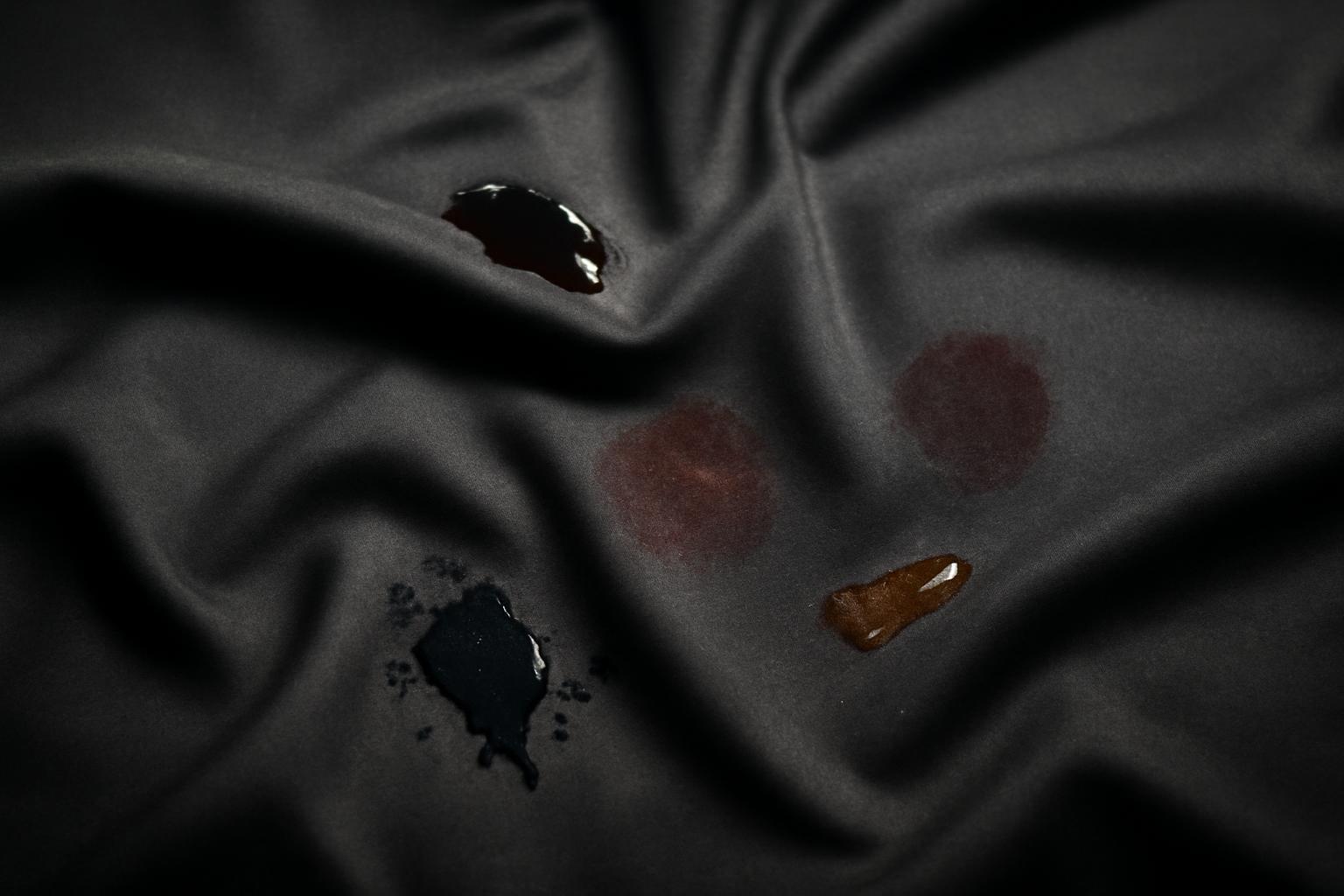
Polyester Lycra material is not one standardized fabric. It is a broad category in which polyester is combined with an elastic fiber—elastane, also called spandex and sold under the Lycra brand. Two fabrics with the same basic fiber description can differ substantially in stretch, recovery, opacity, weight, texture and care requirements.
That variation matters whether you are buying fabric by the yard, choosing leggings or swimwear, or laundering a stretch garment. The reliable approach is specification-first: identify the exact composition and construction, evaluate how the finished fabric behaves, and follow the care label rather than assuming the word “Lycra” guarantees a particular result.
What polyester-Lycra material actually is
Polyester-Lycra usually means a blend of polyester and elastane. Elastane and spandex are generic names for the same category of elastic synthetic fiber; Lycra is a brand name associated with that fiber. Sellers may therefore use “polyester-Lycra,” “polyester-spandex” and “polyester-elastane” for the same general kind of blend, although the wording alone does not prove that two products are equivalent. A commercial textile directory likewise identifies Lycra as a brand name for elastane and spandex as another name for the elastic-fiber category in its overview of Lycra fabric.
Elastane is ordinarily used as one component of a fabric rather than as the entire material. The companion fiber supplies much of the fabric’s body and surface character; in polyester-Lycra material, that companion is polyester. Some products also contain cotton or other fibers, so a name containing “polyester” and “Lycra” may not disclose the complete composition.
It is important to separate fiber content from fabric construction:
- Fiber content identifies what the material is made from.
- Construction describes how the yarns form the fabric.
- Finishing covers treatments applied during or after production.
- Garment design determines how the finished material is cut, supported and stressed in use.
A label saying “polyester and elastane” does not reveal whether the fabric is jersey, interlock, tricot, mesh, stretch lining or another knit or woven construction. Those structures can feel and behave differently even when their fiber percentages are similar.
For the same reason, an elastane percentage cannot be converted directly into a guaranteed finished-fabric stretch percentage. The proportion of elastane is relevant, but yarn arrangement, fabric density, direction, finishing and supporting components also affect how far a fabric or garment extends.
The safest interpretation is narrow: polyester-Lycra identifies a general blend category, not a complete performance specification.
What polyester and elastane each contribute—and what the label cannot promise
Polyester is generally associated with durability, resistance to wrinkling and abrasion, and relatively quick drying. Elastane is blended with polyester to add extension and recovery, supporting movement and a closer fit. Supplier guidance similarly describes spandex as a fiber commonly combined with polyester or nylon to add stretch recovery, comfort and fit while distinguishing its care needs from those of polyester.
Two terms are especially important:
- Stretch describes how far a fabric extends under force.
- Recovery describes how well it returns toward its original dimensions after that force is removed.
Stretch and recovery are related, but they are not interchangeable. A fabric may extend substantially without returning cleanly to its starting dimensions. Maximum extension is therefore not always the most useful measure.
The phrase “polyester-Lycra” does not establish any of the following:
- Exact stretch percentage
- Stretch direction
- Recovery after repeated extension
- Fabric weight or thickness
- Opacity when relaxed or stretched
- Softness or surface texture
- Drape or compression
- Breathability
- Moisture-wicking performance
- Chlorine, ultraviolet or fade resistance
- Suitability for a particular garment
Finished performance depends on the proportions of all fibers, the yarns, construction, weight, finish and garment design. Seams, linings, elastic bands, prints, coatings and trims can also impose limits that are not apparent from the main-fabric label.
Quick drying is not the same as breathability
Polyester is commonly described as relatively quick-drying, but drying speed does not prove that a particular polyester-Lycra fabric is breathable. It also does not establish that the material actively manages perspiration.
If moisture management matters, look for an exact product specification rather than inferring it from the fiber names. One retailer, for example, separately identifies a poly-spandex interlock as having a named moisture-management treatment in its polyester-spandex collection. Specifying that treatment separately is a useful reminder that moisture-management claims should be verified for the individual product.
Treat descriptions such as “chlorine-resistant,” “UV-resistant,” “fade-resistant,” “absorbent,” “exceptionally soft” or “moisture-wicking” as product- or seller-specific unless meaningful specifications or test information are supplied. A category description is not evidence that every fabric in the category performs identically.
Stretch direction, recovery, weight and construction
Two polyester-Lycra fabrics can carry similar fiber labels yet perform very differently. Important variables include stretch direction, extension, recovery, weight, construction and finish.
Two-way and four-way stretch
“Two-way” and “four-way” are common shopping descriptions for the directions in which a fabric stretches.
In practical terms, a fabric may stretch:
- Primarily across its width
- Primarily along its length
- In both width and length
- More in one direction than the other
Ask which directions stretch and by how much. The word “stretch” is too vague when a pattern or garment depends on extension along a particular axis. A material that stretches generously across its width but very little along its length may suit one design and fail in another.
For fabric sold by the yard, request measured stretch percentages in each relevant direction. If possible, also ask how the seller measured them. Results may not be directly comparable when retailers use different sample sizes, loads or terminology.
Check recovery separately
A stretch percentage does not reveal what happens after the force is released. Ask whether the supplier provides recovery data. If not, a sample permits a practical screening check:
- Mark or note the sample’s relaxed dimensions.
- Extend it gently in the direction relevant to the garment.
- Release it without snapping.
- Allow it to rest.
- Look for rippling, distortion or failure to return toward its starting dimensions.
- Repeat the process if the intended use involves frequent movement.
This is an informal inspection, not standardized laboratory testing. It can still identify an obvious mismatch before you buy several yards or cut a garment.
Weight affects more than warmth
Weight and construction affect drape, support, bulk and coverage. A lightweight stretch lining, a smooth interlock and a heavier tricot may all contain polyester and elastane, but they are not interchangeable.
A heavier fabric is not automatically more supportive or opaque, and a lighter fabric is not necessarily more breathable. The available evidence does not support universal fabric-weight rules for leggings, swimwear, dancewear or other garments.
One retail product illustrates the degree of variation. The Green Pepper describes a cotton/polyester/Lycra tricot as four-way stretch, 10–11 ounces per square yard and 60 inches wide. Its listed composition is 44% cotton, 44% polyester and 10% Lycra, but those figures total only 98%, leaving part of the composition unexplained on the retailer’s product page. That inconsistency is a reason to request clarification rather than guess the missing percentage.
Retail offerings range from lightweight linings to interlocks and heavier stretch tricots. This variety confirms that fiber names alone cannot establish weight or intended use.
Inspect opacity under realistic stretch
Evaluate coverage while the fabric is extended to approximately the degree it will experience in the finished garment.
For a sample, place a contrasting surface beneath it and inspect it in relevant lighting, both relaxed and extended. For a finished garment, examine coverage while moving through the positions the garment must accommodate. This is a practical inspection, not a validated opacity test, but it is more informative than viewing relaxed fabric on a table.
Common uses and how to judge suitability
Polyester-Lycra and related stretch fabrics are commercially listed for activewear, leggings, swimwear, cycling apparel, dancewear, tights, underwear, costumes, dresses, shirts and stretch linings. Retail collections also show that stretch fabrics are sold in varied constructions, weights, widths, colors and prints across broad Lycra and stretch-fabric categories.
Those categories indicate how fabrics are marketed. They do not prove that every polyester-Lycra product is suitable for every listed use.
Leggings and fitted activewear
For leggings, fitted shorts and close-fitting exercise garments, verify:
- Recovery after repeated extension
- Opacity at the intended amount of stretch
- Weight and bulk
- Surface feel against the skin
- Stretch in every direction required for movement
- Whether the fabric feels sufficiently supportive for the design
- Care instructions compatible with frequent washing
- Any documented moisture-management treatment, if required
Do not select a fabric solely because a seller calls it “four-way stretch.” Directional movement, recovery and coverage must work together. A highly extensible material may still recover poorly, while a fabric with strong recovery may be too sheer or unsuitable in surface feel.
Swimwear
Polyester-spandex fabrics are sold for swimwear, but the use category alone is not enough to approve an unidentified fabric for pool or ocean use. Before buying, confirm:
- Complete fiber composition
- Construction
- Stretch and recovery in the required directions
- Opacity when wet and stretched, where practical to assess
- Compatibility with the intended lining
- Care and colorfastness guidance
- Whether prints, coatings or trims have separate restrictions
- Any product-specific chlorine or fading claims
Retailers sometimes market polyester-spandex swimwear fabrics as resistant to chlorine, ultraviolet exposure or fading. Without comparable test information, those descriptions should remain attributed to the named product or seller rather than applied to the entire category.
Cycling and dancewear
Cycling and dance garments require movement without uncontrolled deformation. Prioritize recovery and multidirectional movement rather than simply choosing the material with the greatest extension.
Consider where the garment will be stressed—for example, at the hips, knees, shoulders, seat, torso or cuffs. Assess whether the material moves along those paths and returns toward shape. Also examine surface feel, opacity, seam placement and any panels that may stretch differently.
The cotton/polyester/Lycra tricot discussed earlier is marketed by its seller for jackets, bicycling wear, swimsuits, aerobic wear, tights and racing suits. These are seller-suggested uses, not independently validated recommendations for that construction or for polyester-Lycra generally.
Dresses, shirts and costumes
For dresses and shirts, drape and hand may matter more than maximum extension. Determine whether the material hangs fluidly, clings, curls at cut edges or has a brushed, sanded, shiny or matte surface. Weight affects how it falls and whether the design needs support.
Costumes may impose specific appearance and movement requirements, including printed or metallic surfaces, repeated extension during performance, opacity under stage lighting and compatibility with embellishments. Composition alone does not answer those questions.
Stretch linings
A lining must be evaluated in relation to the outer fabric and garment design. Confirm its usable width, weight, surface finish and stretch direction.
There is no universally ideal polyester-to-elastane ratio for these garments. Fiber ratio is one specification among several; it cannot replace evaluation of the finished fabric.
A specification-first checklist for buying fabric
When buying polyester-Lycra material by the yard, use the following checklist. If a critical field is missing, ask the seller before ordering.
Composition
Confirm:
- Exact percentages of polyester and elastane
- Whether the elastane is specifically Lycra-branded
- Whether cotton, nylon, recycled fibers or other components are present
- Whether all listed percentages total 100%
- Whether the information applies to the selected color or variant
Composition helps identify a product, but it does not predict all performance. Similar fiber ratios can behave differently when construction, yarn, weight or finishing changes.
Construction
Ask whether the fabric is jersey, interlock, tricot, mesh, lining or another construction. A listing that supplies only fiber names is incomplete for most garment decisions.
Weight
Request weight in a comparable unit, such as ounces per square yard or grams per square meter. Descriptions such as “light,” “medium” and “heavy” may be retailer-specific.
Weight still requires context. Two fabrics of similar weight may have different thickness, density, stretch and recovery.
Usable width
Confirm the usable cutting width, not merely the total width if selvages or an incomplete printed area reduce it. Width affects yardage and pattern placement.
Directional prints and one-way finishes can further restrict the usable layout.
Stretch direction and measured stretch
Ask:
- Does it stretch across the width?
- Does it stretch along the length?
- How much does it stretch in each direction?
- Is the measurement taken from relaxed fabric?
- Does the seller provide a test method or sample diagram?
Do not accept “stretchy,” “super stretch” or “four-way” as a substitute for measurements when a pattern specifies a minimum stretch range.
Recovery
Check whether the seller supplies recovery figures or another defined measure of dimensional return. If not, obtain a sample when a close fit or repeated movement makes recovery important.
Opacity under stretch
Ask whether the material is intended as an outer fabric or lining. Examine a sample over a contrasting background and under relevant lighting. For pale colors and prints, determine whether the appearance changes substantially under extension.
Surface and finish
Confirm whether the fabric is:
- Matte, shiny or semi-matte
- Smooth, brushed or sanded
- Printed or solution-dyed
- Treated for moisture management
- Coated or otherwise finished
- Intended for direct contact with the skin
If chlorine, UV, fade or moisture-management performance is advertised, ask whether the claim applies to the exact product and color and whether supporting specifications are available.
Care instructions
Request washing, drying and ironing directions before purchase, especially when the finished item will be laundered frequently. Save the instructions with your project information in case the listing later changes or disappears.
Intended use
A seller’s recommended use can help narrow a search, but it is not technical validation. Compare the product’s measurable specifications with the requirements of the pattern or garment.
Retail filters for fiber, use, weight, width, color, design and reorderability can be useful shopping tools. They do not verify that every item has been categorized correctly. A broad polyester-spandex collection may include related products or entries whose visible descriptions do not establish both fibers.
Current stock and sample availability
Check availability when you are ready to buy rather than relying on an older article, cached result or storefront total. Prices, colors, stock and reorderability can change.
Request a swatch when recovery, opacity, hand feel, color or finish is important. A home inspection does not replace standardized testing, but it can reveal a clear mismatch.
Be cautious when a page emphasizes photographs and color names while omitting technical information. For example, the supplied portion of Blue Moon Fabrics’ “Synergy Polyester Lycra Fabric” listing shows numerous color variants but no visible composition percentages, weight, width, stretch measurements, care instructions or recommended uses in the available product-page excerpt. A product title or color gallery is not a substitute for those specifications.
How to wash and dry polyester-Lycra conservatively
The garment or fabric manufacturer’s care label takes priority over generic fiber guidance. Blend ratio, dyes, finishes, seams, prints, elastic components and trims may require stricter treatment than polyester alone.
When the label permits home washing but gives little detail, a cautious baseline is:
- Sort the item by color.
- Turn it inside out.
- Use cool or cold water.
- Select a gentle or low-spin cycle.
- Use a mild detergent in the directed amount.
- Handle the wet garment gently.
- Air-dry it away from strong heat and direct sunlight.
For delicate garments, hand washing may be appropriate when the care label permits it. Move the item gently through the water rather than scrubbing, twisting or wringing it.
Avoid chlorine bleach
Elastane-care guidance warns that chlorine bleach can damage elastic fibers. It also recommends pressing or squeezing out water instead of wringing the fabric in the supplier’s stretch-fabric care guidance.
Follow the garment label and treatment-product directions, and test colorfastness in an inconspicuous area before treating a visible section.
Air drying is the lower-risk default
Published commercial guidance conflicts about tumble drying. One detergent-brand guide permits low-heat tumble drying for Lycra, while elastane-focused supplier guidance favors hanging or laying flat and warns that tumble drying may reduce elasticity. The detergent guide also states that the item’s care label should override its general instructions in its fabric-washing guidance.
The cautious resolution is:
- If the label says to air-dry, do not tumble dry.
- If the label does not authorize machine drying, air-dry.
- If tumble drying is expressly permitted, use the lowest suitable setting.
- Minimize heat exposure and stop the cycle when the item is dry.
Lay the item flat when hanging could pull it out of shape. Otherwise, support it during drying without leaving the fabric, straps or waistband under tension.
Do not import pure-polyester care rules into a blend
Some care guides permit ordinary washing or tumble drying for polyester. Those directions may concern pure polyester rather than a polyester-elastane blend. The elastic component, garment construction, finish or trims can establish a stricter limit.
Industrial processing conditions are not garment-care instructions either. A fiber’s exposure to heat during manufacturing does not prove that a finished garment can tolerate hot washing, drying or ironing.
Ironing and steaming
Read the care label before applying an iron or steamer. If treatment is permitted, use the lowest suitable temperature and avoid prolonged contact. Test an inconspicuous area first if the finish is uncertain.
Do not assume steam is harmless.
Stains, odors and exposure: safe first steps
There is no universal polyester-Lycra stain-removal recipe. The appropriate treatment depends on the stain and on the garment’s dyes, finishes, blend ratio, construction and trims. A method suitable for plain polyester may be too aggressive for an elastane-containing fabric, transfer print or specialty coating.
Use this sequence before applying a treatment:
- Identify the stain if possible.
- Read the garment’s care label.
- Check the treatment product’s directions and exclusions.
- Test for colorfastness in an inconspicuous area.
- Blot or handle gently rather than scrubbing.
- Rinse or wash only as the label permits.
- Check the stained area before drying.
Dryer heat can make some stains harder to remove, so do not machine-dry the item until you have checked whether the mark remains. A general polyester care guide gives the same check-before-drying warning, although it does not specifically address polyester-elastane blends in its polyester washing instructions.
Avoid applying pure-polyester stain instructions automatically to a blend. Also avoid chlorine bleach, rough treatment and heat beyond what the garment label permits.
Treat the stain, not just the fiber name
Ink, oil, makeup, food dye, perspiration and mud do not respond identically. “Polyester-Lycra” identifies the substrate but does not reveal what will dissolve or release the contaminant.
Do not assume that a familiar household remedy is harmless. The supplied evidence does not establish any of them as universally safe for every polyester-Lycra garment.
Odor in activewear
One fabric retailer’s care guidance identifies polyester-spandex activewear as prone to retaining odors. That is commercial care guidance, not proof that every fabric in the category behaves the same way.
Start with the garment label and a suitable detergent used in the directed amount. Do not escalate automatically to improvised acids, alkalis or degreasers, because their compatibility with the exact dye and finish may be unknown.
Swimwear after chlorine or saltwater exposure
Rinse swimwear promptly with fresh water after exposure to chlorine or saltwater, then follow the item’s washing instructions. Retail care guidance recommends prompt rinsing and also lists reduced recovery, sagging and thinning among possible signs of deterioration in its spandex washing and drying guide.
Rinsing does not prove that a suit is chlorine-resistant, nor can it prevent every form of wear.
Know when to stop
Consider a professional cleaner for valuable, specialty, heavily embellished or apparently dye-unstable garments rather than escalating through unverified household treatments. Professional help is also prudent when:
- The care label requires professional cleaning.
- The stain is unknown and widespread.
- A test area changes color or texture.
- The fabric has a coating, metallic finish or bonded decoration.
- Previous treatment has already altered the garment.
- Further experimentation creates an unacceptable risk of permanent damage.
Tell the cleaner what caused the stain, which treatments have been attempted and whether the item has already been exposed to heat.
How to recognize wear and preserve useful life
Stretch fabrics do not always fail through an obvious tear. Possible signs of deterioration include:
- Reduced recovery after movement
- Sagging at the knees, elbows, seat or waist
- Persistent stretching
- Thinning or increased transparency
- Rippling around seams
- Damaged elastic bands
- Seams that no longer stabilize the fabric
- A fit that becomes looser during wear and does not recover after rest
When a garment no longer returns toward its original shape, reassess its fit and integrity.
Permanent elasticity loss caused by damaged or overstretched fibers is not established as reversible through washing or household treatment. Laundering may remove soil or temporarily change how a garment feels, but retailer care guidance states that damaged elasticity cannot be restored in its discussion of spandex wear.
Prevention is therefore more realistic than restoration:
- Follow the exact care label.
- Avoid chlorine bleach.
- Limit heat to what the label permits.
- Handle wet garments gently.
- Do not scrub, twist or wring.
- Rinse swimwear after use.
- Check stains before machine drying.
- Store garments without leaving them under tension.
Avoid stretching a garment over an oversized hanger, fixture or container for long-term storage. Fold it or support it in a way that does not place continuous strain on the fabric, straps or waistband.
Careful laundering may reduce avoidable damage, but it cannot guarantee a particular service life. The practical decision rule is simple: rely on the exact product specifications and care label, and treat generic polyester-Lycra advice as a cautious baseline rather than a warranty.
Frequently asked questions
Is polyester-Lycra the same as polyester-spandex or polyester-elastane?
Usually, the terms identify the same general blend category: polyester combined with the elastic fiber generically called elastane or spandex. Lycra is a brand name rather than a separate generic fiber category.
That does not make all products interchangeable. Verify the full fiber percentages, construction, stretch, recovery, weight, finish and care instructions for the exact material.
Is polyester-Lycra breathable and moisture-wicking?
Not necessarily. The fiber description alone does not establish either property, and relatively quick drying is not proof of breathability or moisture-wicking performance.
If those characteristics matter, look for product-specific specifications or test information. A separately identified moisture-management treatment should not be assumed to exist on other polyester-elastane products.
Can polyester-Lycra go in the dryer?
Only when the garment or fabric care label permits it. Commercial guidance conflicts: some sources allow low-heat tumble drying, while others favor air drying and warn that dryer heat may reduce elasticity.
Air drying away from strong heat is the lower-risk default. If tumble drying is authorized, use the lowest suitable setting and minimize heat exposure.
Is polyester-Lycra suitable for swimwear?
Some polyester-elastane fabrics are specifically marketed for swimwear, but not every material in the category is suitable. Verify composition, construction, stretch direction, recovery, opacity, lining compatibility, colorfastness guidance and any product-specific chlorine claims.
Do not infer chlorine or fade resistance from the fiber names alone. After use, rinse the suit promptly in fresh water and follow its care label.
Can stretched-out Lycra be repaired or restored?
Not reliably through washing or a household treatment. If poor recovery results from damaged or permanently overstretched elastic fibers, laundering is not established as a way to restore them.
If the material remains sagged, thin or distorted after resting, replacement may be more realistic.
Polyester-Lycra is best treated as a family of materials, not a single predictable fabric. Confirm composition, construction, weight, stretch direction, measured extension, recovery, opacity, finish and care instructions for the exact product. Then protect the material by following its label, washing gently, avoiding chlorine bleach and unnecessary heat, and air drying when no more specific instructions are available under conservative stretch-fabric care guidance.