 StainList
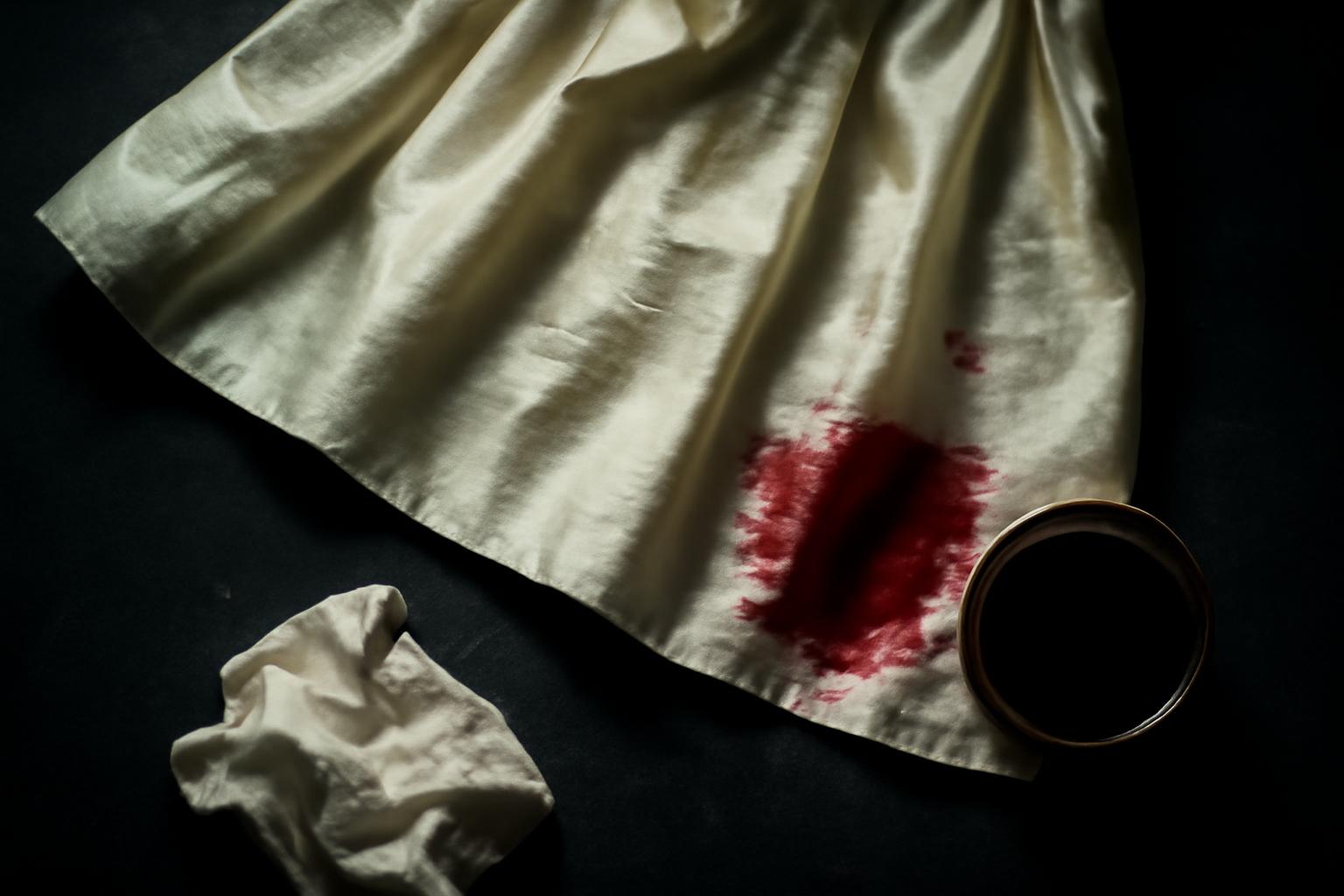
Silk dupioni combines a crisp hand, visible texture, and pronounced luster. Those qualities can give a simple dress architectural shape, add presence to curtains, or create a dimensional decorative finish. They also make product-level evaluation essential: fabrics sold under the same name can differ in composition, weight, usable width, stiffness, slub prominence, color effect, finish, and care requirements.
Choose the individual fabric rather than relying on the category label. Confirm its composition and sale unit, request measurable specifications, inspect a swatch, and consider how its texture and sheen support the intended design. Once the fabric becomes a garment or furnishing, follow the care label and account for the complete construction—not generic advice about silk alone.
What silk dupioni is—and why it has slubs
Dupioni is generally described as a crisp, lustrous, tightly woven, plain-weave silk. It uses a relatively fine yarn in the warp—the threads running lengthwise—and a more uneven yarn in the weft, which crosses from side to side.
Traditionally, that uneven weft is associated with yarn reeled from two or more entangled cocoons. Its thick-and-thin areas appear in the finished cloth as crosswise slubs: visible ridges, nubs, or irregular lines across an otherwise tight weave. Common spelling variants include dupion, dupioni, doupioni, and douppioni. These construction details are summarized in the reference overview of dupioni.
This helps explain its use in formal silhouettes and decorative interiors, but “hand” does not by itself establish comfort, opacity, durability, or suitability for a specific project.
Crosswise slubs are part of dupioni’s expected appearance and should not automatically be rejected as defects. Their size and frequency can vary substantially, making texture an aesthetic choice as well as an identifying characteristic.
At the same time, the word slub should not be used to excuse every visible problem. A consumer cannot always diagnose a weaving or finishing fault from a photograph, but it is reasonable to question holes, broken or pulled threads, stains, conspicuous loose areas, or marks that look unlike the surrounding yarn variation. Ask the seller whether the observed feature is characteristic of the fabric and whether the swatch represents the current stock.
A physical swatch is more informative than a distant photograph. Examine it flat and folded, look at both sides, and view it under angled light. For matched panels, a smooth bodice, or precisely placed embellishment, decide whether the amount and distribution of texture support the design before ordering the full quantity.
Neither fine nor bold slubs are inherently superior. Restrained irregularities may read as quieter from a distance, while pronounced ridges can become a primary design feature. The relevant question is whether the actual surface suits the intended garment, furnishing, or decorative finish.
Sheen, color shifts, and the available surface styles
Dupioni’s recognizable appearance comes from several qualities working together: a tight plain weave, crisp body, high luster, and visible crosswise slubs.
Some dupioni uses different colors in the warp and weft. From one position, the colors may blend into a dominant shade; from another, one yarn color may become more prominent. The resulting two-tone or iridescent effect can be especially visible in folds, pleats, gathered sections, and curved silhouettes.
A still online image may not reproduce that effect accurately. For two-tone dupioni, request a swatch and inspect it:
- Flat and loosely folded.
- From several viewing angles.
- In indirect daylight.
- Under the indoor lighting where the finished item will be used.
- Beside the proposed lining, trim, wall color, or coordinating fabric.
Retail navigation reviewed on July 30, 2026 illustrates the range of merchandise sold as dupioni. One specialty silk retailer groups products into dyeable, ready-colored, two-tone, striped, plaid or checked, printed, embroidered, jacquard, pintucked, and quilted categories. These are examples of current market organization, not an exhaustive or permanent technical classification. The assortment and linked product labels appear in the retailer’s silk dupion navigation.
The terms do not all describe the same type of feature:
- Ready-colored indicates that the fabric is supplied in a selected color.
-
Dyeable indicates that the fabric is marketed for later coloration, but the buyer must still verify its composition, preparation, and appropriate process.
-
Striped or plaid describes an arranged linear or checked design.
A product can fit more than one description.
Texture deserves the same attention as color. Prominent slubs can create a highly dimensional appearance, particularly across broad curtains or full skirts. Fine slubs may look more restrained at normal viewing distance. If a listing does not communicate scale, request a close-up photograph that includes a ruler or another stated reference size.
Where dupioni works best: apparel, occasions, and interiors
Dupioni is most persuasive when its structure, sheen, and texture contribute directly to the design. Its crisp hand can support defined folds, controlled volume, and polished or architectural silhouettes. These are appearance and handling observations, not proof of tested durability or performance.
Commonly cited applications include bridalwear, formalwear, gowns, dresses, skirts, tops, pants, costumes, curtains, drapes, upholstery, and decorative finishing. Retail assortments also show dupioni used for tunics, shirts, overskirts, and coordinated separates. For example, one current collection reviewed on July 30, 2026 presents dupioni in dresses, tunics, tops, pants, shorts, and skirts. Such assortments illustrate styling possibilities; they do not establish that every fabric labeled dupioni is appropriate for every version of those garments.
For apparel, evaluate the entire garment system:
- Silhouette: Decide how much body and shape the design requires.
- Lining: Consider opacity, skin contact, internal finish, and the effect on drape.
- Interfacing or underlining: Determine whether added support is necessary and whether it could make the result too rigid.
- Trim and embellishment: Consider how lace, embroidery, beading, or other additions affect weight, balance, and care.
- Seam placement: Decide whether prominent slubs or two-tone effects will be visually acceptable where pieces meet.
- Pattern matching: Stripes, plaids, borders, or repeated embroidery may require extra fabric.
- Movement: Fold and gather a swatch instead of judging it only while flat.
- Cleaning: Make sure every component of the completed garment is compatible with the intended care method.
A product marketed for gowns may still be too light, stiff, sheer, or heavily textured for a particular gown. Likewise, placement in a tops category does not mean the fabric will behave like a fluid blouse silk. Composition, measurable weight, opacity, usable width, finish, and care instructions all require product-level verification.
Costume buyers should apply the same distinction. Dupioni’s sheen and slubbed texture may support a desired visual effect, but a costume category does not establish abrasion resistance or repeated-cleaning performance. For demanding or frequently worn pieces, request measurable specifications and test a representative sample before committing.
For interiors, scale and exposure become especially important. Curtains use broad adjacent lengths on which slub distribution, color variation, and differences between dye lots may be conspicuous. Plan the cutting layout in advance and secure enough matching fabric for all panels in one order.
For a dupioni curtain or drape, a substantial UV-stable underlining must be used to protect the fabric from sunlight Dupioni - Wikipedia. This is a protective measure, not a guarantee against fading or deterioration. The recommendation appears with dupioni’s commonly cited interior applications in the reference overview linked above.
The word upholstery also covers very different levels of use. A decorative panel or occasional chair is not equivalent to a heavily used seat. Unless the individual product supplies relevant performance specifications, do not infer demanding-service suitability merely because upholstery appears among suggested applications.
There is no evidence-supported universal weight recommendation for every dupioni project. Sellers may use subjective terms such as light or medium, and fabrics with similar descriptions can still behave differently because of weave and finish. Ask for measurable weight, compare swatches, and select the fabric whose verified body, opacity, width, texture, and care requirements fit the design.
Dupioni versus shantung—and why nearby retail labels need scrutiny
Dupioni and shantung can look related, and retailers sometimes place them near one another. The supported general comparison is that dupioni is usually described as slightly thicker and heavier than shantung, with a crisper hand and more visible slubs. This is a broad retailer and reference description—not a rule capable of identifying every bolt.
For that reason, the comparison should not replace product specifications or a physical swatch.
The available evidence does not support a definitive technical comparison between dupioni and taffeta. Both labels may appear near lustrous, structured silks, but they should not be treated as synonyms. If a collection mixes dupioni, taffeta, jacquard, or other silk types, inspect the individual listing rather than assuming that the collection heading applies identically to every item.
The same caution applies to raw silk. Some retail navigation groups dupion-related products under a raw-silk heading while also maintaining a separate dupion category. That shows how one seller organizes merchandise; it does not establish a definitive technical meaning for raw silk or prove that the two labels are interchangeable.
Quick comparison
Label Supported general description What still needs verification Dupioni Crisp, lustrous plain-weave silk with an irregular weft and visible crosswise slubs Composition, weight, width, finish, slub level, opacity, and care Shantung Generally described as somewhat lighter, thinner, less crisp, and less visibly slubbed than dupioni Individual products may overlap; verify every specification Taffeta No definitive comparison is warranted from the available evidence Do not infer construction or equivalence from retail proximity Raw silk Some sellers group dupion-related products under this retail label The observed grouping does not establish technical equivalence Specification warning: Collection names are navigation aids, not substitutes for an individual product description or representative swatch.
When comparing nearby labels, prioritize:
- Fiber content: Is the percentage stated, and is any blend disclosed?
- Weave description: Does the listing explicitly identify dupioni or another construction?
- Measurable weight: Is a unit and measurement basis provided?
- Usable width: Does the figure include selvages or decorative borders?
- Finish: Has the surface been softened, washed, printed, coated, embroidered, quilted, or otherwise treated?
- Close-up images: Can you see the slubs, weave, and reverse?
- Swatch: Does the material in hand match the description?
- Care information: Is it supplied for that exact product?
A collection can include related fabrics or products whose titles emphasize color rather than construction. Price, popularity labels, and category size cannot resolve that uncertainty. A detailed specification and representative swatch are more useful than a familiar but unsupported label.
A practical checklist for buying silk dupioni by the yard
Online fabric shopping works best when aesthetic judgment is separated from specification checking. First decide whether the color, sheen, and texture suit the project. Then determine whether the measurable and commercial terms make the order workable.
Use this checklist before buying:
- Fiber percentage: Is the composition explicitly stated?
- Measurable weight: Is the weight given with a clear unit and measurement basis?
- Usable width: How much fabric remains after excluding selvages, borders, or unusable edges?
- Slub level: Are the irregularities fine and restrained or bold and frequent?
- Sheen: Is the surface subtly lustrous, highly reflective, or altered by a finish?
- Stiffness: How much shape does the swatch hold when folded or gathered?
- Opacity: Will the project need lining or underlining?
- Finish: Is the fabric printed, embroidered, pintucked, quilted, metallic, softened, or otherwise treated?
- Color effect: Is it solid, tonal, two-tone, iridescent, striped, plaid, or printed?
- Dye lot: Can the whole quantity be supplied from a matching lot or bolt?
- Minimum cut: Must you purchase a full yard, several yards, or a fixed-length piece?
- Sale unit: Does the price cover a yard, meter, swatch, remnant, bundle, or fixed cut?
- Swatch availability: Is the sample large enough to reveal texture and color shift?
- Return policy: Are cut goods, sale items, custom colors, or swatches returnable?
- Intended use: Do the specifications support the actual design rather than merely appearing under a relevant filter?
- Care: Is the planned cleaning method compatible with both the fabric and the completed construction?
Width requires particular attention because it affects layout and total cost. Retail evidence reviewed on July 30, 2026 included filters spanning approximately 36 to 72 inches, while one collection description named 45-inch and 54-inch options. These are market examples, not standard dupioni widths; the individual listing controls. The figures appear in the Denver Fabrics dupioni collection.
Do not assume nominal width equals usable width. Ask whether the measurement includes selvages. For bordered, embroidered, or printed fabric, request the width of the usable design area as well.
Product-level measurements are sometimes available. On July 30, 2026, specialty retail navigation included a dyeable product labeled 80 grams and 54 inches wide and another white dyeable product labeled 44 inches wide. Those labels are examples only and should not be generalized to other dupioni. If a listing says only “80 grams,” ask what the figure measures before comparing it with another seller’s weight.
For a two-tone fabric, examine the swatch in daylight and indoor light, bend it into folds similar to those in the finished project, and place it next to coordinating materials. Also inspect the reverse, since a nearby lining, trim, wall color, or textile may make one component of the color effect more noticeable.
When estimating quantity, account for pattern matching, the chosen layout, and a reasonable allowance for flaws or cutting errors. If several panels or garment pieces must match, request enough material from one dye lot and preferably one bolt.
Calculate project cost only after confirming the sale unit:
- Confirm what the displayed price buys.
- Verify the usable width.
- Determine the required quantity from the layout.
- Include swatches, shipping, lining, and matching allowances.
- Check whether color, width, or finish changes the price.
- Review the return terms for cut goods.
This caution is important because some retailer collections contain unusually low starting figures without explaining in the collection view whether they represent swatches, deposits, variants, or full items. Treat an unexplained display price as incomplete information rather than as a per-yard quote.
Inventory, colors, prices, promotions, and product counts change. They should not become permanent benchmarks for what dupioni ought to cost. Price is also not proof of fiber content or quality, while labels such as bestseller, favorite, timeless, or high quality are promotional rather than measurable specifications.
If essential information is missing, ask the seller in writing for the fiber percentage, usable width, measurable weight, finish, care instructions, dye-lot availability, sale unit, minimum cut, and confirmation that the photographed fabric represents current stock. Keep the response with the order record.
Can silk dupioni be washed? Use a risk-based decision
Begin with the care label supplied by the fabric manufacturer or garment maker. Dye, finish, lining, trim, interfacing, embroidery, and construction can all affect which cleaning method is appropriate.
Commercial care guidance takes a conservative position. One laundry-service guide recommends dry cleaning dupioni to preserve its texture and sheen and warns that hand washing can alter the finish. This is attributed, risk-averse guidance—not proof that every untreated piece of dupioni must always be dry cleaned. See the service’s dupioni care recommendation.
Distinguish uncut yardage from a completed item. Plain yardage can be tested before it is committed to a project. A finished garment may contain lining, interfacing, boning, padding, adhesives, embroidery, contrasting dyes, or trim that reacts differently from the face fabric. Curtains may include headings, lining, weights, or interlining.
Sewists have reported washing some uncut dupioni intentionally. Reported results include a softer or more papery hand, reduced crispness, diminished sheen, color bleeding, and blotching. These are personal experiences from a Threads forum discussion, not controlled textile tests.
If a softer, less reflective surface suits the project, prewashing could be treated as an intentional finishing experiment. It should not be described as routine maintenance that will preserve the original appearance.
Use this conservative framework:
- Follow the label for finished garments and furnishings.
- Seek professional assessment for dry-clean-only, valuable, lined, structured, embellished, vintage, specialty, or irreplaceable items.
- Consider testing only on uncut yardage when permanent changes are acceptable.
- Do not assume another person’s result will transfer to a fabric with a different dye, finish, weave, or composition.
- Do not apply generic washable-silk advice automatically to dupioni.
If you are deliberately considering prewashing uncut yardage, test a representative swatch:
- Cut a sample large enough to show the fabric’s texture and color variation.
- Mark its warp and weft orientation.
- Record its dimensions in both directions.
- Reserve an identical unwashed control.
- Apply only the cleaning and drying process intended for the remaining yardage.
- Let the test dry completely.
- Remeasure it in both directions.
- Press a clean white cloth against it and check for color transfer.
- Inspect for blotching, streaks, rings, distortion, or uneven color.
- Compare its sheen, stiffness, texture, hand, and color with the control.
- Fold and handle it as the proposed project would be handled.
- Decide whether the changed result—not merely the absence of obvious damage—is acceptable.
A swatch test reduces uncertainty but cannot guarantee uniform behavior across an entire cut or completed item. It also does not predict the effects of repeated cleaning.
Do not treat machine washing, tumble drying, shampoo, vinegar, salt, specialty wash, or color-catching products as universally safe for dupioni. Such methods appear in general advice and personal anecdotes, but the available evidence does not validate them for every dye, finish, or construction.
If retaining the original crisp hand, luster, color, and finish is important, professional assessment is the lower-risk direction. Give the cleaner the care label and disclose any known finish, trim, previous cleaning, or spot-treatment attempt.
What to do when silk dupioni is stained
Treat spill response as cautious first aid, not guaranteed stain removal. The immediate objective is to limit spread without changing the color, sheen, or finish before an experienced cleaner can assess the item.
First, check the care label and determine whether the item is:
- Marked dry clean only.
- Valuable or irreplaceable.
- Vintage.
- Lined or interlined.
- Structured with interfacing, padding, or boning.
- Embroidered, beaded, printed, or otherwise embellished.
- Made with strongly contrasting colors.
- Already affected by a water ring or previous treatment.
For a fresh liquid spill, blot gently with a clean, dry white cloth. Do not rub. Use light pressure and move to a clean area of the cloth as liquid transfers.
General professional silk guidance warns that unsuitable treatment can produce water marks, color bleeding, shrinkage, or loss of luster. It recommends blotting instead of rubbing and advises against water-based cleaners, bleach, harsh spot removers, soaking, or machine washing unless the label and product-level testing support the method. These cautions are summarized in a commercial cleaner’s silk stain guide.
Avoid:
- Heat from an iron, dryer, hair dryer, radiator, or hot water.
- Bleach.
- Harsh or regular detergent applied directly to the mark.
- Wringing or twisting.
- Prolonged soaking.
- Machine washing as an emergency response.
- Untested commercial spot removers.
- Aggressive brushing or scraping.
- Repeated wetting intended to chase a developing ring.
Do not transfer general silk recipes involving water, vinegar, salt, detergent, or absorbent powder into dupioni-specific instructions. A method suggested for another silk, dye, or stain may alter dupioni’s sheen, crispness, color, or finish.
Stop DIY treatment if:
- The label prohibits washing.
- Color transfers to the blotting cloth.
- A watermark or ring develops.
- The sheen, stiffness, or texture changes.
- The stain spreads.
- The item contains multiple strong colors.
- The piece is valuable, vintage, lined, structured, embellished, or otherwise complex.
- You cannot identify the spilled substance.
- A cleaning agent has already been applied.
When consulting a professional, provide three facts: what caused the stain, when it occurred, and everything already applied. Mention any heat exposure, rinsing, detergent, spot remover, or earlier cleaning attempt.
More treatment is not necessarily better; the risk of color loss, rings, finish alteration, or surface damage can eventually outweigh the benefit of further stain reduction.
Frequently asked questions
Are the slubs in silk dupioni defects?
Usually not. Crosswise slubs result from dupioni’s irregular weft and are part of its expected visual texture.
However, slub should not be used as a blanket explanation for holes, broken threads, stains, snags, or conspicuous loose areas. Inspect a swatch and ask the seller about any feature that appears unlike the surrounding yarn variation.
Is silk dupioni the same as shantung?
No. They are similar-looking fabrics, but dupioni is generally described as slightly thicker, heavier, crisper, and more visibly slubbed than shantung.
Because individual products can overlap, compare the exact composition, measurable weight, usable width, weave description, finish, close-up images, and swatch. Do not treat the labels as interchangeable merely because a retailer places them together.
Can silk dupioni be washed at home?
There is no universal home-washing rule. Some sewists have intentionally washed uncut yardage, but reported changes include softness, reduced crispness or sheen, bleeding, and blotching.
Follow the label for completed items. If you are intentionally considering prewashing plain yardage, test and measure a representative swatch against an unwashed control. Seek professional assessment for dry-clean-only, valuable, lined, structured, embellished, vintage, or irreplaceable pieces.
What should I do immediately after spilling something on dupioni?
Check the care label, then gently blot a fresh liquid spill with a clean, dry white cloth. Do not rub, apply heat, soak the fabric, or use an untested stain remover.
Stop if color transfers, a ring forms, or the surface changes. Give an experienced cleaner an accurate account of the spill and everything already applied.
Is silk dupioni suitable for curtains and drapes?
It can be, when its crisp structure, sheen, and slubbed surface fit the design. Verify composition, weight, usable width, opacity, finish, dye lot, and care requirements rather than relying on a home-decor category alone.
For a dupioni curtain or drape, a substantial UV-stable underlining must be used to protect the fabric from sunlight Dupioni - Wikipedia. Lining reduces exposure but does not guarantee protection from fading or deterioration.
A reliable decision sequence
Start by confirming that dupioni’s slubbed, lustrous, structured appearance suits the project. Then verify the composition, measurable weight, usable width, finish, dye lot, minimum cut, and sale unit.
Order a swatch and inspect it in the lighting and folds relevant to the finished design. Follow the exact care label once the fabric becomes a garment or furnishing, and choose professional assessment for valuable, dry-clean-only, lined, structured, embellished, vintage, or otherwise complicated pieces.
Careful specification checking and a conservative response to spills are more reliable than treating every fabric sold as silk dupioni as though it were identical.