 StainList
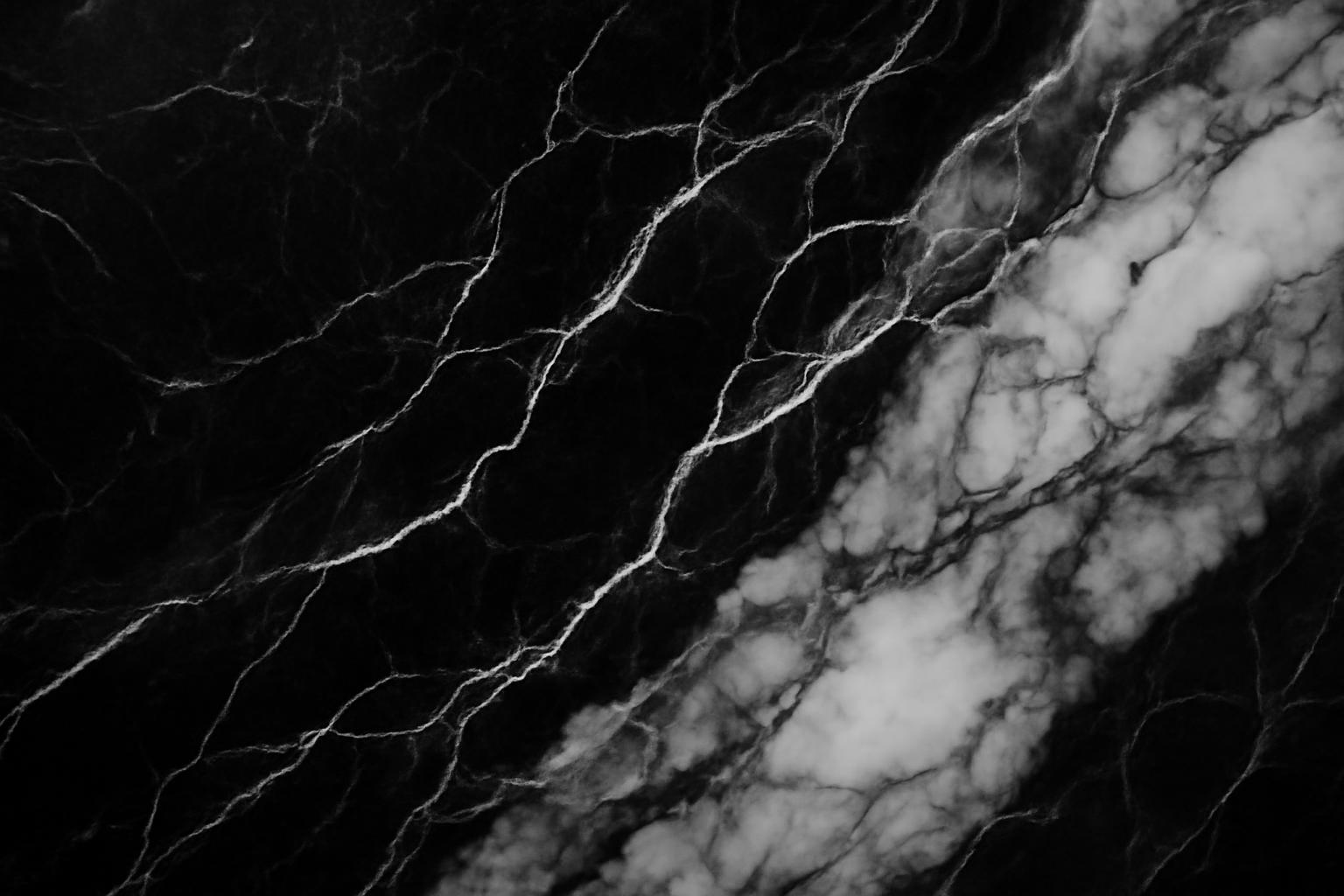
“Silver veined black and white marble” sounds like a specific stone, but the available evidence supports treating it as a description of an appearance—not as one standardized marble variety.
Start by choosing between two visual directions:
- A black or deep-gray field with pale veins: Compare Silver Wave Black, Silver Wave Black Forest, and Nero Marquina.
- A white field with gray, silver-looking, or black veins: Compare Calacatta Lincoln, Bianco Lasa, Carrara, and Calacatta.
Then evaluate the exact slab or lot by background color, vein color and density, movement, finish, format, natural-stone status, and documented suitability for the intended installation. A trade name can create a shortlist, but it should not make the final decision.
Is “silver veined black and white marble” an actual marble name?
The supplied evidence does not establish “silver veined black and white marble” as a standardized variety or universal trade name. It is an appearance-based search phrase that can lead to several different natural stones—and sometimes to artificial products.
Commercial catalogs demonstrate the ambiguity. A marketplace category for “silver veins marble” includes names such as Silver Dragon, Silver Wave, Black Silver Portoro, and Portoro Extra. It groups together black, gray, brown, white-veined, and silver-veined products while also mixing natural and artificial stone. These are supplier listings, not independent verification of geological identity, quarry, composition, or authenticity. StoneContact’s marketplace shows how broadly the “silver veins” label is used.
The phrase usually points to one of two substantially different looks:
- Dark-base marble: A black, charcoal, or deep-gray field crossed by white, silver-gray, or pale-gray veins.
- White-base marble: A white or crystalline field crossed by cool gray, silver-looking, or black veins.
These directions create different visual effects. A black field with thin white veins reads as sharply graphic and monochrome. A dark field with broad gray waves feels more fluid and layered. A white field with gray veining is brighter and less visually heavy, while occasional black veins create localized dark accents rather than an overall black-and-white surface.
Marble varieties are commonly differentiated through several characteristics together:
- Base color and its uniformity
- Grain or crystalline character
- Vein color
- Vein thickness
- Vein density
- Linear, branching, web-like, cloudy, or flowing movement
- Inclusions and secondary colors
A product name cannot establish all those attributes for current inventory. Suppliers may use different names for visually similar stones, while separate selections sold under one name may differ noticeably.
The most useful selection rule is therefore: define the base color and vein character before comparing trade names. Decide whether the field must be black, deep gray, or white; whether the veins should read as white, cool gray, or silver; and whether the movement should be crisp, sparse, dense, linear, cloudy, or wave-like.
Closest matches at a glance
The following names are practical starting points, not interchangeable materials. Descriptions refer to commercial guides and listings, and an exact slab may differ from the general description.
| Commercial name | Background color | Stated vein color | Pattern character | Documented forms | Evidence limitations |
|---|---|---|---|---|---|
| Silver Wave Black / Silver Wave | Black, deep black, gray, or deep silver, depending on seller | White, gray, silver, beige, and sometimes gold | Fluid, layered, undulating waves | Slabs and field tiles | Sources disagree on whether the field is black, gray, or deep silver; some selections are not strictly monochrome |
| Silver Wave Black Forest | Deep silver | White, dark gray, and gold | Broad, flowing waves | Field tiles, subway tiles, hexagons, random mosaics, and checkerboards | Supplier-specific description; warm gold may be visible |
| Nero Marquina | Deep or jet black | White | Crisp, sharp, irregular, distinctive, or web-like | Slabs, tiles, countertops, and decorative pieces | A strong black-and-white match, but the cited descriptions call the veins white rather than silver |
| Silver Dragon | Generally marketed as black or dark | White or silver, depending on listing | Listing-dependent | Slabs, tiles, flooring, and wall cladding | Marketplace name and supplier claim; identity, composition, and origin require verification |
| Black Silver Portoro | Black | White or silver in marketplace listings | Flowing or irregular | Slabs and fabricated products | Must not automatically be confused with Nero Portoro, which is described elsewhere as gold-veined |
| Calacatta Lincoln | White | Gray that may occasionally appear silver | Smoky or sweeping | Not established by the supplied source | Natural selection varies; “silver” may describe the appearance of gray veins |
| Bianco Lasa | Crystalline white | Bluish gray with occasional prominent black veins | Predominantly linear | Not established by the supplied source | Not every slab will contain a strong black vein |
| Carrara | White to blue-gray | Fine gray | Soft, feathery, and relatively subdued | Slabs and other commercial stone formats | A broad family or commercial category rather than one guaranteed pattern |
| Calacatta | Brighter white | Bold gray, sometimes with gold | Thicker, more dramatic movement | Slabs and other commercial stone formats | Warm or gold notes may prevent a strictly cool black-white-silver palette |
Among dark options, Silver Wave Black is the closest explicit match to the word “silver.” A commercial guide describes it as black marble with undulating silver and gray patterns. The guide separately places Silver Wave in a gray family and describes silver and graphite tones, so it does not establish that Silver Wave and Silver Wave Black are identical. It describes Nero Marquina as Spanish marble with a jet-black surface and white veins, while attributing Silver Wave Black to China. These origins remain commercial claims that should be confirmed for the offered bundle. NT Pavers provides the separate Silver Wave, Silver Wave Black, and Nero Marquina descriptions.
For a white field, Calacatta Lincoln and Bianco Lasa are more targeted starting points. Calacatta Lincoln is described as white marble with gray veins that may occasionally appear silver. Bianco Lasa is described as crystalline white with bluish-gray linear veins and one or two potentially prominent black veins. The same supplier guide identifies base uniformity, grain, vein thickness, and pattern as features used to distinguish white-marble varieties. TINO Natural Stone gives the Calacatta Lincoln and Bianco Lasa descriptions.
Carrara and Calacatta are broader alternatives. Carrara generally has a softer white-to-blue-gray field with fine gray veining. Calacatta generally has a brighter white field with bolder gray or gold movement. Carrara is typically the quieter visual direction; Calacatta is more likely to produce large, dramatic gestures.
Treat Silver Wave, Silver Wave Black, Silver Wave Black Forest, Silver Dragon, and Black Silver Portoro as separate commercial leads until product documentation proves otherwise. Similar words in the names do not establish that the stones share a quarry, composition, selection standard, or installed appearance.
Silver Dragon and Black Silver Portoro require especially careful verification. Their inclusion in a marketplace category shows that suppliers use those names for dark stone with pale veining, but it does not independently prove what the delivered material is.
Silver Wave Black versus Nero Marquina
Neither stone is universally better. The choice depends on pattern, secondary color, and how literally the project requires silver-colored veining.
Silver Wave is generally the more fluid option. Artistic Tile describes its Silver Wave product as deep black marble with flowing white, gray, and beige waves, with occasional green material also possible. Silver Wave Black Forest is separately described by another seller as having a deep-silver background with white, dark-gray, and gold veining. Together, those descriptions suggest layered movement rather than a simple black field crossed by a few narrow white lines.
Silver Wave Black is also described commercially as black marble with undulating silver and gray patterns. If the objective is flowing silver-gray movement over a dark ground, it is the strongest name to place at the top of a sample request.
The possible secondary colors need scrutiny. Depending on the selection, Silver Wave-related products may include:
- White
- Cool gray
- Silver-looking gray
- Beige or cream
- Gold
- Occasional green material
That range can work well alongside warm wood, bronze, brass, or cream finishes. It can be unsuitable where the specification requires a strictly neutral black-white-silver palette.
Nero Marquina is the more consistently monochrome alternative. Commercial descriptions characterize it as deep or jet black with crisp, sharp, irregular, distinctive, or web-like white veins. Vein density and geometry still vary, but the core description remains black with white—not black with veins documented as literally silver.
Nero Marquina is therefore a strong visual substitute when high contrast matters more than silver coloration. The cited sources call them white.
| Design priority | Better starting point | Reason |
|---|---|---|
| Flowing silver-gray movement | Silver Wave Black | Explicitly marketed with silver and gray undulating patterns |
| Crisp black-and-white contrast | Nero Marquina | More consistently described as deep black with sharp white veins |
| Warm secondary tones are acceptable | Silver Wave or Black Forest selections | Beige, cream, or gold may occur |
| Strict monochrome palette | Nero Marquina, subject to slab inspection | Its standard commercial description is black and white |
| Large mirrored composition | Consecutive Silver Wave slabs | Broad movement may support a dramatic match if compatible inventory exists |
| Thin, irregular vein accents | Nero Marquina | More commonly characterized by crisp or irregular white veins |
The evidence does not resolve the reason. It does show why inspecting the exact slab is more productive than debating the name.
Origin claims should remain attached to product documentation. Commercial guides identify Nero Marquina as Spanish and Silver Wave Black as Chinese, but a listing title alone does not prove the provenance of delivered material. If origin is consequential, request quarry, bundle, and supplier records for the exact stock.
How slabs, tiles, and mosaics change the pattern
Format changes how veining is perceived. A slab displays a larger, more continuous portion of the stone. Field tile divides that movement into repeated panels, while mosaics fragment it into small units of color, contrast, and texture.
Slabs: best for continuous movement
A slab is the logical starting point when the design depends on an uninterrupted sweep across a countertop, feature wall, vanity, or other large plane. Its size allows broad waves, branching veins, and changes in background tone to remain visible as one composition.
That does not mean every slab is suitable for every application. It means only that a slab preserves more of the natural pattern. Approval still depends on the exact material, thickness, finish, fabrication, support, and installation system.
Consecutive slabs may support:
These layouts depend on actual vein geometry and inventory. A trade name cannot guarantee a successful match. The supplier must have compatible slabs, and the fabricator must map cuts, seams, openings, and orientation before fabrication.
Field tiles: controlled panels and repeated joints
Field tile breaks movement into regular rectangles or squares. This can make an energetic stone easier to control, but it introduces grout joints and repeated boundaries. Veins may stop at joints, change direction from piece to piece, or form unintended clusters.
Artistic Tile lists Silver Wave in 12-by-24-inch tile, 18-by-18-inch tile, and 2-centimeter slab formats. The same stone can read very differently in each: a slab emphasizes continuity, an 18-inch tile preserves a substantial area of movement, and a 12-by-24-inch tile creates a directional module. Artistic Tile documents these Silver Wave formats.
A dry layout is particularly important with field tile. Rotating one piece may continue a vein or create an abrupt interruption. The layout can aim to align movement, distribute light and dark areas, or deliberately randomize orientation—but that decision should be made before setting the material.
Mosaics: fragmented color and stronger texture
Mosaics turn the stone into smaller visual units.
Silver Wave Black Forest listings include 12-by-12 and 3-by-6 tiles, hand-clipped random mosaics, several hexagon sizes, and checkerboard mosaics. The checkerboards combine Silver Wave Black Forest with Carrara White or Thassos White, producing literal black-and-white geometry instead of relying solely on pale veins within dark marble. Stone Center Online documents the Black Forest tile and mosaic range.
Choose the format according to the intended effect:
- Continuous movement: Use slabs and map every seam.
- Controlled repetition: Use field tiles with an approved dry layout.
- Deliberate fragmentation: Use mosaics and evaluate grout as part of the design.
- Literal black-and-white geometry: Consider checkerboards or mixed-stone mosaics.
- Mirrored feature wall: Confirm compatible consecutive slabs before specifying a matched layout.
Do not use a small mosaic sample to predict the composition of a full slab, or a slab photograph to predict the rhythm of a mosaic installation.
Polished, honed, brushed, or satin: choosing the finish
It does not turn the stone into a different variety or eliminate the care concerns that sellers associate with marble.
| Finish | Visual character | Reflectivity | Documented availability | Questions before ordering |
|---|---|---|---|---|
| Polished | Deeper-looking color and stronger apparent contrast | High; glossy and light-reflective | Listed for Silver Wave slabs and tiles and several black-marble products | Will reflected windows or fixtures obscure the pattern? Is this finish approved for the location? |
| Honed | Softer, muted, generally matte | Low to moderate | Listed for Silver Wave-related tiles, mosaics, and other marble products | Will the field read as black, charcoal, or gray under project lighting? |
| Brushed | Textured and visually softened | Usually low | Named on a selected Silver Wave tile listing | What are the actual texture, edge detail, and cleaning requirements? |
| Satin | Low-sheen or softly reflective | Between matte and glossy, depending on supplier terminology | Listed by a seller of European black marble | How does the supplier define satin, and is a physical sample available? |
| High-gloss | Strongly reflective and visually saturated | Very high | Offered on a selected black-marble product page | Is it distinct from that supplier’s standard polished finish? |
Commercial guidance describes polished marble as glossy and light-reflective and honed marble as more matte. Marble Systems summarizes the appearance of polished and honed marble.
Lighting can alter the apparent palette. Cool gray stone can shift visually between silver and charcoal according to finish and illumination.
Compare samples under:
- Daylight at the installation location
- Warm artificial lighting
- Cool artificial lighting, if applicable
- Direct task lighting
- Glancing light across the surface
- The specified cabinets, paint, metals, flooring, and fabrics
Do not assume polishing prevents etching or staining, or that honing eliminates scratches and water spots. The available seller guidance identifies these as ownership concerns across marble products, even though finish can change how conspicuous they appear.
Conflicting product data should be treated as a procurement risk. One Silver Wave page identifies a selected tile as brushed in one location and honed elsewhere. Do not resolve that discrepancy by guessing. Obtain written confirmation of:
- Product name and code
- Exact finish
- Edge treatment
- Nominal and actual dimensions
- Thickness
- Lot or bundle
- Current stock
- Approved application
The sample, quotation, order acknowledgment, delivered material, and installation instructions should all refer to the same product.
Where can these marbles be installed?
Installation suitability belongs to the exact product, not the trade name in isolation. Similar-looking marbles may have different thicknesses, finishes, manufacturing treatments, physical properties, and supplier approvals.
The following matrix distinguishes product-specific documentation from uses that still require confirmation. Artistic Tile lists its named Silver Wave product for interior floors, interior walls, shower walls including steam, fireplace surrounds, and countertops. It applies conditions to shower-floor use and does not approve that selected product for exterior walls, pools, or fountains. The Silver Wave product page provides these application conditions.
| Application | Status | What the supplied evidence supports |
|---|---|---|
| Interior walls | Documented for a named product | The named Silver Wave product is approved for interior walls |
| Interior floors | Documented with conditions | The listing approves light-to-medium commercial interior floors; format and installation requirements still apply |
| Shower walls, including steam | Documented for a named product | Approved on the named Silver Wave listing |
| Shower floors | Documented with conditions | The Silver Wave listing limits this use to mosaic formats installed with white epoxy adhesive |
| Countertops | Documented for a named product | Listed as an approved application for the named Silver Wave product |
| Fireplace surrounds | Documented for a named product | Approved on the named Silver Wave listing |
| Exterior walls | Requires confirmation | The named Silver Wave product is not approved, while another seller lists exterior-wall use for a different black marble |
| Exterior floors | Requires confirmation | Seller guidance differs, and thickness or special-order conditions may apply |
| Pools and fountains | Requires confirmation | The named Silver Wave listing does not approve these uses |
| Kitchen worktops | Documented for a named product | Some product pages list countertop use, but seller guidance also warns about acid sensitivity, etching, porosity, and staining |
| Wet floors generally | Requires confirmation | Product approval, finish, slip information, format, drainage, adhesive, grout, and maintenance requirements all matter |
A separate European black-marble listing names countertops, interior and exterior floors, interior and exterior walls, and shower walls among its uses. Those are seller-listed applications for that particular product, not universal permission for all black or silver-veined marble. Gast’s product page illustrates how application guidance can differ between superficially similar stones.
For a consequential installation, request product-specific information relevant to the location. Depending on the project, that may include:
- Water absorption
- Slip information for the selected finish
- Relevant strength data
- Abrasion or traffic classification
- Freeze-thaw or exterior-exposure documentation
- Thickness requirements
- Substrate and movement-joint requirements
- Approved mortar, adhesive, grout, and sealer
- Wet-area restrictions
- Fabrication and support requirements
The evidence available here does not provide comparable technical testing across the products. Do not insert generic values from another marble into the specification, and do not rely on conflicting seller hardness figures.
Kitchens also require an ownership decision. Commercial sources identify porosity, acid sensitivity, etching, staining, scratching, and water spotting as concerns. A product can be listed for countertop use while still developing visible wear.
The practical question is therefore not only, “Can this product be installed here?” It is also, “Will the household accept patina, dull areas, scratches, water marks, and possible discoloration?”
How to inspect and order the exact stone
A disciplined procurement process is the best protection against receiving material that shares the requested name but not the intended appearance.
1. Define the appearance in specific terms
Write a visual specification before contacting suppliers. Include:
- Black, deep-gray, or white base
- Acceptable range of background variation
- White, cool-gray, silver-looking, or black veins
- Thin, broad, sparse, dense, linear, web-like, or flowing pattern
- Whether beige, cream, gold, green, or brown inclusions are acceptable
- Preferred finish
- Required slab, tile, or mosaic format
Reference images can help, but explain what matters in each image. Otherwise, a supplier may match the general mood while missing the crucial background color, vein density, or movement.
2. Confirm the material type
Ask whether the product is:
- Natural marble
- Another natural stone sold under a marble-like trade description
- Engineered or artificial stone
- Porcelain or ceramic with a printed marble appearance
This is especially important on marketplace sites, where one “silver veins marble” category includes both natural and artificial products. Placement in that category does not prove that a listing is quarried natural marble.
Request the supplier’s written material description, claimed origin, quarry or bundle information where available, and relevant technical documents. Treat a marketplace headline as a commercial lead, not as proof of composition or provenance.
3. Request current full-slab or full-lot images
For slabs, request:
- A straight-on image of every available slab
- Dimensions or another scale reference
- Close-ups of important veins
- Images of fissures, inclusions, filled areas, resin, mesh, or repairs
- Edge photographs if reinforcement or thickness is a concern
- Images under neutral or natural light
- Bundle sequence when matched work is planned
Styled room photography is useful for inspiration but weak as a procurement record. It may show an earlier lot under edited lighting.
For tile, request photographs of several opened boxes from the current lot. A single sample cannot show the complete range of shade, pattern, and inclusions.
4. Inspect the material under project-relevant lighting
A stone retailer recommends assessing natural slabs under natural light because illumination and finish affect how color and veining read. Its Graphite description, for example, ranges from silver to charcoal depending on finish and light. Nova Tile and Stone discusses natural-light inspection and the silver-to-charcoal appearance of Graphite.
Whenever possible, inspect the exact slab in person. Bring samples of cabinet fronts, flooring, paint, metal, and fabric from the project. If remote purchasing is unavoidable, request unedited daylight video moving across the slab, as well as still photographs.
5. Approve a physical finish sample
A physical sample should confirm more than color. Check:
- Surface sheen
- Texture
- Edge appearance
- Whether the field reads as black, charcoal, or gray
- Whether the veins read as white, gray, blue-gray, or silver
- Visibility of secondary warm colors
- Compatibility with adjacent materials
Remember that a small sample confirms one local area. It cannot establish the composition of an entire slab or lot.
6. Record the commercial details
Put the following information on the quotation and purchase order:
- Exact commercial name
- Product code or SKU
- Natural or artificial material designation
- Claimed origin
- Slab numbers, bundle, batch, or lot
- Quantity
- Actual dimensions
- Thickness
- Finish
- Edge treatment, if fabricated
- Price unit: slab, square foot, box, or sheet
- Current stock and reservation period
- Lead time
- Shipping terms
- Application approval
- Installation conditions
Current written confirmation matters because commercial pages can contain conflicting finish labels, stock information, hardness figures, and exterior-use guidance. Published prices and availability can also change.
7. Plan the layout before fabrication or setting
Natural marble varies in shade, vein direction, density, and inclusions. Even slabs associated with the same quarry or commercial name are not identical. A commercial slab catalog specifically notes that slabs show more continuous veining than tile and that individual pieces vary. Marble Systems describes the difference between slabs and tiles and the expected variation among slabs.
For tile, require a dry layout so the buyer, designer, and installer can balance:
- Vein direction
- Light and dark pieces
- Strong inclusions
- Repeated visual clusters
- Abrupt transitions
- Pieces assigned to focal or concealed locations
For slabs, obtain a digital or physical slab map showing cut lines, seams, sink or cooktop locations, edges, and vein orientation before fabrication.
8. Confirm matched-slab inventory
For book-matching or four-matching, verify that compatible consecutive slabs are actually available. Then approve:
- Numbered slabs
- Slab orientation
- Opening direction
- Final seam locations
- The slab map
- Cutouts that interrupt the mirrored pattern
“Book-match capable” describes a possibility, not a guarantee that the current stock will create the intended composition.
9. Calculate project-specific overage
Artistic Tile recommends at least 20% overage for its Silver Wave product to account for selection, shipping damage, installation waste, and future repair. That is one product-page recommendation, not a universal marble rule. Complex matching, diagonal layouts, highly selective color requirements, or a limited lot may justify a different calculation.
10. Check the delivery before installation
Before cutting or setting the material, verify that:
- Product and lot match the paperwork
- Finish is correct
- Dimensions and thickness are correct
- Quantity is complete
- Slab numbers match the approved map
- Tile shade range resembles the approved lot
- Visible damage, repairs, and inclusions have been reviewed
- The installer has the current product-specific instructions
Stop if the delivery differs materially from the approved sample, photographs, slab map, or documentation.
Care risks and realistic ownership expectations
Seller and restoration-company guidance identifies porosity, acid sensitivity, etching, staining, scratching, and water spotting as practical concerns for marble. The supplied evidence is predominantly commercial, so care decisions should be confirmed with the stone supplier, fabricator, or a qualified natural-stone professional familiar with the exact material and finish.
Treat the following as separate inspection and maintenance concerns rather than grouping every visible change under the word “stain”:
- Changes in surface sheen associated by sellers with acid exposure
- Discoloration
- Scratches
- Water spots
- Accumulated surface wear or patina
- Product-specific wet-installation effects
Vein washout should not be treated as a universal marble characteristic. It appears in the evidence as a possible wet-installation issue for the specific Silver Wave product discussed earlier.
Several sellers recommend sealing marble. Sealing may be part of the specified maintenance system, but the supplied evidence does not establish that it makes marble stain-proof, etch-proof, scratch-proof, or maintenance-free. Confirm the appropriate product and schedule for the particular stone and finish.
Color affects which changes are most conspicuous. Rose Restoration states that dark marble can show pale scratches and water spots more readily, while white marble can make staining or rust more noticeable. It also describes Nero Marquina as jet black with white—not silver—veining. Rose Restoration discusses the visibility of wear on dark and light marble.
The named Silver Wave listing classifies that product as highly acid-sensitive. In kitchens, bars, bathrooms, and dining areas, follow the product supplier’s guidance, attend promptly to spills, and use products confirmed as compatible with the exact marble and finish.
Do not transfer cleaning advice intended for fabric, carpet, concrete, wood, generic hard surfaces, or unspecified countertops to acid-sensitive marble. A method suitable for one material may damage another. Avoid improvised treatment when the stone identity, finish, or existing surface treatment is uncertain.
Professional guidance is appropriate when:
- The installation is valuable or historically significant
- Damage covers a large area
- The stone or finish cannot be identified
- A dark polished surface has widespread dulling
- Repairs, fillers, resin, or mesh complicate treatment
- Discoloration may originate below the stone
- The installation is in a shower, exterior area, or another complex environment
The central ownership decision is whether natural change is acceptable. Marble buyers should expect variation from piece to piece and recognize that visible wear may develop. If a permanently uniform, unchanged surface is essential, reconsider the material before purchase rather than expecting a finish or sealer to remove the tradeoff.
Frequently asked questions
What is the name of black marble with silver or white veins?
For flowing silver-gray movement over a dark field, Silver Wave Black is the closest explicit commercial description in the available evidence. Silver Wave and Silver Wave Black Forest are also relevant, although particular selections may include white, beige, cream, gold, or occasional green.
For crisp black-and-white contrast, Nero Marquina is the clearest established shortlist option. Commercial sources consistently describe it as deep or jet black with contrasting white veins, not literal silver veins.
Silver Dragon and Black Silver Portoro also appear in marketplace listings, but their exact identity, natural-stone status, origin, and appearance must be confirmed for the offered product.
Are Silver Wave, Silver Wave Black, and Silver Dragon the same marble?
Do not assume so. Commercial sources use Silver Wave, Silver Wave Black, Silver Wave Black Forest, and Silver Dragon as separate names, and their descriptions and listed forms differ.
They may represent distinct stones, selections, regional labels, or supplier-specific names, but the supplied evidence does not resolve that question. Ask for the exact material designation, claimed origin, current lot photographs, technical documents, and written confirmation of whether the product is natural stone. Do not mix materials sold under these names without approving the pieces together.
Which white marble has silver-gray or black veins?
Calacatta Lincoln is a useful starting point for a white field with gray veins that may sometimes appear silver. Bianco Lasa is more targeted when the design calls for a crystalline white field with bluish-gray linear veining and occasional prominent black veins.
Carrara offers a broader white-to-blue-gray field with fine gray veining. Calacatta generally provides a brighter white field with bolder gray or gold movement. Inspect exact slabs because vein color, thickness, and density vary.
Can Silver Wave or Nero Marquina be used in a shower or kitchen?
Potentially, but approval must be product-specific.
The named Silver Wave product discussed in the application matrix is seller-approved for countertops and shower walls, including steam. Its shower-floor approval is conditional. Those permissions do not automatically apply to every product sold as Silver Wave, Silver Wave Black, or Nero Marquina.
For a kitchen, confirm countertop approval, thickness, fabrication requirements, support, finish, and maintenance guidance. Also decide whether visible wear and patina are acceptable.
For a shower, request written wet-area approval, applicable slip information, adhesive and grout requirements, drainage details, sealing guidance, and any product-specific wet-installation warnings. Never infer shower-floor suitability from color or trade name alone.
How can I tell whether an online listing is natural marble?
Do not rely on the title, marketplace category, or photograph. Commercial categories can contain both natural and artificial products, while images may show a representative sample rather than the material being sold.
Ask the seller to confirm in writing:
- Whether the material is natural marble
- The commercial and geological material description
- Claimed country and quarry of origin
- Slab, bundle, lot, or batch identification
- Available technical documentation
- Whether resin, mesh, fillers, pigments, or other treatments are present
- Whether the image shows the exact slab or only a representative sample
Compare that information with the quotation, product code, physical sample, and delivered material. If composition, provenance, or authenticity is consequential, obtain independent help from a qualified natural-stone professional.
The final choice should follow the intended visual direction. Choose Silver Wave Black as the leading candidate for flowing silver-gray movement over a dark field. Compare Nero Marquina when crisp black-and-white contrast matters more than literal silver coloration. Examine Calacatta Lincoln or Bianco Lasa when the desired field is white.
In every case, make the final decision from the exact slab or lot under project lighting, supported by written confirmation of material type, finish, dimensions, application approval, installation requirements, and current availability.