 StainList
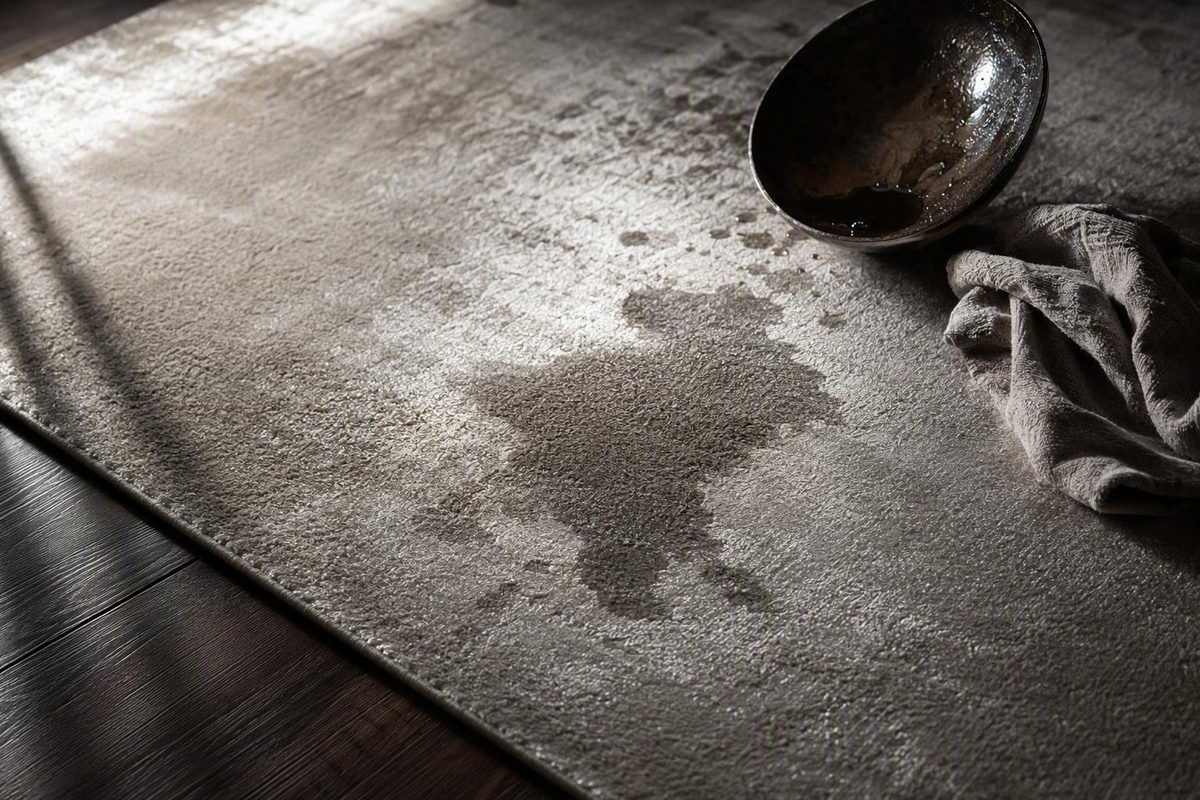
A viscose rug water stain is not necessarily ordinary dirt waiting for the right cleaner. Moisture can move dye or residue, expose discoloration, weaken wet fibers, flatten the pile, or alter how the surface reflects light. Treat the incident as a damage-control problem first: remove moisture that is already present, dry the rug gently, and avoid adding an unverified treatment.
Quick decision guide
- Liquid is still present: Blot vertically with a clean, dry, white absorbent cloth. Do not rub.
- The rug is damp: Keep it flat and use cool, gentle room airflow.
- The mark is fully dry: Do not re-wet it simply to test a remedy or chase the outline.
- Color transfers, the mark spreads, the pile stiffens or mats, the rug distorts, or the backing is wet: Stop home treatment and seek a cleaner experienced with viscose.
First determine whether the rug and mark are still changing
Before touching the area again, record what you have and what has already happened:
- Read the care label. Look for viscose, the percentage in a blend, and restrictions such as “dry-clean only” or “do not spot clean.”
- Identify the construction as far as possible. Note whether the rug is pure viscose or a wool-viscose, cotton-viscose, or synthetic-viscose blend.
- Write down everything already applied. Include water, detergent, vinegar, carpet spray, stain protector, powder, steam, or heat.
- Photograph the mark. Take one image from above and others from opposite directions because pile orientation and sheen can change its appearance.
- Check below the face. Determine whether moisture has reached the backing, rug pad, fringe, floor, or nearby furniture.
- Measure the affected area. A small surface spot and a large backing-deep wet section require different responses.
Classify the incident by its present condition:
- Fresh spill: Liquid remains in or on the pile. The immediate task is to absorb existing moisture without friction.
- Damp patch: The face may feel only slightly cool or damp, but moisture could remain in the pile or backing. Drying is the priority.
- Fully dried mark: There is no liquid to absorb. Do not add water merely to repeat a blotting test or see whether the ring disappears.
Inspect the area in ordinary room light. Look for yellow or brown discoloration, a dark outline, color outside the original pattern, clumping, matting, stiffness, rippling, warping, or an unusually pale, dark, or shiny patch. Walk around the rug and view the mark from opposing directions. A light-and-dark effect that changes with your position may involve pile orientation, but that observation is not a diagnosis.
If the area is still wet, press a clean, dry, white absorbent cloth gently against it. Do not rub. If rug color transfers to the cloth, stop adding moisture or products. Commercial viscose-care guidance identifies dye movement, browning, matting, and loss of sheen as risks associated with wetting and unsuitable cleaning (Blatchford’s overview of viscose-rug cleaning risks).
Do not perform this test by dampening a cloth and pressing it against an established dry mark. Blotting is useful when it removes liquid already present. Re-wetting a dry ring creates another moisture exposure and does not prove that a larger treatment would be safe.
Manufacturer instructions take priority over generic internet advice. If the label prohibits spot cleaning, requires professional cleaning, or provides a product-specific procedure, follow it. Rugs sold under the same broad fiber name can differ in dyes, blends, backing, foundation, finishing treatments, and permitted care.
Treat the rug as a poor candidate for experimentation if it is valuable, handmade, pale, heavily dyed, blended, previously treated, or under warranty. The same caution applies when you cannot identify what was used before the mark appeared. Preserve the label, purchase information, photographs, and treatment history for the manufacturer or cleaner.
Why plain water can leave a visible mark on viscose
Viscose is a manufactured, regenerated cellulose-based fiber commonly made from processed plant cellulose. Its smooth surface produces the silk-like sheen for which many viscose rugs are sold, but wetting can cause the fibers to swell, weaken, distort, or release dye. Retailer guidance therefore recommends blotting rather than rubbing and drying without direct heat or sunlight (Rug Love’s guidance on wet viscose rugs).
Possible moisture-related changes include:
- Yellow or brown discoloration
- A dark ring or tide line
- Dye bleeding into a neighboring color
- Clumped, flattened, or matted pile
- A stiff or crunchy feel
- Rippling or loss of shape
- A pale, dull, dark, or unusually shiny patch
- A change in softness or sheen
These symptoms do not establish one universal cause.
Some cleaning businesses call moisture-related yellow or brown discoloration cellulose browning and attribute it to changes within plant-derived material. That is one possible explanation, not a confirmed diagnosis for every yellow mark. Appearance alone cannot reliably distinguish browning from migrated soil, dye movement, residue, a contribution from the rug’s underlying construction, or physical alteration of the pile.
Clear water can therefore leave what looks like a stain even when it contains no colored contaminant. It may reveal or redistribute material already present in the rug, or change the condition and orientation of the fibers so that the area reflects light differently.
Construction matters as much as the face-fiber name. Relevant variables may include:
- The dyes and their stability when damp
- The percentage and location of viscose in a blend
- The backing, foundation, and adhesives
- Fringe and edge construction
- Applied finishes or stain protectors
- Soil accumulated before the incident
- Residue from earlier cleaning
- How far the water traveled
- How quickly and evenly the rug dried
A wool-viscose blend is not automatically safe to wet simply because it contains wool. Its viscose sections may still discolor, weaken, mat, or change sheen. An industry-forum report about a rug labeled 70% wool and 30% viscose described yellow-brown discoloration after water was sprayed on an edge, but commenters disagreed about the cause and remedy. That disagreement illustrates why an anecdote cannot establish a universal fix (forum discussion of the wool-viscose rug).
Fresh spill protocol: blot, stabilize, and stop
Use this limited emergency protocol only while moisture is present. Its purpose is to reduce the amount of liquid in the rug, not to remove a ring that has already dried.
-
Remove the source. Stop the leak, move the plant pot, lift the wet object, or otherwise prevent more liquid from reaching the rug.
-
Place a clean, dry, white absorbent towel over the wet area. Press straight down gently. A white towel makes dye transfer easier to see and avoids adding color from the cloth.
-
Replace the towel as it becomes damp. Use fresh, dry sections rather than pressing absorbed moisture back into the pile.
-
Blot vertically. Do not wipe sideways, scrub, twist, wring, brush, or grind the towel into the rug. Wet viscose may be weaker, and friction can spread color or alter the pile.
-
Keep the rug flat. Do not hang it over a rail, pull sharply on a wet corner, or fold it. If you must inspect beneath an edge, lift only as much as necessary and avoid stressing the damp construction.
-
Check the depth of wetting. If the backing, pad, or floor is wet, treat the incident as a larger drying problem rather than a routine face-fiber spot.
-
Stop if the condition worsens. End the home response if color appears on the towel, the boundary expands, the pile begins to clump, or the rug ripples or changes shape.
Manufacturer guidance for viscose and Tencel rugs similarly advises absorbing spills with a white towel, dabbing rather than rubbing, keeping the rug flat, and consulting a professional for larger affected areas (kymo’s care guidance for viscose and Tencel rugs).
Do not pour rinse water over the spot, mist around its outline, or try to “feather” the edge with a household cleaner. Each action creates a larger wet area. Plain water as the original spill does not make additional water harmless.
Once towels stop collecting meaningful moisture, stop blotting. Move to controlled drying.
Even careful blotting may not prevent a visible mark. It can remove excess liquid and limit additional movement or distortion, but it cannot guarantee that dye, residue, or fibers will return to their previous state.
Dry the rug promptly without heat or aggressive airflow
Keep the rug flat in a well-ventilated room and use cool, gentle room airflow. A fan may assist drying, but direct it across the general area rather than blasting one small point or visibly forcing the pile in one direction. A dehumidifier can help reduce moisture in the room. General area-rug guidance recommends flat drying in a shaded, ventilated space and warns that folding, rolling, or stacking a damp rug traps moisture (Austonian Rug Cleaning’s discussion of oversaturation and drying).
Make room airflow and dehumidification the default. Use a hair dryer only if the specific rug manufacturer expressly permits it. Where expressly authorized for a small damp patch, use only the cool, gentle setting and keep the dryer moving. Never substitute a hot setting, and do not rely on a hair dryer for a large or backing-deep wet area: the face may feel dry while moisture remains below.
Keep a damp viscose rug away from:
- Radiators and space heaters
- Heated floor vents
- Hot hair dryers
- Irons
- Tumble dryers
- Strong direct sunlight
- Improvised heat lamps
Do not fold, roll, stack, or place furniture on the rug while it remains damp. These actions can trap moisture, compress the pile, create a crease, or make drying less even.
If water reached the backing, pad, or floor—or affected a large part of the rug—seek prompt professional assessment. Surface airflow may not reveal or remove moisture held deeper in the pile or construction. A cleaner may need to assess whether the rug can be moved safely and how the rug, pad, and floor should be dried.
After the face feels dry, check for signs that deeper moisture or continuing change remains:
- A cool or damp feel
- Persistent odor
- Expanding discoloration
- Rippling or edge curl
- A stiff or altered backing
- Dampness in the pad or floor
Once deeper moisture has been reasonably excluded, allow the rug’s appearance to stabilize before considering another intervention. Compare it with your earlier photographs and inspect:
- Color and pattern boundaries
- The presence and width of an outline
- Texture and softness
- Pile direction and sheen
- Rippling, edge curl, or dimensional change
- Odor
- The accessible backing, pad, and floor
A dry, stable surface mark is not a reason to begin repeated wet-and-dry treatment cycles.
Identify what kind of mark remains after drying
A dry mark may involve discoloration, migrated material, physical pile alteration, or several changes at once. Use this table to organize what you observe—not to make a conclusive chemical diagnosis.
| Appearance | Possible explanation | Low-risk observation | Reason to stop DIY treatment |
|---|---|---|---|
| Yellow or brown patch | Moisture-related browning, migrated soil or residue, dye change, or a contribution from underlying construction | Compare the fully dry area in neutral room light with earlier photographs | Color persists, spreads, or occurs with stiffness or distortion |
| Dark ring or tide line | Uneven moisture movement, migrated material, or a change extending below the face | Compare the center and boundary for both color and texture | The ring enlarges, the backing is involved, or previous wetting made it worse |
| Color outside the original pattern | Dye movement from a neighboring section or component | Compare it with an unaffected repeat of the pattern | Color transfers to a dry white cloth during necessary blotting or continues to spread |
| Stiff, brittle, crunchy, or clumped area | Dried residue, fiber alteration, compressed pile, or a combination | Touch the fully dry area very lightly | Fibers shed, crackle, remain stuck together, or resist gentle movement |
| Matted or flattened pile | Pressure, rubbing, wet-fiber distortion, or drying in a different orientation | View the rug from opposite ends without brushing | Grooming causes shedding, fuzzing, or further distortion |
| Shiny, pale, or dark patch that changes by angle | Pile shading or altered orientation; discoloration may also be present | When fully dry, lightly stroke a small area with clean fingertips in each pile direction | The effect does not follow pile direction or the fibers feel damaged |
| Rippling, warping, or edge curl | Uneven wetting or drying or a change in the rug’s construction | Photograph the rug lying flat without pulling it into shape | The shape continues to change or the backing feels stiff, loose, or altered |
| Persistent dampness or odor | Moisture may remain in the pile, backing, pad, or floor | Check accessible surrounding materials without stressing the rug | Dampness or odor persists after surface drying |
Yellow or brown discoloration is often described by commercial cleaners as browning, but color alone does not establish the chemistry. Similarly, a dark outline does not prove that dirt merely collected at the edge. The visible boundary may reflect changes within more than the exposed pile.
Do not try to rinse migrated dye back into position. If a dark border has feathered into a pale area, adding liquid may mobilize it again. Dye movement calls for rug-specific testing and controlled treatment, not more forceful scrubbing.
A stiff or crunchy patch should not automatically be treated as soap residue. Residue is possible when a product was used, but moisture exposure and handling may also have altered the pile. Adding a stronger product before identifying the problem can introduce more residue and complicate later assessment.
For a shiny or dark patch, wait until the rug is completely dry. View it from opposite sides, then lightly stroke a small section with clean, dry fingertips in each pile direction. If its shade changes with pile direction, orientation may contribute to the appearance. This is only an observation; it is not permission to wet, iron, steam, or brush the rug.
Persistent dampness, odor, rippling, backing distortion, or a continuing shape change is a stop signal. These conditions extend beyond a routine surface blemish.
Why there is no universal household recipe for a dried water ring
The available guidance does not establish a validated do-it-yourself formula for removing an established viscose water stain.
Published commercial recommendations conflict. Rugs Direct suggests cautious, minimal use of selected acidic or mild-soap solutions while warning against oversaturation and steam cleaning. By contrast, kymo advises against cleaning agents on its rugs and confines its instructions to its own products. These are retailer and manufacturer care articles, not controlled comparative textile studies, so neither position should be converted into a universal recipe (Rugs Direct’s viscose-rug care guide).
Every proposed liquid adds moisture. Depending on the particular rug, a treatment may:
- Move dye
- Alter conditions at the wet boundary
- Leave a sticky or stiff residue
- Move soil or other material into the face
- Enlarge a tide line
- Change pile texture
- Make later diagnosis more difficult
Repeatedly wetting the visible outline is particularly risky. If each application reaches slightly beyond the last one, the affected boundary can grow.
A hidden-area test has limited value. The marked section may be more worn, differently dyed, contaminated, previously treated, or already altered by moisture. A test behind furniture also may not reproduce how a prominent area reflects light.
Unless the rug manufacturer or a qualified specialist expressly authorizes a product for that specific rug, avoid experimenting with:
- Baking soda or powders worked into damp pile
- Bleach or bleach alternatives
- Strong detergents
- Generic carpet shampoo
- Fabric softener
- Browning reducers
- Citric-acid or vinegar mixtures
- Solvents
- Multi-product stain-removal combinations
Ironing requires separate caution. One manufacturer describes a low-temperature, cloth-covered procedure for a shading effect on its own viscose or Tencel products. Because that method deliberately combines moisture and heat, it should not be generalized to an unidentified rug or used when the care label prohibits heat or spot treatment.
Once a dry mark is stable, restraint is the practical response. Collect the label, purchase details, photographs, dimensions, fiber percentages, and a list of everything applied. Ask the manufacturer or a viscose-experienced cleaner to evaluate those details before you add another substance.
Methods most likely to make the damage worse
Do not use the following as routine home treatments for a viscose rug water mark:
- Rubbing or scrubbing
- Soaking or flooding
- Machine washing
- Carpet shampoo machines
- Rented carpet extractors
- Rotating or powered brushes
- Stiff pile brushes
- Aggressive hand grooming
- Routine steam or hot-water extraction
- Hot hair dryers
- Radiators or heated vents
- Irons, unless a rug-specific instruction expressly authorizes a controlled method
- Strong direct sunlight
- Vacuum beater bars
The risk is not limited to water quantity. Moisture, heat, agitation, cleaning chemistry, drying, and construction can interact. Commercial specialists associate unsuitable wet or steam cleaning with browning, dye movement, pile distortion, rippling, stiffness, and sheen loss, although their descriptions do not independently prove that any proprietary alternative is universally superior (Ultimate Rug Spa’s account of viscose-cleaning risks and controls).
One commenter in the previously cited industry forum proposed limited professional steam cleaning with an acid rinse and fast drying. That advice conflicts with other supplied guidance and is anecdotal, not a validated home procedure. Do not reproduce it with a household steamer, extraction machine, or improvised acid solution.
Avoid using a vacuum beater bar over the affected area. If loose, dry debris must be removed after the rug is fully dry, follow the manufacturer’s instructions and use gentle suction without aggressive agitation. Do not repeatedly pass a nozzle over a stiff, fragile, or shedding patch.
Most importantly, do not continue cleaning merely because the original mark remains visible. A change in color, pile direction, texture, or sheen may not respond like removable soil. More pressure and stronger chemistry can add damage without resolving the underlying change.
Stop home treatment if:
- The ring grows
- Rug color appears on a blotting cloth
- The pile stiffens, clumps, or mats
- Fibers begin shedding
- The rug ripples or warps
- Moisture reaches the backing, pad, or floor
- An odor develops or persists
- An attempted product has already failed
These are reasons to reduce intervention, not increase product strength.
When to call a viscose-experienced rug cleaner—and what to ask
Seek professional assessment for:
- An established yellow or brown mark
- Visible dye movement
- A large wet area
- Moisture in the backing or pad
- Persistent odor
- Stiffness, clumping, or matting
- Rippling, edge curl, or altered shape
- Prior steam cleaning
- Several unsuccessful household treatments
- Repeated re-wetting without improvement
A specialty rug facility and a general in-home carpet cleaner are not interchangeable service descriptions. Neither business model guarantees a safe method or successful result, so ask about the actual process and the cleaner’s experience.
Use this interview checklist:
- Have you treated viscose rugs and this particular fiber blend before?
- How will you identify the face fiber, backing, foundation, and construction?
- Will you test dye stability before broader treatment?
- Will you perform a small test spot?
- How much moisture does the proposed process use?
- How will cleaning chemistry be selected and controlled?
- How will you limit additional movement of color or residue?
- How will the rug be dried?
- How will you check for deeper retained moisture?
- Will the pile be groomed, and by what method?
- How do the fringe, backing, adhesives, and edges affect the plan?
- How do previous protector, vinegar, detergent, steam, or other treatments affect your assessment?
- Which color, texture, shape, or sheen changes may remain?
Service providers describe professional controls that may include fiber identification, dye-stability testing, test spotting, restricted-moisture treatment, controlled drying, and pile management. These are useful practices to ask about, but the available evidence does not establish one universally superior process for every viscose rug.
Request a written description of the proposed work, known risks, limitations, and realistic outcome before authorizing treatment. Ask whether the objective is to reduce discoloration, remove suspected residue, improve pile alignment, or stabilize the rug’s condition. Those are different goals.
Do not accept an unqualified promise of complete restoration. Specialist treatment may improve the mark, but original color, softness, shape, pile alignment, and sheen cannot be guaranteed. Commercial guidance describing low-moisture treatment and controlled pile management also acknowledges that residual color or texture differences may remain (Rug Cleaning Cambridge’s discussion of treatment limits).
Preserve photographs, the care label, purchase receipt, warranty documents, and details of every cleaning attempt. These records may be useful when speaking with the retailer, manufacturer, cleaner, insurer, landlord, or warranty provider. If the incident resulted from a plumbing leak, delivery problem, or previous professional cleaning, document the source and timeline before further work changes the rug’s appearance.
The condition-based response is straightforward:
- If moisture is present: Blot gently and dry the rug flat with cool room airflow.
- If the rug is dry and stable: Observe rather than repeatedly treating the outline.
- If there is dye transfer, persistent discoloration, stiffness, matting, distortion, odor, or backing saturation: Stop home intervention and arrange a rug-specific assessment.
A viscose water mark may be a color, residue, construction, or pile problem rather than removable surface dirt. The safest objective is to prevent additional damage and obtain a realistic assessment—not to force complete removal through repeated cleaning.
Frequently asked questions
Will a viscose rug water stain disappear when it dries?
It may become less noticeable as surface moisture evaporates, especially if the original dark appearance came partly from wet fibers. It may also remain as a yellow or brown patch, tide line, stiff area, flattened pile, or sheen change.
Drying is necessary before judging the condition, but it does not guarantee that the mark will disappear. Let the rug dry flat with cool room airflow, exclude deeper dampness, and inspect it from several angles before deciding what remains.
Can I use vinegar or dish soap on a water mark?
There is no universal recommendation. Some retailer guidance suggests minimal use of diluted acidic or mild-soap solutions, while other manufacturers and cleaners advise against cleaning agents or specifically warn against vinegar. The conflict reflects variation among rugs and the absence of a validated household formula for an established water ring.
Adding either product introduces more moisture and may move dye, enlarge the boundary, leave residue, or change the pile. Follow the specific rug manufacturer’s instructions or consult a cleaner experienced with viscose rather than applying a general recipe.
Is a hair dryer safe for a wet viscose rug?
Cool room airflow and dehumidification are the safer defaults. Use a hair dryer only when the manufacturer of the specific rug expressly permits it.
If expressly authorized for a small damp patch, use only a cool, gentle setting and keep the dryer moving. Never use a hot setting. A hair dryer is not an adequate plan for a large wet area or moisture in the backing, pad, or floor.
Does the same advice apply to a wool-viscose blend or a rug labeled art silk, rayon, or bamboo silk?
A wool-viscose blend can remain moisture-sensitive because its viscose component may still discolor, weaken, mat, or change sheen. The percentage alone does not show where viscose appears in the pattern or how the dyes and construction will respond.
Art silk, rayon, and some products sold as bamboo silk may refer to related manufactured cellulose fibers. Trade names are not a substitute for the care label, however. Do not assume that viscose, rayon, bamboo silk, lyocell, and Tencel rugs have identical construction or care requirements. Confirm the fiber and permitted method with the manufacturer.
Can professional cleaning fully restore the rug’s color and sheen?
Possibly, but it cannot be promised. A specialist may be able to reduce discoloration, remove residue, improve pile alignment, or make the mark less visible. The outcome depends on the fiber, dyes, backing, prior treatments, severity of wetting, and whether the remaining change is chemical, physical, or both.
Ask for preliminary testing and a written explanation of realistic outcomes. Even after appropriate treatment, some difference in color, softness, pile, shape, or sheen may remain.