 StainList
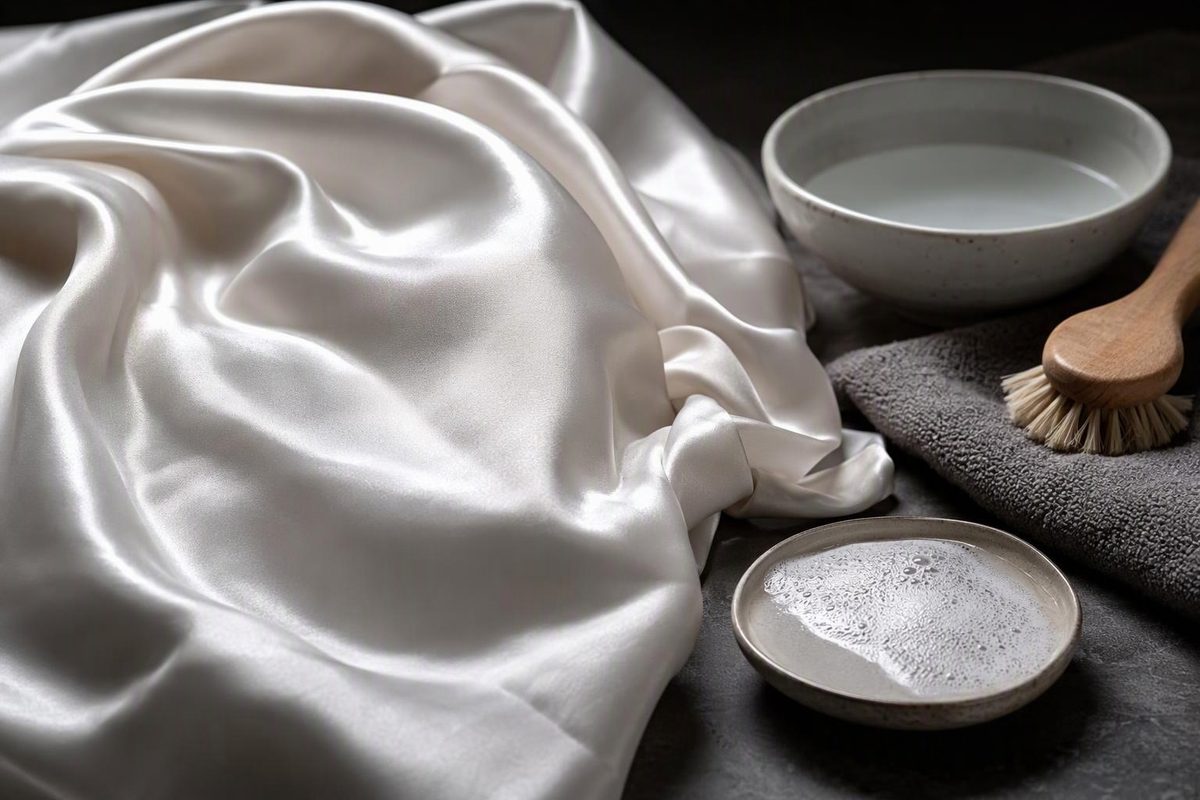
Cotton satin fabric, when the term is used accurately, is cotton woven in a satin structure; an all-cotton version is more conventionally called cotton sateen. Its smooth face and luster come from the weave, while cotton is the fiber. It is not necessarily silk or synthetic satin, so check the fiber and care labels before buying, washing or treating a stain.
Choose what the label tells you; the checker gives the safest next step.
Label Check
Find the labels before cleaning
The product name alone does not establish the fiber content or a safe cleaning method. Find the sewn-in fiber and care labels, the bolt-end information or the seller’s written specification.
What the Evidence Establishes
| Evidence | What It Supports | Next Step |
|---|---|---|
| 100% cotton | All-cotton satin or sateen | Still follow the care label |
| Cotton plus another fiber | Cotton-blend satin | Use the complete composition |
| Dry clean only | No home wet-cleaning route | Use a suitable professional |
| No care information | No established wash setting | Ask the seller or cleaner |
Sources: Federal Trade Commission textile and care-label guidance; CottonWorks woven-fabric guidance. Product-specific labels control.
Satin Describes the Weave; Cotton Describes the Fiber
A satin weave spaces its yarn intersections apart, leaving longer yarn sections, called floats, on the surface. This construction creates a smooth, usually lustrous face and good drape. The trade-off is that the exposed floats can be vulnerable to surface damage.
CottonWorks notes that satin-weave fabrics can have problems with picking, snagging, skew and seam slippage because of their long floats (CottonWorks). Avoid dragging jewelry, rough fingernails or a stiff stain-removal brush across the face.
Terminology varies by source and textile practice. Britannica calls an all-cotton satin-weave fabric sateen, while CottonWorks notes that “satin” can refer to a warp-faced construction and “sateen” to a filling-faced one (Britannica; CottonWorks). For a shopper, the fiber declaration is more useful than the product name:
- Silk satin: silk fiber in a satin weave
- Polyester satin: polyester fiber in a satin weave
- Cotton satin or cotton sateen: cotton fiber in a satin weave
- Cotton-blend satin: cotton combined with one or more other fibers
Product listings do not always use these terms consistently. Shine, softness or the word “satin” cannot establish the fiber content.
In the United States, a covered textile product should not be labeled “100% cotton” unless it contains only cotton, apart from non-cotton trim. A blend’s fiber-content statement must list fibers that account for at least 5% of its weight in descending order, with an exception for smaller amounts that have functional significance. The FTC gives “85% Cotton, 15% Polyester” and “96% Cotton, 4% Spandex” as examples (Federal Trade Commission). A product title that says “cotton satin” is not a substitute for that declaration.
Check the Fiber, Care Label and Surface Before Buying
Do not judge cotton satin by shine or thread count alone. Check these product-specific details:
- Fiber composition. Confirm whether the fabric is 100% cotton or a blend. A small amount of spandex or elastane may be relevant for fitted clothing.
- Care instructions. Cotton sateen may be machine washable, but its dyes, finishes, lining, interfacing or garment construction can impose stricter limits. For covered apparel, the FTC requires a reasonable basis for the care instructions and evidence that the whole garment can withstand the stated treatment—not merely its separate fibers (FTC care-label guidance).
- Weight and opacity. Lightweight sateen may suit blouses and linings; heavier versions may be sold for trousers, curtains or upholstery. Request a swatch when opacity, hand or drape matters.
- Surface condition. Inspect for pulled floats, pale abrasion lines and seam distortion. The sheen can make small surface disruptions conspicuous.
- Intended use. For seating, a cotton declaration does not establish abrasion performance or cleanability. Ask for performance-test results and the finished furniture’s cleaning code. See the separate guide to choosing and cleaning cotton upholstery.
If sewing a washable item, prewash and dry a measured swatch using the care method planned for the finished piece, unless the seller says not to. Check it for shrinkage, color loss and a change in sheen before cutting the full length.
Wash Cotton Satin According to the Complete Item’s Label
Follow the item’s care label rather than applying a universal cotton setting. The fiber may tolerate a treatment that the dye, finish, lining, interfacing or overall construction cannot.
For a machine-washable item:
- Close zippers and hooks. Turn a garment inside out to limit rubbing against its glossy face.
- Wash with similar colors, using the cycle and water temperature stated on the label.
- Use only a bleach type the label permits. “No bleach” and “only non-chlorine bleach” are different instructions.
- Dry exactly as directed and avoid unnecessary over-drying.
- If ironing is permitted, work on the reverse at the labeled temperature. Test a hidden area first if the fabric has a print or special finish.
These measures can reduce surface wear, but they do not override “hand wash,” “dry clean only” or “do not iron.” If the label is missing, the words “cotton satin” alone do not establish a safe cycle, temperature, bleach type or drying method.
Treat Stains Without Roughening the Satin Face
Identify both the stain and the complete item before adding a cleaner. Cotton fiber may tolerate water while the dye, finish, lining or padding does not.
For an ordinary washable, colorfast item:
- Lift solids with a spoon or dull edge. Blot liquid with a clean white cloth; do not scrub across the floats.
- For a compatible water-based stain, rinse from the back with cool water so the residue is pushed out rather than farther through the fabric.
- Patch-test liquid laundry detergent or a stain remover labeled for the item. Follow its directions and contact time; do not let it dry on the fabric unless the label specifically instructs you to.
- Wash at the warmest temperature allowed by the care label.
- Inspect the item before machine drying. If the mark remains, repeat a suitable treatment and air-dry while deciding what to do next. The American Cleaning Institute likewise advises laundering according to the care instructions and keeping a stained item out of the dryer until the stain has been removed (ACI).
The stain still controls the chemistry. ACI recommends a prewash stain remover or liquid laundry detergent for light grease and oil, while fresh blood starts with cold water. Ink may require rubbing alcohol or another compatible cleaning fluid, but not every dye, print or finish will tolerate those solvents.
For cooking oil on an ordinary washable garment, follow the dedicated guide to olive-oil stains on clothing rather than applying an all-purpose household mixture.
Stop if color transfers to the test cloth, the sheen turns cloudy, or the surface begins to fuzz or pull. Refer dry-clean-only, structured, upholstered, valuable or unknown-composition cotton satin to a suitable professional rather than increasing the heat, friction or solvent strength.