 StainList
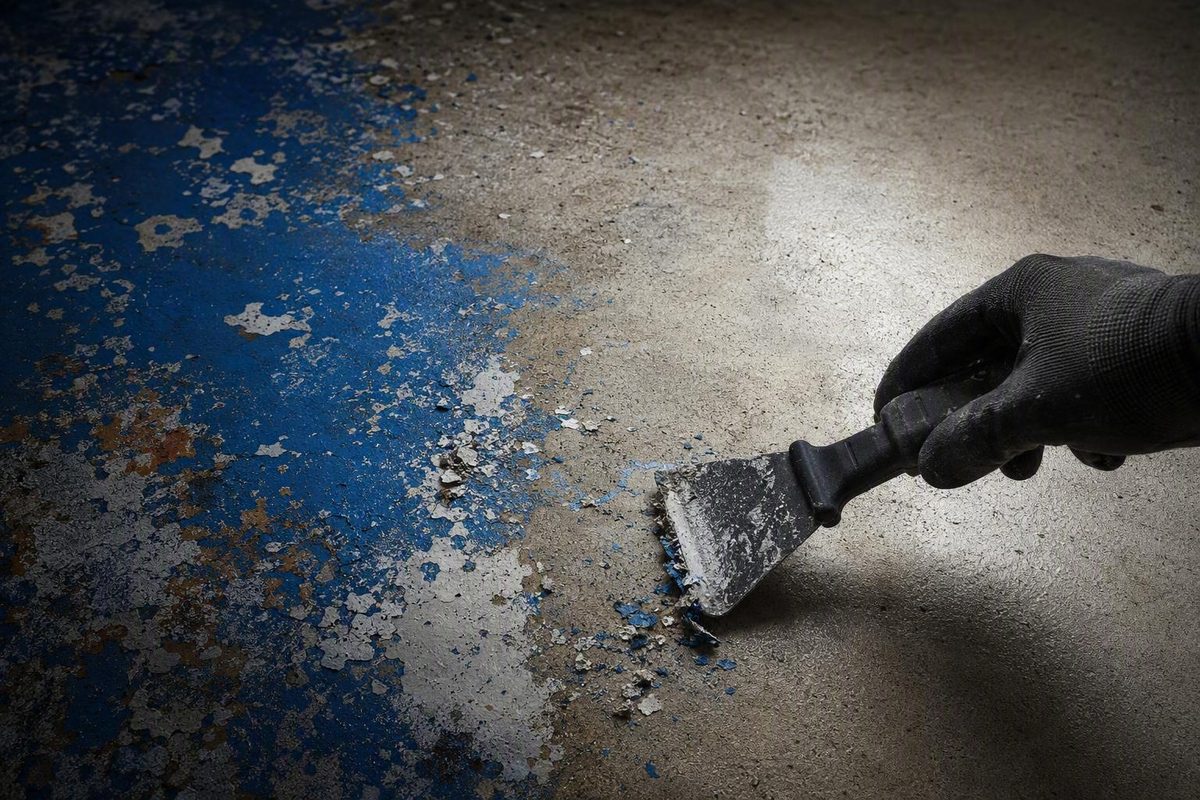
The safest way to remove paint from concrete is to match the method to four things: whether the paint is wet or dry, whether it is water-based or solvent-based, whether the concrete is sealed, and how large the affected area is. Start with lifting and scraping, then move to a paint-specific stripper only if needed. Save grinding, blasting, and aggressive pressure washing for sound, unsealed concrete—and usually for a professional.
If the spill is still wet, do not spread it with a hose. Scoop up the excess, blot from the outside toward the center, and clean the residue according to the paint label. If the paint is dry, test the least aggressive method in a hidden spot before treating the whole stain.
Choose the method before you start
Use this quick decision guide:
| What you have | Best starting point | What to avoid |
|---|---|---|
| Wet, water-based paint | Lift excess, blot, then scrub with warm water and detergent | Flooding the spill or pushing it into drains |
| Wet oil-based or unknown paint | Contain and absorb it; follow the paint label for cleanup | Guessing at a solvent or mixing cleaners |
| Thin, dry paint on bare concrete | Plastic scraper, stiff nylon brush, detergent, and repeated rinsing | Starting with a grinder or strong chemical |
| Dry oil-based paint or several layers | A stripper specifically labeled for that paint and concrete | Universal dwell times or an unlabeled solvent |
| Epoxy or a thick floor coating | Confirm the coating; consider a concrete-coating professional | Assuming a household cleaner will dissolve it |
| Sealed, stained, polished, or decorative concrete | Hidden-spot test and guidance from the finish manufacturer | Wire wheels, grinding, blasting, or high pressure |
Concrete is porous, so a successful cleanup may take several gentle passes. A faint color shadow can remain after the paint film is gone. More force is not always better: it can etch the slab, open its pores, or remove a sealer along with the paint.
What you need
For a small, straightforward stain, gather:
- drop cloths or plastic sheeting to protect nearby surfaces;
- disposable absorbent material and a container for wet residue;
- a plastic putty knife or paint scraper;
- a stiff nylon brush;
- detergent, clean water, and rags;
- splash goggles, closed shoes, and gloves compatible with the product you use; and
- a wet/dry vacuum or absorbent material if runoff must be captured.
If you use a chemical product, read its entire label and safety data before opening it. Provide the ventilation the label requires, keep ignition sources away when the product is flammable, and do not combine a stripper with bleach, ammonia, acids, or another cleaner. “More chemicals” is not a removal strategy.
How to remove wet paint from concrete
Fresh paint is the easiest case because much of it may still be sitting above the concrete’s pores.
- Stop the spread. Keep people and pets away. Place absorbent material around the edge if the spill is moving.
- Lift, do not wipe. Use cardboard or a plastic scraper to transfer thick paint into a suitable waste container. Wiping a puddle enlarges the stain.
- Blot toward the center. Use clean rags or absorbent material, changing them as they load with paint.
- Check the paint label. For water-based paint, warm water and a small amount of detergent are a sensible first cleaning pass. For oil-based or specialty paint, use only the cleanup material named by its manufacturer.
- Scrub a small area. Agitate with a nylon brush, then collect the liquid rather than washing it into soil or a storm drain.
- Repeat and inspect after drying. Concrete often looks darker while wet. Wait until it dries before deciding whether another pass is needed.
This lift-first sequence also avoids an easy mistake: using a pressure washer on a liquid spill and atomizing or spreading the paint.
How to remove dried paint from bare concrete
For dried paint, begin mechanically but gently. Concrete Network’s removal guide likewise separates simple scraping from chemical stripping, pressure washing, and grinding rather than treating every stain the same way.
1. Remove loose paint
Vacuum grit, then work a plastic scraper under lifting edges. A stiff nylon brush can loosen small flakes without the aggressiveness of a powered wire wheel. A wire-cup-brush approach can remove stubborn old spots, as this documented garage-floor trial shows, but it also abrades the surface. Reserve it for sound, unfinished concrete after a hidden-spot test; do not use it on decorative, polished, stained, or sealed work.
2. Wash and reassess
Scrub the area with detergent and water, collect the residue, rinse sparingly, and let the concrete dry. If only a shadow remains, another mild pass may be preferable to damaging the surface in pursuit of perfectly uniform color.
3. Use a compatible stripper only when needed
Choose a product whose label names both the coating type and masonry or concrete as a suitable substrate. Protect adjacent finishes, test a hidden spot, and follow the label’s application thickness, temperature range, dwell time, PPE, ventilation, cleanup, and disposal directions. Do not copy a dwell time from a different product.
Scrape softened paint into a container before cleaning the residue exactly as the label directs. Repeat only if the surface remains sound. A comparison of pressure washing, stripping, grinding, and blasting from Dustless Blasting is useful for understanding the tradeoffs, although its blasting recommendation is commercial advice rather than a universal answer.
Do not look for methylene-chloride paint remover as a shortcut. The U.S. Environmental Protection Agency’s current methylene-chloride page says consumer paint-and-coating-removal uses were prohibited in 2019 and explains the chemical’s unreasonable health risk. Use a currently sold, properly labeled alternative and follow that label.
Oil paint, epoxy, and sealed concrete need different care
Oil-based paint: A detergent-only wash may not lift a cured oil film. Use a paint-specific, concrete-compatible remover instead of improvising with acetone, lacquer thinner, or fuel. Strong solvents can create vapor, fire, finish, and disposal problems.
Epoxy and thick floor coatings: These are designed to bond to concrete. Small drips may respond to the coating manufacturer’s named remover, but widespread epoxy removal commonly needs professional grinding, scarifying, or blasting. Those methods intentionally change the surface profile.
Sealed or decorative concrete: First determine whether the apparent “paint” sits on acrylic sealer, epoxy, polyurethane, polished concrete, or a decorative stain. A stripper that removes the spill may also haze, soften, or strip the finish. Contact the sealer or floor-system manufacturer when known. On an unknown finish, a small inconspicuous test is the maximum sensible DIY experiment.
When pressure washing or grinding is too risky
Pressure washing can remove loose exterior paint, but a concentrated jet can etch weak concrete, drive contamination into pores, damage joints, and spread polluted runoff. Do not use it indoors, on a wet spill, near uncontrolled drainage, or on a decorative finish. Follow the machine and nozzle manufacturers’ instructions rather than relying on a one-size-fits-all pressure number.
Grinding and abrasive blasting remove both paint and some concrete. They also create hazards that a dust mask alone does not solve. OSHA’s silica fact sheet explains that grinding concrete can release respirable crystalline silica and identifies water delivery or vacuum dust collection as engineering controls for covered workplace tasks. For a large area, an indoor slab, or any job without effective dust and runoff control, hire a qualified concrete-surface-preparation contractor.
Stop if the old paint might contain lead
Do not sand, grind, wire-wheel, pressure-wash, or blast paint of unknown age until lead risk is resolved. The EPA’s consumer renovation guidance warns that disturbing paint in pre-1978 homes can release hazardous lead dust and recommends a lead-safe certified contractor. Rules vary with the property and who performs the work, so use EPA or your state program to determine what applies rather than treating this as an ordinary stain.
Also call a professional when the concrete is historic, crumbling, polished, integrally colored, heavily cracked, or covered by an unknown floor system; when paint covers a large area; or when ventilation, dust capture, or wastewater containment is uncertain.
Final cleanup and surface check
Collect chips, sludge, absorbents, and rinse water as the product label and local waste authority require. Do not sweep dry grinding dust, pour stripper residue into a drain, or mix waste streams. Once the area is fully dry, inspect it in even light. If recoating is planned, verify that no oily or chemical residue remains and follow the new coating manufacturer’s surface-preparation requirements.
The practical rule is simple: remove the paint film with the least aggressive compatible method, then stop before the cleanup becomes concrete damage.