 StainList
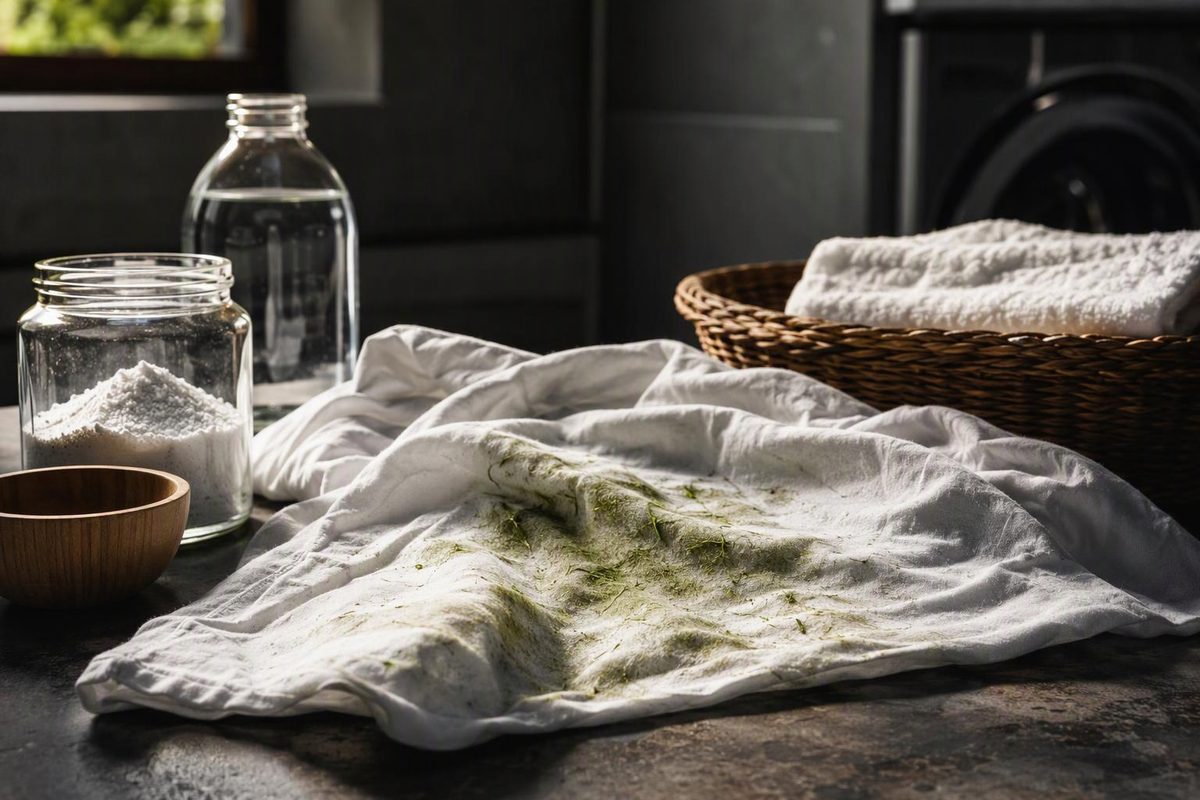
For washable cotton, denim, polyester and ordinary cotton–synthetic blends, start with liquid laundry detergent containing enzymes: spot-test, pretreat for the product’s stated time, rinse if directed, then wash according to the care label. Check the stain before using the dryer. The American Cleaning Institute’s grass-stain guidance recommends enzyme pretreatment first, with fabric-safe bleach only if the stain persists.
Grass transfers plant pigments to fabric, so removing loose dirt alone may leave a green mark. Treat the stain in stages rather than scrubbing harder.
Check the fabric before treating
Read both the garment’s care label and the cleaner’s instructions. Check any restrictions for prints, trims and stretch fabrics—not just the main fiber.
- Washable everyday clothes: follow the sequence below.
- Wool: use a mild wool detergent and the labeled washing method instead. Woolmark advises against enzyme detergents and both chlorine and oxygen bleach. See its wool-detergent guidance.
- Silk, dry-clean-only, fragile or valuable items: do not apply this general laundry sequence. Seek professional care, and identify the mark as grass, with any mud or treatments already applied.
Before each new cleaner, test a hidden seam using the intended dilution and contact time. Rinse and let it dry; stop if the garment’s dye transfers, the color changes or the texture is affected. ACI recommends inconspicuous testing for enzyme cleaners.
Remove a fresh grass stain
- Lift off grass and loose debris. Avoid grinding particles into the cloth. If the area is coated with mud, let the mud dry and gently brush away the loose soil before wet treatment; this is the ACI method for mud stains.
- Rinse with cool water. Where practical, rinse from the back of the stain. Do not start with boiling water or a hot soak.
- Pretreat with liquid enzyme laundry detergent. Apply enough to cover the mark, following any dilution instructions. Gently work it in with your fingers; on sturdy fabric, a soft toothbrush is an option. Follow the product’s contact time and rinsing directions. As one example, Arm & Hammer’s grass-stain instructions specify 10 minutes with its enzyme-containing liquid detergent, followed by thorough rinsing. They also warn against harsh scrubbing that can fade or stretch fabric. If your detergent lacks enzymes, use a laundry pretreatment labeled for grass and suitable for the garment.
- Wash as labeled. Use your normal laundry detergent and a temperature allowed by the garment and treatment product. A cool initial rinse does not mean every later wash must be cold.
- Inspect before drying. If green remains, keep the item out of the tumble dryer and do not iron the area. Repeat treatment rather than applying heat; ACI specifically advises against dryer use until the stain is removed.
For sportswear, keep any printed-logo and stretch-fabric restrictions in force. The polyester stain-removal guide covers those label-led decisions in more detail.
If green remains—or the stain is old
An older or already tumble-dried stain is still worth treating, but full removal is uncertain. Repeat the enzyme pretreatment, or use a labeled enzyme presoak. Do not assume that a longer contact time is safe: follow that product’s soaking limits.
If pigment remains after washing, move to oxygen bleach only when both the garment and product permit it. “Color-safe” does not mean every dye is colorfast, so test again.
Use the package’s concentration, water temperature and soaking time. As one product-specific example, OxiClean Versatile Stain Remover’s instructions specify its scoop filled to line 2–4 per gallon of water, fully dissolved before adding clothes, followed by a 1–6-hour soak and normal washing. Those scoop markings are not transferable to other powders; follow your current package. Keep this solution in an open container, not a sealed one: the manufacturer warns that released oxygen can build pressure.
Do not mix the soak with chlorine bleach or household remedies. Do not use chlorine bleach simply because a garment is white; its label must permit it.
Stop if the fabric fades, roughens or develops damage. If a careful repeat and one permitted oxygen-bleach treatment produce no useful improvement, seek professional advice rather than increasing concentration, heat or scrubbing.