 StainList
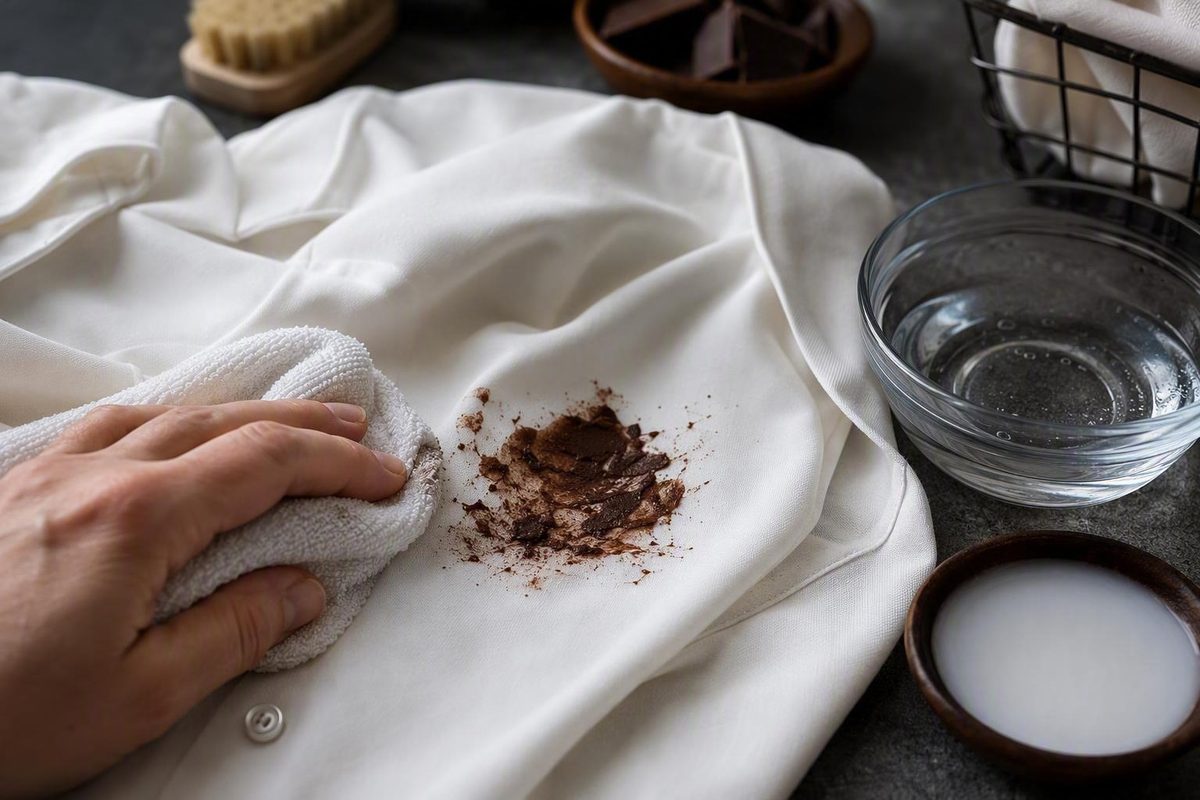
The six-step method for washable clothes
Quick reference
- Check the care label and fabric.
- Lift solids or blot liquid chocolate—do not rub.
- Flush from the back with cool water.
- Pretreat with compatible liquid laundry detergent.
- Wash at the warmest temperature the care label permits.
- Inspect before drying; retreat and air-dry if a mark remains.
This method is for ordinary washable clothing. Before adding water or cleaner, read the garment’s care label. Do not use the standard soak-and-wash process on dry-clean-only clothing, leather, highly delicate fabric, unstable dyes, elaborate embellishments, or garments whose labels prohibit water-based cleaning.
Safety rules for every stage
- The garment label and cleaning-product directions override general advice.
- Spot-test any unfamiliar or stronger treatment on an inside seam.
- Stop if dye transfers or the fabric changes color, texture, shape, or strength.
- Rinse one treatment out before trying another, and never mix stain-removal products.
- Keep the garment out of the dryer and away from direct heat while a mark remains.
- Refer delicate, valuable, non-colorfast, or care-restricted garments to a professional.
General stain-care guidance likewise advises following treatment-time limits, avoiding mixed cleaners, and withholding dryer heat until a stain is gone (Apartment Therapy’s stain-removal precautions).
1. Check the garment. Identify the fiber if possible, note the permitted wash temperature, and look for instructions such as “hand wash,” “dry clean only,” or “do not bleach.” If you intend to use anything beyond the garment’s normal detergent, test it on an inconspicuous area first. Do not proceed if the test causes color transfer or a visible change.
2. Lift or blot the excess. Use a spoon, dull knife, or the edge of a plastic card to lift solid chocolate from the surface. For liquid chocolate, blot with a clean white cloth, moving to a clean section as the stain transfers. Do not rub because that can spread the chocolate and press it farther into the fibers.
If the chocolate is too soft to lift cleanly, protect the garment in a clean bag and chill it briefly. Depending on the guide, suggested chilling times range from approximately 10 to 30 minutes; the purpose is simply to firm the residue enough to lift it without smearing. Seventh Generation, for example, suggests about 30 minutes for liquid or syrupy chocolate (chilling guidance).
3. Flush from the reverse. Turn the garment inside out or otherwise expose the back of the stained area. Hold that side under cool running water so the flow moves loosened chocolate back out through the fabric rather than farther through it.
Use cool water for this first flush. That does not mean the final wash must always be cold. The rinse and wash have different purposes: begin with a controlled cool flush, then use only the wash temperature allowed by the garment label.
4. Pretreat gently. Apply a small amount of compatible liquid laundry detergent to the damp stain. Spread it gently with a fingertip or press the solution through the fabric without hard scrubbing. A practical general pretreatment period is approximately 5 to 15 minutes, but the detergent directions and garment restrictions take priority; published chocolate-stain procedures commonly use times within that range (Tide’s treatment guidance).
If the remaining mark is visibly oily, a small amount of grease-cutting dish soap can be used as an alternative targeted treatment on a compatible washable garment. Spot-test it, apply it sparingly, and rinse it out thoroughly. Do not assume that dish soap is suitable for every fiber, dye, finish, or garment construction.
5. Wash according to the label. Launder the garment with detergent at the warmest temperature the care label permits. That label-approved wash may be warmer than the water used for the initial reverse flush. Do not exceed the stated temperature in an attempt to accelerate cleaning.
6. Inspect before drying. Check the stained area while the garment is still wet. If a brown mark, outline, or translucent oily shadow remains, repeat a compatible treatment rather than putting the item in a heated dryer. Air-dry and inspect again in good light; faint residue can be difficult to judge while the entire fabric is wet.
Use the tumble dryer only after you are satisfied that the stain is gone. Dryer heat can make remaining residue harder to remove, although previous heat exposure does not prove that the mark is irreversible. Guidance for both fresh and dried chocolate similarly recommends inspection and retreatment before machine drying (fresh and dried stain procedure).
Why chocolate may need more than one treatment
Chocolate is best approached as a combination food stain rather than a single uniform substance. It can leave both oily or fatty material and dark-colored food residue. Syrup, frosting, ice cream, baked goods, and filled candy may also add different amounts of sugar, oils, dairy ingredients, colorings, or other residue.
Removing the solids limits spreading, but it does not necessarily remove everything that entered the cloth.
Liquid laundry detergent is the sensible first pretreatment for an ordinary washable garment because it is intended for clothing and designed to rinse away during laundering. Grease-cutting dish soap may help with an oily remnant, but it is a limited alternative rather than a universally superior or fabric-safe choice.
On compatible washable fabric, a garment-approved enzyme laundry product may help with lingering food residue. A label-directed oxygen-bleach treatment may be considered for discoloration on colorfast material. Neither treatment belongs on every fiber or dye, so check both labels and spot-test before escalating.
Commercial guides describe chocolate as containing an oily component as well as colored residue, but they do not provide independent comparative testing establishing one branded cleaner as best. OxiClean’s guidance, for example, distinguishes cocoa-butter-containing chocolates from syrup while imposing product-specific fabric and color restrictions (manufacturer stain guidance).
Dark, milk, and white chocolate can leave different proportions of grease and colored residue, and fillings can alter the stain further. The available evidence does not justify a wholly different core procedure for each type. The safest common sequence remains: lift the excess, cool-flush from the back, pretreat, wash as permitted, and inspect.
The practical answer is patient, sequential treatment—not chemical overload. If the first wash removes the obvious brown area but leaves an oily outline, repeat a compatible grease-focused treatment. If the oiliness has gone but discoloration remains, consider a garment-safe enzyme or oxygen-based option. Fully rinse the earlier cleaner before moving to another treatment.
Choose the route for fresh, melted, dried, or dryer-exposed chocolate
Begin with two checks:
- Is the garment washable in water according to its care label? - No or uncertain: Lift loose solids, avoid soaking, and seek professional care. - Yes: Continue to the second question.
- Has the garment already been through a heated dryer? - No: Follow the route that matches the stain’s current condition. - Yes: Expect a more difficult treatment and avoid additional heat until you finish.
Fresh stain: Lift solid chocolate or blot free liquid promptly. Flush the reverse with cool water, pretreat for the cleaner’s stated period, and wash according to the care label. Prompt treatment may improve the chance of first-wash removal, but it does not guarantee it.
Melted or syrupy chocolate: Blot free liquid without wiping it across clean fabric. If the remaining chocolate is too soft to lift, chill it for roughly 10 to 30 minutes and then scrape gently with a dull edge. Once the surface residue has been removed, continue with the reverse flush and detergent pretreatment.
Dried stain: Carefully break away loose residue without pulling at the yarns. If the chocolate appears bonded to a delicate surface, stop scraping. Flush from the back with cool water and apply compatible liquid detergent. A longer pretreatment may be appropriate only if the product directions and fabric permit it; longer contact is not automatically better.
Washed but not dried: Do not assume another untreated wash will remove what the first cycle missed. Pretreat again before applying any heat. Note whether the remaining mark appears oily, brown, or both, and select the next compatible treatment accordingly.
Previously tumble-dried: Start again with gentle removal, a cool reverse flush, and detergent pretreatment. Heat-exposed residue can be substantially harder to release, so more than one treatment-and-wash round may be needed. Air-dry between attempts. No evidence supports a universal number of cycles or a guarantee of complete removal.
Filled chocolate: Peanut butter, caramel, nougat, nuts, cream, and similar fillings may add oily or sugary residue. Do not invent a stronger chemical mixture. Remove what you can, use the ordinary detergent treatment, rinse, and reassess. If an oily shadow remains, move to a spot-tested dish-soap treatment only if the garment is compatible.
How to escalate a stubborn stain without over-treating it
Use a treatment ladder. Start with the least aggressive reasonable option and move upward only after the previous cleaner has been rinsed away and the garment has shown no adverse reaction.
Level one: liquid laundry detergent
For an ordinary washable garment, liquid laundry detergent is the default pretreatment. Apply a small amount to the damp stain, leave it for the product-directed period, wash or rinse, and inspect. If the stain is improving and the fabric is unchanged, the same treatment can be repeated.
Avoid hard brushing.
Level two: grease-cutting dish soap
Consider dish soap when the remaining stain looks like a translucent oily shadow. Test a small amount on an inside seam, apply it sparingly to the stain, and rinse thoroughly.
Dish soap is an optional spot treatment, not a universal substitute for laundry detergent. Do not leave it on longer than its directions permit, and do not combine it with another stain remover.
Level three: a compatible enzyme product
If food residue or brown discoloration persists, consider an enzyme-containing laundry detergent or stain remover approved for the garment’s fiber. Follow the product’s stated contact time. Do not assume that a formula suitable for cotton or polyester is appropriate for silk, wool, or another delicate material.
Enzymes require particular care on silk and wool, and treatment times should not be extended beyond the product directions. Stop if the fabric’s appearance or texture changes.
Level four: oxygen bleach
For compatible, washable, colorfast fabric, a label-directed oxygen-bleach soak may reduce persistent discoloration. Check the garment label and oxygen-bleach label, spot-test the prepared solution, and use only the stated concentration, water temperature, and contact time.
“Oxygen bleach” does not mean universally color-safe or fiber-safe. Unstable dyes may shift or bleed, and some products are unsuitable for wool, silk, leather, dry-clean-only garments, or other delicate materials. White fabric also needs a fiber check: color alone does not establish bleach compatibility.
Stop treatment if:
- dye transfers during the spot test or rinse;
- the treated area becomes lighter or changes hue;
- the fabric changes texture or shape;
- fibers appear abraded, separated, or weakened;
- a print, trim, embellishment, coating, or finish visibly changes.
Rinse one treatment out completely before using another. Never mix detergents, dish soap, oxygen bleach, chlorine bleach, peroxide, or other stain-removal chemicals in an improvised formula.
Chlorine bleach is not a routine chocolate treatment. It can remove color and may be incompatible with the garment’s fiber or finish. Peroxide mixtures, baking soda, and similar household remedies should not be promoted as proven color-safe solutions when their compatibility and comparative effectiveness are uncertain.
The purpose of the ladder is not to use every level. Stop at the lowest level that works—or stop home treatment if the garment reacts.
Fabric and color safety guide
The care label and cleaning-product restrictions take priority over a general fiber category. A garment may contain blends, trims, prints, stretch components, finishes, or unstable dyes that change what it can tolerate. The table therefore gives conservative starting points rather than universal compatibility rules.
| Material | Safest starting method | Treatments requiring caution | When to seek professional care |
|---|---|---|---|
| Cotton | Use the core lift, reverse-flush, detergent, wash, and inspect method as labeled | Enzymes and oxygen bleach still require label checks and spot-testing | If dry-clean-only, valuable, delicate, or dye-unstable |
| Polyester | Use the core method with gentle handling | Spot-test dish soap, enzymes, and oxygen bleach | If the garment has sensitive finishes, trim, or visible treatment damage |
| Denim | Lift residue, reverse-flush, pretreat, and wash according to the label | Dark or raw denim may transfer dye; stronger treatments may alter color | If dye transfer is substantial or preserving the finish is important |
| Nylon | Follow the label-approved core method | Stronger cleaners and extended contact need product approval | If color or texture changes |
| Ordinary washable blends | Follow the most restrictive care instruction shown on the label | Do not assume every component tolerates enzymes, oxygen bleach, or heat | If the blend is unfamiliar or contains a delicate fiber |
| Colored garments | Spot-test cleaner on an inside seam and monitor for dye transfer | Avoid chlorine bleach; do not assume oxygen bleach or peroxide is color-safe | If color transfers, fades, shifts, or develops a pale area |
| White garments | Treat according to fiber content and the care label | White color alone is not permission to use bleach | If the fiber is delicate or the item has colored trim |
| Wool | If water treatment is permitted, use cool water, minimal handling, and a wool-approved product | Enzymes and oxygen bleach may be unsuitable | For valuable, structured, embellished, or dry-clean-only wool |
| Silk | If explicitly washable, use cool water, minimal handling, and a silk-approved product | Enzymes, oxygen bleach, rubbing, and prolonged wetting may be unsuitable | Usually the lower-risk choice for valuable, printed, dark, or dry-clean-only silk |
| Linen | Follow the label and handle gently | Spot-test stronger products and avoid aggressive scraping | If structured, antique, valuable, or dye-unstable |
| Rayon or viscose | Defer closely to the care label and minimize handling | Do not assume soaking, enzymes, or bleach are permitted | If the garment changes shape, texture, or color |
| Acrylic | Use the label-approved washable method | Stronger stain removers and heat require label checks | If construction or care instructions are uncertain |
| Leather or suede | Gently remove loose solids without soaking | Do not apply the standard laundry treatment | Use a leather-care professional |
| Dry-clean-only, embellished, vintage, or valuable garments | Lift loose solids and blot free liquid without spreading | Avoid soaking and experimental spot treatments | Take promptly to a professional and identify the stain as chocolate |
Available fabric-specific guidance supports using the core method on ordinary washable cottons and synthetics while modifying treatment for sensitive fibers and following garment and product directions throughout (Maytag’s fabric guidance). It does not establish universal cleaner compatibility across every fiber, dye, print, finish, or blend.
For colored clothes, conduct a simple hidden-area test before escalating: apply a very small amount of the prepared cleaner to an inconspicuous seam, wait no longer than the product permits, rinse if directed, and check for color transfer or a visible change after drying. If the test area becomes lighter or the color transfers to a white cloth, discontinue that treatment.
For wool and silk, cool water and restrained handling are safer starting principles when the care label permits water. Use only a cleaner approved for that fiber. A generic “delicates” description does not prove that a product is suitable for every silk or wool garment.
Rayon, linen, acrylic, and unfamiliar blends call for similar restraint. “Washable” means the garment can generally be laundered according to its label; it does not mean every stain remover is compatible.
For dry-clean-only, leather, embellished, vintage, valuable, or visibly non-colorfast clothing, remove loose chocolate without pressing and avoid soaking. Tell the professional cleaner that the stain is chocolate, whether it contained a filling, what home treatment was used, and whether the item has encountered dryer heat.
Removing a chocolate stain without a washing machine
You can treat chocolate by hand when the care label permits hand washing or water-based spot treatment. The absence of a washing machine does not make it safe to wet a dry-clean-only or spot-clean-only garment.
First, lift solid chocolate with a spoon or dull edge. Blot melted material with a clean cloth. If very soft residue cannot be lifted without smearing, chill it briefly before scraping.
Position the fabric so you can rinse from behind the stain. Run cool water through the reverse side. If the garment is difficult to hold beneath a tap, place a clean absorbent cloth beneath the stain and carefully pass cool water through from the back.
Apply a small amount of compatible liquid laundry detergent. Gently squeeze or press the detergent solution through the fabric rather than scrubbing, twisting, or wringing it.
If oily residue is the main problem, a spot-tested drop of grease-cutting dish soap may be used instead on compatible material. Keep the application local and sparing.
Rinse repeatedly with cool water until the loosened chocolate and cleaner are gone. Press out water gently rather than twisting the garment. If the label permits full hand washing, wash the complete item afterward according to those instructions.
For a small spot that cannot be fully washed immediately:
- Lift or blot the excess.
- Reverse-flush the affected area.
- Apply a minimal amount of compatible detergent.
- Blot and rinse locally until no cleaner remains.
- Keep the area away from direct heat.
- Wash the complete garment as soon as practical according to its label.
A detergent-or-dish-soap treatment followed by repeated cool-water rinsing is also described in Tide’s instructions for treating chocolate without a washing machine, subject to fabric and care-label restrictions.
Air-dry the garment and inspect it. Do not speed drying with a hair dryer, iron, radiator, heated towel rail, or similar direct heat while a mark remains. If necessary, repeat the compatible treatment or advance one level only after the first cleaner has been fully rinsed away.
Mistakes that spread the stain or damage the garment
Rubbing melted chocolate: Rubbing spreads the stained area and presses residue into the weave. Blot liquid and lift solids instead.
Pressing while scraping: A dull edge is safer than a sharp one, but technique still matters. Slide it beneath the residue instead of bearing down on the fabric.
Scraping dried residue aggressively: Stop if dried chocolate appears bonded to delicate fibers. Forceful scraping can damage the surface even if the discoloration later comes out.
Starting with hot water: Use a cool initial reverse flush. A warmer final wash may be appropriate only when the care label permits it. These are separate stages, not contradictory instructions.
Assuming longer contact is better: Do not turn a short product-directed pretreatment into an extended soak. Follow the cleaner’s time limit and the garment label.
Layering products: Do not apply detergent, dish soap, enzyme remover, and oxygen bleach one over another. Rinse the earlier treatment away before deciding whether another is needed.
Using chlorine bleach because the garment is white: Fiber content and care instructions still govern. White silk, wool, blends, colored stitching, prints, and decorative trim may not tolerate the same treatment as plain washable cotton.
Assuming oxygen bleach is harmless to color: A “color-safe” description is not a guarantee for every dye or fabric. Spot-test and stop if fading or transfer occurs.
Machine-drying too early: Air-dry while the result is uncertain. Heated drying can make remaining chocolate harder to remove. Published guidance likewise recommends lifting or blotting instead of rubbing, using a cool initial flush, and withholding dryer heat until the stain is gone (Southern Living’s syndicated stain-care guidance).
Using direct heat to check progress: Do not use an iron, hair dryer, radiator, or another concentrated heat source on an uncertain stain. Let the garment dry naturally.
Continuing after the garment reacts: Stop if dye bleeds or the material changes color, texture, shape, or strength. Removing a stain is not worth creating permanent fabric damage.
Experimenting on valuable clothing: Vintage garments, heirlooms, structured pieces, unstable dyes, leather, silk, wool, and elaborate embellishments may need a cleaner or textile conservator. The safest home action may be limited to removing loose material.
Troubleshooting what remains after washing
Inspect the garment once while wet and again after air-drying. Use good indirect light for the second inspection.
If a translucent or greasy shadow remains: Repeat a compatible liquid-laundry-detergent pretreatment. If that does not improve the mark, spot-test a small amount of grease-cutting dish soap, apply it sparingly, rinse completely, and rewash as permitted.
If brown discoloration remains without obvious oiliness: On compatible washable fabric, consider a garment-approved enzyme treatment or a label-directed oxygen-bleach soak after a colorfastness test. Do not compensate by rubbing harder.
If both grease and brown color remain: Treat the components sequentially. Address the oily residue with detergent or compatible dish soap, rinse fully, and reassess. Only then consider an enzyme or oxygen-based treatment. Never combine the products in the same cup, paste, basin, or application.
If the outline is lighter than the surrounding fabric: The problem may be color loss rather than chocolate residue. Stop treatment.
If the stain improves but does not disappear: Repeat only while each round produces visible progress and the fabric remains unchanged. Old and dryer-exposed marks may require several treatments, but no evidence supports a guaranteed number of rounds or success rate. Commercial guidance similarly notes that set-in or previously dried chocolate may require repeated treatment (fresh and set-in stain guidance).
Stop home treatment and seek professional help if the garment is:
- dry-clean-only;
- leather or suede;
- silk or wool and not clearly approved for the proposed treatment;
- embellished, structured, vintage, or valuable;
- visibly non-colorfast;
- developing a pale area or transferring dye;
- changing texture or shape;
- fraying, snagging, or weakening;
- no longer improving after careful, compatible treatment.
Some old or heat-exposed chocolate marks may remain even after methodical treatment.
Frequently asked questions
Should I use cold or warm water on a chocolate stain?
Use cool water for the initial flush and direct it through the back of the stain. After pretreatment, wash at the warmest temperature permitted by the garment’s care label. A cool first rinse and a label-approved warmer wash are separate stages.
Never exceed the care-label limit. If the garment allows only cold washing, keep the entire process cold. If it permits warm washing, that temperature can be used after excess chocolate has been lifted, the stain has been reverse-flushed, and detergent has been applied.
Can I use dish soap instead of laundry detergent?
Sometimes, on a compatible washable garment. Dish soap is most useful as a sparing, targeted treatment when the remaining mark appears oily. Liquid laundry detergent remains the broader default because it is intended for clothing and ordinary laundry rinsing.
Spot-test first, apply only a small amount, and rinse until no cleaner remains. Do not combine dish soap with another stain remover or assume it is suitable for silk, wool, unstable dyes, specialty finishes, or every garment labeled washable.
How do I remove a dried or old chocolate stain?
Carefully loosen dry surface residue with a spoon or dull edge. Do not pull at chocolate that appears bonded to delicate fibers. Flush the reverse with cool water, apply compatible liquid laundry detergent, and observe the product-directed pretreatment time.
Wash according to the care label and air-dry for inspection. If residue remains, repeat the detergent step or move cautiously to a compatible enzyme or oxygen-based treatment after spot-testing. Old stains may require multiple rounds, and complete removal cannot be guaranteed.
Can a chocolate stain come out after the garment has been through the dryer?
It may improve or come out, but heated drying can make the residue substantially harder to remove. Begin again with a cool reverse flush and compatible detergent pretreatment, wash as the care label permits, and air-dry.
More than one treatment may be necessary. Use a spot-tested dish-soap treatment for compatible fabric if an oily shadow remains, or consider a garment-approved enzyme or oxygen-based treatment for persistent brown discoloration. Stop if the color or texture changes.
What should I do with chocolate on silk, wool, or dry-clean-only clothing?
For dry-clean-only clothing, gently lift loose chocolate, blot free liquid, avoid soaking, and take the garment to a professional cleaner. Identify the stain as chocolate and disclose any treatment or dryer exposure.
For washable silk or wool, follow the care label exactly. Favor cool water, minimal handling, and a mild product specifically approved for the fiber. Enzyme products and oxygen bleach may be unsuitable. If the garment is valuable, dark, printed, structured, embellished, or transferring dye, professional treatment is the lower-risk choice.
The safest approach to removing chocolate stains from clothes is consistent: check the label, lift rather than rub, cool-flush from the back, pretreat, wash as permitted, and inspect before drying. Add stronger treatments one at a time only when both the garment and product labels permit them. For delicate, valuable, non-colorfast, or dry-clean-only clothing, choose professional cleaning rather than risking irreversible damage.