 StainList
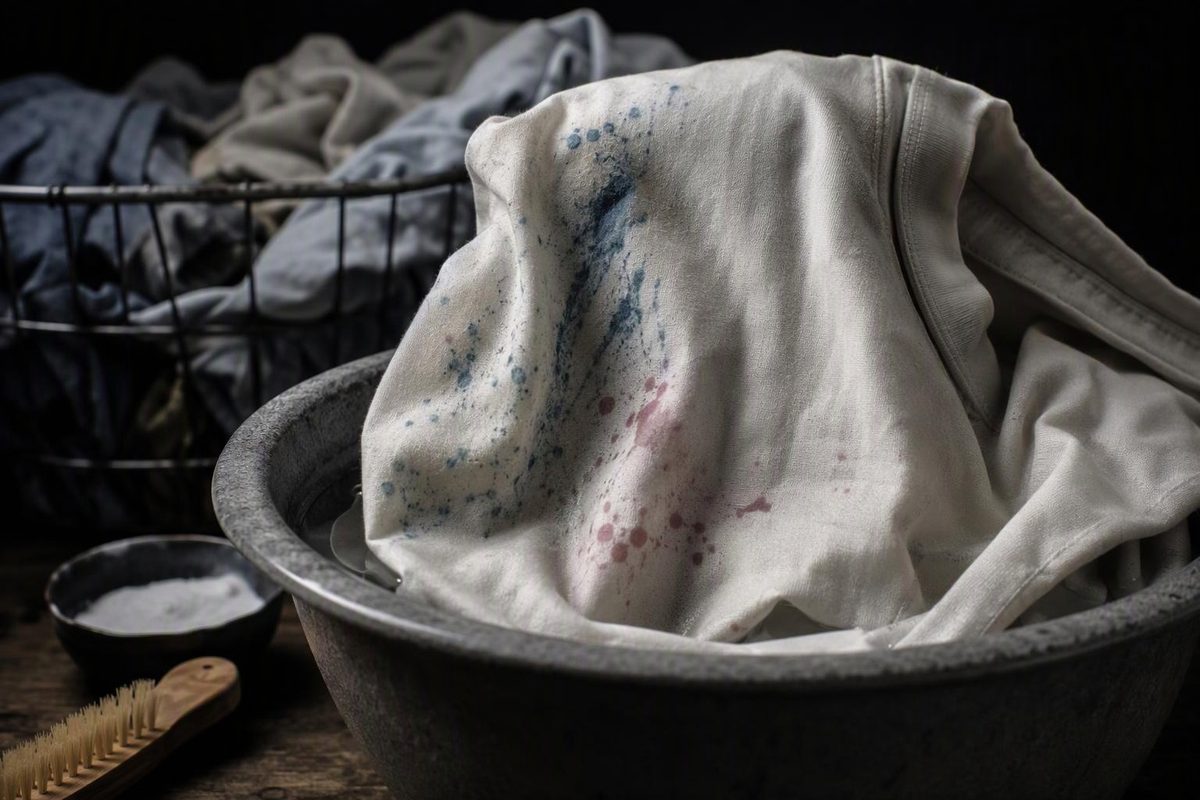
For white detergent streaks or clumps on washable clothes, start with water—not more detergent. Rinse the affected area, then rewash without adding detergent if residue remains. If a localized mark persists, spot-test a gentle treatment before using it. Keep the garment out of the dryer until you have checked the result.
Undissolved detergent clumps should usually come out with rewashing, according to Whirlpool’s residue troubleshooting guide. But not every mark that appears after laundry is detergent.
Check the mark and the care label
Use these clues to choose your next step; appearance alone cannot confirm the cause:
- White streaks, powdery clumps or a film: Start with the water-only sequence below. Whirlpool lists excess detergent, unsuitable detergent, lint, water quality and body-soil interactions among possible causes of white residue.
- A blue or colored spot: Rinse first. If color remains after the surface residue is gone, treat it as a lingering stain rather than continuing to rinse indefinitely.
- A dark, oily-looking spot: Check whether fabric softener was used. The American Cleaning Institute recommends dampening a softener stain, rubbing with bar soap, rinsing and laundering. Work gently and spot-test first. For recurring marks, use the separate guide to oily laundry spots after washing.
Read the garment’s care label before wetting it. This sequence is for water-washable clothing. Take dry-clean-only items and valuable or fragile wool or silk garments to a professional rather than experimenting with general-purpose stain removers.
Remove the residue, then treat only what remains
1. Rinse with plain water
Rinse the affected area thoroughly, gently working the fabric with your fingers. Use the temperature allowed by the care label; warm water may help with undissolved powder, but do not override a cold-wash restriction. Samsung notes that powdered detergent can be harder to dissolve in cold water.
Avoid vigorous scrubbing. If the mark washes away, no spot-cleaning product is needed.
2. Rinse or rewash the garment
For widespread residue on machine-washable clothing, run a rinse-and-spin cycle appropriate for the fabric first. If clumps remain, rewash using a fabric-appropriate cycle, without adding more detergent or fabric softener. Reduce an overloaded load so clothes have room to move, and select an extra rinse if available. Sears Home Services recommends additional rinsing to remove white detergent residue.
For hand-wash-only clothing, rinse by hand instead of using a machine cycle.
3. Spot-treat a persistent mark
If a small mark remains, test bar soap on an inside seam first. Rinse and let the test area dry; stop if its color or texture changes.
If the test is satisfactory, dampen the mark with cold water, gently rub with the soap and rinse thoroughly with cold water. Maytag includes this method for detergent stains. A persistent colored stain can instead be treated with a fabric-compatible prewash stain remover: spot-test it, then follow its label for application, dwell time and washing.
Do not assume an oxygen-based product is suitable for every garment. For example, OxiClean Versatile Stain Remover’s instructions exclude wool, silk, their blends, leather and dry-clean-only fabrics.
4. Air-dry and inspect
Check the treated area after it dries. If the mark has improved, one careful repeat is reasonable. If it is unchanged, looks like fading rather than a deposit, or the fabric becomes rough or distorted, stop and reassess instead of scrubbing harder.
If the clothes have already been tumble-dried, removal may still be possible. Rewet and follow the same sequence; do not assume dryer exposure makes the mark permanent. Maytag advises avoiding further dryer heat while a stain remains.
Prevent another marked load
Measure detergent for the actual load rather than automatically filling the cap. Use HE detergent where the washer requires it, stay below the dispenser’s MAX line, and follow the machine’s instructions for liquid, powder or pods. In Samsung’s standard front- and top-load instructions, pods go in the drum before clothing—not in the detergent drawer.
Avoid overloading. If residue keeps returning, clean the dispenser and run the washer’s cleaning cycle as its manual directs. LG recommends regular Tub Clean cycles when residue transfers to laundry. Persistent problems after correcting dosing, loading and maintenance warrant appliance troubleshooting, not stronger garment treatments.