 StainList
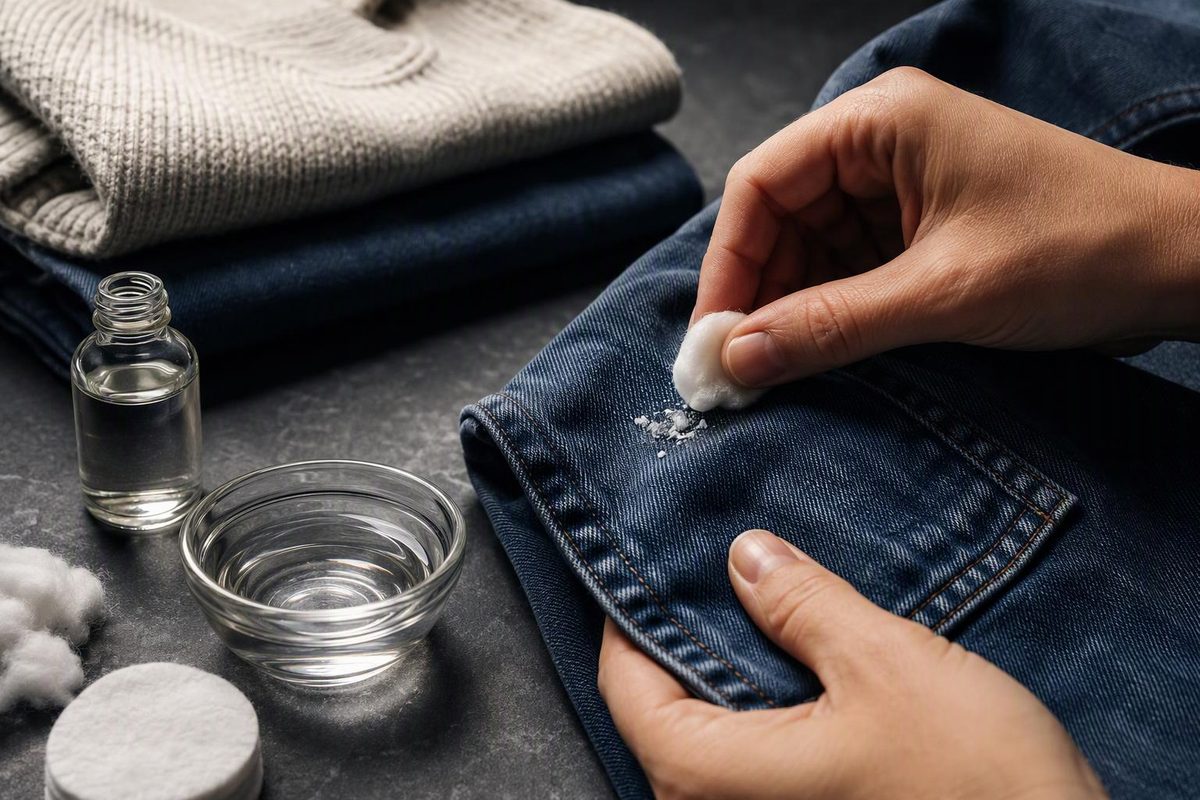
For a small, dried super-glue spot on a washable garment, let the glue harden, lift off loose material without stressing the fibers, and use acetone only if the care label, fiber content and a hidden patch test indicate that the fabric can tolerate it. Never use acetone on acetate or triacetate.
Choose the garment details to see whether to patch-test acetone or stop home treatment.
Acetone Safety Check
Use the labels for the outer fabric and lining. An unknown answer does not count as solvent-safe.
The fiber, care instructions and garment type are unknown. Check every label, including the lining, or take the garment to a professional cleaner.
If the Glue Is Still Wet
Do not rub or blot wet super glue with tissue, a cotton pad or another part of the garment. Super glue is usually a cyanoacrylate adhesive. Contact with cellulose materials—including cotton fabric, cotton wool and paper—can cause rapid curing that produces heat, smoke and irritating vapor and may cause a burn, according to a University of Reading safety data sheet.
If the spill is small, cool and not attached to skin, avoid folding the fabric onto itself. If you can remove the garment without touching the spill, lay it flat on a noncombustible surface, away from paper and other fabrics, and let the glue become hard and cool in a ventilated place.
If the fabric is hot, smoking or bonded to skin, do not pull it off. Move to fresh air if there are vapors and get medical advice for a burn or breathing symptoms.
For bonded skin, soak with warm, soapy water and gently work the bond apart rather than pulling. For eye exposure, rinse with water for 15 minutes and do not force the eye open. Poison Control advises contacting a poison center for eye or mouth exposure. In the US, call 1-800-222-1222.
Check Every Fabric Layer Before Using Acetone
Read the garment’s care and fiber-content labels, including the lining. The outer fabric may tolerate a solvent that damages a hidden lining, print, finish or stretch component.
- Acetate or triacetate: Do not use acetone or acetone-based nail-polish remover. The American Cleaning Institute excludes these fibers from its nail-polish-remover method, and the University of Georgia states that acetone destroys acetate fiber.
- Dry-clean-only, wool, silk, vintage, valuable or highly decorated clothing: Do not scrape aggressively or experiment with solvent. Take the item to a professional cleaner and identify the adhesive as cyanoacrylate.
- Other washable fabrics: A cautious acetone test may be reasonable, but the fiber name alone does not establish safety. Acetone can affect dyes, prints, surface finishes, stretch components and hidden linings.
The Drycleaning & Laundry Institute reports that acetone can reduce many glue stains but may also pull dye and readily dissolve acetate, including acetate linings. It recommends testing material from an unexposed area first (DLI guidance).
Remove Dried Super Glue Step by Step
1. Lift the Brittle Deposit
Wait until the glue is completely hard and cool. Place the garment on a firm surface, then use the edge of a spoon or plastic card to lift loose flakes. Work from the outside of the deposit toward its center.
Do not bend or stretch the stained area to crack the glue. Stop if the threads begin to stretch, fuzz or lift with the deposit. Adhesive that has penetrated the yarns may not come away mechanically without taking fibers with it.
2. Patch-Test Plain Acetone
Skip acetone if the garment is acetate or triacetate, its care instructions prohibit solvent treatment, or it is delicate or valuable.
Work in a well-ventilated area away from flames, sparks, cigarettes and hot appliances. Moisten a tiny hidden area, such as an inside seam allowance, with plain acetone. Blot it with a white cloth and let it dry.
Do not continue if color transfers or the fabric softens, puckers, develops a ring, or changes in sheen or texture. A patch test can damage the hidden test area, so professional treatment is the safer choice when that risk is unacceptable.
Acetone has a flash point of 0°F (-18°C) and is classified as a flammable liquid, according to NIOSH’s acetone data. Keep the bottle and treated garment away from ignition sources.
3. Soften and Transfer the Residue
If the test area remains unchanged:
- Place the stained area face down on a folded white absorbent cloth.
- Apply a very small amount of acetone to the back of the cured deposit with the corner of another white cloth.
- Blot briefly, then turn the garment over and try to lift the softened glue with the edge of a spoon.
- Move the stain to a clean part of the absorbent cloth and repeat only while glue continues to transfer.
Use as little solvent as possible and do not soak the garment. Loctite’s clothing instructions also call for scraping dried glue first, testing acetone for color damage and then treating the remaining mark (Loctite guidance).
Repeated treatment is not useful once adhesive stops transferring. More solvent or harder scraping can damage the fabric without removing a deposit that has entered the yarns.
4. Rinse, Pretreat and Wash
Rinse the treated area thoroughly with water. Apply a small amount of liquid laundry detergent or a label-approved prewash stain remover, then wash according to the garment’s care label.
Air-dry and inspect the area. Do not use a tumble dryer while glue or a remaining mark is still present; the American Cleaning Institute advises keeping stained clothing out of the dryer until treatment is complete.
If the garment still has a rigid spot, do not assume another acetone treatment is safe merely because the first one caused no visible change. Stop when the glue no longer transfers or the fabric begins to react.
Stop Before the Fabric Is Permanently Damaged
Stop home treatment if:
- the fabric loses color, shine or texture;
- fibers stretch, pill, separate or soften;
- the glue covers a seam, print, waterproof coating or elastic area;
- gentle treatment no longer transfers adhesive; or
- removing the last rigid film would require cutting or pulling fibers.
Full removal is not certain. The University of Georgia’s apparel guidance classifies super-glue stains as nonremovable, while an adhesive manufacturer describes acetone treatment. The result depends on the size and depth of the deposit, how far it entered the fabric and whether the garment can tolerate the solvent.
Leaving a small hard spot is preferable to creating a hole, faded patch or dissolved lining. A professional cleaner is the better option when the garment is valuable, the fiber content is unknown or the glue has reached a sensitive construction detail.
If the residue came from a label or pressure-sensitive adhesive rather than super glue, use the milder sequence in How to Remove Sticker Residue From Clothing by Fabric Type.