 StainList
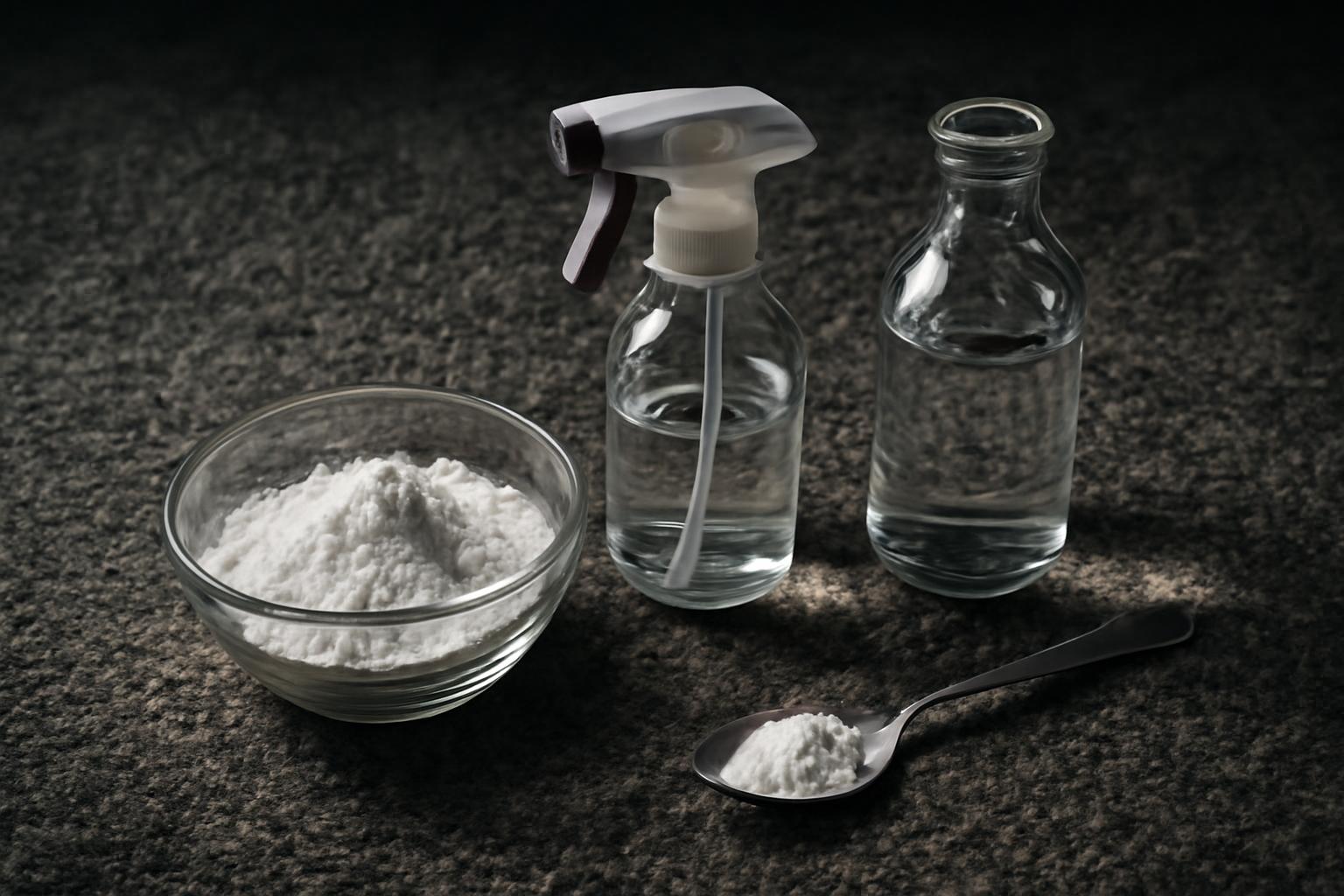
If you’re searching for how to deodorize carpet without buying a shelf full of specialty products, the good news is that the basics usually work well when you match them to the right odor.
For most everyday smells, baking soda is the first thing to try because it helps absorb odor and moisture. For musty or mildew-like smells, a light mist of diluted white vinegar can help neutralize odor if you dry the carpet thoroughly afterward. For pet urine and other organic odors, enzyme cleaners are usually the better choice because they target the residue causing the smell instead of just covering it up.
The key is not to jump straight to a random deodorizer. Carpet odors tend to come from one of three places:
- Room air: smoke, cooking, stale air
- Carpet fibers: traffic, spills, surface pet messes
- Padding or subfloor: urine, old spills, moisture damage
That’s why the same treatment doesn’t work for every smell. A stale hallway carpet can often be fixed with vacuuming and baking soda. A damp basement rug may need moisture control and vinegar. A pet accident that soaked through the backing may need an enzyme cleaner, extraction, or even new padding.
Below is a practical, step-by-step guide that starts with identifying the source, then moves from mild DIY fixes to stronger options and finally to the point where professional help makes more sense than repeating home remedies.
Identify Carpet Odor Sources Before Treatment
Before you deodorize anything, figure out what kind of smell you’re dealing with and where it’s actually coming from. That one step prevents a lot of frustration.
Common carpet odor sources include:
- Pet urine and pet fur
- Moisture, humidity, and mildew
- Food and beverage spills
- Dirt, body oils, and foot traffic
- Smoke or cooking odors
These don’t behave the same way in carpet.
What different odors usually mean
Pet urine is one of the most persistent carpet smells because it often penetrates beyond the surface fibers into the padding underneath. If the smell seems stronger on humid days or keeps returning after cleaning, the pad may be holding residue.
Mildew or musty odors usually point to trapped moisture. That can come from a spill that never fully dried, repeated wet shoes, high indoor humidity, or a leak. In these cases, deodorizing without fixing the moisture source is temporary at best.
General stale odors are often a buildup problem rather than a single incident. High-traffic carpet slowly collects dirt, sweat, skin oils, food crumbs, and airborne smells. The carpet can start smelling “old” even if it doesn’t look visibly dirty.
Smoke odors may be partly in the carpet and partly in the room air. That matters because a powder on the carpet may help the fibers, but it won’t solve odor lingering in curtains, upholstery, and ventilation.
Greasy or kitchen-adjacent odors can come from oily residues tracked in from cooking areas, garages, or entryways. These usually respond better to an absorb-first approach than to wet cleaning right away.
How to pinpoint the source
Start simple:
-
Walk the room slowly and smell close to the floor. The strongest spot often tells you whether the issue is localized or room-wide.
-
Inspect visually. Look for old spots, discoloration, damp-looking areas, or places where pets tend to lie or return.
-
Check edges and corners. Moisture problems often show up near walls, under furniture, or in shaded areas that dry slowly.
-
Lift the carpet edge if you can do so safely. If the smell seems deep or returns after every treatment, check the underside and padding. A dry-looking carpet surface can still hide a damp or contaminated pad.
-
Think about timing. - Smell worse after rain or on humid days? Likely moisture or mildew. - Strong in one pet area? Likely urine or fur buildup. - Strong near an entryway? Likely shoes, dirt, and traffic. - Room smells stale all over? Likely general buildup plus poor airflow.
Treat the cause, not just the symptom
A deodorizer can help with lingering odor molecules, but it won’t fix:
- a wet pad,
- a recurring pet accident,
- smoke settled throughout the room,
- or greasy residue still trapped in the fibers.
If you don’t address the source first, the smell usually comes back. In practice, that means:
- blotting and treating accidents before they dry deep,
- drying damp carpet fully,
- vacuuming out loose debris before using powders,
- and using an enzyme cleaner for urine rather than relying on fragrance.
Think of deodorizing as the second step, not the first.
Preparation Steps: Vacuum, Patch Test, and Safety
Good prep makes the actual deodorizing work better and reduces the chance of leaving residue, causing dye issues, or trapping more moisture in the carpet.
1. Vacuum thoroughly first
Always start by vacuuming the carpet well, especially if you plan to use baking soda or any powder.
This removes:
- loose dirt,
- pet hair,
- crumbs,
- dust,
- and debris that can block the deodorizer from reaching the fibers.
If you have a vacuum with a HEPA filter, it’s a good choice for odor-prone rooms because it helps reduce fine dust and dander recirculating into the air. In high-traffic rooms, make slow overlapping passes instead of one quick sweep.
If the odor source is greasy, vacuuming after an absorbent powder step is even more important, because residue left behind can keep attracting dirt and smell.
2. Patch-test every treatment
Even common household deodorizers can affect carpet color, finish, or fiber texture.
Before using any spray or powder broadly:
- pick a hidden area, such as under a couch edge or in a closet corner,
- apply a small amount,
- wait 15 to 30 minutes,
- blot or let dry as appropriate,
- then check for color change, texture change, or residue.
Be especially cautious with:
- wool,
- silk,
- older rugs,
- richly dyed carpet,
- and anything with unknown fiber content.
Patch testing is boring, but it’s much faster than trying to fix a bleached or stiffened spot.
3. Ventilate the room
Open windows if weather allows. Turn on fans. If the room is already humid, use air conditioning or a dehumidifier.
Ventilation matters for two reasons:
- it helps odor treatments dry faster,
- and it keeps moisture-based methods from turning into new mildew problems.
This is especially important when using vinegar spray, enzyme cleaners, or hot water extraction.
4. Avoid oversaturating the carpet
This is one of the biggest mistakes in DIY carpet deodorizing.
A carpet that gets too wet may:
- take too long to dry,
- develop a musty smell,
- damage the backing,
- or wick old residue back to the surface.
For sprays, think mist, not soak. For spot treatments, use enough product to contact the affected fibers, but not so much that liquid spreads widely beyond the problem area.
5. Protect kids, pets, and yourself
Dry powders are convenient, but they still need some care.
- If using borax, keep children and pets away until the powder has been completely vacuumed up.
- Wear gloves if you’re handling stronger cleaners or if you have sensitive skin.
- Use a mask when applying dusty powders like baking soda-borax blends in large areas.
- Never assume a scented add-in is safe just because it’s “natural.”
If you have pets, be extra cautious with anything fragranced. Even DIY guides that suggest essential oils usually include caveats, especially around oils such as tea tree. The safest approach in pet homes is to keep the deodorizing method as simple as possible unless you’ve confirmed a specific product or ingredient is appropriate for your household.
6. Know when not to DIY
Pause before using home methods if the carpet is:
- valuable,
- antique,
- wool or silk,
- heavily water-damaged,
- or already separating from its backing.
Those situations are where “simple household fixes” can stop being simple.
Baking Soda: The Go-To Absorber for General Odors
For routine carpet odor, baking soda is the most reliable starting point.
Why it works: it helps absorb odor and moisture from the carpet rather than simply covering smell with fragrance. It’s best for:
- stale rooms,
- light pet odor between deeper cleanings,
- food smells,
- everyday traffic buildup,
- and mild smoke residue in carpet fibers.
It is not the best first-line fix for deep urine contamination or active mildew, but it’s the easiest and safest place to start for general freshening.
Basic baking soda method
Use it on dry carpet.
- Vacuum first.
- Sprinkle baking soda generously and evenly over the affected area. A flour sifter or shaker can help prevent clumps.
- Lightly work it into the fibers with a soft brush or dry sponge mop if you want better contact. Don’t scrub hard.
- Let it sit. - 15 to 30 minutes for a quick refresh - Several hours to overnight for stronger odors
- Vacuum thoroughly and slowly.
For stronger room-wide odors, don’t rush the last step. Incomplete vacuuming can leave visible dust or powder in the pile.
How long should baking soda stay on carpet?
There isn’t one universally proven “best” dwell time. Practical guidance varies from 15 minutes for light refreshing to overnight for stronger smells.
A good rule:
- Light stale odor: 15 to 30 minutes
- Moderate odor: a few hours
- Persistent but dry odor: overnight
Longer contact can help, but only if the problem is actually in the fibers and not in the pad underneath.
How much to use
You want enough for a visible, light, even layer. Too little may do very little. Too much can mean extra vacuuming and leftover white residue if your vacuum is weak.
For large rooms, apply in sections so you can keep track of coverage and removal.
Optional fragrance: use caution
Some DIY methods suggest mixing baking soda with 10 to 30 drops of essential oil and letting the mixture sit overnight before sprinkling it on the carpet. Lavender and lemon are often suggested in household guides.
That can add scent, but it is not necessary for deodorizing, and it comes with tradeoffs:
- scent may distribute unevenly,
- oil residue can be undesirable on carpet,
- and pet safety depends on the specific oil and household.
If you have pets, children, or sensitive occupants, the cautious option is to skip essential oils entirely. If you do use them, use very little, never apply oils directly to carpet, and avoid any oil you haven’t specifically vetted for your home.
For repeat or greasy odors
Baking soda can be repeated safely on general odor problems.
If the smell has an oily or greasy character, use a dry absorbent approach first:
- baking soda alone, or
- equal parts cornstarch and baking soda
Let that sit for 20 to 30 minutes or longer, then vacuum before trying any wet cleaning. This follows the same absorb-first logic used for grease and oil stains: dry powder helps pull up residue that water alone won’t handle well.
When baking soda works best
Baking soda is the best first try when the carpet:
- smells stale but isn’t wet,
- has light odor from everyday traffic,
- needs a monthly refresh,
- or has mild surface odor after spills have already been cleaned.
If you do one full baking soda treatment and the smell returns quickly, that’s your clue to move beyond “general deodorizing” and look for a deeper source.
Vinegar Spray for Mildew and Musty Smells
Diluted white vinegar is most useful for musty, mildew-like, or mystery stale odors, especially when the smell seems related to humidity.
The important part is that vinegar is not a magic reset button. It works best when:
- the carpet is only lightly affected,
- the moisture source has been fixed,
- and the carpet can dry quickly and completely.
When vinegar makes sense
Use a vinegar mist when the odor is:
- musty,
- faintly sour,
- damp-smelling,
- or concentrated in a spot that had a spill or got wet.
Skip it as a first choice for:
- deep pet urine,
- soaked padding,
- valuable wool or silk,
- or any carpet you can’t dry promptly.
How to make the spray
A practical dilution range is:
- 1:1 white vinegar to water, or
- 1:2 vinegar to water for a lighter mix
Put it in a spray bottle and shake gently.
How to use vinegar safely on carpet
- Vacuum first.
- Patch-test in an inconspicuous spot.
- Lightly mist the affected area. Do not soak the carpet.
- Let it sit: - about 15 to 20 minutes for light odor - up to 1 hour for mildew-like smell if the carpet type tolerates it
- Air-dry fully with open windows, fans, or a dehumidifier.
The vinegar smell may be noticeable at first, but it typically fades as the area dries.
Why drying matters so much
If the odor was caused by dampness, a wet treatment only helps if you prevent the carpet from staying damp again. That means:
- fans pointed across the carpet,
- open windows if humidity is low,
- dehumidifier if the room is humid,
- and no foot traffic until the area is dry.
If the carpet stays cool and damp for hours, the musty smell may come back or worsen.
Fiber cautions
Be careful with vinegar on:
- wool
- silk
- delicate or richly dyed rugs
Some guidance specifically warns against using vinegar on wool or silk unless you have patch-tested successfully and are comfortable with the result. For specialty rugs, professional cleaning is often the safer choice.
Don’t mix it directly with baking soda for routine deodorizing
Some DIY carpet advice suggests combining vinegar and baking soda because the fizz looks active and can help mechanically loosen certain spot residues. But for routine deodorizing, mixing them directly is usually not the best plan.
Why:
- they react with each other,
- much of the acid/alkali action gets neutralized,
- and you may just create extra residue and cleanup.
A better approach is to use them separately for different jobs:
- baking soda for dry odor absorption,
- vinegar mist for musty smells or light wet-neutralization needs.
Pet Urine and Organic Odors: Enzyme Cleaners
If the odor is from pet urine, vomit, feces, or another organic source, enzyme cleaners are the method most consistently recommended as first-line treatment.
That’s because the goal is not just to freshen the surface. It’s to break down the organic residue causing the smell.
Baking soda and vinegar can help around pet odors, but they often fall short when urine has dried into the fibers or seeped into the pad.
Why enzymes work better for pet smells
Enzyme cleaners are designed to break down compounds in urine and other organic messes at the source. That’s a different job from a dry deodorizer.
For pet urine, that matters because the smell often persists even after the wetness is gone. Commercial testing cited in consumer guidance also suggests that enzyme-based and oxidizing pet cleaners can outperform vinegar and baking soda for urine odor.
Step-by-step for pet urine odor
-
Blot first. If the spot is fresh, press with clean towels to remove as much liquid as possible. Don’t rub.
-
Apply the enzyme cleaner according to the label. Coverage and dwell time vary by product. Many require at least 10 to 15 minutes, and some longer.
-
Let it dwell. This matters. Enzymes need time to work.
-
Blot or extract if the label says to do so.
-
Let the area dry completely before judging results. Damp carpet can still smell temporarily.
-
Repeat if necessary, especially for old or repeated pet spots.
Check for deep penetration
If the pet smell keeps returning, especially in the same spot, assume it may have reached:
- the backing,
- the padding,
- or even the subfloor.
That’s common with pet urine. Surface treatment may improve the smell briefly, then humidity pulls odor back up.
Signs the issue is deeper:
- odor returns after drying,
- the same spot keeps smelling after multiple treatments,
- or the area smells stronger close to the floor than in the room overall.
In those cases, lifting the carpet edge or having the area professionally inspected can save time.
Can you follow with baking soda?
Yes, but timing matters.
If the area still has mild odor after the enzyme treatment has dried, a baking soda pass can help absorb leftover surface smell. Don’t dump baking soda onto a still-wet enzyme-treated area unless the product label specifically supports that workflow.
What about peroxide-based oxidizers?
Peroxide-based or other oxidizing cleaners can also work well on pet stains and odors, and some testing suggests they may be among the better performers.
But there’s a tradeoff: they may pose a bleaching or color-lightening risk, especially on darker carpet. Always patch-test first and follow the product label.
A practical way to think about it:
- Enzyme cleaner: strong default for organic odor removal
- Oxidizer: potentially effective, often faster acting, but test carefully for color safety
When DIY pet treatment is unlikely to be enough
DIY treatment may not fully solve the problem if:
- the accident is old and repeated,
- multiple pets have marked the same area,
- the pad is soaked,
- or the subfloor absorbed urine.
At that point, extraction, pad replacement, or professional odor remediation may be more realistic than layering more home remedies on top.
Tough Odors: Borax Blends and Absorbents
Some odors are more stubborn than basic staleness but still worth a careful DIY try before renting equipment or calling a pro.
These include:
- smoke-related odor in carpet fibers,
- greasy or kitchen-like smells,
- heavy general funk in a traffic path,
- or old room odor that keeps lingering after vacuuming.
Borax and baking soda for stronger dry deodorizing
For a tougher powder treatment, some guides recommend a 50/50 blend of borax and baking soda.
How to use it:
- Mix equal parts borax and baking soda.
- Sprinkle a light, even layer over dry carpet.
- Let it sit for 15 to 60 minutes, or longer for stronger odor if the room can remain undisturbed.
- Vacuum thoroughly.
This can be a useful escalation when plain baking soda isn’t doing enough.
But there are clear tradeoffs:
- borax dust is not something you want kids or pets contacting,
- it’s less forgiving than plain baking soda,
- and cleanup needs to be complete.
Use gloves, consider a mask, ventilate the room, and keep children and pets away until the carpet has been fully vacuumed.
Cornstarch or baking soda for greasy odors
If the odor source is oily, absorb first.
Use:
- cornstarch,
- baking soda,
- or a mix of the two.
Sprinkle it over the area, let it sit 20 to 30 minutes or longer, then vacuum thoroughly. This helps with greasy odor because oils don’t respond well to water-first cleaning.
If odor remains after the powder step, then move to a compatible wet-cleaning method rather than starting wet.
Activated charcoal for airborne odor nearby
Activated charcoal is helpful for room-level odor control, not as a direct carpet treatment.
Place charcoal in:
- bowls,
- bags,
- or sachets near the problem area
and leave it for a few days. This can help when carpet odor is contributing to stale room air, especially with smoke or general closed-up smell.
Just don’t expect it to replace treating the carpet itself. It works on the air around the carpet, not contamination in the fibers or pad.
Steam or hot water extraction for built-in odor
When dry powders are not enough, deeper extraction can help remove odor-causing residue from carpet fibers.
If your carpet and machine allow it, you can use:
- water-only extraction, which is the safest default,
- or a solution specifically approved by the machine manufacturer and carpet care guidance.
Some DIY advice suggests adding vinegar to a machine tank, but that is not a universal recommendation. Compatibility varies by machine, so don’t assume it’s safe unless the machine instructions support it.
If you use extraction:
- make slow passes,
- avoid over-wetting,
- and dry the carpet fully afterward.
For smoke or heavy stale odor, extraction can help more than repeated surface powdering because it removes built-up residue instead of just absorbing surface smell.
Deep Cleaning and When DIY Isn’t Enough
There is a point where repeating DIY deodorizing stops being efficient.
If you have already:
- vacuumed thoroughly,
- tried baking soda,
- used vinegar appropriately for mustiness,
- treated pet spots with enzymes,
- and the smell keeps returning,
the problem is probably deeper than a surface refresh.
When to rent a carpet machine
A rental or home extraction machine makes sense when:
- the odor is spread over a larger area,
- the carpet has visible soiling along with odor,
- or you need more than a spot treatment.
For best results:
- vacuum first,
- make slow extraction passes,
- avoid flooding the carpet,
- and use fans or a dehumidifier until fully dry.
Hot water extraction can help lift residue that powders won’t reach, but its success depends heavily on drying. A half-cleaned, slow-drying carpet can smell worse later.
When persistent odor points to the padding
If odor disappears briefly and then comes back, the carpet padding is a prime suspect.
This is especially common with:
- pet urine,
- old beverage spills,
- and water-damaged areas.
Padding can hold contamination long after the top looks clean. In some cases, the subfloor also absorbs odor.
That’s why a carpet can smell “fine after cleaning” and then smell bad again the next day. The surface improved, but the lower layers didn’t.
When to lift carpet or call a professional
Consider a professional cleaner or odor specialist when:
- the carpet is wool, silk, antique, or delicate,
- the odor is old and deeply set,
- the room has had repeated pet accidents,
- the carpet backing or padding may be involved,
- or wet cleaning at home won’t dry fast enough.
Professional service is also the better choice if you suspect a broader moisture issue rather than a simple odor issue.
When replacement is more realistic
Sometimes deodorizing is no longer the right goal.
If the carpet or pad is:
- repeatedly urine-soaked,
- mold-damaged,
- visibly degraded,
- or still smells after appropriate treatment and extraction,
padding replacement may be necessary, and in some cases the carpet itself may need to be replaced.
That can sound like a last resort, but it’s often cheaper than months of repeated products that never reach the contamination.
Reasonable maintenance schedule
A practical maintenance rhythm for odor control is:
- monthly deodorizing for busy homes, especially with pets,
- annual deep cleaning for most carpets,
- and more frequent deep cleaning if the home has heavy traffic, pets, or moisture challenges.
That schedule won’t prevent every odor, but it keeps ordinary buildup from turning into a bigger project.
Prevent Odors from Returning
The easiest carpet odor to remove is the one that never gets embedded in the first place.
Most recurring carpet smell comes from four things:
- debris left in the fibers,
- spills not cleaned quickly,
- too much indoor moisture,
- and habits that keep bringing dirt and oil back in.
Vacuum on a schedule, not just when it looks dirty
For odor prevention:
- vacuum 2 to 3 times per week in high-traffic areas,
- vacuum weekly in lower-traffic rooms,
- and use a HEPA-filter vacuum if you have one.
Carpet can trap odor before it looks visibly dirty, so waiting for it to “look bad” is usually too late.
Clean spills right away
Fresh spills are much easier to manage than old ones.
Blot, don’t rub, and dry the area well. The longer food, drink, or pet accidents stay in the carpet, the more likely they are to become an odor problem instead of just a stain problem.
Reduce what gets tracked in
A few habits make a real difference:
- no shoes indoors if possible,
- doormats at entry points,
- wiping pet paws,
- and avoiding eating over carpeted areas when practical.
These aren’t glamorous tips, but they directly reduce the dirt, oils, and outdoor moisture that build odor over time.
Control humidity
If mustiness is a recurring issue, odor control is partly an indoor-air problem.
Aim to keep indoor humidity below 50%. A dehumidifier is especially useful in:
- basements,
- humid climates,
- closed rooms,
- and any space where carpet has smelled musty before.
Ventilation matters too. Even clean carpet can smell stale in a room with poor airflow.
Do a light monthly refresh
For many homes, a monthly baking soda treatment is enough to stop small odors from building into a bigger problem.
That looks like:
- vacuum,
- apply baking soda,
- let sit for a few hours if convenient,
- vacuum thoroughly.
It’s simple, inexpensive, and often enough for normal traffic odor.
Choose odor-resistant materials in pet homes
If you’re replacing carpet in a pet-heavy household, consider:
- odor-resistant carpet
- and odor-resistant padding
That won’t make accidents harmless, but it can reduce how easily smells settle into the floor system.
For greasy residue problems, the same logic of absorb-first treatment used in carpet stain removal can help prevent lingering smell. If that’s a recurring issue, a more detailed guide to grease and oil stains on carpet and other surfaces can help with cleanup before odor sets in.
For most households, the order of operations is simple: start with baking soda for everyday odor, move to diluted vinegar for mustiness, use enzymes for pet urine, and escalate to extraction or professional help when the smell keeps coming back. The real secret is not a miracle ingredient. It’s matching the method to the cause and making sure the carpet dries fully afterward.
Can I mix vinegar and baking soda for carpet deodorizing?
Not as your default deodorizing method.
They each have uses on carpet, but mixing them directly causes a reaction that largely neutralizes both. The fizz can sometimes help mechanically loosen residue in a spot-cleaning situation, but it is not strong evidence that the combination is a superior deodorizer.
For routine odor removal, it usually makes more sense to use them separately:
- baking soda on dry carpet for general odor absorption
- diluted white vinegar as a light mist for musty or mildew-like smells
Mixing them can also leave extra residue and adds more uncertainty on delicate fibers such as wool or silk.
Is baking soda safe for all carpets, including wool?
Not automatically.
Baking soda is generally considered a reasonable option for most standard carpets when used dry and vacuumed thoroughly, but that does not make it risk-free on every carpet type.
Use extra caution with:
- wool,
- silk,
- antique rugs,
- and carpets with unstable dyes or delicate finishes.
The safest approach is to patch-test first in a hidden area, avoid aggressive brushing, and check any manufacturer care guidance you have. On specialty rugs, professional cleaning is often the better call.
How long to leave baking soda on carpet?
A practical range is 15 minutes to overnight, depending on the odor.
- 15 to 30 minutes: light freshening
- Several hours: moderate odor
- Overnight: stronger dry odor in a room you can leave undisturbed
Longer dwell time can help, but it’s not a cure for odor in the padding or subfloor. Thorough vacuuming afterward matters just as much.
What if pet urine odor returns after treatment?
That usually means one of three things:
- the first treatment did not reach all of the residue,
- the odor is in the padding or subfloor,
- or the area needs a second pass with a more suitable product.
Start by retreating with an enzyme cleaner according to the label and letting it dry fully before judging the result. If the smell keeps returning in the same place, inspect for deeper contamination or consider a peroxide-based oxidizer, patch-tested first.
If repeated DIY attempts fail, professional extraction or padding replacement may be necessary. At that point, adding more fragrance or more baking soda usually just delays the real fix.
Are essential oils safe with pets on carpet?
Not broadly enough to assume they’re safe.
Some DIY carpet recipes include essential oils for scent, but pet safety depends on the specific oil, amount, exposure, and animal. Even household guides that suggest certain oils also include warnings, especially around oils known to be problematic, such as tea tree.
For pet homes, the safest answer is:
- skip essential oils unless you have specific guidance that the product and amount are appropriate, and
- never apply essential oils directly to carpet fibers.
If your goal is deodorizing rather than fragrance, plain baking soda or a pet-appropriate enzyme cleaner is usually the simpler and safer choice.