 StainList
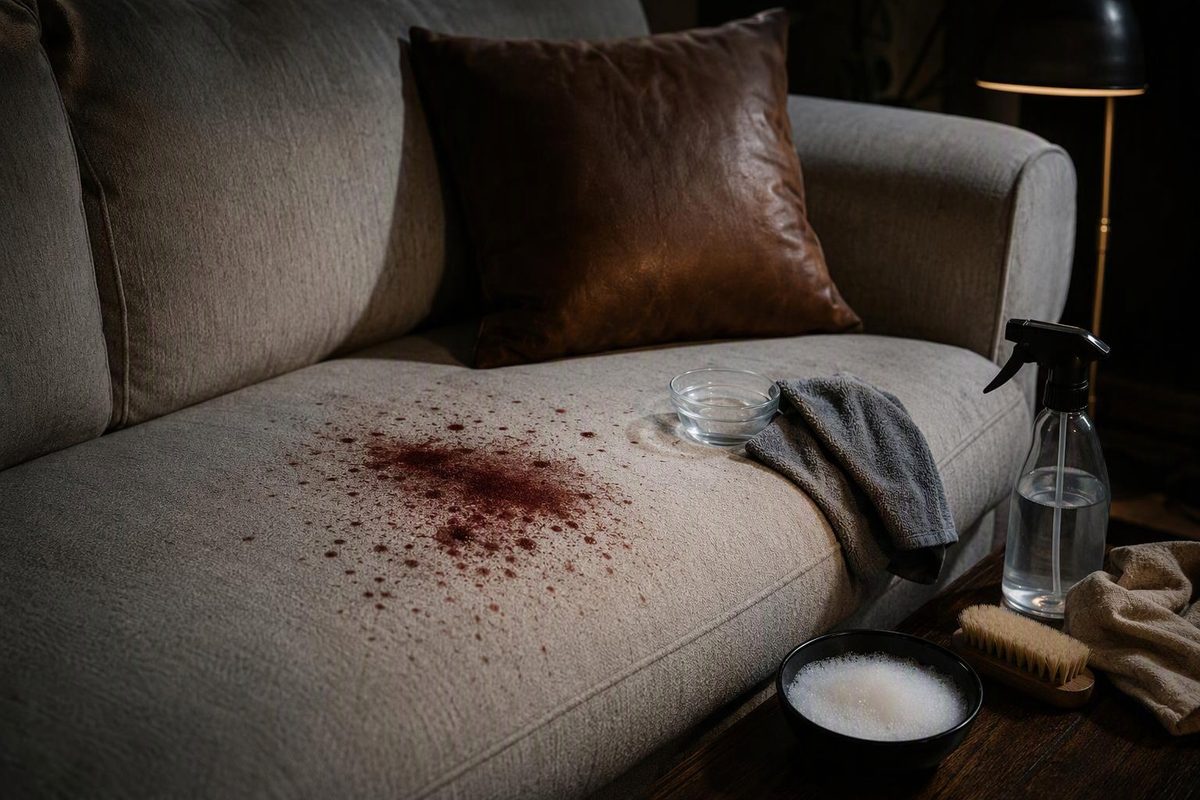
For a fresh blood stain on water-cleanable upholstery, absorb the excess, then repeatedly blot with a white cloth lightly dampened with cold water. Use as little moisture as possible. If water stops lifting the mark, use a weak detergent solution only when the sofa’s care instructions permit water-based cleaning.
Avoid hot water, scrubbing and soaking. Heat can make this protein stain difficult or impossible to remove, while excess water can carry blood into the cushion or leave a ring in the upholstery (University of Georgia Extension).
Choose the sofa’s cleaning code and whether the blood is fresh or dried.
Recommended Starting Method
For fresh blood on W upholstery, blot with minimal cold water.
Steps
- Absorb wet blood with a dry white cloth without rubbing.
- Spot-test a cold-water-dampened cloth, then blot from the outside toward the center.
- If needed, use ¼ teaspoon clear mild dishwashing liquid in 1 cup cool water, then blot-rinse and air-dry.
Stop if dye transfers, the texture changes or a ring develops. Do not use heat, scrub or soak the cushion.
Sources: University of Georgia Extension, Consumer Reports and Sailrite upholstery guidance.
Check the Sofa’s Cleaning Code
Look under the cushions or frame for a cleaning tag. Check the manufacturer’s instructions as well, if available.
- W: Water-based upholstery treatments are permitted.
- S: Use only a water-free solvent permitted by the manufacturer. Do not use the water method below.
- W/S: Either type may be permitted, but the chosen treatment still needs a spot test.
- X: Vacuuming or light brushing only. Arrange professional stain removal.
A W code does not mean a removable cushion cover is machine-washable. Do not unzip and wash it unless its instructions expressly allow that. The cover may shrink, distort or become difficult to refit. These code meanings and the warning against overwetting are explained in Sailrite’s upholstery-code guide.
For an unlabelled sofa, or upholstery made from silk, velvet, wool, suede or an unidentified delicate fabric, stop after absorbing the excess and contact the manufacturer or a professional upholstery cleaner.
If the blood is from another person, wear disposable gloves. Removing the visible stain does not by itself disinfect the sofa. Use a disinfectant only if it is approved for that upholstery.
Remove Fresh Blood From W or W/S Upholstery
Gather cold water and several clean, absorbent white cloths or plain white paper towels. White material lets you see whether blood or upholstery dye is transferring.
- Absorb without rubbing. Press a dry cloth onto the wet blood. Lift it and move to a clean section after each press.
- Test cold water. Lightly dampen a white cloth and press it against an inconspicuous seam. Stop if dye transfers or the texture changes.
- Blot with minimal water. Work from the outside edge toward the center. Do not pour or spray water directly onto the sofa.
- Wait one minute, then blot dry. Repeat with clean sections of cloth until no more blood transfers. This minimal-water cycle follows Consumer Reports’ guidance for blood on upholstery.
- Add diluted detergent only if needed. Mix ¼ teaspoon of clear, mild dishwashing liquid with 1 cup of cool water. Dampen—not soak—a clean cloth with the solution and blot the remaining mark. This weak upholstery spot-cleaning ratio appears in guidance from Consumer Reports and Crypton. Too much detergent can leave residue.
- Blot-rinse. Use another cloth barely dampened with plain cold water, then press with dry towels to remove moisture and detergent.
- Air-dry fully. Improve airflow with a fan if necessary, but do not use a hair dryer, heater or steam cleaner. Judge the result only when dry because damp fabric may look darker.
Stop immediately if upholstery dye appears on the cloth. That means the treatment is affecting the sofa as well as the stain.
Soften Dried Blood Before Blotting
Do not begin with hot water or vigorous scrubbing. Dried blood needs to be softened without saturating the cushion.
- If there is raised, brittle residue, lift only what releases easily with the edge of a spoon. Do not scrape delicate or piled fabric.
- Hold a cold-water-dampened white cloth against the mark briefly to soften it.
- Blot, wait one minute and blot again, following the fresh-stain method.
- If a shadow remains on W or W/S upholstery, use an enzyme stain remover only when its label specifically permits use on that upholstery material. Follow the stated dilution, application and contact time. Do not assume a laundry pretreatment is sofa-safe. See how to choose an enzymatic cleaner for blood.
- Blot-rinse if directed, then dry the area thoroughly.
Older or heat-exposed blood may not disappear completely. Repeatedly wetting the cushion is usually a worse trade-off than accepting a faint residual mark.
Use Hydrogen Peroxide Only With Manufacturer Approval
Hydrogen peroxide and oxygen stain removers are not safe defaults because their suitability depends on the upholstery material.
Sunbrella, for example, lists peroxide as one commercial option for dried blood on its own fabrics and requires thorough rinsing afterward (Sunbrella). OxiClean limits its upholstery method to water-washable material and excludes wool, silk and leather (OxiClean).
Those instructions do not establish that peroxide is safe for an unidentified sofa. Use it only if the sofa or fabric manufacturer permits it, at the stated concentration and after a hidden-area test. Do not improvise mixtures containing peroxide, bleach, ammonia, vinegar or other cleaners.
Treat Finished Leather With Foam, Not Water
For smooth, finished leather, first check that the maker permits a mild soap treatment. If so, make suds from a small amount of mild soap and cool water. Apply only the foam with a clean sponge, avoid spreading the mark, and wipe dry with a soft cloth.
This method is given by both University of Georgia Extension and Consumer Reports. Do not use it on suede, nubuck or aniline leather without maker approval.
Do Not Flood Blood-Soaked Cushion Filling
If blood has soaked into foam or batting, surface blotting may not reach all of it. Adding more water can drive the contamination farther into the insert and make complete drying harder.
Do not flood the cushion. Ask a professional whether the insert can be removed, cleaned and dried safely or should be replaced.
Stop DIY treatment if dye transfers to the cloth, a ring or texture change develops, the stain spreads, or the cushion remains damp or odorous after drying.