 StainList
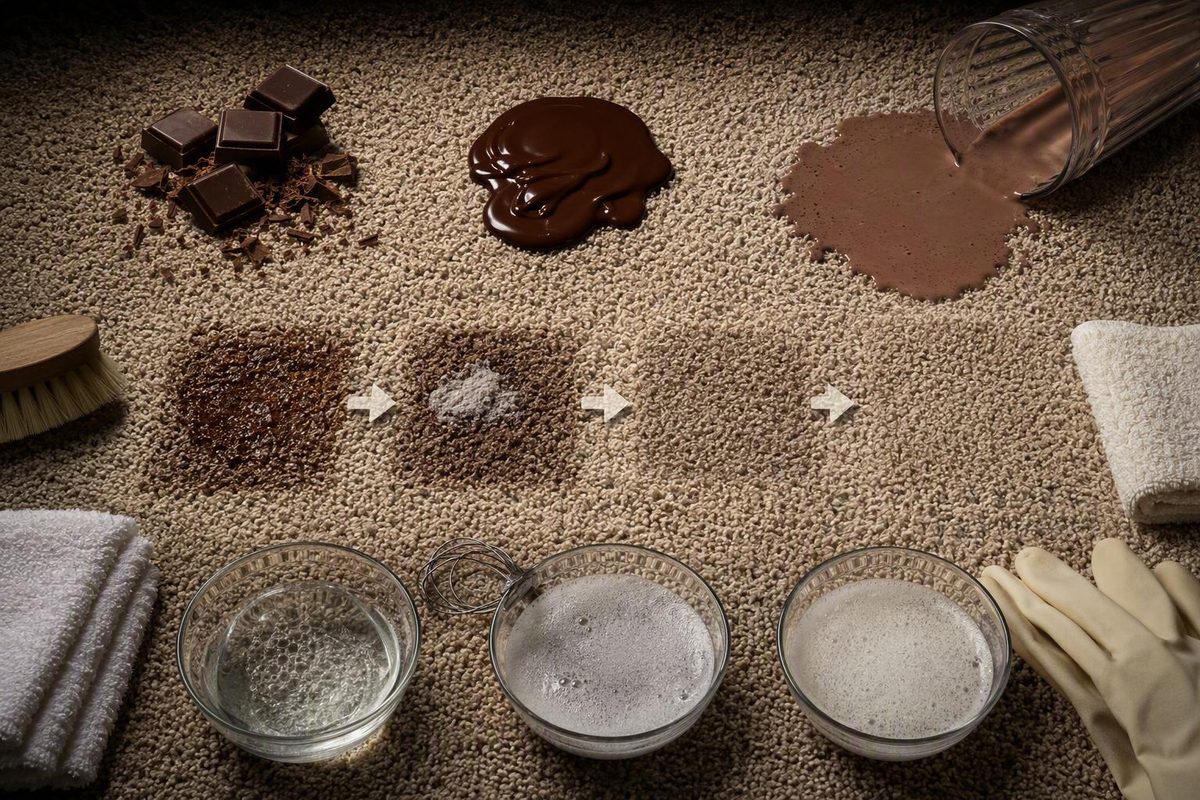
Lift solid chocolate off the pile with a spoon, or blot melted chocolate and chocolate milk with a clean white cloth, before any liquid goes near the carpet. Then test a spot cleaner the carpet manufacturer permits in a hidden area, blot it on from the outer edge toward the center, finish as the cleaner’s label directs, and let the carpet dry completely before judging the result. Do not scrub, do not pour cleaner into the pile, and do not borrow soaking or rinsing steps from clothing care. Dried, old, or previously treated marks may not lift fully with this conservative method; that is the point at which a professional carpet cleaner is the better call.
Pick the spill, the carpet, and the cleaner you have; the step list updates beside them.
Chocolate-on-carpet step finder
Remove the excess, test, blot inward, dry.
- Slide a spoon or dull edge under the chocolate and lift it; do not rub. Loosen what stands above the pile and vacuum the flakes before any liquid.
- Confirm the carpet-care instructions allow this spot cleaner.
- Test: a small amount on a white cloth, blotted on a hidden patch. Check the cloth for dye, let it dry, and stop on any color or texture change.
- Blot the spot from the outer edge toward the center, rotating the cloth as residue transfers. Follow the label for amount and method; do not invent a dwell time.
- If the label allows, blot with a second cloth lightly dampened with plain water, then a dry cloth.
- Air-dry fully before judging. Damp pile looks darker; that is not a reason to add more.
Sequence and recipes from COIT, Rug Doctor, and Stain List's grease guide; none compares results on chocolate-stained carpet. Rug Doctor timings apply only to its named products.
Lift or Blot the Excess Before Any Liquid Touches the Carpet
Solid or dried chocolate: slide a spoon or another dull edge under it and lift. Do not rub. Rubbing pushes fragments down into the pile, where the first drop of cleaner turns them into a smear. Loosen whatever stands above the pile and vacuum the flakes before you wet anything.
Melted chocolate, syrup, or chocolate milk: press a clean section of white cloth onto the spill and lift straight up. Each time the cloth shows chocolate, rotate to a clean section so you are not putting residue back onto the carpet.
COIT’s carpet guide follows the same order: scrape dried chocolate gently, vacuum the flakes, treat with a white cloth, and blot from the outside toward the center. It does not promise complete removal and says persistent stains may need professional cleaning (COIT chocolate-carpet guidance).
Match the First Move to the State of the Chocolate
| Spill | Remove before treatment | Main risk |
|---|---|---|
| Solid or dried chocolate | Lift gently, then vacuum loose flakes | Liquid turns leftover fragments into a smear |
| Melted chocolate or syrup | Lift what you can, then blot the moisture | Rubbing spreads the deposit |
| Chocolate milk | Blot promptly with a clean white cloth | Dairy and cocoa land together |
After the physical removal, every spill runs through the same control points: check the carpet-care instructions, test the cleaner, blot instead of scrubbing, and follow the product label. Dark, milk, and white chocolate do not get separate carpet recipes; none of the cited sources supports one.
Skip the freezing trick you may have seen for clothing. The cited carpet procedures start by lifting or blotting the excess, and none establishes a chilling step for any carpet or rug construction.
Test a Permitted Spot Cleaner in a Hidden Area First
Choose a spot cleaner the carpet manufacturer expressly permits and use it the way its own label says. Before it touches the visible spot:
- Put a small amount on a clean white cloth, unless the label requires a different application method.
- Blot an inconspicuous patch, inside a closet or under furniture.
- Look at the cloth for transferred carpet dye.
- Let the test patch dry.
- Stop if the carpet has changed color or texture.
Rug Doctor gives the same instruction for its own products on rugs and upholstery: test a small hidden area and do not use the product if the color is affected (Rug Doctor chocolate guide).
On the visible spot, blot with the cloth from the outer edge inward and rotate to a clean section as residue transfers. Do not invent a dwell time and do not repeat the treatment indefinitely. If the label permits a plain-water finish, blot with a second white cloth lightly dampened with water, then follow with a dry cloth. This is controlled residue reduction, not the rinsing you would give a washable shirt.
Two Published Detergent Recipes, and Why They Are Not Interchangeable
“Use a little detergent” is not precise enough to act on, and the published recipes show why.
COIT’s chocolate guide gives ¼ teaspoon of “white detergent” in 1 cup of lukewarm water for residue left after scraping. It does not define “white detergent,” so it does not say whether that means dish detergent, laundry detergent, or a dye-free formula, and it gives no fibre-specific limits.
Stain List’s general grease guide gives 1 teaspoon of dish soap in 1 cup of warm water for greasy carpet spots, followed by plain-water blotting. That recipe was written for grease, not tested on chocolate specifically.
The two guides never compare their formulas on chocolate-stained carpet, so neither concentration is established as the better one. Treat them as two separate recipes, each to be tested in a hidden area and used only where the carpet-care instructions allow a detergent solution.
Chocolate Is a Fat Stain That Often Carries Milk Solids Too
Cocoa butter is a fat. Milk chocolate adds milk solids, and chocolate milk adds more dairy on top. OxiClean’s ingredient discussion draws the same line between cocoa butter and milk solids, though its treatment advice is manufacturer-authored rather than independent comparison (OxiClean chocolate guide).
That mix is why chocolate does not behave like a spilled soft drink. It does not prove the carpet needs a protein step followed by a grease step, or the reverse. COIT describes milk proteins binding to carpet fibres; Rug Doctor sells an enzyme-action product for organic stain material. Neither source shows an enzyme cleaner removing the fatty portion on its own, and a grease-focused dish-soap recipe has not been shown to clear milk solids, cocoa, sugar, and discoloration together.
So do not escalate on your own to peroxide, bleach, alcohol, acetone, citrus degreaser, vinegar mixtures, or baking-soda pastes. None of the cited chocolate-carpet procedures establishes those as compatible with every carpet fibre, dye, backing, or finish. If a shadow remains after drying, its look does not tell you whether it is cocoa butter or something else. Recheck the care instructions and stop if the next step would need an unapproved cleaner.
Rug Doctor’s Five-Minute and 24-Hour Directions Belong to Its Own Formulas
Dwell times travel with the formula they were written for. Rug Doctor’s procedure is to spray one of its named formulas, wait five minutes, and blot with light strokes from the edges toward the center. For its enzyme-based product it adds a further step: cover the spot with a damp white cloth for 24 hours. Those timings apply to the named products in that procedure and to nothing else. Five minutes is not a general dish-soap dwell time, and a 24-hour damp cover is not a general enzyme-cleaner method.
These are vendor directions for vendor products, not evidence that they beat alternatives or suit every carpet. Use them only when you have that exact cleaner, its label permits the use, and the carpet-care instructions do not prohibit it. If the product label and the carpet instructions disagree, ask the manufacturers; do not split the difference.
Dry Fully, Then Decide Whether to Stop
Press clean, dry white cloths onto the area to pull out as much moisture as practical, then let it air-dry completely. Damp pile always looks darker than the surrounding carpet; that is not a reason to add more cleaner.
Once dry, check for each of these separately: brown or gray discoloration, an oily-looking shadow, sticky or stiff residue, lingering odor, distorted pile, and a mark that vanishes when damp but returns once dry.
Stop DIY treatment as soon as the test cloth picks up carpet dye, the treated area changes color or texture, the stain spreads, or moisture has reached the backing or padding. Call a carpet cleaner or rug specialist for a large or deeply penetrated spill, persistent odor, a stain that keeps reappearing, a failed colorfastness test, unidentified fibres, or a mark that survives conservative treatment. Wool, viscose, silk, handmade, antique, valuable, and unidentified rugs get manufacturer or specialist guidance, not the installed-carpet method above.
Keep clothing and carpet methods separate. Laundry soaking, undiluted dish soap, machine washing, and free rinsing all depend on being able to flush the fabric. Carpet backing and padding cannot be flushed, so the sequence stays lift, test, blot, dry, and stop when the carpet’s material makes the next step uncertain.