 StainList
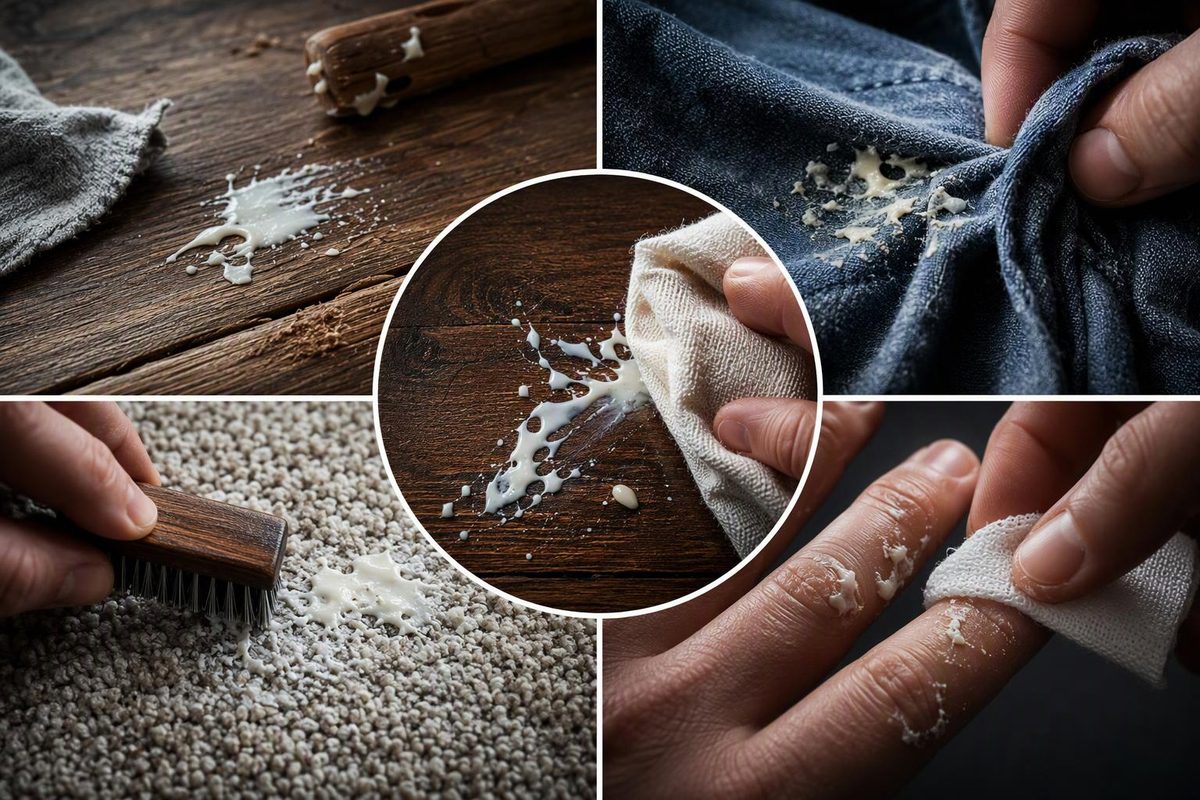
Identify the glue and the surface before treating it. Typical white and yellow carpenter’s glues are polyvinyl acetate (PVA), but color alone is not conclusive. Check the bottle: polyurethane glue, epoxy and cyanoacrylate need different cleanup methods. Loctite identifies PVA as the most common wood glue and notes that polyurethane glues are moisture-activated and foam as they dry (Loctite’s wood-glue guide).
If the product is cyanoacrylate or “instant” adhesive, use the separate guide to remove super glue from fabric safely.
White or yellow PVA wood glue
While the glue is wet
- Lift the bulk with a spoon, plastic card or putty knife, working toward the center of the spill.
- Wipe the remaining glue with a clean cloth dampened—not dripping—with water.
- Turn or replace the cloth as it picks up glue so you do not spread the residue.
- Dry the surface and inspect it under good light.
This is the least aggressive starting point for ordinary water-based wood glue. Titebond recommends removing excess from most of its water-based wood glues with a damp cloth before the glue dries; once dry, scraping or sanding is generally needed (Titebond wood-glue FAQs).
Use repeated light passes rather than flooding unfinished wood, veneer, laminate seams or hardwood flooring. On a finished surface, first confirm that the finish or flooring maker permits damp cleaning.
Dried glue on bare wood
- Lift a raised bead with a sharp cabinet scraper or a sharp chisel held almost flat. Take thin passes and keep the cutting edge away from the surrounding wood.
- Stop scraping when only a thin film remains.
- Sand the film lightly with the grain, using a grit appropriate for the project’s current preparation stage.
- Remove the dust and inspect before applying stain or finish.
Titebond recommends scraping or sanding dried water-based glue. It notes that steam may soften glue but will not remove adhesive from wood pores (Titebond woodworking guidance). Glue remaining in the pores can become conspicuous after stain is applied, so inspect from several angles before finishing.
If you are not comfortable controlling a sharp chisel, use a cabinet scraper or ask a woodworker to remove the bead. A gouge may be harder to repair than the glue mark.
Dried glue on finished furniture or flooring
Do not begin with a chisel, coarse sandpaper, acetone or a heat gun. Each can damage the finish along with the adhesive.
- Test the proposed method in a hidden area.
- If the finish maker permits damp cleaning, hold a barely damp cloth against the residue briefly.
- Try to roll up a thin edge with a fingernail or lift it with a flexible plastic scraper held nearly flat.
- Wipe with a barely damp cloth and dry promptly.
- Stop if the finish becomes cloudy or soft, changes gloss, or transfers to the cloth.
A film bonded through a worn or damaged finish may not separate cleanly. On veneer, valuable furniture or prefinished flooring, finish repair is safer than escalating to solvent, steam or aggressive scraping.
Wood glue on clothes
Treat wet PVA wood glue immediately. Titebond advises wetting spilled wood glue with water and keeping it wet while working the adhesive out. It also warns against machine drying until the glue is gone and says dried Titebond II and III may not release from fabric (Titebond wood-glue FAQs).
For a washable garment:
- Check its fiber content and care label. Refer dry-clean-only, silk, wool, acetate and fragile items to a cleaner.
- Lift excess glue with a spoon; do not grind it into the yarns.
- Rinse through the back of the mark with cool or lukewarm water while the glue remains wet.
- Work a small amount of liquid laundry detergent gently into the area, then rinse.
- Wash on a cool or lukewarm care-label-safe cycle.
- Air-dry and inspect. Do not use a dryer while glue remains.
For dried, ordinary water-based glue, flex the fabric and lift only what releases with a dull edge. A brief cold-water soak may loosen basic glue residue; Tide’s general glue guidance recommends a five-minute cold soak followed by careful removal, pretreatment and laundering (Tide’s glue-stain guidance). Do not expect the same result from every water-resistant wood glue.
Do not use acetone as a universal remedy. Although one manufacturer suggests spot-tested acetone for cured PVA, it also warns that the solvent may damage or discolor fabric (Loctite’s PVA removal guidance). Unless both the glue instructions and fabric content support solvent use, stop rather than experiment on a valuable item.
Wood glue on carpet or a rug
Fresh PVA glue
- Scoop up the bulk with a spoon or plastic card.
- Blot with a white cloth lightly dampened with cool water, working from the outside toward the center.
- Alternate damp blotting with a dry white towel until glue stops transferring.
- Blot once with a small amount of clear water, then press dry towels over the spot.
- Let it dry completely before deciding whether more treatment is needed.
PVA is water-soluble before curing, while carpet needs low-moisture handling. The Carpet and Rug Institute recommends white absorbent cloths, small amounts of treatment, outside-in blotting and a hidden-area test. It warns that brushing or scrubbing can fray carpet and alter its texture (CRI cleaning and maintenance guidance).
Dried glue
Gently flex the carpet and break away only raised, brittle pieces with a spoon. If the label identifies the adhesive as ordinary PVA, patch-test a lightly dampened white cloth and use it to soften the residue gradually. Do not soak the backing, pull tufts or cut into the pile.
Call a carpet or rug cleaner if the glue has reached the backing, spans several tufts, or is on wool, silk, viscose, an heirloom rug or an unknown fiber. Dried water-resistant glue may not soften enough for safe home removal.
Polyurethane wood glue
Polyurethane glue is not cleaned like PVA. Original Gorilla Glue, for example, is a moisture-activated polyurethane that expands as it cures. For wet squeeze-out on a suitable hard surface, its maker recommends a dry cloth or standard paint thinner used according to the thinner’s directions. Once cured, it recommends sanding, chiseling, scraping or picking (Original Gorilla Glue instructions).
Wear gloves and follow the product label. Do not improvise with paint thinner on clothing, carpet, skin or an unknown finish. On finished wood or textiles, cured polyurethane may not be removable without damaging the underlying material.
Wood glue on skin
For ordinary water-based wood glue, wash with soap and warm water. Do not pull aggressively if skin or hair is caught; soak and work at the edge gradually.
For tacky polyurethane glue, wipe first with a dry cloth, then wash with warm water and soap. Gorilla advises against alcohol, acetone and other solvents on skin; cured residue may take several days to wear off naturally (Gorilla adhesive-removal guidance).
For bonded skin, eye exposure, ingestion or significant irritation, stop removal attempts and follow the product’s first-aid instructions. Gorilla directs people with bonded skin or a suspected ingestion to its medical support line, and its safety information directs ingestion cases to Poison Control or a doctor (Gorilla first-aid information).