 StainList
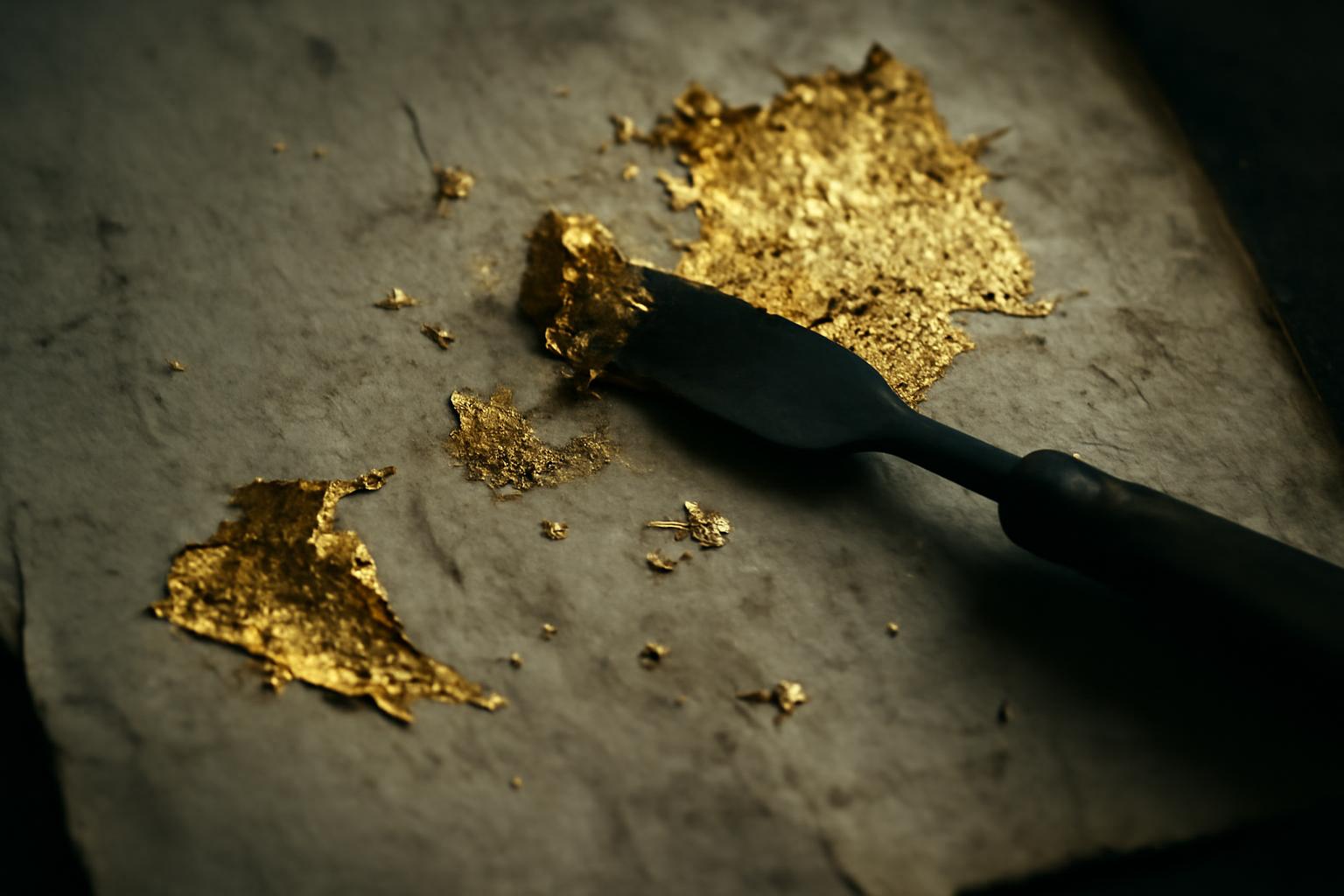
If you are trying to figure out how to remove gold leaf from paper from painting projects or paper-based artwork, the safest honest starting point is this: the available evidence does not give a validated, paper-specific DIY method. The strongest art-adjacent source in this packet discusses painted canvas, leather, and skin, not paper, and it explicitly says valuable or historic painted works should go to a qualified conservator while non-valuable pieces require solvent tests, the mildest solvent possible, minimal swab application, and no abrasives (Barnabas Gold’s guide to removing gold leaf from different surfaces).
That means this article is best read as a risk-and-decision guide rather than a guaranteed removal recipe. If the work is antique, signed, sentimental, saleable, or simply important to you, the supported answer is to stop and consult a conservator (Barnabas Gold guide on removing gold leaf from different surfaces). If the work is clearly non-valuable and you are willing to accept visible change or failure, the most defensible DIY path is narrow: assess what the gold is attached to, check whether a coating may be involved, and if you still proceed, limit yourself to a tiny, highly controlled test using the mildest approach you are willing to try (Barnabas Gold guide on removing gold leaf from different surfaces).
That is less satisfying than a “use this product” answer, but it is more faithful to the sources. The available material on gold removal comes mostly from three places: a painted-canvas/leather/skin article, a signmaking forum about gilded lettering on painted metal fire-truck doors, and a gold-refining discussion about scrap leaf mixed with paint, size, and paper. None of those is a paper-painting conservation manual. So the useful question is not “What removes gold leaf from paper safely every time?” It is “When is DIY too risky, and what is the narrowest testable scenario for a non-valuable piece?”
For readers who want a quick triage rule, here it is:
- Valuable, historic, sentimental, antique, or uncertain item: do not DIY; consult a conservator (Barnabas Gold guide on removing gold leaf from different surfaces).
- Non-valuable item with obvious clear coat, varnish, or buried-looking gilding: expect removal to be more complex and less predictable because protective layers can be the real problem, not the gold alone (Barnabas Gold guide on removing gold leaf from different surfaces; Signs101 fire-truck-door discussion).
- Non-valuable item with very superficial, recent-looking transfer only: a tiny test may be reasonable, but only as a diagnostic test, not as a promise of full removal (Barnabas Gold guide on removing gold leaf from different surfaces).
Why Gold Leaf Removal from Paper Paintings Is Risky
Gold leaf sounds simple because the metal itself is thin. The removal problem is usually not simple because gold is often part of a larger material system. In the gold-refining discussion, the leaf being recovered is not a neat metallic film; it is described as scrap mixed with paint, gold size, and paper, which is a useful reminder that gilding often ends up bonded with other materials rather than existing as a clean layer by itself (Gold Refining Forum discussion of gold leaf recovery).
That matters because when people say they want to “remove the gold,” they may really be trying to separate several things at once: metal, adhesive or size, paint, and sometimes a coating above or below the gilding. The Barnabas Gold article makes the same point from the painted-canvas side: varnish and transferred gilding removal can be complex and risky, and in some cases removing gold from the varnish layer may mean removing the varnish layer more broadly (Barnabas Gold guide on removing gold leaf from different surfaces). On paper paintings, where no paper-specific DIY protocol is established in the supplied evidence, that uncertainty is the core hazard.
A second reason removal is risky is that the methods people casually recommend online usually come from the wrong substrate. The signmaking forum thread is about used fire-engine doors with gilded letters on painted metal. The suggestions there include oven cleaner, rubbing compounds, lacquer thinner, razor blades, duct tape, wet sanding, and repainting. Even in that much tougher context, posters warn about damaging the underlying paint and about ghosting from old lettering (Signs101 discussion of removing gold leaf). If aggressive methods can damage a fire-truck door finish, they are not evidence-backed candidates for paper art.
The third risk is that two gold areas that look similar can behave very differently. In the signmaking thread, several posters suspect the lettering is protected by a clear coat or another tough paint system, which is why a familiar remover no longer works (Signs101 discussion of removing gold leaf). The Barnabas Gold article says something similar from the art side: whether the gilding sits in or on a varnish layer changes the treatment question entirely. So before any DIY attempt, you have to assume that “gold on top” may be a false impression. The real task may be coating reduction, not simple leaf pickup.
This is why the safest headline conclusion is not “gold leaf can’t be removed from paper,” but rather “the supplied sources do not establish a safe general paper method, and they do establish several reasons removal may involve more than the gold itself.” For a valuable artwork, that is enough reason to stop.
When to Consult an Art Conservator
For a valuable, historic, or sentimental paper painting, consulting a conservator is not overcautious; it is the one recommendation the available art-focused source supports directly. Barnabas Gold says that for any piece with sentimental and/or financial value, a qualified art conservator should be involved as early as possible, and it repeats that varnish and transferred gilding removal can be complex and risky (Barnabas Gold guide on removing gold leaf from different surfaces).
That recommendation becomes even stronger when the object is paper-based, because the packet offers no paper-validated DIY process to balance against that warning. In other words, the evidence does not give you a competing home method with similar credibility. It gives you one art-adjacent caution and a cluster of non-paper anecdotes from tougher materials.
There is also a broader handling principle here. Even practical household-cleaning resources such as Stain List draw a line around fragile specialty items rather than pretending every stain problem has a home fix.
Its methodology page also says methods are organized for common fabrics, carpet, and hard surfaces, and that unreliable methods should be stated plainly. That is useful here because a paper painting with gilding is not one of those common surfaces. So if the packet does not yield a reliable paper-art method, the honest conclusion is to say so, not to overextend stain or sign-removal advice into conservation guidance.
In practice, a conservator is the better first call when any of the following is true:
- the work may have sentimental, financial, resale, or historical value
- you are not sure whether the gold is original to the artwork or accidental transfer
- the gold may sit in, under, or over a coating such as varnish or clear coat
- you cannot identify whether you are seeing leaf, metallic paint, or some other metallic medium
- you are not willing to accept a visible mark, partial removal, or treatment failure as the price of experimentation (Barnabas Gold guide on removing gold leaf from different surfaces; Stain List homepage and methodology)
That last point is easy to overlook. People often ask for a removal method when what they really want is certainty. The available evidence does not provide certainty for paper paintings. A conservator may still decide not to pursue full removal, but professional assessment preserves options. A rushed DIY attempt can remove those options quickly.
Assessing Your Artwork Before Any Removal
Before touching the surface, decide what kind of problem you actually have. The available evidence supports a more useful first question than “What solvent should I buy?” Ask instead: Is this a non-valuable surface-transfer problem, or am I dealing with original gilding or gilding integrated with the artwork?
Start with value and replaceability. If the piece is important enough that a failed experiment would bother you for years, stop there and do not test it at home (Barnabas Gold guide on removing gold leaf from different surfaces). A tiny test is still a real intervention.
Next, look at the gold itself. Does it seem loose, powdery, and obviously sitting on top? Or does it look smooth, buried, or evenly sealed into the surface? The reason this matters is supported from two directions in the packet. In the metal-sign discussion, posters suspect clear coat when removal is unexpectedly difficult. In the canvas article, varnish involvement is treated as a major complication. So “looks embedded” is a meaningful warning sign even if the exact layer structure is unknown (Signs101 discussion of removing gold leaf; Barnabas Gold guide on removing gold leaf from different surfaces).
Then ask what the gold is attached to. The refining discussion is helpful here not because it tells you how to preserve art, but because it shows how often gold leaf waste is mixed with paint, size, and paper rather than existing as a pure metal film. If your golded area may involve size, paint, paper fibers, or a coating, that complexity itself is the point. You may not be choosing between “gold present” and “gold absent.” You may be choosing between “leave it” and “disturb several bonded materials at once” (Gold Refining Forum discussion of gold leaf recovery).
A practical diagnostic checklist for a non-valuable piece looks like this:
- Confirm the stakes. Is the piece genuinely expendable? If not, stop.
- Check whether the problem seems accidental or original. A recent transfer from another object is a different situation from intentional gilding built into the work.
- Look for coating clues. Strong gloss, even sealing, or resistance at the edge may mean you are dealing with a finish layer as much as with gold.
- Define your stop point before you begin. If the only acceptable outcome is invisible full removal, DIY is the wrong path.
- Plan to test, not to “do the job.” The first pass is diagnostic. Its purpose is to reveal whether the surface reacts acceptably, not to clear the whole area (Barnabas Gold guide on removing gold leaf from different surfaces).
One handling principle can be borrowed, carefully and explicitly as analogy, from stain treatment: blotting is safer than rubbing when you are trying to keep material from spreading. Stain List’s red-wine guide says to blot immediately and not rub because rubbing spreads the stain boundary (Stain List’s red wine guide). That does not prove how gold behaves on paper art, but it does support a conservative handling mindset: keep contact localized, avoid broad friction, and do not turn a small contaminated area into a larger disturbed one.
The most important part of assessment is accepting uncertainty. If you cannot tell what the metallic material is, whether a coating is present, or whether the gilding is original, uncertainty is not a challenge to overcome with stronger chemistry. It is a reason to stop.
General Risks Specific to Paper Substrates
The key paper-specific problem in this evidence set is not a detailed catalog of documented paper failure modes. It is that the packet does not establish a paper-safe solvent, paper-safe abrasive, or paper-safe universal process. So any practical advice has to start from absence of validation, not from confidence.
What the art-adjacent evidence does support is a general caution about liquids on painted surfaces: for non-valuable pieces, perform solvent tests, use the mildest solvent possible, keep application minimal, use swab technique, and avoid soaking and abrasives (Barnabas Gold guide on removing gold leaf from different surfaces). That is the closest thing in the packet to procedural guidance, and it matters precisely because it is restrained. On paper, it should be treated as a ceiling for experimentation, not as proof of safety.
The packet is much clearer about what not to import from other materials. The painted-metal forum thread contains suggestions like wet sanding with 400–600 grit, razor-blade work, rubbing compound with lacquer thinner, duct-tape lifting, oven cleaner, and commercial adhesive removers. Those ideas are anecdotal even for the fire-truck-door problem they were written for, and posters still warn about paint damage and ghosting (Signs101 discussion of removing gold leaf). Since those methods were developed for painted metal, not paper art, the evidence does not support adapting them to a paper painting.
Ghosting is one of the few post-removal outcomes that the packet supports directly, though again from the metal-sign context. Even after gilded lettering is removed, an old outline may remain visible (Signs101 discussion of removing gold leaf). That matters for paper not because it proves the exact same effect will occur, but because it warns against the fantasy of perfect subtraction. The absence of visible metal does not guarantee a visually unified surface afterward.
Heat is another example where the evidence is indirect but still useful as a warning. Stain List’s ink guide says many inks become effectively permanent once heat sets them, and specifically says not to machine-dry until the stain is gone (Stain List’s ink guide). That is not paper-painting conservation evidence, but it is a reasonable analogy against using improvised heat to “help” an uncertain removal attempt. When the chemistry and layering are already unclear, adding heat is hard to justify.
So the general risk picture for paper is narrow but important:
- no supplied source validates a standard DIY paper method
- the nearest art source says testing must be tiny, mild, and non-abrasive
- the non-paper anecdotes show that coatings complicate removal substantially
- the tougher-surface methods are aggressive enough to damage even painted metal
- full visual disappearance cannot be assumed even when the gold itself is reduced or removed (Barnabas Gold guide on removing gold leaf from different surfaces; Signs101 discussion of removing gold leaf; Stain List ink guide)
That combination is why paper-art removal should be approached as an uncertainty problem, not a product-selection problem.
Preparation Steps for Non-Valuable DIY Attempts
If you have decided the piece is non-valuable and still want to proceed, preparation is less about assembling a magic toolkit and more about setting strict limits. The evidence supports a cautious test framework, not a broad treatment recipe.
Start by simplifying the goal. Your aim is not “remove all gold today.” Your aim is “find out whether the surface tolerates any intervention at all.” That framing alone prevents many bad decisions, because it turns the first attempt into a diagnostic test.
A practical minimum kit for that kind of test is modest:
- cotton swabs
- a clean dry cloth or blotting material
- magnification or a phone camera for close inspection
- a notebook or photo log so you know exactly where and how you tested
- if you choose to test a liquid at all, only the mildest option you are prepared to try, recognizing that the packet does not validate any particular solvent as safe for paper paintings (Barnabas Gold guide on removing gold leaf from different surfaces)
If any product is involved, follow its own safety labeling. Barnabas notes that some gilding-related liquids may contain irritants or flammables and that safety data should be checked, which is a reminder not to improvise with unlabeled mixtures or casual cross-surface advice (Barnabas Gold guide on removing gold leaf from different surfaces).
For a non-valuable piece, the most evidence-bounded test sequence looks like this:
- Photograph the area first. You need a baseline.
- Choose the least visible edge of the gilded zone. Do not start in the center.
- Do the smallest possible test. The Barnabas guidance for painted surfaces is solvent tests with minimal swab application and no soaking; on paper, that is still only a test, not a validated treatment.
- Use the mildest approach you are willing to try first. Do not begin with the strongest cleaner because you are impatient.
- Keep contact localized. A tiny swab test is easier to evaluate than a broad wipe.
- Stop and inspect immediately. The question is whether the test affected only the unwanted gold, or whether it also changed something else.
- Do not scale up automatically. A tolerable tiny test does not prove whole-area safety (Barnabas Gold guide on removing gold leaf from different surfaces).
The point of testing is to discover limits early.
It is also worth separating “recent superficial transfer” from “bonded gilding.” Either answer is useful. A good test is not the one that removes the most; it is the one that tells you whether proceeding is defensible.
Limited DIY Approaches from Other Surfaces (With Paper Caveats)
Most publicly available gold-leaf removal advice comes from other surfaces, so the right way to use it is to borrow principles, not direct methods.
The first principle worth borrowing is localization. From the art-adjacent source, non-valuable painted surfaces should be approached with solvent testing, the mildest solvent possible, minimal swab use, and no abrasives (Barnabas Gold guide on removing gold leaf from different surfaces). Even though that article is not about paper, the discipline of “tiny test first” transfers better than any named product does.
The second principle is surface classification. The signmaking discussion makes clear that when a clear coat or very durable paint system is involved, the apparent gold problem may actually be a coating problem.
A third principle, again only as analogy, is fresh and superficial contamination is different from dried, bonded contamination. In stain treatment, prompt blotting is favored because once material dries and binds, removal becomes less reliable (Stain List red wine guide).
What should not be borrowed is just as important. The leather section of the Barnabas article discusses isopropyl alcohol on gold lettering, but that is leather-specific guidance, not paper guidance. The metal-sign forum suggests tape, abrasives, blades, lacquer thinner, oven cleaner, and related methods, but that is a painted-metal anecdotal context. The refining forum discusses incineration, acids, and paint strippers for recovering gold scrap mixed with paint and paper. None of those contexts validates a method for preserving a paper painting.
So for paper, the usable takeaway from other surfaces is narrow:
- test in the smallest area possible
- begin with the mildest plausible approach
- treat coatings as a major complication
- avoid abrasives
- do not assume a method that works on leather, metal, or scrap-recovery problems belongs anywhere near an artwork (Barnabas Gold guide on removing gold leaf from different surfaces; Signs101 discussion of removing gold leaf; Gold Refining Forum discussion of gold leaf recovery)
That is not an exciting toolkit. It is still the most defensible one.
Post-Removal Care and Stabilization
If you attempt any removal at all, the next step is not to keep chasing perfection. It is to decide whether the test gave you a clear enough answer to stop.
A useful post-test rule is this: if the result is incomplete but stable, that may already be the best DIY outcome. The packet does not establish a paper-safe “finishing” routine, a paper-safe rinse protocol, or a paper-safe method for evening out the appearance afterward. So continuing simply because some gold remains can push you from partial success into broader damage without any evidence-backed recovery step.
Documentation matters here. Photograph the area after the test, note exactly what was used, and note whether the gold changed, whether anything else changed, and whether the area now looks more or less acceptable than before. If you later consult a conservator, that information can be more helpful than another round of guessing (Barnabas Gold guide on removing gold leaf from different surfaces).
If the test produced a result you do not understand, stop. Uncertainty after a test is a signal, not an invitation to escalate. The Barnabas article’s core warning still governs: gilding and varnish removal can be complex and risky, especially when value is involved. A post-DIY consultation can still be worthwhile if the situation has shifted from “unwanted gold” to “uncertain surface change” (Barnabas Gold guide on removing gold leaf from different surfaces).
It is also important to set realistic expectations. The signmaking thread warns about ghosting even after gilded lettering is removed, and the coating discussion in both main sources makes clear that removal may be visually or structurally incomplete even when the gold is reduced (Signs101 discussion of removing gold leaf; Barnabas Gold guide on removing gold leaf from different surfaces). On a non-valuable paper piece, a realistic target may be “less distracting” rather than “as if it were never there.”
In other words, post-removal care on paper is mostly about restraint: do not broaden the area, do not jump to stronger methods just because the first pass partly worked, and do not assume that a leftover outline means you simply have not scrubbed hard enough. Sometimes the responsible end point is “stop here.”
Common Mistakes and What Doesn’t Work
The biggest mistake is treating paper art like a durable object. The evidence packet repeatedly shows how easy it is to wander into the wrong category of advice: leather advice, metal-sign advice, stain advice, or even metal-recovery advice. Each of those domains has different goals and different tolerances for damage.
A second common mistake is assuming that if a method is commonly repeated, it must be broadly safe. The Signs101 thread is a good warning against that. The proposed methods are numerous, but they are anecdotal, aimed at painted metal doors, and accompanied by cautions about paint damage, clear coats, staining, ghosting, sanding, and possible repainting (Signs101 discussion of removing gold leaf). “People on a forum suggested it” is not the same as “the method is suitable for a paper painting.”
A third mistake is letting the first failed attempt justify a stronger second one. The Barnabas article points in the opposite direction: start with solvent tests, use the mildest solvent possible, and avoid abrasives. That is a rule of escalation control. If a tiny mild test already looks questionable, the evidence does not support solving the problem by multiplying force (Barnabas Gold guide on removing gold leaf from different surfaces).
Another mistake is confusing gold recovery with art preservation. In the refining discussion, users talk about burning off material, using acids, paint strippers, and other harsh approaches because their goal is recovering precious metal from mixed waste. That is logically the opposite of preserving an image-bearing paper object. Methods suitable for scrap recovery are evidence of how destructive the separation problem can become, not of what should be done to artwork (Gold Refining Forum discussion of gold leaf recovery).
Heat is another poor shortcut. As a handling analogy, not as direct paper-art proof, Stain List warns that heat can set many inks irreversibly and that rubbing spreads material laterally (Stain List ink guide). That does not tell you exactly what heat will do to gilding on paper, but it is enough to reject the casual “speed it up with heat” instinct when the treatment chemistry is already uncertain.
In short, what the packet gives you good reason to avoid on paper paintings is:
- abrasive methods borrowed from metal or sign work
- tape-pull, razor, sanding, polishing, or compound-based approaches
- strong chemical escalation after an ambiguous first test
- recovery-style methods such as burning, acid treatment, or paint stripping
- heat as a shortcut
- any confident claim that alcohol, acetone, soap, tape, or another household product is generally safe for paper paintings (Barnabas Gold guide on removing gold leaf from different surfaces; Signs101 discussion of removing gold leaf; Gold Refining Forum discussion of gold leaf recovery; Stain List ink guide)
Is isopropyl alcohol safe for removing gold leaf from paper paintings?
No paper-specific source in the supplied material establishes isopropyl alcohol as safe for paper paintings.
At most, it remains an unvalidated possibility for a clearly non-valuable piece under a tiny test protocol, and even that is not established as safe for paper.
Can I use tape or scraping like on metal signs for paper art?
No. The recurring tape, razor, rubbing-compound, sanding, and similar suggestions in the packet come from anecdotal discussion about gilded lettering on painted fire-truck doors, not paper art (Signs101 discussion of removing gold leaf).
More importantly, even in that metal context the posters warn about damaging the underlying paint and about ghosting. So the evidence supports viewing those methods as substrate-specific and risky, not as transferable paper techniques.
When is gold leaf removal likely to leave a ghost or shadow on paper?
The available evidence directly supports ghosting from old gilded lettering in the painted-metal sign context, especially when age and prior surface history are involved (Signs101 discussion of removing gold leaf). The packet does not provide a paper-specific ghosting formula, but it does support two relevant ideas: first, removal may affect more than the gold when coatings or varnish are involved; second, the absence of visible gold does not guarantee an invisible repair (Barnabas Gold guide on removing gold leaf from different surfaces; Signs101 discussion of removing gold leaf).
Should I try DIY on antique or valuable paper paintings?
No. The clearest art-focused recommendation in the packet is to involve a qualified conservator for valuable, historic, or sentimental painted works because gilding and varnish removal can be complex and risky (Barnabas Gold guide on removing gold leaf from different surfaces).
That conclusion also fits the broader principle that fragile specialty items are not ordinary household removal projects. If the work matters, preserve the option of professional treatment rather than spending that option on a speculative home test.