 StainList
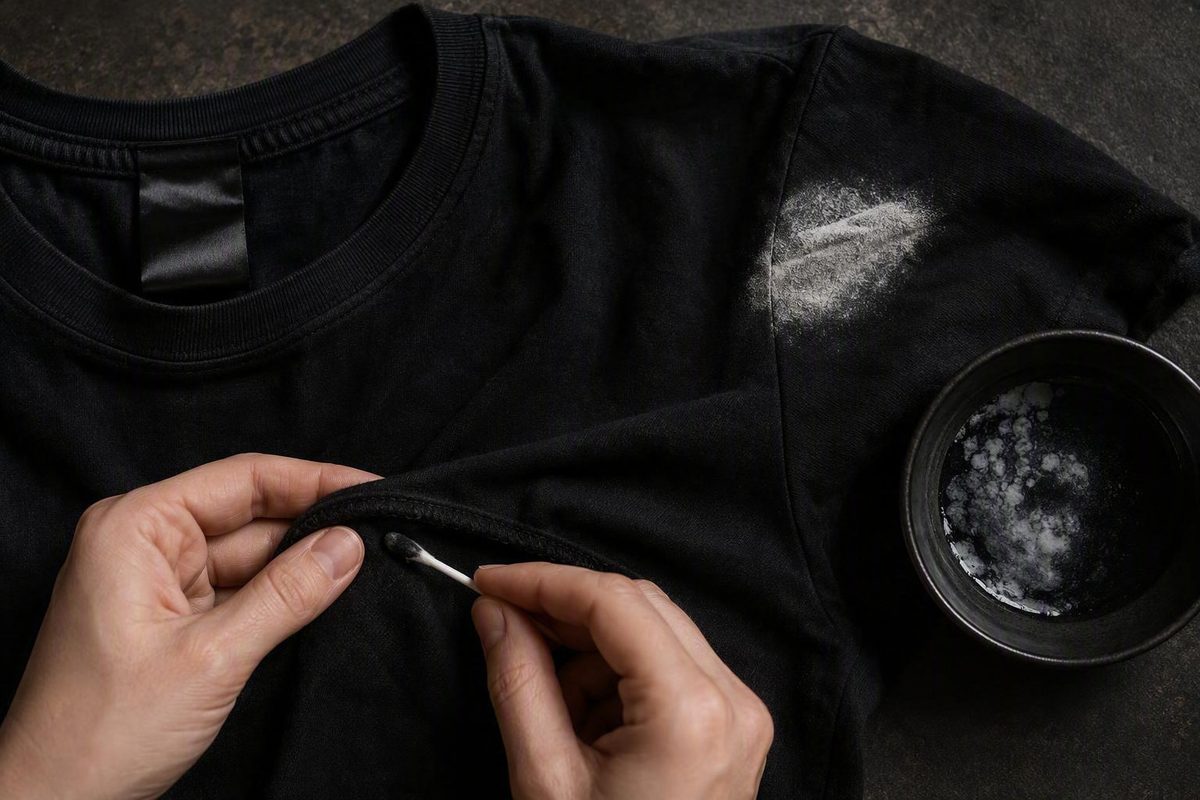
For deodorant buildup on a washable black shirt, remove loose residue, pretreat with a suitable liquid laundry detergent, and wash according to the care label. Check the stain before using the dryer. Start gently: removing a white mark is not worth leaving a faded patch.
The American Cleaning Institute recommends detergent or stain-remover pretreatment for deodorant stains, with five to ten minutes of contact for heavier buildup. Use your product’s label if it specifies a different time or fabric restriction. ACI deodorant-stain guidance.
Clean the Shirt Without Sacrificing the Color
- Check the care label. Confirm that the shirt is washable and note restrictions on temperature, bleaching, and drying. Prints, stretch panels, wool, and delicate finishes can need different treatment.
- Remove loose excess. Gently brush away visible deodorant sitting on the surface. Avoid scraping hard enough to roughen the fabric.
- Pretreat the underarm area. Use an appropriate liquid laundry detergent or stain remover. Follow the product’s directions, including any hidden-area test.
- Wash as permitted. Use the garment’s recommended cycle and no hotter than its allowed temperature.
- Check before drying. Repeat treatment if the mark persists. Tide warns that drying a remaining deodorant stain can make it harder to remove. Tide deodorant-stain instructions.
White Transfer or Established Buildup?
A fresh white swipe from pulling a shirt over recently applied deodorant may sit on the surface. Thick or stiff underarm residue needs a proper wash and pretreatment. That distinction determines how much cleaning is necessary; it does not justify harsher chemicals.
| What You See | Practical Response |
|---|---|
| Loose white product on the surface | Remove the excess gently before washing |
| Stiff or persistent underarm deposit | Pretreat, allow the permitted contact time, then wash |
| Color change remains after residue is gone | Stop escalating; staining and dye damage are different problems |
| Snagging, pilling, or fading during treatment | Stop and seek garment-specific care |
For synthetic activewear, keep the fabric-specific limits in mind; see removing stains from polyester.
What to Avoid
Do not apply chlorine bleach to a black shirt simply because a generic stain guide mentions bleach. Any bleaching treatment must be permitted by both garment and product labels. Do not mix vinegar, peroxide, bleach, ammonia, or other cleaners into an improvised stain-removal cocktail.
A stronger scrub is also not a test of whether the stain is removable. If an approved repeat treatment does not work, a cleaner can assess the fabric and finish before more damage is done.
To reduce new marks, let deodorant dry before dressing and wash worn shirts promptly. Those are also Tide’s prevention recommendations. Tide stain prevention.