 StainList
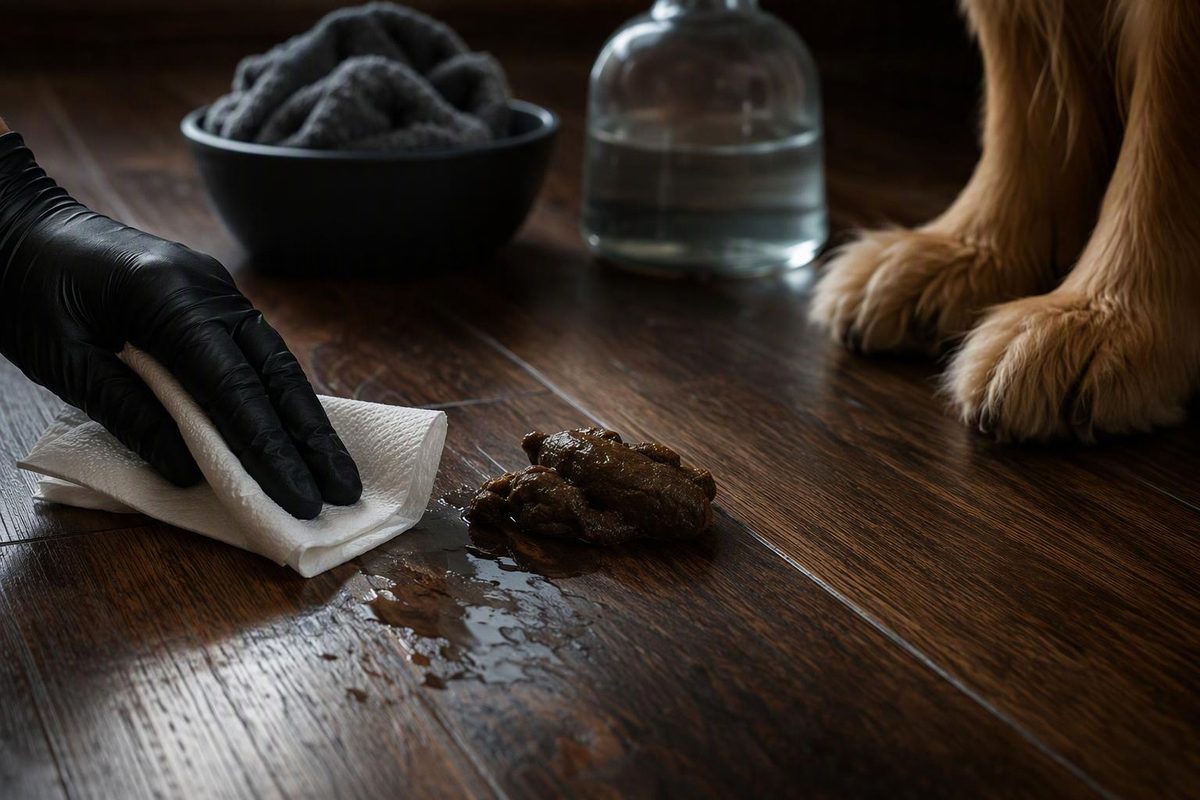
Lift the poop, blot moisture, then clean the remaining film with a cleaner approved for your floor’s finish. Use as little liquid as practical and dry the area promptly. Removing the mess, removing odor, and disinfecting are separate tasks; a pet stain remover does not automatically do all three.
The National Wood Flooring Association recommends cleaning spills immediately with a dry or slightly damp cloth and using a cleaner made specifically for the floor’s finish—not a wet mop or steam mop. That moisture limit matters when cleaning a pet accident, too. NWFA maintenance guidance
1. Remove the mess before adding cleaner
Keep children and pets away. Put on disposable gloves and gather paper towels, a waste bag, soft white cloths, and your floor-approved cleaner.
- Firm poop: Lift it with folded paper towels or a piece of disposable cardboard. Avoid dragging it across the floor.
- Diarrhea or a wet smear: Lift what you can, then blot with fresh towels. Work inward from the edges rather than spreading the liquid over more boards.
- Dried poop: Lift loose pieces first. If the floor’s care instructions allow damp wiping, gently dab stuck residue with a barely damp cloth to soften the surface, then lift it. Repeat small passes rather than leaving a wet towel over the spot. Do not use a metal scraper or abrasive pad.
Bag the waste and used towels. Wash your hands with soap and running water after cleanup, even if you wore gloves or used a bag. Dog poop can carry germs, and CDC specifically recommends handwashing after contact with it. CDC dog hygiene guidance
2. Check the finish and clean the remaining film
Use the flooring manufacturer’s care instructions if available. A product permitted on intact polyurethane-coated wood may not be appropriate for waxed, oiled, unfinished, or visibly worn flooring. If you cannot identify the finish, avoid experimenting with stronger cleaners; remove the waste, blot moisture, and ask the installer or a wood-floor professional what is compatible.
Spot-test before treating the visible area. Apply the chosen cleaner to an inconspicuous place using its label directions. Let the test dry and check for dulling, color change, tackiness, or finish transfer to the cloth. Stop if any appears.
For an intact finish whose care instructions permit damp wiping:
- Wipe away the remaining smear with a barely damp, soft white cloth. Change to a clean section often.
- If a film remains, use a small amount of finish-approved wood-floor cleaner according to its dilution and application instructions.
- Remove residue or rinse only as the label directs. Do not flood the area or board seams.
- Wipe dry with a clean cloth.
NWFA’s spot-cleaning advice supports soft cloths, minimal wood-floor cleaner, and an inconspicuous-area test. Excess water can enter seams and damage the wood. Wood-floor cleaning guidance
3. If odor remains, choose a wood-compatible pet cleaner
After the floor dries, check for overlooked residue along board edges and nearby baseboards before adding another product.
If odor persists, consider a pet stain-and-odor cleaner whose label explicitly permits sealed hardwood and whose use is compatible with your particular finish. “For pet messes” or “enzymatic” alone is not enough. Do not copy carpet instructions that require soaking the affected area.
For example, Nature’s Miracle Hard Floor Cleaner lists sealed wood among its permitted surfaces but prohibits use on visibly worn, unsealed, or unfinished floors. Those restrictions belong to that formulation—not every cleaner sold under the same brand. Check your bottle’s application and contact-time instructions against your floor’s care requirements; if they conflict, choose another compatible product rather than shortening a treatment or soaking the wood. Manufacturer instructions
4. Treat disinfection as a separate decision
A clean-looking, odor-free floor is not proof of disinfection. Cleaning physically removes dirt and germs; disinfecting uses chemicals to kill germs. CDC advises following disinfectant labels and keeping pets away during treatment. CDC cleaning and disinfection guidance
If you disinfect, choose an EPA-registered product in the United States whose label permits your sealed floor surface and whose use is compatible with the flooring manufacturer’s instructions. Clean off fecal residue first, then follow the labeled wet-contact time and any rinse instructions. The surface must remain visibly wet for the entire contact time; wiping it off early does not meet that requirement. EPA disinfectant-label guidance
Allow the area to dry before pets return, following any additional label precautions. Never mix cleaning or disinfecting products. If the required wet treatment conflicts with the floor’s care instructions, do not improvise: ask the flooring manufacturer for a compatible option. For a dog with a diagnosed infectious illness, ask the veterinarian which disinfectant and precautions are needed.
Stop if a mark remains after drying
A flat discoloration that no longer transfers to a cloth is a reason to reassess—not to scrub harder. Persistent odor at seams, lifting finish, swelling, or a dark patch warrants a wood-floor professional’s assessment.
Avoid vinegar, household bleach, ammonia cleaners, steam, and abrasive scrubbing as routine fixes. NWFA warns against acidic vinegar treatments, harsh chemicals, and excessive moisture. Peroxide soaking is also not a harmless next step: professional guidance on urine-stain repairs describes how peroxide bleaching can trade a dark stain for a bleached-out patch. That is a repair warning, not a recommended poop-cleanup method. NWFA cleaning cautions · Urine-stain repair limitations
For a mark left after cleanup, use the hardwood stain diagnosis guide. If urine was also present, follow the separate urine-on-hardwood guide rather than assuming the remaining stain came from poop alone.