 StainList
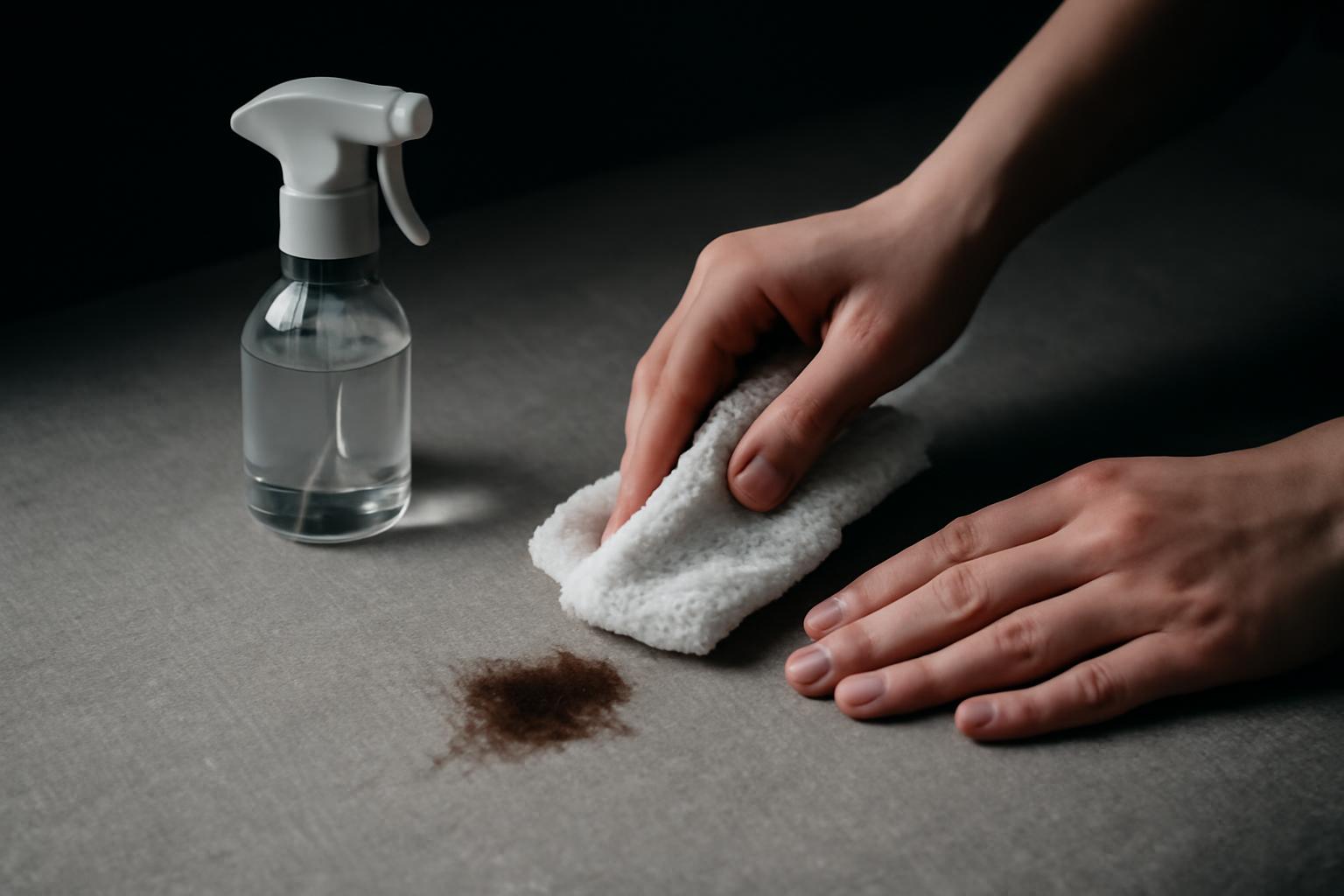
How to treat a small stain without cleaning the whole item
The short answer: clean the spot, not the whole item
“Spot clean only” generally means treating only the stained or soiled area while leaving the rest of the item untouched.
In practical terms, hand-washing, soaking, machine washing—even on a delicate cycle—and professional wet cleaning are full-item processes, not spot cleaning. Routine full-item dry cleaning is not the same as spot cleaning either. The instruction is deliberately narrow: address the visible mark locally with as little intervention as possible.
Those businesses generally distinguish localized treatment from cleaning an entire garment through a wet- or solvent-based process, as this guidance on spot-clean-only garments explains.
The phrase can be confusing because “spot cleaning” is also used as a stain-removal step on washable clothing. You might pretreat a mark on a washable cotton shirt and then launder the entire shirt. That follow-up wash may be appropriate for the shirt, but it should not be assumed safe for an item specifically labeled “spot clean only.”
Treat the instruction as a warning about the risks of full-item cleaning—not as a promise that local treatment will remove the stain or leave no trace. Spot treatment may produce a ring, color change, altered texture, residue, or an area that looks cleaner than the surrounding material.
The complete care label still matters. Check the fiber content and every written instruction or care symbol before acting. Restrictions such as “do not bleach” or “do not iron” continue to apply when you are treating one small area.
Do:
- Confine treatment to the mark.
- Read the complete care label.
- Identify the material and stain if possible.
- Begin with the least invasive compatible action.
- Test the proposed treatment in a concealed area.
- Stop if the item’s color, texture, finish, or shape changes.
Don’t:
- Submerge or soak the item.
- Hand-wash the whole piece.
- Put it in a washing machine, including on a delicate cycle.
- Treat a broad area as though it were one small spot.
- Assume routine full-item dry cleaning is allowed.
- Improvise a full wash because local treatment did not work.
If the entire item needs cleaning, the label creates a genuine maintenance problem. The solution is not to redefine a gentle wash as spot cleaning. Seek item-specific guidance and consider whether professional assessment is justified.
Why manufacturers limit some items to localized cleaning
A spot-clean-only restriction may reflect a concern about the main textile, but that is only one possibility. The vulnerable element could instead be the dye, finish, lining, adhesive, trim, embellishment, or structural construction. An outer fabric that looks ordinary may be only one part of a complicated item.
Materials and items commonly associated with restrictive care include silk, wool, leather, suede, velvet, lace, vintage garments, sequins, beads, embroidery, multiple dyes, and non-removable or mixed-material components. These are warning examples, not a complete classification. A material’s name alone cannot establish how a particular item will respond.
Water, solvent, agitation, or friction may affect different parts of an item differently. Possible results include:
- Shrinkage, puckering, or misshaping
- Color bleeding or fading
- Disturbed nap, pile, or sheen
- Stretching or surface roughening
- Flattened velvet or brushed surfaces
- Loosened beads, sequins, or embroidery
- Damage to sensitive trim or finishes
- Uneven changes between the shell, lining, and decoration
Professional-cleaner guidance identifies delicate fabrics, special dyes, lace, sequins, beads, and other embellishments as common reasons for restrictive care instructions, while emphasizing that the degree of risk depends on the individual garment (A Cleaner World’s explanation).
Mixed construction is especially important. Consider a structured jacket with an outer textile, a different lining, interfacing, padded sections, and contrasting trim. Those components may not respond uniformly.
Decorative items create similar uncertainty. Lace may snag or stretch, while friction or machine movement may disturb embroidery, beads, sequins, or a raised surface. Contrasting colors can also make any local color movement more conspicuous.
The restriction may be about appearance as much as immediate structural damage. A tailored item, velvet surface, uniform-colored dress, or matched set may remain usable yet look visibly uneven after treatment. A slight difference in sheen, pile, stiffness, or color may be more noticeable on formal clothing than on a casual textile.
Their appearance does not reveal how well the fibers, dyes, trim, or construction will tolerate moisture or cleaning agents.
The safest interpretation is not “this named fabric can never be washed.” It is: “the complete item was not designated for routine full cleaning, so do not infer a safe alternative from the appearance of its main fabric.”
Decide whether the stain is a reasonable home-treatment candidate
Before applying anything, compare the difficulty of the stain with the consequences of damaging the item. A cautious home attempt is more reasonable when both the stain and the textile are understood.
What is the material?
Read the label rather than relying on appearance. The visible surface may not reveal a blend, coating, backing, lining, or internal component.
Silk, suede, leather, velvet, rayon, cashmere, lace, vintage textiles, unstable colors, and raised or brushed surfaces deserve particular caution. These categories do not all react identically, but the margin for error may be narrow. Commercial guidance generally recommends professional care for difficult stains and for sensitive items that must retain a sharp or uniform appearance (Press Cleaners’ material-specific cautions).
Does the color appear stable?
Look for multiple saturated colors, dark trim against pale fabric, printed areas, and previous bleeding or fading. A concealed-area test can reveal some immediate instability, but it cannot guarantee that the visibly stained area will react in exactly the same way.
Are embellishments or structural elements nearby?
Beads, sequins, embroidery, glued trim, stiffened sections, pleats, padding, interfacing, and non-removable decoration increase uncertainty. Even a small amount of liquid may reach a backing, lining, filling, thread, or adjacent material.
Do you know what caused the stain?
A recent drop of a known drink presents a more defined problem than an old, dark mark of unknown origin. Ink, grease, makeup, paint, food, and transferred dye may require different approaches. Choosing a method for the wrong stain type can spread the mark or make later treatment more difficult.
How large and old is it?
A small, recent, isolated mark is generally a better candidate for restrained local treatment than:
- A large spill
- Several separate stains
- An old or heat-exposed mark
- Broad discoloration
- A greasy or oily patch
- An unknown stain
- A stain already treated with one or more products
A spill covering much of a sleeve, cushion, bodice, or bag is not meaningfully a “spot,” even if it resulted from one incident. Treating such an area locally may produce an uneven field or a conspicuous boundary.
Has anything already been applied?
Record any water, wipes, soap, detergent, stain remover, sanitizer, solvent, or heat already used. A later treatment must account for what has happened to both the stain and the material. When the previous treatment is unknown, experimenting with another product adds uncertainty.
How much does the item matter?
Consider financial and sentimental value, rarity, replacement difficulty, and the importance of a flawless appearance. A minor visible change may be acceptable on a casual household textile but unacceptable on a wedding garment, vintage piece, tailored jacket, or matching upholstery panel.
Also consider whether the item must retain a uniform surface or crisp finish. A treatment can reduce the stain yet still leave a noticeable change in pile, sheen, stiffness, or color.
Is this really localized soil?
Spot cleaning is poorly suited to general yellowing, body oils, underarm discoloration, smoke odor, widespread dust, multiple stains, or an item that is dirty throughout. Expanding the treated area section by section effectively becomes uncontrolled full-item cleaning.
Use this stop rule:
If the fiber, finish, stain, or previous treatment is unknown—and damage would be unacceptable—do not experiment.
Ask the manufacturer or retailer for item-specific information when available, or consult a cleaner experienced with the item’s material and construction.
Before treatment, photograph the care label and stain. Record what caused the mark, approximately when it occurred, and everything already applied. This is practical documentation rather than a formal requirement, but it can help if professional care becomes necessary.
A conservative spot-cleaning process
There is no universal spot-cleaning formula. The following sequence is intended to reduce avoidable risks; it cannot guarantee stain removal or prevent every color, texture, finish, or shape change.
1. Read the complete care label
Check the fiber content, cleaning instruction, bleach restriction, drying direction, and ironing or heat symbols. Identify the likely stain before choosing any liquid or cleaner.
Do not select a treatment merely because it is marketed as “gentle,” “natural,” or suitable for laundry generally. Compatibility depends on the stain and on the item’s textile, dye, finish, trim, and construction.
2. Remove loose material carefully
Gently lift crumbs, dried mud, food solids, or other debris resting on the surface. Avoid sharp edges, abrasive tools, hard pressure, and any action that grinds the material farther into the textile. If the surface is delicate and you are unsure how to remove the debris safely, stop rather than improvising.
For a liquid spill, blot unabsorbed liquid instead of wiping it across a larger area. Avoid pressing so forcefully that moisture is driven into padding, lining, or backing.
3. Test the treatment in a concealed area
Choose an inside seam, hem allowance, underside, or similarly hidden area made from the same material and color. Apply a very small amount using the same applicator and technique you intend to use on the stain.
Allow the test area to dry completely before judging it. Once dry, inspect for:
- Color transfer or fading
- A change in sheen
- Roughness or stiffness
- Flattened or disturbed pile
- Puckering or distortion
- A visible boundary
- Changes to print, coating, trim, or decoration
A successful test reduces uncertainty but does not prove that the stained area will respond identically.
4. Use a clean white cloth or controlled applicator
A white cloth makes transferred stain or dye easier to see and reduces the risk of introducing color from the tool. For a very small area, a clean cotton swab may provide greater control.
Do not use a dirty cloth, dyed towel, or applicator carrying residue from another product. Move to a clean section as soon as material transfers.
5. Apply the smallest practical amount
When it gives better control, put the treatment on the applicator rather than pouring or broadly spraying it onto the item. Contact only the affected area and avoid saturating the shell, lining, filling, or backing.
More product is not necessarily more effective. Excess liquid can enlarge the treated area and increase the chance of a visible boundary after drying.
6. Blot or dab instead of scrubbing
Use light, repeated contact. Aggressive rubbing can spread contamination, abrade the textile, flatten a pile, change the sheen, or distort the area.
Where appropriate, work from the outside boundary toward the center so the mark does not spread outward. General spot-treatment guidance supports using controlled applicators, working inward, and air-drying without heat (AYSHA NY’s process overview).
7. Keep transferring onto clean material
Rotate or replace the cloth as the stain transfers. Otherwise, you may redeposit what you have lifted.
Watch the color carefully. Transferred stain may be expected; transferred color from the item is a stop signal. If you cannot tell which one you are seeing, stop.
8. Remove residue only if the method permits it
Some treatments require residue removal, but that does not grant permission to rinse, soak, or launder a spot-clean-only item. If minimal local moisture is compatible with the material and method, use only enough to address residue in the affected area.
Avoid saturating garment padding, upholstery foam, handbag reinforcement, cushion filling, or layered construction. If a method depends on thorough rinsing, it may not be appropriate for an item that cannot undergo full washing.
9. Blot excess moisture and air-dry
Use a clean, dry white cloth to pick up unabsorbed moisture without rubbing. Let the area air-dry completely in its normal shape before assessing the result.
Do not use a tumble dryer, hot iron, pressing heat, or another heated method to accelerate drying. Heat can make some stains harder to remove and may reveal or worsen remaining discoloration.
Once dry, inspect the item in even light. If the stain remains but the surrounding material is unchanged, do not escalate automatically. A second attempt adds more moisture, friction, and product exposure. If the first conservative treatment produced little improvement, professional advice may be safer than cycling through stronger remedies.
Choose treatment by stain and material—not by a universal home remedy
There is no single safest product for every item labeled “spot clean only.” Water, detergent, dish soap, vinegar, bleach, commercial stain remover, alcohol, and dry-cleaning solvent can each be unsuitable in some circumstances.
Two compatibility questions must be answered together:
- What may lift or alter this particular stain?
- What can this particular item tolerate?
A product may address the stain yet still affect the item’s dye, finish, surface, trim, adhesive, or construction. It may also leave residue that cannot be removed without more rinsing than the label allows.
Water-based marks
Some fresh drinks and other water-based marks may respond to a water-compatible method. That does not make water safe for every spot-clean-only textile. Moisture may leave rings, move color, disturb the surface, or affect layered construction.
The fact that a stain is water-based tells you something about the stain—not everything about the item.
Ink
“Ink” is not one substance. Ballpoint, gel, fountain-pen ink, and permanent marker use different carriers, dyes, pigments, or binders, so a method that helps one type may fail on another.
Solvents commonly suggested for ink may affect textile dyes, while some stronger solvents can damage acetate, triacetate, or certain rayon materials. The Stain List guide to ink types illustrates why identification matters, but its ordinary wash or rinse steps should not be transferred automatically to an item restricted to localized cleaning.
Grease and oil
Oil does not dissolve in water, so adding water alone does not address the substance that must be removed. Depending on the item and stain, treatment may involve absorption, surfactant action, or a suitable solvent—but each option introduces compatibility and residue concerns.
The Stain List grease and oil guide discusses approaches by material and stain type. Use it only as secondary reading, not as blanket permission to apply powder, dish soap, solvent, warm water, or a full rinse to a spot-clean-only item.
Why ordinary stain instructions may not fit
Many stain-removal guides end with “rinse thoroughly” or “wash as usual.” That can be appropriate for washable fabric because laundering removes dissolved stain and treatment residue. It conflicts with a label that restricts care to local treatment.
Do not follow a final laundering step simply because an earlier stain-removal step appeared successful. Do not compensate by leaving a large amount of product in the textile. If a method depends on thorough rinsing that the item cannot tolerate, choose another approach or seek professional advice.
Solvent recommendations require the same restraint. A solvent’s ability to dissolve ink or grease does not establish that it is safe for a particular dye, fiber, finish, trim, or construction. “Dry clean only” and “spot clean only” are also different instructions; permission for one should not be inferred from the other.
If the first carefully tested attempt fails, stop before trying several unrelated remedies. Do not casually mix products, particularly when you do not know what remains in the material.
For an unknown stain on a valuable silk dress, grease on suede, ink on a delicate lining, or discoloration beside embellishment, the safest home product may be no product at all.
Rings, fading, residue, and other signs to stop
Localized treatment can cause damage even though the label permits spot cleaning. The instruction limits the scope of cleaning; it does not certify every method.
Possible unwanted results include:
- A water ring or tide line
- A solvent mark
- A faded or lightened patch
- Dye bleeding
- A rough, stiff, shiny, or flattened surface
- Loss of pile, nap, or sheen
- Residue that remains visible
- Puckering or misshaping
- A stain that spreads
- An area cleaner than the surrounding textile
Excessive moisture can move the stain or treatment beyond its original boundary, leaving a visible edge as the area dries. A cleaner patch can also appear when local treatment removes general soil from one section but not the surrounding material.
Rubbing creates a separate risk. On a smooth surface, it may spread the mark or produce a visible change in sheen. On velvet, suede, brushed textiles, embroidery, and other textured materials, it may alter the direction or character of the surface.
Heat can make some remaining stains more difficult to remove. Professional-cleaner guidance also warns that local treatment may leave residue and that pressing heat can reveal yellowing in remaining contamination (RAVE FabriCARE’s discussion of spot-treatment residue).
Stop immediately if:
- Color from the item appears on the cloth.
- The textile lightens or develops a pale halo.
- The surface becomes rough, shiny, flattened, or fuzzy.
- A pile or nap changes.
- The item puckers, stretches, softens, or loses shape.
- The stain moves outward.
- A ring begins to form.
- The material becomes stiff or sticky.
- Print, coating, trim, or decoration changes.
- The stain stops transferring but the textile continues changing.
If a problem begins, do not add a second product in an attempt to neutralize the first. Stop applying liquid. Blot only unabsorbed moisture with a clean white cloth, without rubbing, and let the item air-dry in its proper shape.
Once dry, obtain advice specific to the item. Wetting a wider area to “blend out” a ring may simply create a larger mark, while further stain remover cannot restore color already lost.
Keep expectations realistic. An experienced cleaner may have specialized agents, extraction methods, and equipment, but cannot guarantee complete or invisible restoration. If the dye, finish, surface, or shape has changed, removing the original stain may not restore the item’s former appearance.
When the whole item is dirty—or the stain needs professional care
Spot cleaning addresses isolated marks. It does not refresh an entire garment or adequately treat widespread dirt, persistent odor, accumulated body oils, underarm discoloration, broad yellowing, smoke exposure, or multiple stains.
This is the central maintenance limitation of a spot-clean-only item: once the whole piece is soiled, its labeled care method may be insufficient. Cleaning the collar, cuffs, underarms, front, back, and lining as separate “spots” is effectively an improvised full cleaning with poor control over residue and uniformity.
Start by contacting the manufacturer or retailer if item-specific support is available. Provide photographs of the complete care label, materials, construction, and condition. Additional instructions may not be available, but asking is preferable to assuming that an unlisted cleaning method is safe.
Professional assessment is especially appropriate for:
- Valuable, sentimental, vintage, or irreplaceable items
- Sensitive materials such as silk, suede, leather, velvet, cashmere, or rayon
- Heavily embellished or structurally complex pieces
- Large spills, multiple stains, or widespread soil
- Grease, ink, paint, transferred dye, or unknown stains
- Old or heat-exposed marks
- Items requiring an even, sharp, or formal appearance
- Stains that did not respond to one conservative attempt
- Rings, fading, stiffness, color transfer, or distortion caused by earlier treatment
Choose a cleaner with relevant experience in the material or item type. When requesting an assessment, provide:
- The complete care label
- The known or suspected stain source
- The approximate age of the stain
- Whether it was exposed to heat
- Every product or method already tried
- Any color, texture, shape, or residue change observed
Do not omit an unsuccessful home attempt.
The dry-cleaning nuance
Commercial cleaning sources do not present a perfectly uniform view. Some interpret “spot clean only” as ruling out full-item dry cleaning along with laundering, hand-washing, and wet cleaning. Their concern is that complete cleaning may damage a fragile fabric, special dye, embellishment, or mixed construction (Classic Cleaners’ restrictive interpretation).
Other professional cleaners argue that an experienced cleaner may sometimes assess a higher-risk full-item method after examining the individual garment. That is a case-by-case professional judgment, not a universal override of the label or a guarantee of safety.
Before authorizing treatment beyond the labeled instruction, ask:
- Why the cleaner considers the method appropriate
- Which components present the greatest risk
- Whether color, trim, finish, or structure may change
- Whether local treatment may leave a ring or uneven appearance
- What improvement is realistically expected
- What result cannot be promised
- Whether work will proceed only after you accept the limitations
A cleaner may decline the item because the risk is too high. That does not necessarily mean another business can treat it safely; there may be no reasonably low-risk path to the result you want.
Frequently asked questions
Can I hand-wash or use the delicate cycle on something labeled “spot clean only”?
Generally, no. Hand-washing, soaking, and machine washing expose the whole item to water, cleaning agents, movement, and drying, so they are not ordinarily consistent with a localized-only instruction.
A delicate cycle may reduce agitation, but it still cleans the complete item. Do not infer safety from the visible fabric alone; the restriction may relate to dye, trim, lining, embellishment, or construction.
Does “spot clean only” mean the item can never be professionally dry-cleaned?
It means you should not assume routine full-item dry cleaning is permitted. Some cleaners treat the instruction as excluding full dry cleaning, while others may assess a higher-risk method for an individual item.
A cleaner’s willingness to try that method does not change the label or guarantee the outcome. Ask what may improve, what may change, and what risks you must accept.
What is the safest product for spot-clean-only fabric?
There is no universally safest product. The appropriate choice depends on the stain, fiber, dye, finish, trim, construction, and whether treatment residue can be removed without broader washing.
Identify the material and stain, test any proposed treatment in a concealed area, let the test dry fully, and use the smallest practical amount. If compatibility cannot be established, apply nothing and seek experienced advice.
What should I do if spot cleaning leaves a ring or causes color transfer?
Stop. Do not rub, add another cleaner, or wet a larger area to blend the change.
Blot only unabsorbed moisture with a clean white cloth, then air-dry the item in its normal shape without heat. Photograph the result and record what you used. Because rings and color transfer can have different causes, seek advice based on the exact material and treatment history.
How do I clean a spot-clean-only item that smells or is dirty all over?
Widespread odor or soil cannot be solved adequately by treating one small area. Do not submerge the item or clean it section by section as a disguised full wash.
Ask the manufacturer whether additional item-specific guidance exists, then consult an experienced cleaner about the likely benefits and risks of broader treatment. The available options may offer limited improvement, carry a substantial risk of change, or be unsuitable altogether.
The practical rule is straightforward: treat only the affected area, use the least intervention compatible with the exact stain and material, and stop at the first sign of damage. If the stain is large, unknown, persistent, or on a valuable or fragile item—or if the entire item needs cleaning—professional assessment is more appropriate than an improvised full wash, although no method can guarantee a perfect result.